|
|
GU50 Vacuum Tube |
x 1 | |
|
|
Microwave Oven Transformer (MOT) |
x 1 | |
|
|
Primary Coils |
x 1 | |
|
|
Secondary Coil |
x 1 | |
|
|
12V/1A Power Supply |
x 1 | |
|
|
Resistors, Capacitors, Diodes |
x 1 |

|
Soldering Iron Kit |
Simple GU50 VTTC Tesla Coil with MOT (25+cm Spark)
Vacuum Tube Tesla Coils are a common choice for homebuilders for several practical reasons. At Solid State Tesla Cioils in the case of incorrect assembly, incorrect calculations, or even incorrect wiring of printed circuits, field-effect transistors quickly fail, sometimes with explosions, which also entails financial difficulties, because powerful transistors cost a lot. VTTC have a much simpler circuit, based on one powerful Vacuum Tube, as in this particular case GU50 which is also much more resistant to construction errors.

As mentioned above, the circuit of such a design is quite simple, but, nevertheless, for construction it requires certain skills in electronics and working with high voltage.
This project is sponsored by PCBWay. They has all the services you need to create your project at the best price, whether is a scool project, or complex professional project. On PCBWay you can share your experiences, or get inspiration for your next project. They also provide completed Surface mount SMT PCB assemblY service at a best price, and ISO9001 quality control. Visit pcbway.com for more services.

- The power supply section is from a previous project and consists of a microwave oven transformer with a voltage doubler half wave rectifier. For these reasons, a Variac autotransformer is connected to the input of the MOT so that we can control the tube's anode voltage to a certain safe level.
- The primary winding consists of 30 turns of insulated copper wire with a diameter of 1.5 mm, wound on a plastic tube with a diameter of 11 cm. After the twentieth winding, it is desirable to make a tap of each subsequent one, for the sake of easier tuning.

- The secondary coil consists of 1300 turns of thin varnished wire with a diameter of 0.14mm. It is wound on a plastic tube with a diameter of 7 cm and a height of 20 cm.
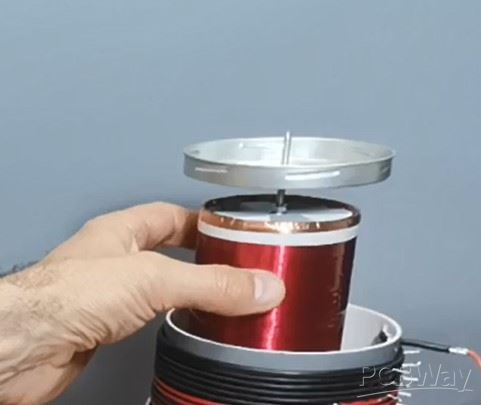
- An aluminum disc or toroid is placed on top of the secondary coil.
- In addition to the primary coil, there is the feedback coil, which contains 10 turns and has taps on each turn for easier tuning.

- It is also worth mentioning such an important detail of the circuit as capacitor C2 - this capacitor is selected individually to achieve resonance. It is quite easy to see the resonance - a small discharge will appear at the top of the terminal even at low supply voltage. With a further increase or decrease in capacitance, the frequency will change, and accordingly, the resonance will disappear. The capacitor must be designed for high voltage.
- The tube heater is powered by an external 12V/0.6 Ampere power supply.
Now let's see how the device works in real conditions. With an approximate value of the capacitor and a certain number of windings, usually about 25, we first bring a low voltage to the primary of the MOT, and we bring a compact fluorescent lamp close to the Tesla Transformer.

If the lamp lights up, it means that the circuit is well connected, otherwise we should check all the wires, and if they are well connected we should rotate the wires from the primary coil. After that comes tuning to get the biggest spark. We increase the voltage with the variac until a small spark with a length of 1-2 cm appears. Then by gradually changing the number of coils from the primary and the feedback coil we try to get the longest spark. When we achieve this, we still have to increase the input voltage with the variac to some safe level. GU 50 can withstand pulse voltage up to 8 thousand volts. If we notice that the anode of the tube becomes a red heated color, it is a sign that it is overloaded and we need to reduce the voltage.


And finally a short conclusion. The process of making Tesla coils requires patience and diligence, so if the device does not work the first time, you need to look for the reason and figure it out, but not give up.
This is a great simple Tesla Coil design made with only one Vacuum Tube and a few passive elements, which has a number of advantages over similar transistor devices. Despite the simplicity, the final result is surprisingly good, and with a well-adjusted device are generated sparks with a length greater than 25-30cm .
SAFETY NOTE: Please do not attempt to recreate the experiments shown on this video unless you are familiar with High Voltage Safety Techniques! Direct Current even above 60V maybe lethal, even when the AC supply voltage has been disconnected due to the stored energy in the capacitors. I have no responsibility on any hazards caused by the circuit. Be very careful. This is a humble request.


Simple GU50 VTTC Tesla Coil with MOT (25+cm Spark)




Raspberry Pi 5 7 Inch Touch Screen IPS 1024x600 HD LCD HDMI-compatible Display for RPI 4B 3B+ OPI 5 AIDA64 PC Secondary Screen(Without Speaker)
BUY NOW


- Comments(0)
- Likes(0)
More by Mirko Pavleski
-
 Arduino 3D Printed self Balancing Cube
Self-balancing devices are electronic devices that use sensors and motors to keep themselves balanc...
Arduino 3D Printed self Balancing Cube
Self-balancing devices are electronic devices that use sensors and motors to keep themselves balanc...
-
 Building a Mini Fostex Horn Speaker with a 2-Inch Full-Range Driver
A back-loaded horn speaker is a loudspeaker design that channels the rear sound wave of a driver th...
Building a Mini Fostex Horn Speaker with a 2-Inch Full-Range Driver
A back-loaded horn speaker is a loudspeaker design that channels the rear sound wave of a driver th...
-
 ESP32 Moon Lamp That Shows the Real Moon Phase on Crowpanel Round Dispaly
Recently on the Hackaday portal I came across a very interesting project called Moon Display by aut...
ESP32 Moon Lamp That Shows the Real Moon Phase on Crowpanel Round Dispaly
Recently on the Hackaday portal I came across a very interesting project called Moon Display by aut...
-
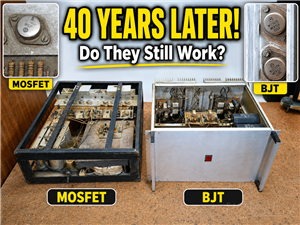 40-Year-Old DIY Power Amplifiers – Do They Still Work - 500W MOSFET & Transistor Amps
This time I want to describe my two DIY super powerful audio amplifiers that I made about 40 years ...
40-Year-Old DIY Power Amplifiers – Do They Still Work - 500W MOSFET & Transistor Amps
This time I want to describe my two DIY super powerful audio amplifiers that I made about 40 years ...
-
 Wi-Fi HaLow Explained! Long-Range Camera Test up to 300m (ESP32 + ThinkNode G4 from ELECROW)
I recently needed to install a security camera at a relatively large distance from my home, more pre...
Wi-Fi HaLow Explained! Long-Range Camera Test up to 300m (ESP32 + ThinkNode G4 from ELECROW)
I recently needed to install a security camera at a relatively large distance from my home, more pre...
-
 Simple Object Recognition with the UNIHIKER K10 – No TensorFlow, No Internet, No Cloud AI
Object recognition has become one of the most popular applications of artificial intelligence and em...
Simple Object Recognition with the UNIHIKER K10 – No TensorFlow, No Internet, No Cloud AI
Object recognition has become one of the most popular applications of artificial intelligence and em...
-
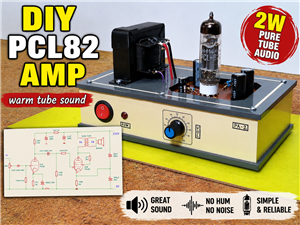 DIY PCL82 Tube Amplifier, Single-Ended Amp with Amazing Sound
The idea for this project came from a local electronics magazine called EMITER, issue 12/13 from 20...
DIY PCL82 Tube Amplifier, Single-Ended Amp with Amazing Sound
The idea for this project came from a local electronics magazine called EMITER, issue 12/13 from 20...
-
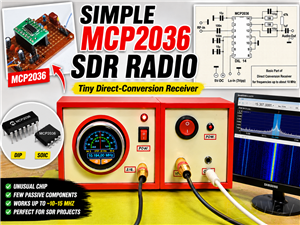 Simple MCP2036 SDR Radio - The Most Unusual Software Defined Radio
SDR (Software Defined Radio) is a radio communication system where many of the key electronic compo...
Simple MCP2036 SDR Radio - The Most Unusual Software Defined Radio
SDR (Software Defined Radio) is a radio communication system where many of the key electronic compo...
-
 Elecrow All-in-One Arduino Starter Kit Review - 20 Projects & 16 Modules
This time I will describe a simple and practical way to enter the world of microcontrollers, specif...
Elecrow All-in-One Arduino Starter Kit Review - 20 Projects & 16 Modules
This time I will describe a simple and practical way to enter the world of microcontrollers, specif...
-
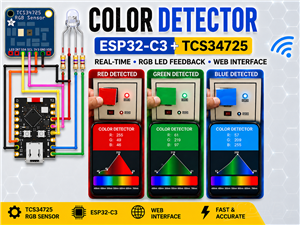 ESP32-C3 Color Detector with TCS34725, Real-Time RGB Detection & Web Interface
Color detection is a fundamental task in many embedded systems – from industrial sorting machines t...
ESP32-C3 Color Detector with TCS34725, Real-Time RGB Detection & Web Interface
Color detection is a fundamental task in many embedded systems – from industrial sorting machines t...
-
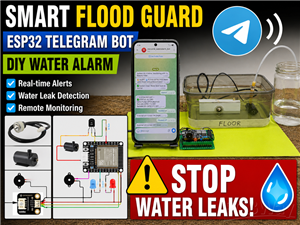 DIY ESP32 Telegram Flood Protection System - Smart Home Automation
Recently I had an unpleasant experience in my home, specifically my ground floor was flooded as a r...
DIY ESP32 Telegram Flood Protection System - Smart Home Automation
Recently I had an unpleasant experience in my home, specifically my ground floor was flooded as a r...
-
 Real-Time Air Traffic Radar using ESP32 + ADS-B Data
ADS-B, which stands for Automatic Dependent Surveillance-Broadcast, is the modern standard for trac...
Real-Time Air Traffic Radar using ESP32 + ADS-B Data
ADS-B, which stands for Automatic Dependent Surveillance-Broadcast, is the modern standard for trac...
-
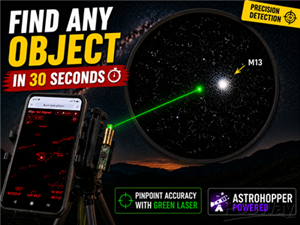 DIY Green Laser Night Sky Object Finder - Find Stars & Galaxies Instantly with great accuracy
As an amateur astronomer, especially at the beginning, the most difficult part of observing the nig...
DIY Green Laser Night Sky Object Finder - Find Stars & Galaxies Instantly with great accuracy
As an amateur astronomer, especially at the beginning, the most difficult part of observing the nig...
-
 DIY Avionics Simulator with ESP32 - Artificial Horizon, Compass & Altimeter
The inspiration for this project comes from classical aircraft cockpit instruments used for navigat...
DIY Avionics Simulator with ESP32 - Artificial Horizon, Compass & Altimeter
The inspiration for this project comes from classical aircraft cockpit instruments used for navigat...
-
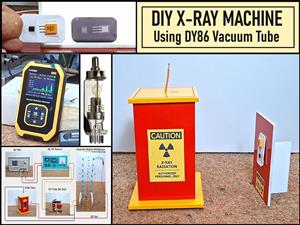 DIY Miniature X-Ray Machine using a TV Vacuum Tube DY86
An X-ray machine (or radiograph) is a quick, painless medical test that produces images of the struc...
DIY Miniature X-Ray Machine using a TV Vacuum Tube DY86
An X-ray machine (or radiograph) is a quick, painless medical test that produces images of the struc...
-
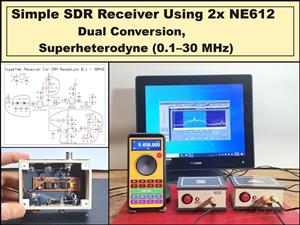 Simple SDR Receiver Using 2x NE612 - Dual Conversion, Superheterodyne (0.1–30 MHz)
SDR (Software Defined Radio) is a radio system in which most of the functions of a classic radio (f...
Simple SDR Receiver Using 2x NE612 - Dual Conversion, Superheterodyne (0.1–30 MHz)
SDR (Software Defined Radio) is a radio system in which most of the functions of a classic radio (f...
-
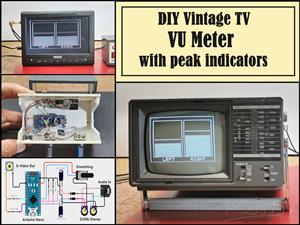 DIY Vintage TV VU Meter with peak indicators
Some time ago in one of my projects I presented you a way to turn a black and white old mini TV int...
DIY Vintage TV VU Meter with peak indicators
Some time ago in one of my projects I presented you a way to turn a black and white old mini TV int...
-
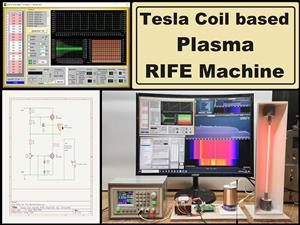 DIY Tesla Coil based Plasma Rife Machine
In several of my previous videos, I presented you with different ways to make a Rife Machine, from ...
DIY Tesla Coil based Plasma Rife Machine
In several of my previous videos, I presented you with different ways to make a Rife Machine, from ...
-
Programmable Mist Maker - XIAO / QT PY Extension
2374 2 2 -
RadioHAT - Raspberry Pi radio development platform
2056 0 4 -
-
-
-
ARPS-2 – Arduino-Compatible Robot Project Shield for Arduino UNO
4210 0 6 -
A Compact Charging Breakout Board For Waveshare ESP32-C3
4984 3 8 -
AI-driven LoRa & LLM-enabled Kiosk & Food Delivery System
5751 2 2 -