|
|
Rotary potentiometer 10k |
x 2 | |
|
|
swich 2x2 |
x 1 | |
|
|
varicap diode BB112 or similar |
x 1 | |
|
|
Capacitor 100 nF |
x 3 | |
|
|
Capacitor, 10000 pF |
x 2 | |
|
|
Inductor 1µH |
x 2 | |
|
|
Inductor, 22 µH |
x 1 | |
|
|
Air Core Inductor, 100 nH |
x 1 | |
|
|
resistors |
x 1 | |
|
|
9V battery |
x 1 | |
|
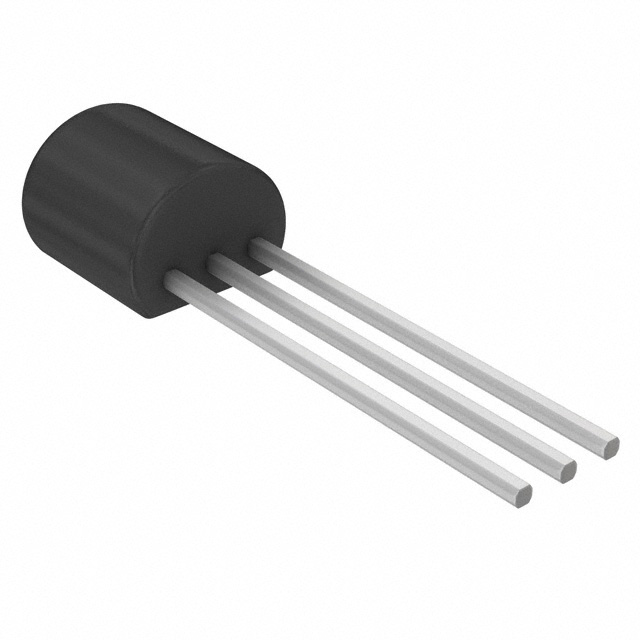
J310onsemi
|
x 1 |

|
Soldering Iron Kit |
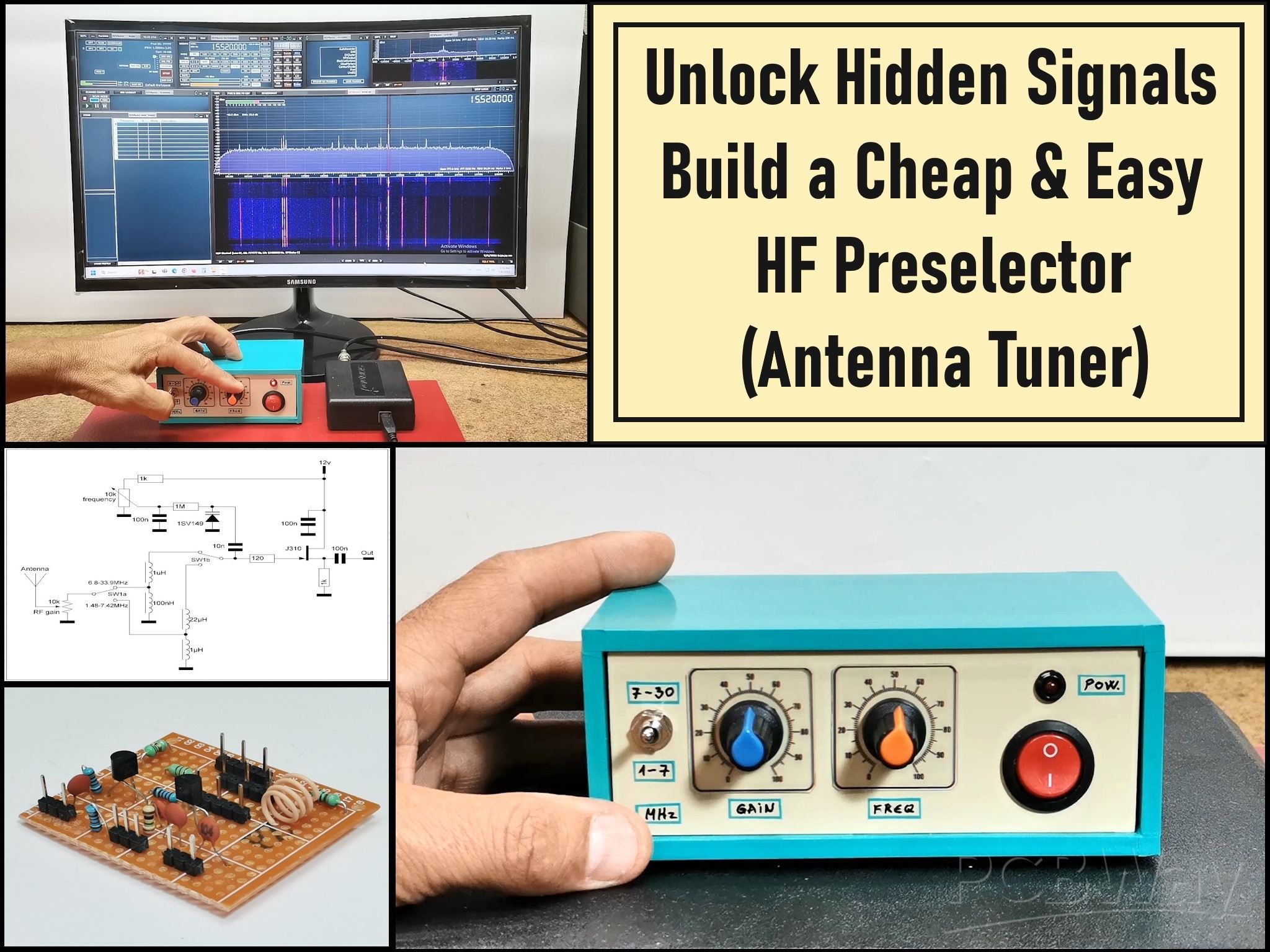
Build a Cheap & Easy HF Preselector - Antenna Tuner
HF antenna preselector is an electronic device connected between an HF radio antenna, and a radio receiver. Its primary function is to act as a tunable band-pass filter, selectively allowing desired frequencies to pass through, while significantly attenuating unwanted out-of-band signals. This means it only passes the desired signal and blocks others. The device presented in this project is basically intended for SW listeners who most often use a so-called Long Wire antenna. This type of antenna generally receives all signals in the HF range equally, which leads to many unwanted effects, such as Interference from strong local stations, Image responses and Intermodulation distortion.
The antenna tuner is especially useful in simple DIY radio receivers where some important elements in the input part of the receiver are omitted for the sake of simplicity. In this case, using such a device drastically increases the quality of reception. Otherwise, I took the project from the sv3ora website where you can find many amateur radio projects and all the credit goes to the author.
The device is very simple to make and consists of several components:
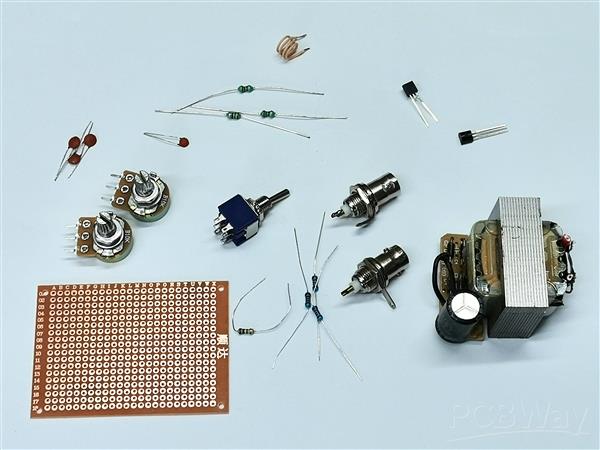
- Transformer with rectifier that provides DC voltage with a value of 10 to 12V (you can also use standard 9V Battery)
- j310 mosfet
- bb112 varicap diode
- 10Kilohm potentiometer
- and several passive elements, resistors, capacitors and inductors
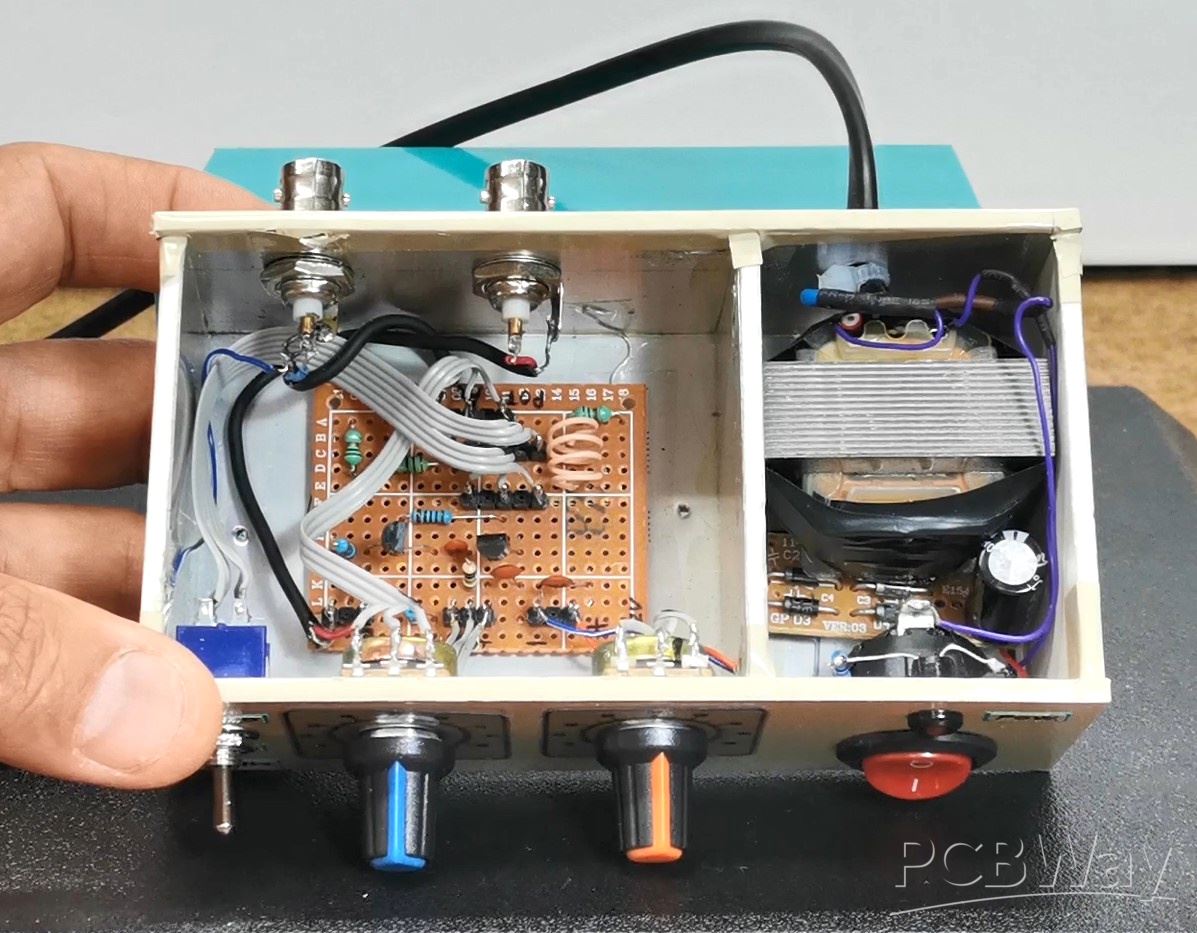
- Transformer with rectifier that provides DC voltage with a value of 10 to 12V (you can also use standard 9V Battery)
- j310 mosfet
- bb112 varicap diode
- 10Kilohm potentiometer
- and several passive elements, resistors, capacitors and inductors
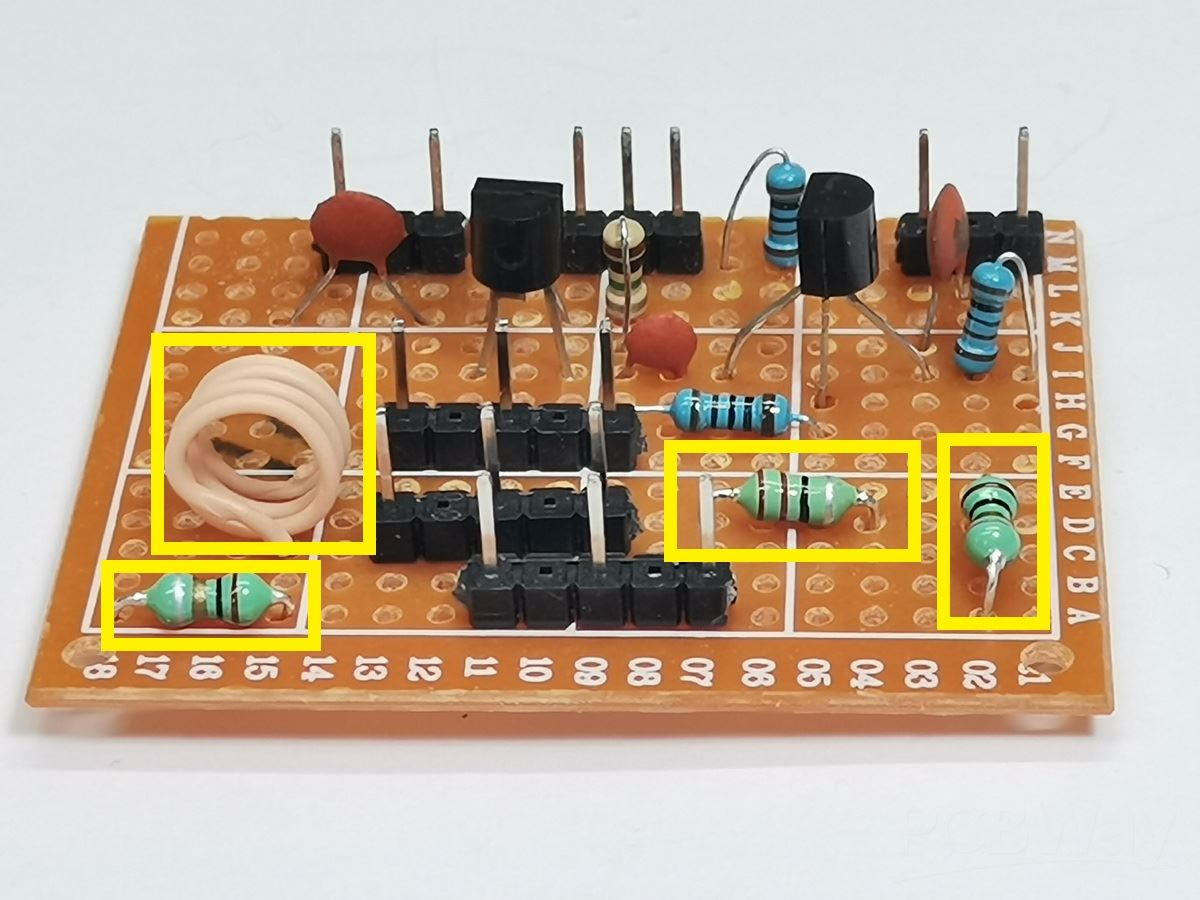
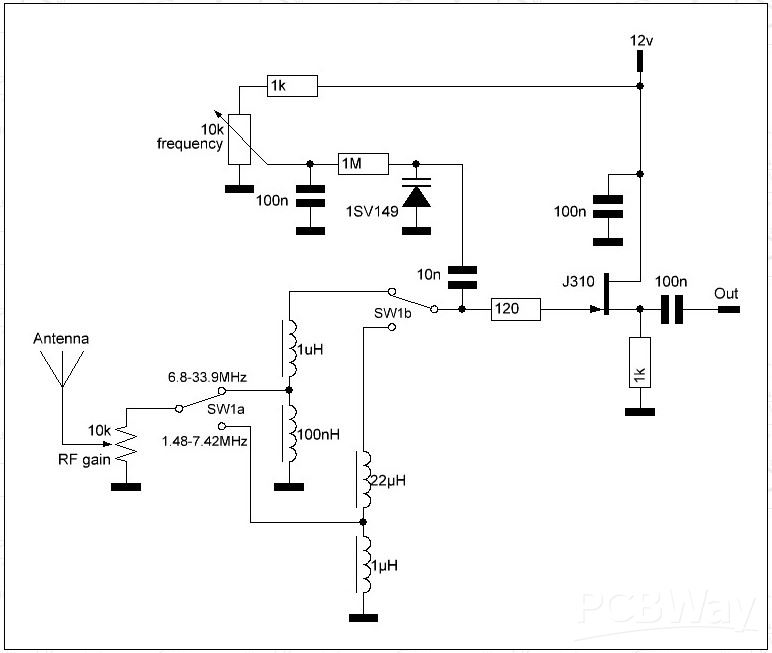
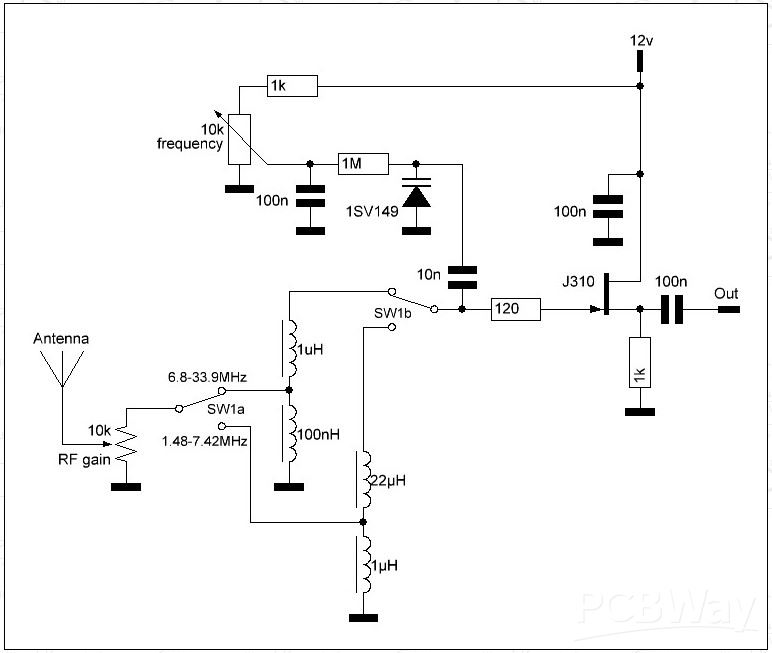
The tuner has only 2 ranges that cover the entire HF band. The potentiometer changes the voltage applied to the varicap diode and thus its capacitance, and in conjunction with the appropriate group of inductances we obtain the required range. At the input there is another potentiometer with which the RF gain is regulated. The inductor with a value of 100 Nanohenry is hard to find, so I made it with 4 turns of insulated wire on a body with a diameter of 7mm.
The PCB is built into a suitable box that is completely covered with a metal cover connected to the ground to avoid unwanted external influences.
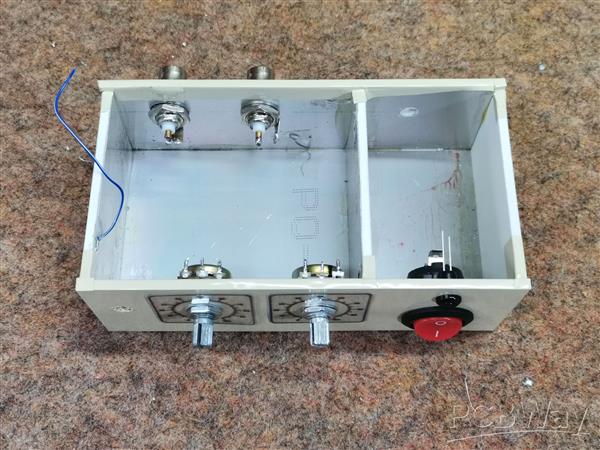
Instead of a transformer and rectifier, we can use a 9V battery because the total consumption is extremely low and the battery would allow for several months of uninterrupted operation.
Now let's see how this device works in real conditions. I will use my 10m long Long Wire antenna located on the roof of the house. As a radio receiver, I will use my SDRPlay software-defined radio because its software will provide us with an excellent visual presentation of the functionality of the antenna preselector. In fact, this SDR radio also has a built-in preselector circuit for each band, so the true efficiency and usability of this device would be best seen in a simple DIY radio receiver.
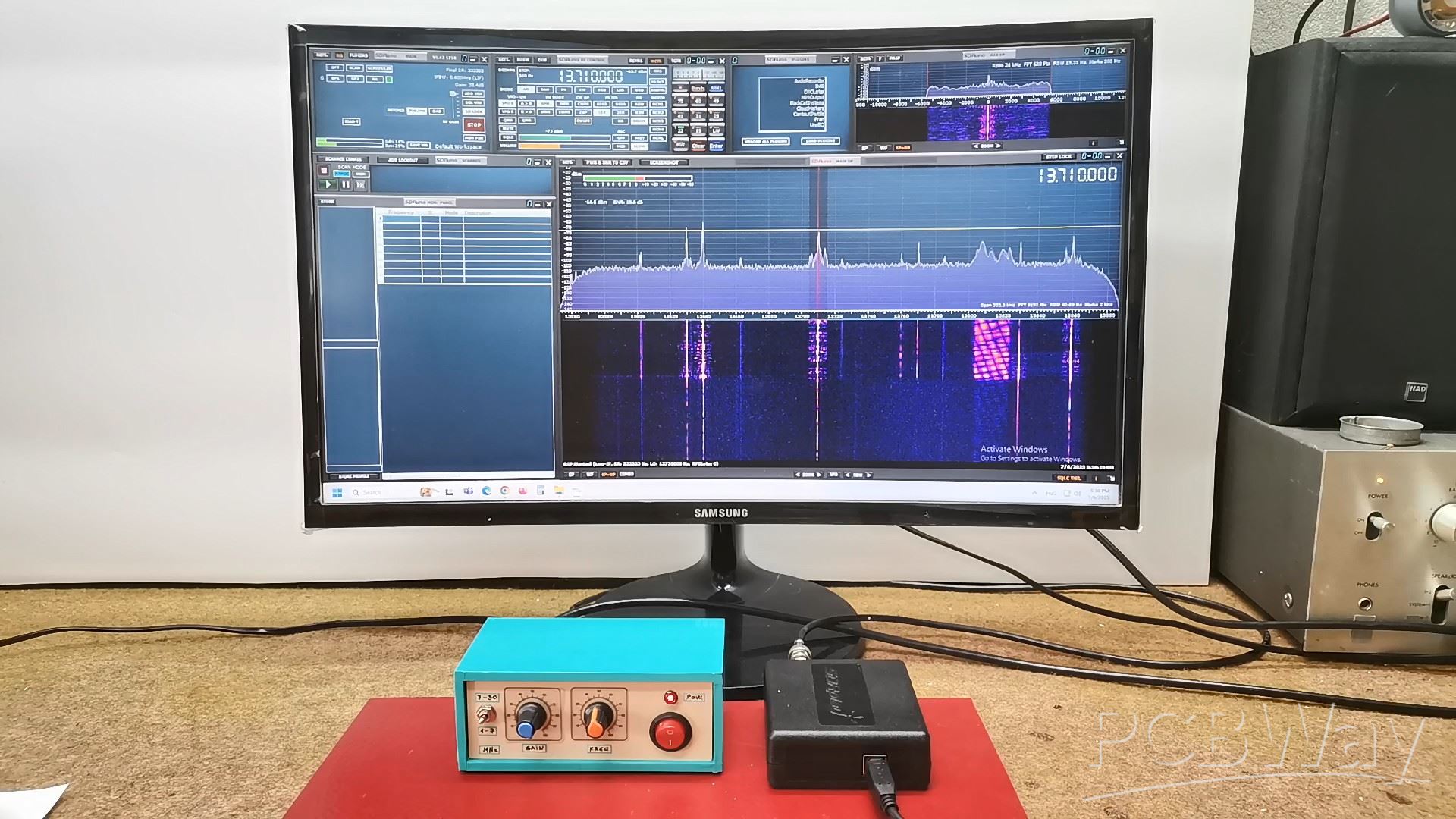
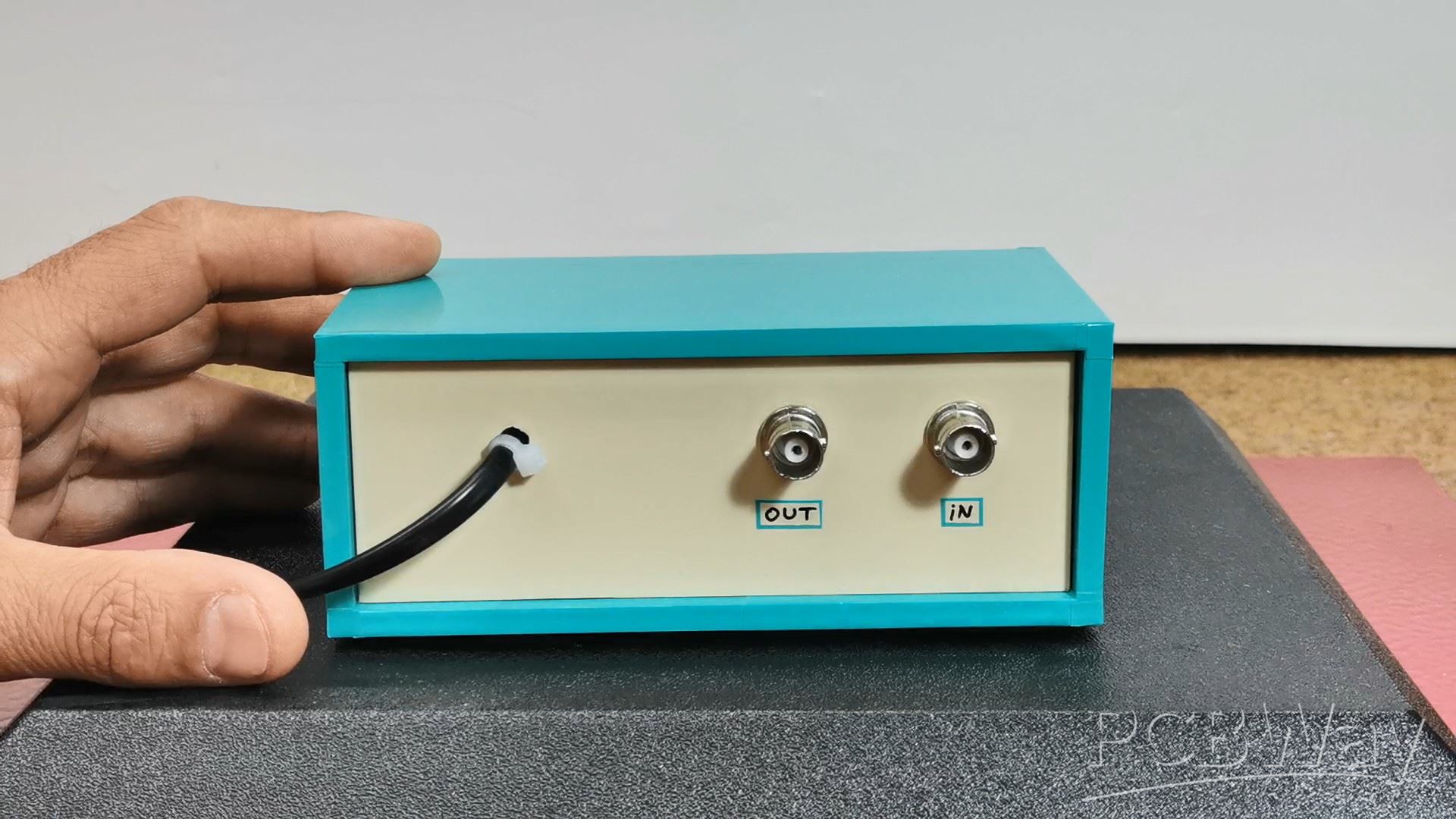
I connected the long wire antenna to the input of the preselector, and I connected the output of the preselector to the SDRPlay receiver.
As I mentioned, I will start by using the SDRUno software because it is the best way to visually understand the function of this preselector. Now I will move the Frequency knob until I get the strongest and clearest reception. It is immediately clear that the difference before the adjustment and now is huge. I try this on other bands too. After a short practice, we can almost instantly set the Frequency potentiometer to the ideal position in which we will get the best reception with the lowest noise level. Unless we have a particularly strong shortwave station nearby, the Gain potentiometer should always be in the position for the strongest reception.
In conclusion, this simple and inexpensive HF antenna preselector significantly enhances reception quality, especially for SW listeners using Long Wire antennas and basic DIY radio receivers. By effectively filtering out unwanted signals, it allows for a much clearer and stronger listening experience across the entire HF band.
Build a Cheap & Easy HF Preselector - Antenna Tuner


Raspberry Pi 5 7 Inch Touch Screen IPS 1024x600 HD LCD HDMI-compatible Display for RPI 4B 3B+ OPI 5 AIDA64 PC Secondary Screen(Without Speaker)
BUY NOW


- Comments(1)
- Likes(3)
More by Mirko Pavleski
-
 Arduino 3D Printed self Balancing Cube
Self-balancing devices are electronic devices that use sensors and motors to keep themselves balanc...
Arduino 3D Printed self Balancing Cube
Self-balancing devices are electronic devices that use sensors and motors to keep themselves balanc...
-
 DIY ESP32 Universal Timer with Touchscreen & Rotary Encoder
In several of my previous videos, I presented different projects based on the CrowPanel 2.1-inch HM...
DIY ESP32 Universal Timer with Touchscreen & Rotary Encoder
In several of my previous videos, I presented different projects based on the CrowPanel 2.1-inch HM...
-
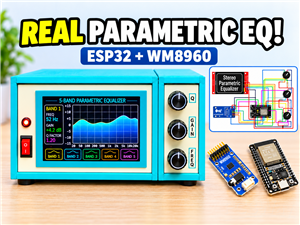 Build a Real 5-Band Parametric EQ with ESP32 + WM8960 - Stereo DSP Audio Processor
Audio equalizer (EQ) is an electronic device that allows control over the strength of different fre...
Build a Real 5-Band Parametric EQ with ESP32 + WM8960 - Stereo DSP Audio Processor
Audio equalizer (EQ) is an electronic device that allows control over the strength of different fre...
-
 Bass Reflex vs Sealed vs Horn – Same 2 inch Speaker Test
In one of the previous videos I presented the making of a miniature Horn type speaker box with a 2 ...
Bass Reflex vs Sealed vs Horn – Same 2 inch Speaker Test
In one of the previous videos I presented the making of a miniature Horn type speaker box with a 2 ...
-
 Building a Mini Fostex Horn Speaker with a 2-Inch Full-Range Driver
A back-loaded horn speaker is a loudspeaker design that channels the rear sound wave of a driver th...
Building a Mini Fostex Horn Speaker with a 2-Inch Full-Range Driver
A back-loaded horn speaker is a loudspeaker design that channels the rear sound wave of a driver th...
-
 ESP32 Moon Lamp That Shows the Real Moon Phase on Crowpanel Round Dispaly
Recently on the Hackaday portal I came across a very interesting project called Moon Display by aut...
ESP32 Moon Lamp That Shows the Real Moon Phase on Crowpanel Round Dispaly
Recently on the Hackaday portal I came across a very interesting project called Moon Display by aut...
-
 40-Year-Old DIY Power Amplifiers – Do They Still Work - 500W MOSFET & Transistor Amps
This time I want to describe my two DIY super powerful audio amplifiers that I made about 40 years ...
40-Year-Old DIY Power Amplifiers – Do They Still Work - 500W MOSFET & Transistor Amps
This time I want to describe my two DIY super powerful audio amplifiers that I made about 40 years ...
-
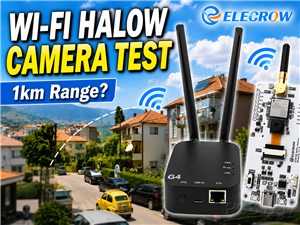 Wi-Fi HaLow Explained! Long-Range Camera Test up to 300m (ESP32 + ThinkNode G4 from ELECROW)
I recently needed to install a security camera at a relatively large distance from my home, more pre...
Wi-Fi HaLow Explained! Long-Range Camera Test up to 300m (ESP32 + ThinkNode G4 from ELECROW)
I recently needed to install a security camera at a relatively large distance from my home, more pre...
-
 Simple Object Recognition with the UNIHIKER K10 – No TensorFlow, No Internet, No Cloud AI
Object recognition has become one of the most popular applications of artificial intelligence and em...
Simple Object Recognition with the UNIHIKER K10 – No TensorFlow, No Internet, No Cloud AI
Object recognition has become one of the most popular applications of artificial intelligence and em...
-
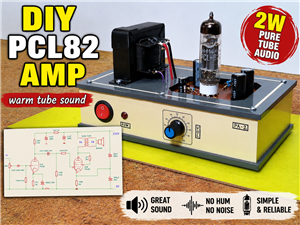 DIY PCL82 Tube Amplifier, Single-Ended Amp with Amazing Sound
The idea for this project came from a local electronics magazine called EMITER, issue 12/13 from 20...
DIY PCL82 Tube Amplifier, Single-Ended Amp with Amazing Sound
The idea for this project came from a local electronics magazine called EMITER, issue 12/13 from 20...
-
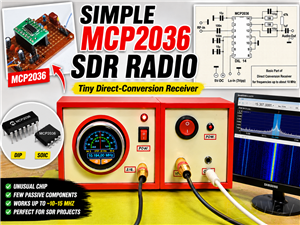 Simple MCP2036 SDR Radio - The Most Unusual Software Defined Radio
SDR (Software Defined Radio) is a radio communication system where many of the key electronic compo...
Simple MCP2036 SDR Radio - The Most Unusual Software Defined Radio
SDR (Software Defined Radio) is a radio communication system where many of the key electronic compo...
-
 Elecrow All-in-One Arduino Starter Kit Review - 20 Projects & 16 Modules
This time I will describe a simple and practical way to enter the world of microcontrollers, specif...
Elecrow All-in-One Arduino Starter Kit Review - 20 Projects & 16 Modules
This time I will describe a simple and practical way to enter the world of microcontrollers, specif...
-
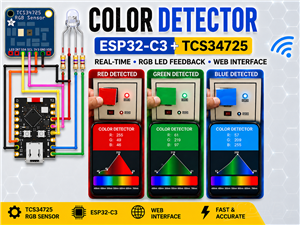 ESP32-C3 Color Detector with TCS34725, Real-Time RGB Detection & Web Interface
Color detection is a fundamental task in many embedded systems – from industrial sorting machines t...
ESP32-C3 Color Detector with TCS34725, Real-Time RGB Detection & Web Interface
Color detection is a fundamental task in many embedded systems – from industrial sorting machines t...
-
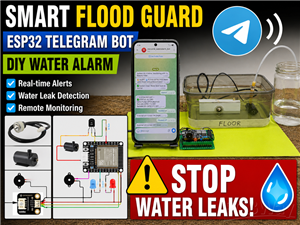 DIY ESP32 Telegram Flood Protection System - Smart Home Automation
Recently I had an unpleasant experience in my home, specifically my ground floor was flooded as a r...
DIY ESP32 Telegram Flood Protection System - Smart Home Automation
Recently I had an unpleasant experience in my home, specifically my ground floor was flooded as a r...
-
 Real-Time Air Traffic Radar using ESP32 + ADS-B Data
ADS-B, which stands for Automatic Dependent Surveillance-Broadcast, is the modern standard for trac...
Real-Time Air Traffic Radar using ESP32 + ADS-B Data
ADS-B, which stands for Automatic Dependent Surveillance-Broadcast, is the modern standard for trac...
-
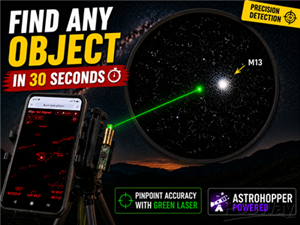 DIY Green Laser Night Sky Object Finder - Find Stars & Galaxies Instantly with great accuracy
As an amateur astronomer, especially at the beginning, the most difficult part of observing the nig...
DIY Green Laser Night Sky Object Finder - Find Stars & Galaxies Instantly with great accuracy
As an amateur astronomer, especially at the beginning, the most difficult part of observing the nig...
-
 DIY Avionics Simulator with ESP32 - Artificial Horizon, Compass & Altimeter
The inspiration for this project comes from classical aircraft cockpit instruments used for navigat...
DIY Avionics Simulator with ESP32 - Artificial Horizon, Compass & Altimeter
The inspiration for this project comes from classical aircraft cockpit instruments used for navigat...
-
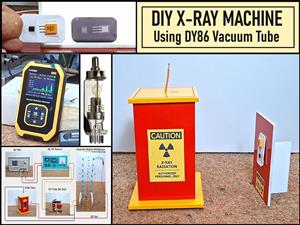 DIY Miniature X-Ray Machine using a TV Vacuum Tube DY86
An X-ray machine (or radiograph) is a quick, painless medical test that produces images of the struc...
DIY Miniature X-Ray Machine using a TV Vacuum Tube DY86
An X-ray machine (or radiograph) is a quick, painless medical test that produces images of the struc...
-
Émetteur Récepteur Optique Expérimental (communication UART ATtiny + fibre optique)
152 0 1 -
SmallOLED - Live PC Stats, Animated Clocks & Audio Visualizer
1002 0 3 -
"Talking Multimeter": Arduino-Based Speech Add-on for Multimeters with SCPI Protocol
574 0 1 -
Programmable Mist Maker - XIAO / QT PY Extension
3044 2 3 -
RadioHAT - Raspberry Pi radio development platform
2590 0 4 -
-
-