


|
Soldering Iron Kit |
DIY Tesla Coil based Plasma Rife Machine
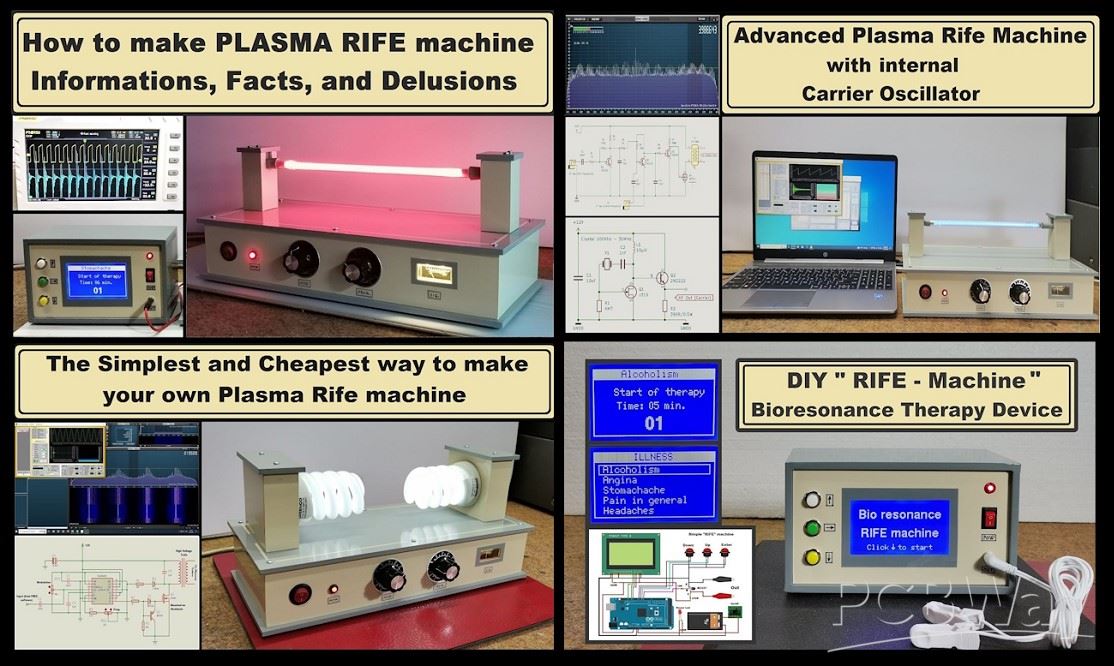
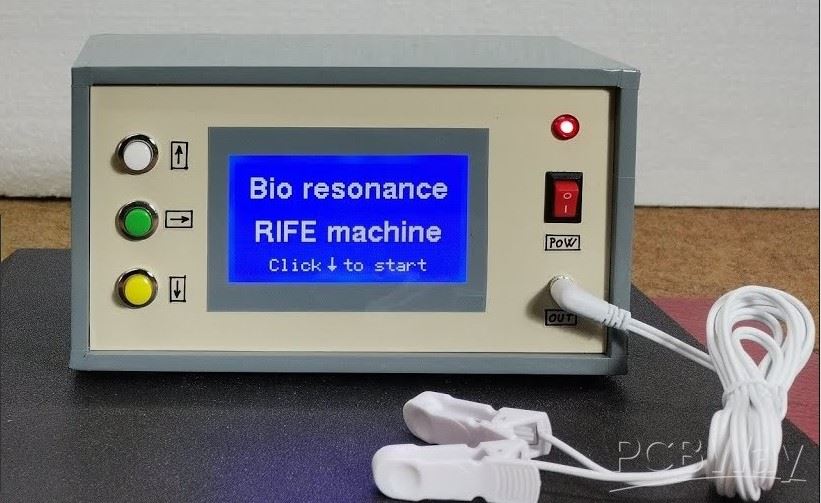
In several of my previous videos, I presented you with different ways to make a Rife Machine, from the simplest with metal electrodes as a medium for the transfer of frequencies, to an advanced Plasma Rife Machine. This time I will stick to the more advanced versions which, like the original device, use plasma as a medium that radiates into the environment.
With the previous devices, I mostly used a configuration that consisted of: a carrier signal generator, a modulator, an amplifier, a HV transformer and finally a Plasma Tube. A quality HV Transformer retains its characteristics up to a few hundred kHz, and above this frequency the signal weakens. In the original Rife machine, the carrier frequency is much higher, specifically about 3.1 MHz. What you see in the spectrogram from the previous videos is that 3.1 MHz carrier signal, but significantly weakened due to the characteristics of the HV transformer. That is why very weak parasitic signals are visible around it and in the entire spectrum.
I spent more time thinking about how to solve this deficiency, and I came up with the idea of using a Tesla Coil to generate a clean carrier signal.
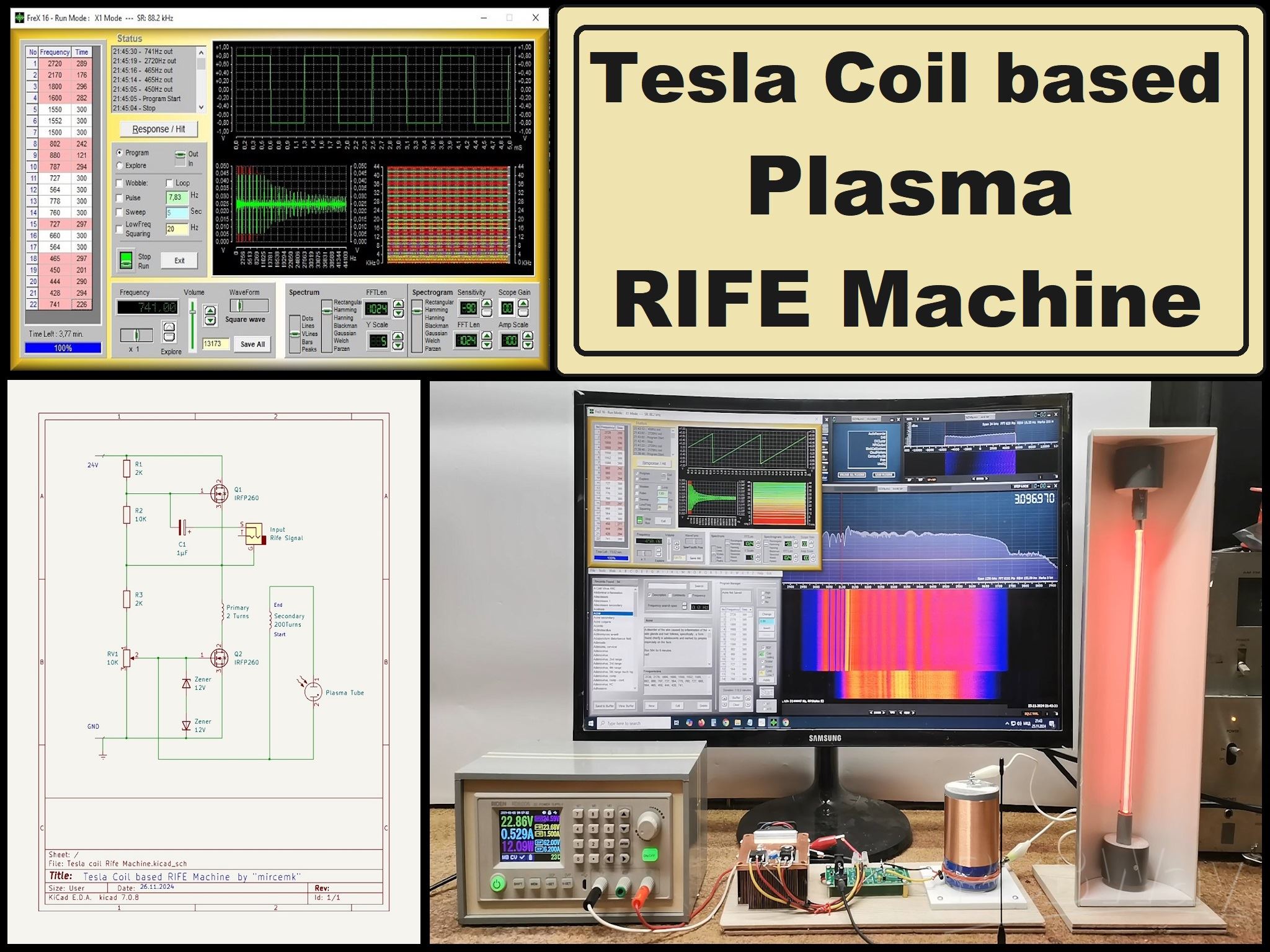
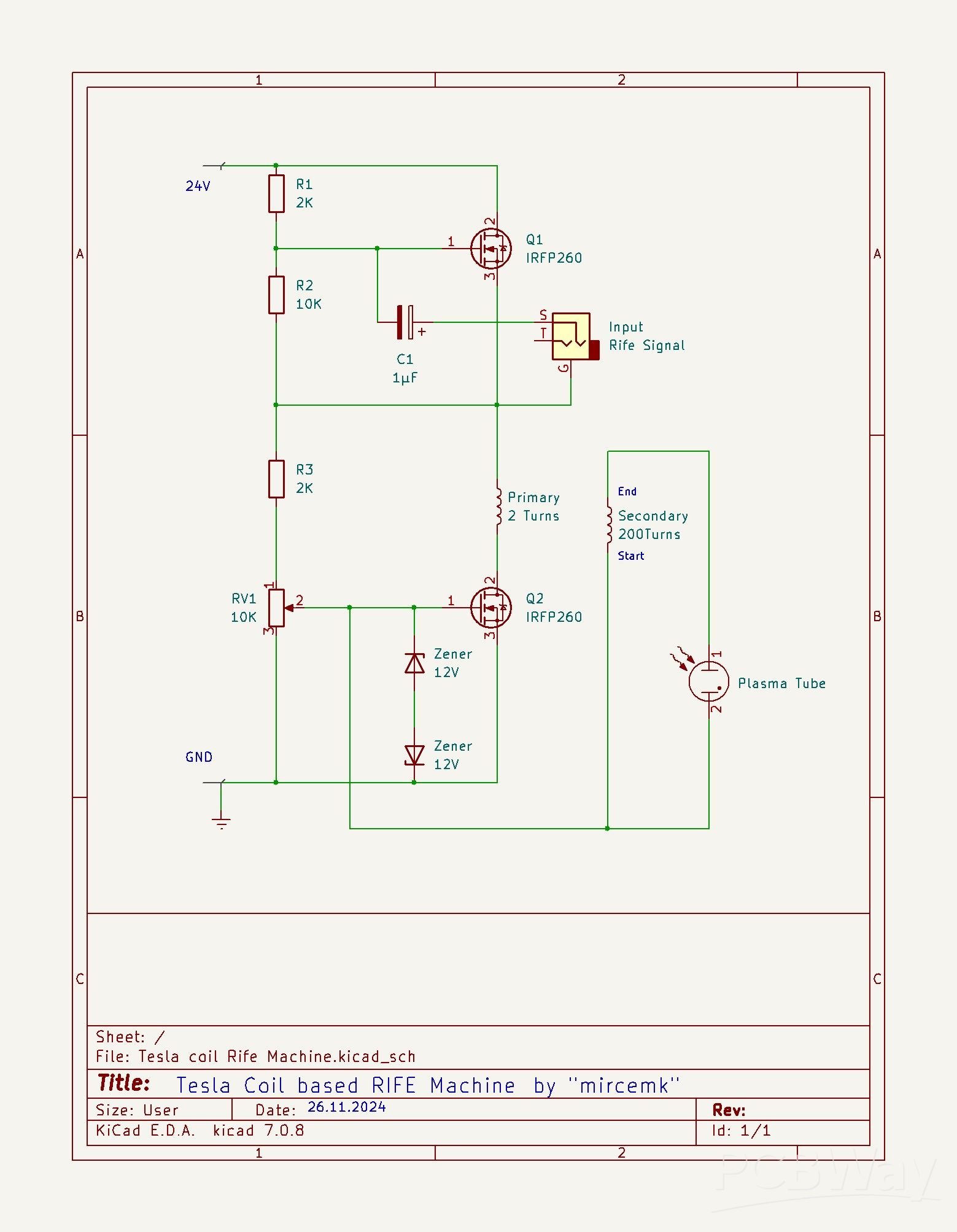
Since the Tesla Transformer is actually a high voltage generator, with it we can directly drive the plasma tube without the use of an amplifier and HV Trafo. Also, the tesla transformer can work even at frequencies of several tens of MHz without any problem. In fact, the original Rife machine works in roughly the same way. Instead of vacuum tubes like the original, I use modern solid state components. Next, as can be seen from the schematic diagram, I perform frequency modulation of the oscillator (carrier) with an external "Rife" frequency.
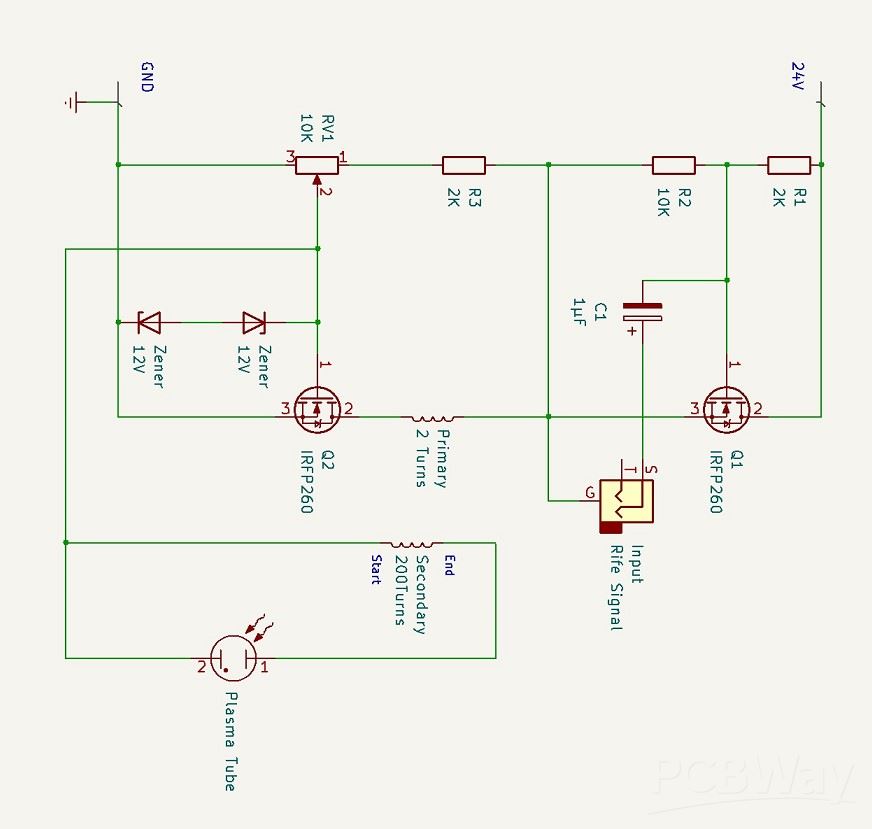
Now let's focus specifically on this new project. This is the Rife Tube driver, which is actually a modulated Tesla Coil. I set the resonant frequency of this transformer to be exactly 3.1 MHz using one of the online calculators for this purpose. The primary coil consists of 2 turns around the secondary with an insulated copper wire with a cross section of 1mm. The secondary coil is wound on a body with a diameter of 5 cm and contains 200 turns of varnished copper wire with a cross section of 0.35 mm.
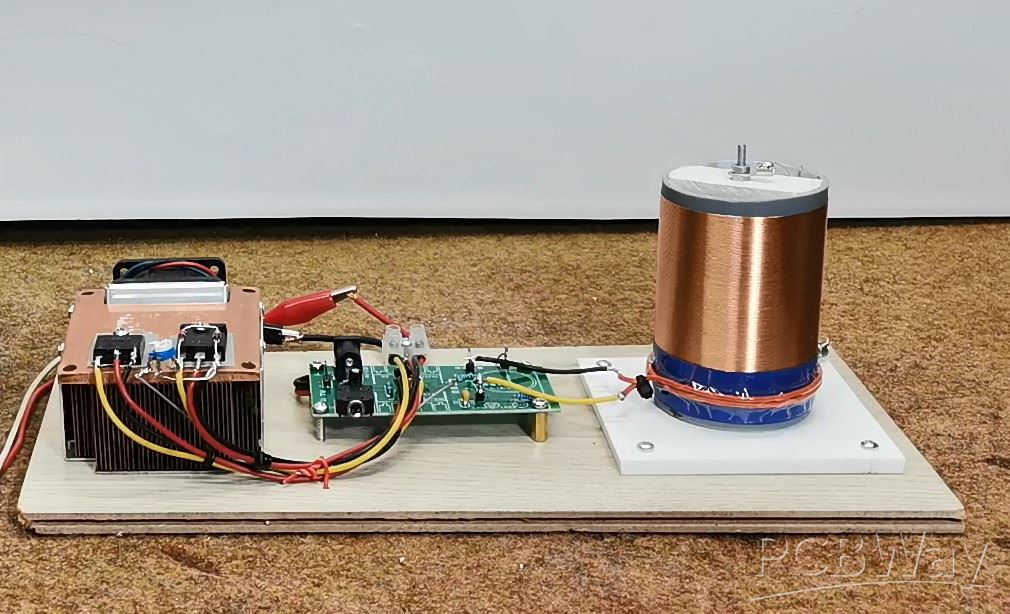
One mosfet drives the primary coil, actually the transformer itself, and the other mosfet is a modulator and modulates the supply voltage with a "Rife" frequency. Otherwise, this is the simplest practical way of modulation. The mosfets are mounted on a massive heatsink for better heat dissipation. Since this is a test sample, I am using a laboratory power supply with a voltage of 24V and a constant current of 1.5A, in order to protect the mosfets. Now let's first perform measurements and look at the characteristics of the driver (tesla coil) without a connected plasma tube. Since I do not own a classic spectrum analyzer, as usual I will use my SDR radio SDRPlay for this purpose, together with the accompanying software SDRuno. Through small antenna I will receive the signal emitted by the Tesla transformer, and then I will analyze it in the software. As a source of Rife frequencies, we can use various commercial or non-commercial devices, and in this particular case I use the excellent Frex16 software which is free and you can find it on the Spectrotek website.
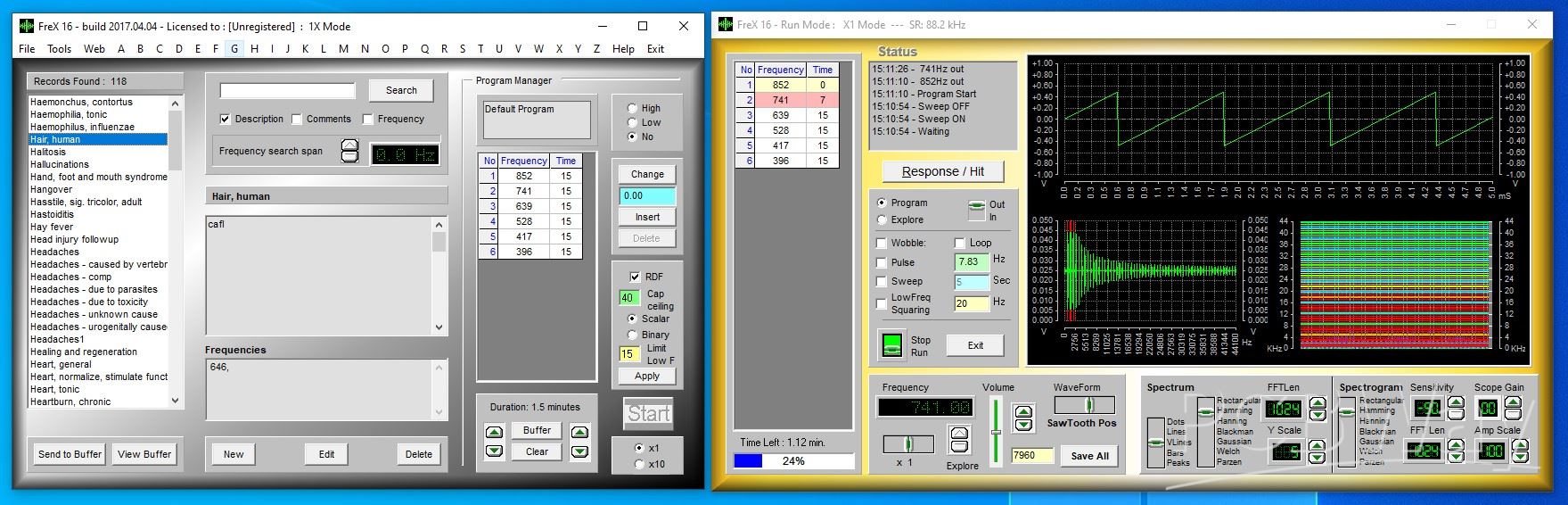
This software also contains a database of many ready-made frequency sequences for treating various diseases.
Of course, you can also use the Arduino device for which you can find a detailed description of the construction in one of my previous videos.
First we start the Tesla coil and adjust the small trimmer potentiometer to a position where the device draws a current of several hundred milliamperes. This adjustment is made only when first turned on. Regarding the making of the secondary coil, according to the calculations that I performed on online calculators, the frequency it radiates should be around 3.1 MHz. If we look at the spectrum analyzer, we see that the frequency is very close to 3.1 MHz.
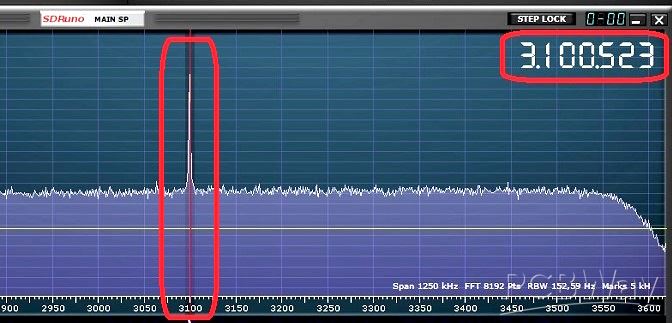
Much more important is the fact that the signal is crystal clear, covers a small range, and there are no parasitic oscillations around it at all, which was not the case with previous versions made with a HV transformer. Also, now the range of radiation (power) is much larger. We can notice that if we bring an object closer to the Tesla transformer, the oscillation frequency will change, in fact it will decrease.
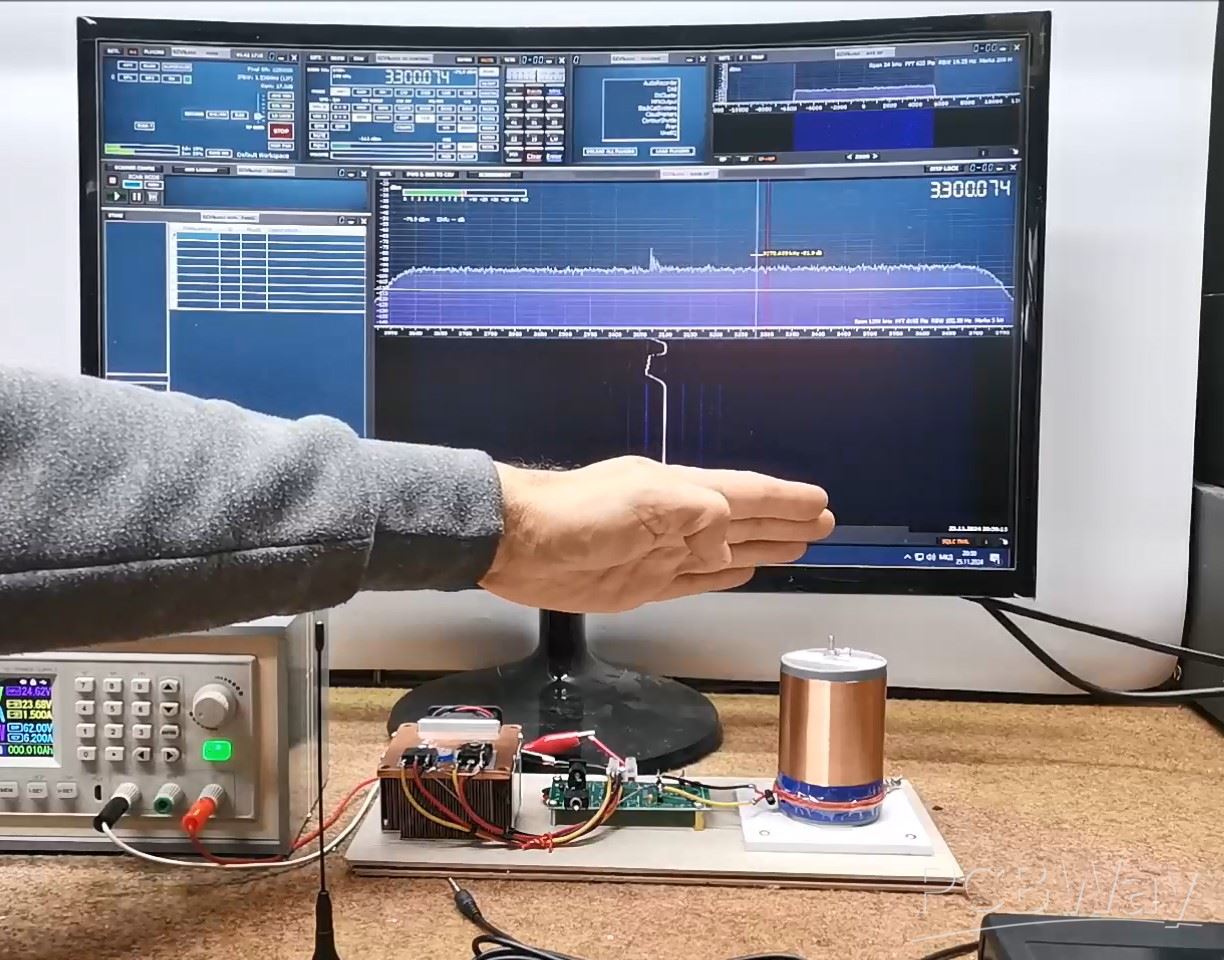
The reason for this is the increase in the capacitance of the secondary coil under the influence of the approaching object. As we will see later, the same thing will happen when we connect the plasma tube. Therefore, when designing a final product, we should take this fact into account, and calculate a proportionally higher oscillation frequency in the "empty from" state, so that when we connect the plasma tube the frequency is exactly 3.1 MHz. This is achieved by reducing the number of turns on the secondary, so that we can relatively easily perform it experimentally.
Now I will bring different frequencies from the Frex program to the modulation input of the Tesla coil and we will observe the modulated output signal for different input frequencies.
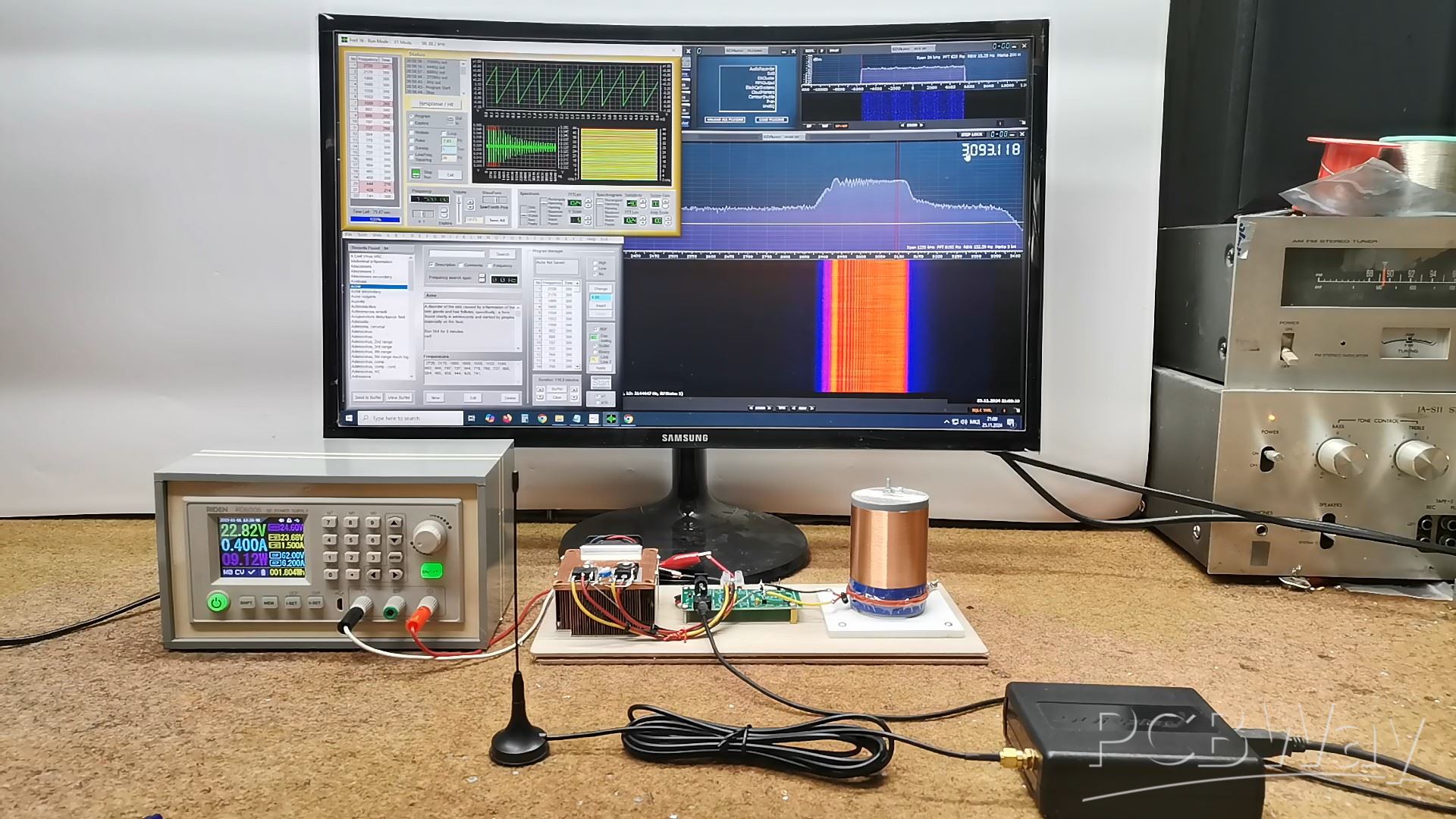
This is actually the most interesting part, the modulated final signal that is radiated into the environment is incredibly homogeneous and clean. I can also clearly see its harmonics, which are also located exactly where predicted according to the calculations (2f,4f... for even, as well as 3f,5f for odd harmonics).
Now let's try the same thing but with a Plasma tube connected. In this case I set the carrier frequency at 3.7MHz, because when I Activate the Plasma tube with modulation signal, the carrier frequency will be exactly 3.1 MHz.
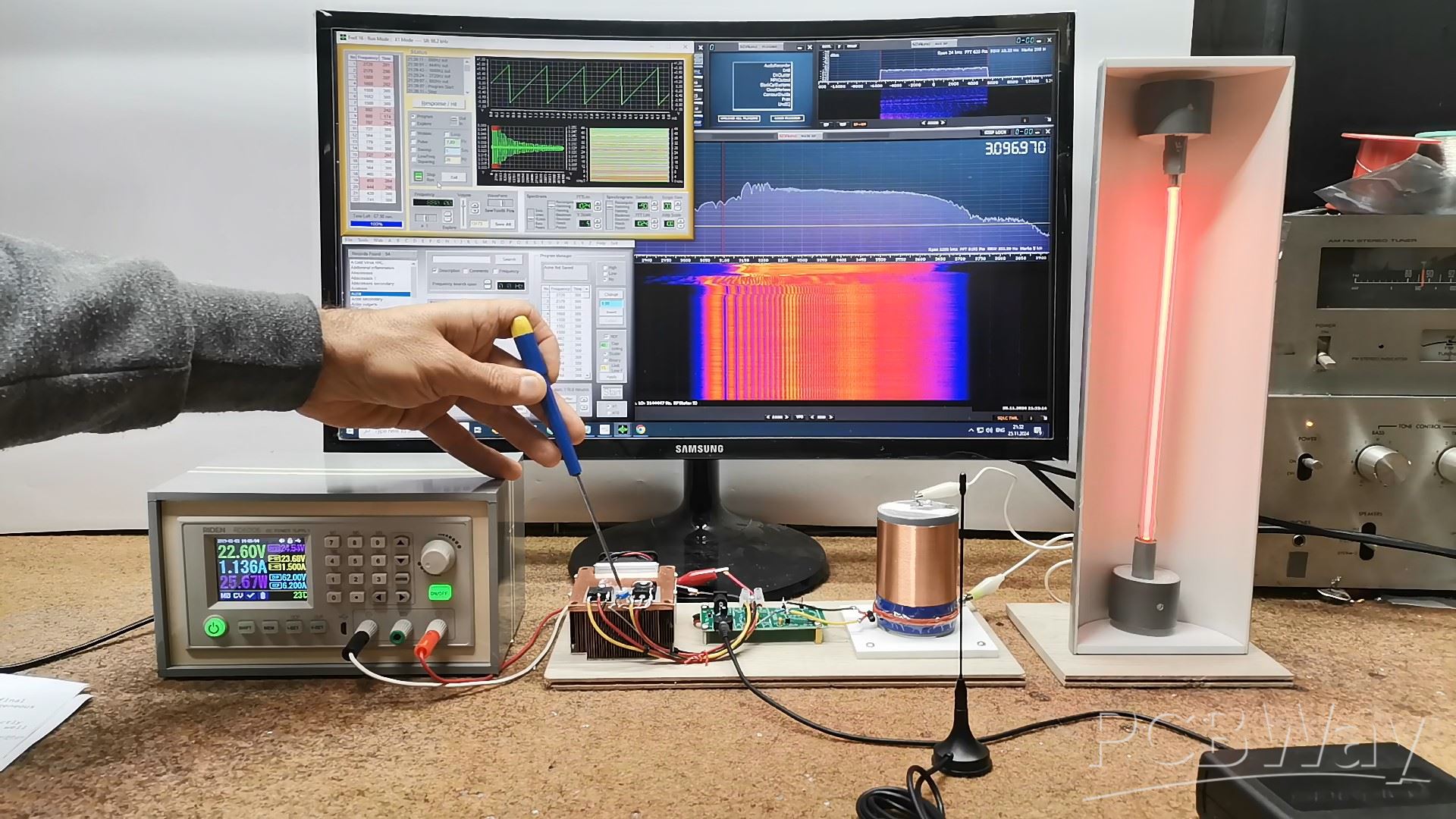
As for the plasma tube itself, mine is filled with argon gas. I mounted it on this half-cylinder support primarily for mechanical protection but also for a better visual effect. If we place aluminum foil on the inside, then the tube will radiate only on the front side.
I just want to point out that my personal subjective opinion about the effect of this device on health is completely negative, and I think that this device "heals" just as much as an ordinary CFL bulb, but everyone has the right to believe or not believe in something. Only the hazy red plasma can have a Placebo effect on the patient, which is not a negligible effect after all. I am exclusively interested in the technical side, especially due to the fact that these machines are advertised as miraculous and based on that are sold at unrealistically high prices, and all of this is ultimately reflected in the patients who pay huge sums for such treatment. With this series, I would like to make it a little clearer to people that this is a relatively simple electronic device that any slightly more experienced electronics technician could make.
And finally, a short conclusion. First of all I want to tell you that this is the most advanced version so far, and is based on original Rife project, but with modern semiconductors. As for the components used, and the circuit diagram, this is the simplest version of the Plasma Rife machine. However, for the making a stable Tesla coil, at least some basic experience in this area is required, as well as the use of laboratory power supplies with a constant voltage and constant current option, which will "save" a lot of Mosfets during the manufacture. On the other hand, the signal generated by this version of the Plasma Rife machine is incredibly clean and stable and can be compared with any commercial device, which by the way costs several thousand dollars.
DIY Tesla Coil based Plasma Rife Machine


Raspberry Pi 5 7 Inch Touch Screen IPS 1024x600 HD LCD HDMI-compatible Display for RPI 4B 3B+ OPI 5 AIDA64 PC Secondary Screen(Without Speaker)
BUY NOW


- Comments(0)
- Likes(0)
More by Mirko Pavleski
-
 Arduino 3D Printed self Balancing Cube
Self-balancing devices are electronic devices that use sensors and motors to keep themselves balanc...
Arduino 3D Printed self Balancing Cube
Self-balancing devices are electronic devices that use sensors and motors to keep themselves balanc...
-
 Bass Reflex vs Sealed vs Horn – Same 2 inch Speaker Test
In one of the previous videos I presented the making of a miniature Horn type speaker box with a 2 ...
Bass Reflex vs Sealed vs Horn – Same 2 inch Speaker Test
In one of the previous videos I presented the making of a miniature Horn type speaker box with a 2 ...
-
 Building a Mini Fostex Horn Speaker with a 2-Inch Full-Range Driver
A back-loaded horn speaker is a loudspeaker design that channels the rear sound wave of a driver th...
Building a Mini Fostex Horn Speaker with a 2-Inch Full-Range Driver
A back-loaded horn speaker is a loudspeaker design that channels the rear sound wave of a driver th...
-
 ESP32 Moon Lamp That Shows the Real Moon Phase on Crowpanel Round Dispaly
Recently on the Hackaday portal I came across a very interesting project called Moon Display by aut...
ESP32 Moon Lamp That Shows the Real Moon Phase on Crowpanel Round Dispaly
Recently on the Hackaday portal I came across a very interesting project called Moon Display by aut...
-
 40-Year-Old DIY Power Amplifiers – Do They Still Work - 500W MOSFET & Transistor Amps
This time I want to describe my two DIY super powerful audio amplifiers that I made about 40 years ...
40-Year-Old DIY Power Amplifiers – Do They Still Work - 500W MOSFET & Transistor Amps
This time I want to describe my two DIY super powerful audio amplifiers that I made about 40 years ...
-
 Wi-Fi HaLow Explained! Long-Range Camera Test up to 300m (ESP32 + ThinkNode G4 from ELECROW)
I recently needed to install a security camera at a relatively large distance from my home, more pre...
Wi-Fi HaLow Explained! Long-Range Camera Test up to 300m (ESP32 + ThinkNode G4 from ELECROW)
I recently needed to install a security camera at a relatively large distance from my home, more pre...
-
 Simple Object Recognition with the UNIHIKER K10 – No TensorFlow, No Internet, No Cloud AI
Object recognition has become one of the most popular applications of artificial intelligence and em...
Simple Object Recognition with the UNIHIKER K10 – No TensorFlow, No Internet, No Cloud AI
Object recognition has become one of the most popular applications of artificial intelligence and em...
-
 DIY PCL82 Tube Amplifier, Single-Ended Amp with Amazing Sound
The idea for this project came from a local electronics magazine called EMITER, issue 12/13 from 20...
DIY PCL82 Tube Amplifier, Single-Ended Amp with Amazing Sound
The idea for this project came from a local electronics magazine called EMITER, issue 12/13 from 20...
-
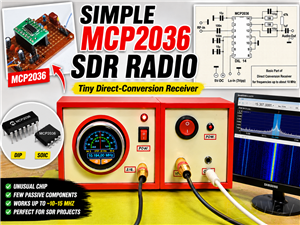 Simple MCP2036 SDR Radio - The Most Unusual Software Defined Radio
SDR (Software Defined Radio) is a radio communication system where many of the key electronic compo...
Simple MCP2036 SDR Radio - The Most Unusual Software Defined Radio
SDR (Software Defined Radio) is a radio communication system where many of the key electronic compo...
-
 Elecrow All-in-One Arduino Starter Kit Review - 20 Projects & 16 Modules
This time I will describe a simple and practical way to enter the world of microcontrollers, specif...
Elecrow All-in-One Arduino Starter Kit Review - 20 Projects & 16 Modules
This time I will describe a simple and practical way to enter the world of microcontrollers, specif...
-
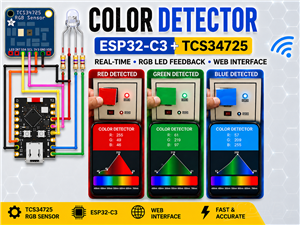 ESP32-C3 Color Detector with TCS34725, Real-Time RGB Detection & Web Interface
Color detection is a fundamental task in many embedded systems – from industrial sorting machines t...
ESP32-C3 Color Detector with TCS34725, Real-Time RGB Detection & Web Interface
Color detection is a fundamental task in many embedded systems – from industrial sorting machines t...
-
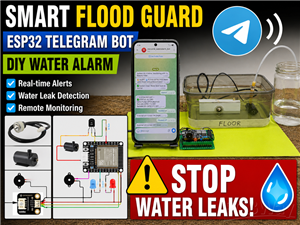 DIY ESP32 Telegram Flood Protection System - Smart Home Automation
Recently I had an unpleasant experience in my home, specifically my ground floor was flooded as a r...
DIY ESP32 Telegram Flood Protection System - Smart Home Automation
Recently I had an unpleasant experience in my home, specifically my ground floor was flooded as a r...
-
 Real-Time Air Traffic Radar using ESP32 + ADS-B Data
ADS-B, which stands for Automatic Dependent Surveillance-Broadcast, is the modern standard for trac...
Real-Time Air Traffic Radar using ESP32 + ADS-B Data
ADS-B, which stands for Automatic Dependent Surveillance-Broadcast, is the modern standard for trac...
-
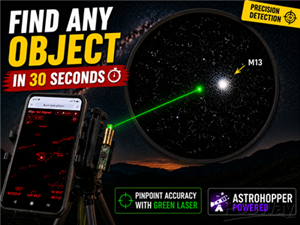 DIY Green Laser Night Sky Object Finder - Find Stars & Galaxies Instantly with great accuracy
As an amateur astronomer, especially at the beginning, the most difficult part of observing the nig...
DIY Green Laser Night Sky Object Finder - Find Stars & Galaxies Instantly with great accuracy
As an amateur astronomer, especially at the beginning, the most difficult part of observing the nig...
-
 DIY Avionics Simulator with ESP32 - Artificial Horizon, Compass & Altimeter
The inspiration for this project comes from classical aircraft cockpit instruments used for navigat...
DIY Avionics Simulator with ESP32 - Artificial Horizon, Compass & Altimeter
The inspiration for this project comes from classical aircraft cockpit instruments used for navigat...
-
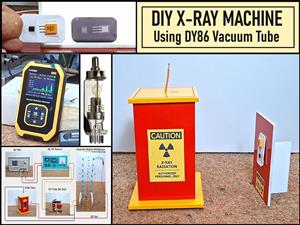 DIY Miniature X-Ray Machine using a TV Vacuum Tube DY86
An X-ray machine (or radiograph) is a quick, painless medical test that produces images of the struc...
DIY Miniature X-Ray Machine using a TV Vacuum Tube DY86
An X-ray machine (or radiograph) is a quick, painless medical test that produces images of the struc...
-
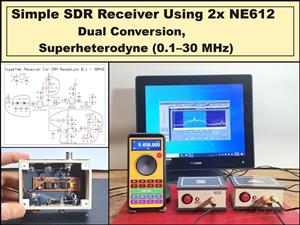 Simple SDR Receiver Using 2x NE612 - Dual Conversion, Superheterodyne (0.1–30 MHz)
SDR (Software Defined Radio) is a radio system in which most of the functions of a classic radio (f...
Simple SDR Receiver Using 2x NE612 - Dual Conversion, Superheterodyne (0.1–30 MHz)
SDR (Software Defined Radio) is a radio system in which most of the functions of a classic radio (f...
-
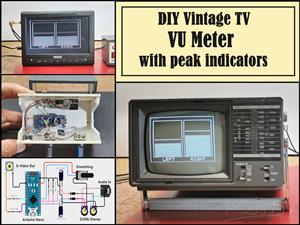 DIY Vintage TV VU Meter with peak indicators
Some time ago in one of my projects I presented you a way to turn a black and white old mini TV int...
DIY Vintage TV VU Meter with peak indicators
Some time ago in one of my projects I presented you a way to turn a black and white old mini TV int...
-
SmallOLED - Live PC Stats, Animated Clocks & Audio Visualizer
733 0 3 -
"Talking Multimeter": Arduino-Based Speech Add-on for Multimeters with SCPI Protocol
418 0 1 -
Programmable Mist Maker - XIAO / QT PY Extension
2863 2 3 -
RadioHAT - Raspberry Pi radio development platform
2454 0 4 -
-
-
-
ARPS-2 – Arduino-Compatible Robot Project Shield for Arduino UNO
4537 0 6