

|
|
Small music Tesla Coil with Bluetooth |
x 1 | |
|
|
Arduino Nano R3 |
x 1 | |
|
|
3.5mm Slim Stereo Plug to 3.5mm Slim Stereo Jack |
x 1 |

|
Soldering Iron Kit |
|

|
arduino IDEArduino
|
Short review of small music Tesla Coil with Bluetooth
A Solid State Tesla Coil (SSTC) is a type of Tesla coil that uses solid-state electronic components to generate high-voltage, high-frequency alternating current electricity. The use of modern semiconducting elements makes it possible to make such miniature and efficient devices. In this video I will present you a miniature Tesla Coil that can be purchased online for a price of several tens of dollars. The shipment contains a Tesla Coil module, a 48V/2A switching power supply, a needle through which the spark exits, as well as two tines and metal tweezers for presentation.
First, about the physical dimensions of the device. They are 9 by 9 by 3 centimeters and in that space all the electronics are placed together with the aluminum cooler. Even at first glance, it is noticeable that the device is solidly made. The case is made of transparent plexiglass, so we can look inside without disassembling it. On the main PCB the several component assemblies can be easily seen.
The driver part is composed of several powerful SMD mosfets (two irfp and one irfp) which are mounted on a relatively massive aluminum heatsink.

The other part represents an interrupter plus an audio modulator consisting of two NE555 integrated circuits, then an LM339 comparator, and XL7005 Buck-Step down converter

And this is a Bluetooth audio receiver for wireless, as well as an input audio jack for wired audio communication.

On either side of the power jack are two large electrolytic capacitors that provide enough power during short bursts of power.

On the front there are two potentiometers, one for intensity and the other for controlling the frequency of the interrupter, and a switch for selecting standard and audio input mode of operation.

The so-called Pancake coil is visible on the top side, and it is the most innovative and interesting part of this Tesla Coil.

It actually represents a PCB spiral coil with about 150 windings and its calculated resonant frequency is 10MHz. The primary is located on the underside of the PCB and contains one wider winding.
Now let's see how the device works in real conditions
The spark is accompanied by a very loud sound that complements the excellent visual effect. The power is controlled with the left potentiometer, and the discharge frequency with the right. We can place different shapes on the needle to get interesting visual effects. Here's what discharge looks like through a thin circular disc.

Next let's test the plasma sound option, noting that for proper functioning, we need to bring a so-called rectangular music signal to the input. For this purpose I made a very simple Arduino project that actually generates a melody with this type of signal.

This time we will not dwell on the Arduino project, and the code and scheme are given below in the project.
The sound is intense and clear followed by a scattered spark that changes shape depending on the frequency of the audio signal. We can demonstrate the same thing with a smartphone, for which we first need to pair the Tesla coil bluetooth module with the phone.
The following are some pictures of the operation of this device


And finally a short conclusion:
Despite the low price for this type of device, the test results are surprisingly good. Consumption is relatively low, the device is adapted for long-term operation, the length of the spark in interrupter mode is almost ten centimeters, and in music mode, regardless of whether via an AUX cable or Bluetooth mode, it works flawlessly, noting that the source music signal should have a rectangular shape. The beautiful visual effect is accompanied by an intense clear sound that even more increases the overall impression.
SAFETY NOTE: Please do not attempt to recreate the experiments shown on this video unless you are familiar with High Voltage Safety Techniques! Direct Current even above 60V maybe lethal, even when the AC supply voltage has been disconnected due to the stored energy in the capacitors. I have no responsibility on any hazards caused by the circuit.
Let me mention that I bought the device mentioned above with my own funds and the manufacturer has no influence on this review. This represents my personal opinion based on my previous experience in making such devices

// -------------------------------------------------
// Copyright (c) 2022 HiBit <https://www.hibit.dev>
// -------------------------------------------------

#include "pitches.h"

#define BUZZER_PIN 9

int melody[] = {
  NOTE_E5, NOTE_E5, REST, NOTE_E5, REST, NOTE_C5, NOTE_E5,
  NOTE_G5, REST, NOTE_G4, REST,
  NOTE_C5, NOTE_G4, REST, NOTE_E4,
  NOTE_A4, NOTE_B4, NOTE_AS4, NOTE_A4,
  NOTE_G4, NOTE_E5, NOTE_G5, NOTE_A5, NOTE_F5, NOTE_G5,
  REST, NOTE_E5,NOTE_C5, NOTE_D5, NOTE_B4,
  NOTE_C5, NOTE_G4, REST, NOTE_E4,
  NOTE_A4, NOTE_B4, NOTE_AS4, NOTE_A4,
  NOTE_G4, NOTE_E5, NOTE_G5, NOTE_A5, NOTE_F5, NOTE_G5,
  REST, NOTE_E5,NOTE_C5, NOTE_D5, NOTE_B4,

  REST, NOTE_G5, NOTE_FS5, NOTE_F5, NOTE_DS5, NOTE_E5,
  REST, NOTE_GS4, NOTE_A4, NOTE_C4, REST, NOTE_A4, NOTE_C5, NOTE_D5,
  REST, NOTE_DS5, REST, NOTE_D5,
  NOTE_C5, REST,

  REST, NOTE_G5, NOTE_FS5, NOTE_F5, NOTE_DS5, NOTE_E5,
  REST, NOTE_GS4, NOTE_A4, NOTE_C4, REST, NOTE_A4, NOTE_C5, NOTE_D5,
  REST, NOTE_DS5, REST, NOTE_D5,
  NOTE_C5, REST,

  NOTE_C5, NOTE_C5, NOTE_C5, REST, NOTE_C5, NOTE_D5,
  NOTE_E5, NOTE_C5, NOTE_A4, NOTE_G4,

  NOTE_C5, NOTE_C5, NOTE_C5, REST, NOTE_C5, NOTE_D5, NOTE_E5,
  REST,
  NOTE_C5, NOTE_C5, NOTE_C5, REST, NOTE_C5, NOTE_D5,
  NOTE_E5, NOTE_C5, NOTE_A4, NOTE_G4,
  NOTE_E5, NOTE_E5, REST, NOTE_E5, REST, NOTE_C5, NOTE_E5,
  NOTE_G5, REST, NOTE_G4, REST,
  NOTE_C5, NOTE_G4, REST, NOTE_E4,

  NOTE_A4, NOTE_B4, NOTE_AS4, NOTE_A4,
  NOTE_G4, NOTE_E5, NOTE_G5, NOTE_A5, NOTE_F5, NOTE_G5,
  REST, NOTE_E5, NOTE_C5, NOTE_D5, NOTE_B4,

  NOTE_C5, NOTE_G4, REST, NOTE_E4,
  NOTE_A4, NOTE_B4, NOTE_AS4, NOTE_A4,
  NOTE_G4, NOTE_E5, NOTE_G5, NOTE_A5, NOTE_F5, NOTE_G5,
  REST, NOTE_E5, NOTE_C5, NOTE_D5, NOTE_B4,

  NOTE_E5, NOTE_C5, NOTE_G4, REST, NOTE_GS4,
  NOTE_A4, NOTE_F5, NOTE_F5, NOTE_A4,
  NOTE_D5, NOTE_A5, NOTE_A5, NOTE_A5, NOTE_G5, NOTE_F5,

  NOTE_E5, NOTE_C5, NOTE_A4, NOTE_G4,
  NOTE_E5, NOTE_C5, NOTE_G4, REST, NOTE_GS4,
  NOTE_A4, NOTE_F5, NOTE_F5, NOTE_A4,
  NOTE_B4, NOTE_F5, NOTE_F5, NOTE_F5, NOTE_E5, NOTE_D5,
  NOTE_C5, NOTE_E4, NOTE_E4, NOTE_C4,

  NOTE_E5, NOTE_C5, NOTE_G4, REST, NOTE_GS4,
  NOTE_A4, NOTE_F5, NOTE_F5, NOTE_A4,
  NOTE_D5, NOTE_A5, NOTE_A5, NOTE_A5, NOTE_G5, NOTE_F5,

  NOTE_E5, NOTE_C5, NOTE_A4, NOTE_G4,
  NOTE_E5, NOTE_C5, NOTE_G4, REST, NOTE_GS4,
  NOTE_A4, NOTE_F5, NOTE_F5, NOTE_A4,
  NOTE_B4, NOTE_F5, NOTE_F5, NOTE_F5, NOTE_E5, NOTE_D5,
  NOTE_C5, NOTE_E4, NOTE_E4, NOTE_C4,
  NOTE_C5, NOTE_C5, NOTE_C5, REST, NOTE_C5, NOTE_D5, NOTE_E5,
  REST,

  NOTE_C5, NOTE_C5, NOTE_C5, REST, NOTE_C5, NOTE_D5,
  NOTE_E5, NOTE_C5, NOTE_A4, NOTE_G4,
  NOTE_E5, NOTE_E5, REST, NOTE_E5, REST, NOTE_C5, NOTE_E5,
  NOTE_G5, REST, NOTE_G4, REST,
  NOTE_E5, NOTE_C5, NOTE_G4, REST, NOTE_GS4,
  NOTE_A4, NOTE_F5, NOTE_F5, NOTE_A4,
  NOTE_D5, NOTE_A5, NOTE_A5, NOTE_A5, NOTE_G5, NOTE_F5,

  NOTE_E5, NOTE_C5, NOTE_A4, NOTE_G4,
  NOTE_E5, NOTE_C5, NOTE_G4, REST, NOTE_GS4,
  NOTE_A4, NOTE_F5, NOTE_F5, NOTE_A4,
  NOTE_B4, NOTE_F5, NOTE_F5, NOTE_F5, NOTE_E5, NOTE_D5,
  NOTE_C5, NOTE_E4, NOTE_E4, NOTE_C4,

  // Game over sound
  NOTE_C5, NOTE_G4, NOTE_E4,
  NOTE_A4, NOTE_B4, NOTE_A4, NOTE_GS4, NOTE_AS4, NOTE_GS4,
  NOTE_G4, NOTE_D4, NOTE_E4
};

int durations[] = {
  8, 8, 8, 8, 8, 8, 8,
  4, 4, 8, 4,
  4, 8, 4, 4,
  4, 4, 8, 4,
  8, 8, 8, 4, 8, 8,
  8, 4,8, 8, 4,
  4, 8, 4, 4,
  4, 4, 8, 4,
  8, 8, 8, 4, 8, 8,
  8, 4,8, 8, 4,


  4, 8, 8, 8, 4, 8,
  8, 8, 8, 8, 8, 8, 8, 8,
  4, 4, 8, 4,
  2, 2,

  4, 8, 8, 8, 4, 8,
  8, 8, 8, 8, 8, 8, 8, 8,
  4, 4, 8, 4,
  2, 2,

  8, 4, 8, 8, 8, 4,
  8, 4, 8, 2,

  8, 4, 8, 8, 8, 8, 8,
  1,
  8, 4, 8, 8, 8, 4,
  8, 4, 8, 2,
  8, 8, 8, 8, 8, 8, 4,
  4, 4, 4, 4,
  4, 8, 4, 4,

  4, 4, 8, 4,
  8, 8, 8, 4, 8, 8,
  8, 4, 8, 8, 4,

  4, 8, 4, 4,
  4, 4, 8, 4,
  8, 8, 8, 4, 8, 8,
  8, 4, 8, 8, 4,

  8, 4, 8, 4, 4,
  8, 4, 8, 2,
  8, 8, 8, 8, 8, 8,

  8, 4, 8, 2,
  8, 4, 8, 4, 4,
  8, 4, 8, 2,
  8, 4, 8, 8, 8, 8,
  8, 4, 8, 2,

  8, 4, 8, 4, 4,
  8, 4, 8, 2,
  8, 8, 8, 8, 8, 8,

  8, 4, 8, 2,
  8, 4, 8, 4, 4,
  8, 4, 8, 2,
  8, 4, 8, 8, 8, 8,
  8, 4, 8, 2,
  8, 4, 8, 8, 8, 8, 8,
  1,

  8, 4, 8, 8, 8, 4,
  8, 4, 8, 2,
  8, 8, 8, 8, 8, 8, 4,
  4, 4, 4, 4,
  8, 4, 8, 4, 4,
  8, 4, 8, 2,
  8, 8, 8, 8, 8, 8,

  8, 4, 8, 2,
  8, 4, 8, 4, 4,
  8, 4, 8, 2,
  8, 4, 8, 8, 8, 8,
  8, 4, 8, 2,

  //game over sound
  4, 4, 4,
  8, 8, 8, 8, 8, 8,
  8, 8, 2
};

void setup()
{
  pinMode(BUZZER_PIN, OUTPUT);
}

void loop()
{
  int size = sizeof(durations) / sizeof(int);

  for (int note = 0; note < size; note++) {
    //to calculate the note duration, take one second divided by the note type.
    //e.g. quarter note = 1000 / 4, eighth note = 1000/8, etc.
    int duration = 1000 / durations[note];
    tone(BUZZER_PIN, melody[note], duration);

    //to distinguish the notes, set a minimum time between them.
    //the note's duration + 30% seems to work well:
    int pauseBetweenNotes = duration * 1.30;
    delay(pauseBetweenNotes);

    //stop the tone playing:
    noTone(BUZZER_PIN);
  }
}
Short review of small music Tesla Coil with Bluetooth


Raspberry Pi 5 7 Inch Touch Screen IPS 1024x600 HD LCD HDMI-compatible Display for RPI 4B 3B+ OPI 5 AIDA64 PC Secondary Screen(Without Speaker)
BUY NOW


- Comments(0)
- Likes(1)
More by Mirko Pavleski
-
 Arduino 3D Printed self Balancing Cube
Self-balancing devices are electronic devices that use sensors and motors to keep themselves balanc...
Arduino 3D Printed self Balancing Cube
Self-balancing devices are electronic devices that use sensors and motors to keep themselves balanc...
-
 Building a Mini Fostex Horn Speaker with a 2-Inch Full-Range Driver
A back-loaded horn speaker is a loudspeaker design that channels the rear sound wave of a driver th...
Building a Mini Fostex Horn Speaker with a 2-Inch Full-Range Driver
A back-loaded horn speaker is a loudspeaker design that channels the rear sound wave of a driver th...
-
 ESP32 Moon Lamp That Shows the Real Moon Phase on Crowpanel Round Dispaly
Recently on the Hackaday portal I came across a very interesting project called Moon Display by aut...
ESP32 Moon Lamp That Shows the Real Moon Phase on Crowpanel Round Dispaly
Recently on the Hackaday portal I came across a very interesting project called Moon Display by aut...
-
 40-Year-Old DIY Power Amplifiers – Do They Still Work - 500W MOSFET & Transistor Amps
This time I want to describe my two DIY super powerful audio amplifiers that I made about 40 years ...
40-Year-Old DIY Power Amplifiers – Do They Still Work - 500W MOSFET & Transistor Amps
This time I want to describe my two DIY super powerful audio amplifiers that I made about 40 years ...
-
 Wi-Fi HaLow Explained! Long-Range Camera Test up to 300m (ESP32 + ThinkNode G4 from ELECROW)
I recently needed to install a security camera at a relatively large distance from my home, more pre...
Wi-Fi HaLow Explained! Long-Range Camera Test up to 300m (ESP32 + ThinkNode G4 from ELECROW)
I recently needed to install a security camera at a relatively large distance from my home, more pre...
-
 Simple Object Recognition with the UNIHIKER K10 – No TensorFlow, No Internet, No Cloud AI
Object recognition has become one of the most popular applications of artificial intelligence and em...
Simple Object Recognition with the UNIHIKER K10 – No TensorFlow, No Internet, No Cloud AI
Object recognition has become one of the most popular applications of artificial intelligence and em...
-
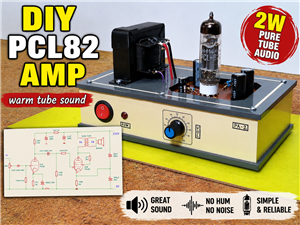 DIY PCL82 Tube Amplifier, Single-Ended Amp with Amazing Sound
The idea for this project came from a local electronics magazine called EMITER, issue 12/13 from 20...
DIY PCL82 Tube Amplifier, Single-Ended Amp with Amazing Sound
The idea for this project came from a local electronics magazine called EMITER, issue 12/13 from 20...
-
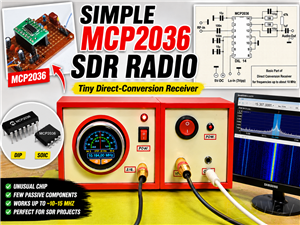 Simple MCP2036 SDR Radio - The Most Unusual Software Defined Radio
SDR (Software Defined Radio) is a radio communication system where many of the key electronic compo...
Simple MCP2036 SDR Radio - The Most Unusual Software Defined Radio
SDR (Software Defined Radio) is a radio communication system where many of the key electronic compo...
-
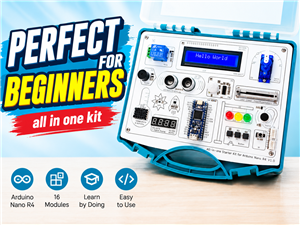 Elecrow All-in-One Arduino Starter Kit Review - 20 Projects & 16 Modules
This time I will describe a simple and practical way to enter the world of microcontrollers, specif...
Elecrow All-in-One Arduino Starter Kit Review - 20 Projects & 16 Modules
This time I will describe a simple and practical way to enter the world of microcontrollers, specif...
-
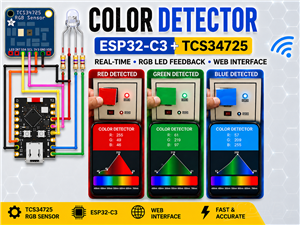 ESP32-C3 Color Detector with TCS34725, Real-Time RGB Detection & Web Interface
Color detection is a fundamental task in many embedded systems – from industrial sorting machines t...
ESP32-C3 Color Detector with TCS34725, Real-Time RGB Detection & Web Interface
Color detection is a fundamental task in many embedded systems – from industrial sorting machines t...
-
 DIY ESP32 Telegram Flood Protection System - Smart Home Automation
Recently I had an unpleasant experience in my home, specifically my ground floor was flooded as a r...
DIY ESP32 Telegram Flood Protection System - Smart Home Automation
Recently I had an unpleasant experience in my home, specifically my ground floor was flooded as a r...
-
 Real-Time Air Traffic Radar using ESP32 + ADS-B Data
ADS-B, which stands for Automatic Dependent Surveillance-Broadcast, is the modern standard for trac...
Real-Time Air Traffic Radar using ESP32 + ADS-B Data
ADS-B, which stands for Automatic Dependent Surveillance-Broadcast, is the modern standard for trac...
-
 DIY Green Laser Night Sky Object Finder - Find Stars & Galaxies Instantly with great accuracy
As an amateur astronomer, especially at the beginning, the most difficult part of observing the nig...
DIY Green Laser Night Sky Object Finder - Find Stars & Galaxies Instantly with great accuracy
As an amateur astronomer, especially at the beginning, the most difficult part of observing the nig...
-
 DIY Avionics Simulator with ESP32 - Artificial Horizon, Compass & Altimeter
The inspiration for this project comes from classical aircraft cockpit instruments used for navigat...
DIY Avionics Simulator with ESP32 - Artificial Horizon, Compass & Altimeter
The inspiration for this project comes from classical aircraft cockpit instruments used for navigat...
-
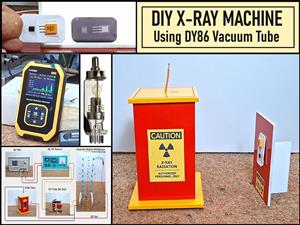 DIY Miniature X-Ray Machine using a TV Vacuum Tube DY86
An X-ray machine (or radiograph) is a quick, painless medical test that produces images of the struc...
DIY Miniature X-Ray Machine using a TV Vacuum Tube DY86
An X-ray machine (or radiograph) is a quick, painless medical test that produces images of the struc...
-
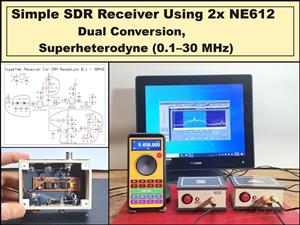 Simple SDR Receiver Using 2x NE612 - Dual Conversion, Superheterodyne (0.1–30 MHz)
SDR (Software Defined Radio) is a radio system in which most of the functions of a classic radio (f...
Simple SDR Receiver Using 2x NE612 - Dual Conversion, Superheterodyne (0.1–30 MHz)
SDR (Software Defined Radio) is a radio system in which most of the functions of a classic radio (f...
-
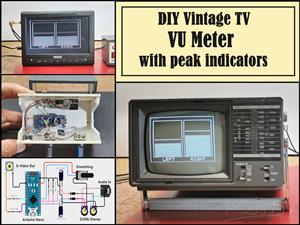 DIY Vintage TV VU Meter with peak indicators
Some time ago in one of my projects I presented you a way to turn a black and white old mini TV int...
DIY Vintage TV VU Meter with peak indicators
Some time ago in one of my projects I presented you a way to turn a black and white old mini TV int...
-
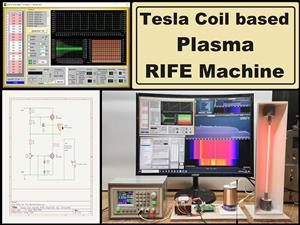 DIY Tesla Coil based Plasma Rife Machine
In several of my previous videos, I presented you with different ways to make a Rife Machine, from ...
DIY Tesla Coil based Plasma Rife Machine
In several of my previous videos, I presented you with different ways to make a Rife Machine, from ...
-
Programmable Mist Maker - XIAO / QT PY Extension
2333 2 2 -
RadioHAT - Raspberry Pi radio development platform
2021 0 4 -
-
-
-
ARPS-2 – Arduino-Compatible Robot Project Shield for Arduino UNO
4180 0 6 -
A Compact Charging Breakout Board For Waveshare ESP32-C3
4943 3 8 -
AI-driven LoRa & LLM-enabled Kiosk & Food Delivery System
5722 2 2 -