|
Soldering Iron Kit |
How to make simple portable PEMF Magnetic Pulser
PEMF (Pulsed Electromagnetic Field Therapy), which is also known as magnetic pulse therapy uses electromagnetic fields that are applied to the body in pulsing patterns to promote healing and overall wellness in the body. These fields are typically low-frequency and mimic the natural electromagnetic fields produced by the body.

PEMF therapy is used in various medical and wellness applications. It is commonly employed for pain management, wound healing, and bone-related disorders. In addition, this type of therapy improves sleep, mental focus, and the body’s overall performance by helping the energy output and regeneration of the body’s cells.
In several of my previous videos, I described different ways to make such devices yourself, because commercial ones are too expensive. After the request of several of my viewers and readers I decided to develop and make this project which is actually a miniature portable magnetic pulser that is powered by a battery and you can take it with you everywhere. And again, not to mention brands, such devices are sold at a price of 100 to 300 dollars and more. Even this device is also more advanced than the commercial ones and is controlled through a Smartphone application. We can set many different frequencies depending on the type of therapy we want to apply.
Basically this is a miniature PEMF device and produces a magnetic field of approximately 1 Gauss.

I should also mention that according to NASA research, fields of 0.5 to 4 Gauss are sufficient for effective therapy. I tried to make the device as simple as possible, so that even those with less experience in this field can make it. That's why I used ready-made modules, which, in addition to excellent functionality, also have an incredibly low price.

The entire device contains only a few components:
- a small DFRObot Bluetooth amplifier module model XY-WRBT
- lithium, or better lithium polymer battery (also you can use miniature power bank connected directly to micro-usb port)
- a small coil that radiates an electromagnetic field
- and a miniature switch to activate the device
First, let me describe the components in more detail:
- This small bluetooth amplifier module is actually the main part that wirelessly receives signals from the smartphone software, amplifies that signal, and sends it to the coil that radiates this signal in the form of an electromagnetic field.

- The module is powered by one lithium or lithium polymer battery, and can be charged with external charger, which is a great option and allows us unlimited inexpensive use of the device. I mention this because commercial devices use a standard, usually 2032 type of lithium battery which, when used up, needs to be replaced with a new one.

- And the coil that radiates the electromagnetic field. It can have a shape that depends on the box or the shape in which the device is created, but most often it is round or rectangular. It is made with thin lacquered copper wire with a diameter of 0.1 mm or thinner and should contain at least 100 turns or more, which is not critical.

I specifically used wire from an old relay and the coil consists of 150 turns. When making this coil, we should pay attention to some recommendations, such as: Its ohmic resistance must not be less than 15 ohms, and that it should contain 100 or more windings. If we use a thicker wire, the resistance will be lower, the field will be stronger, but the battery consumption will be higher, and vice versa. That's why we need to find some compromise between field strength and consumption, so I recommend you to use the coil I made.
First, we need to install some free Signal Generator Application on the smartphone, and I specifically use "Frequency Sound Generator" from "LuxDeLux" wich is free app.

A few words about Smartphone application. All the options are available on the start screen, the frequency is marked in the middle, which we can set using the slider or enter it manually. Let me just mention that the frequency can be set with a huge accuracy of two decimal places, which is a hundredth of a hertz. Then we choose the shape of the signal, which is usually square or sawtooth, and finally the intensity, which we usually set to maximum. We can remember the frequency set in this way with a certain name and call it later depending on the needs. As you can see, I previously set several frequencies for different diseases. You can also use some other free application, such as "Signal Generator" from XYZ-Apps.

Finally let's see how the device works in real conditions. With a long press on the button, the module is activated and the blue LED starts flashing. Now we need to pair the smartphone with this bluetooth module, while the diode lights up constantly.

That completes the setup. Now we activate the application and select the desired frequency for a specific therapy. We press play, and the therapy begins. Next, this compact device can be placed in a pocket or around the neck with a suitable strap. For protection, I practice putting it in this little anti-static bag. However, I leave it to your imagination to come up with some way to make a miniature, light and strong case.
So, the device now should work and we need to find some simple way to test it.
I did it in the simplest way without the use of expensive measuring instruments. We need a small coil with multiple turns, and I'm specifically using a relay coil that has the copper core removed.

The outputs of the coil are connected to a 3.5mm female audio jack, and then via a suitable coaxial cable to the microphone input of the PC. If the pulser is functioning normally, then the generated magnetic field induces voltage pulses in this coil which are heard on the PC speaker. In this simple way we can test other devices of this type.
And finally a short conclusion. This is a miniature, cheap and easy to make portable PEMF Therapy device that you can make yourself for just a few dollars. You don't even have to use the specific items used in this video, but let this idea guide you on how to choose your own bluetooth amplifier module, battery, and coil. There are even similar modules where the battery is charged automatically through the micro USB port, which is a much simpler and more practical option.
If you are considering using this device for health-related purposes, it is crucial to consult a qualified healthcare professional to ensure safety and efficacy.
This video only explains the technical aspect of this device (how to build it) .


How to make simple portable PEMF Magnetic Pulser


Raspberry Pi 5 7 Inch Touch Screen IPS 1024x600 HD LCD HDMI-compatible Display for RPI 4B 3B+ OPI 5 AIDA64 PC Secondary Screen(Without Speaker)
BUY NOW


- Comments(0)
- Likes(1)
More by Mirko Pavleski
-
 Arduino 3D Printed self Balancing Cube
Self-balancing devices are electronic devices that use sensors and motors to keep themselves balanc...
Arduino 3D Printed self Balancing Cube
Self-balancing devices are electronic devices that use sensors and motors to keep themselves balanc...
-
 Building a Mini Fostex Horn Speaker with a 2-Inch Full-Range Driver
A back-loaded horn speaker is a loudspeaker design that channels the rear sound wave of a driver th...
Building a Mini Fostex Horn Speaker with a 2-Inch Full-Range Driver
A back-loaded horn speaker is a loudspeaker design that channels the rear sound wave of a driver th...
-
 ESP32 Moon Lamp That Shows the Real Moon Phase on Crowpanel Round Dispaly
Recently on the Hackaday portal I came across a very interesting project called Moon Display by aut...
ESP32 Moon Lamp That Shows the Real Moon Phase on Crowpanel Round Dispaly
Recently on the Hackaday portal I came across a very interesting project called Moon Display by aut...
-
 40-Year-Old DIY Power Amplifiers – Do They Still Work - 500W MOSFET & Transistor Amps
This time I want to describe my two DIY super powerful audio amplifiers that I made about 40 years ...
40-Year-Old DIY Power Amplifiers – Do They Still Work - 500W MOSFET & Transistor Amps
This time I want to describe my two DIY super powerful audio amplifiers that I made about 40 years ...
-
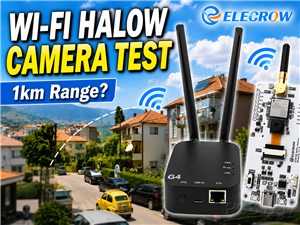 Wi-Fi HaLow Explained! Long-Range Camera Test up to 300m (ESP32 + ThinkNode G4 from ELECROW)
I recently needed to install a security camera at a relatively large distance from my home, more pre...
Wi-Fi HaLow Explained! Long-Range Camera Test up to 300m (ESP32 + ThinkNode G4 from ELECROW)
I recently needed to install a security camera at a relatively large distance from my home, more pre...
-
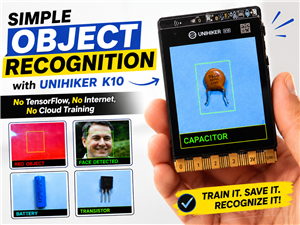 Simple Object Recognition with the UNIHIKER K10 – No TensorFlow, No Internet, No Cloud AI
Object recognition has become one of the most popular applications of artificial intelligence and em...
Simple Object Recognition with the UNIHIKER K10 – No TensorFlow, No Internet, No Cloud AI
Object recognition has become one of the most popular applications of artificial intelligence and em...
-
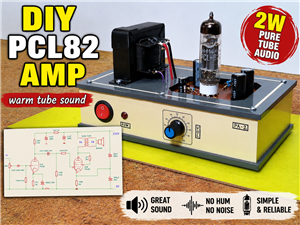 DIY PCL82 Tube Amplifier, Single-Ended Amp with Amazing Sound
The idea for this project came from a local electronics magazine called EMITER, issue 12/13 from 20...
DIY PCL82 Tube Amplifier, Single-Ended Amp with Amazing Sound
The idea for this project came from a local electronics magazine called EMITER, issue 12/13 from 20...
-
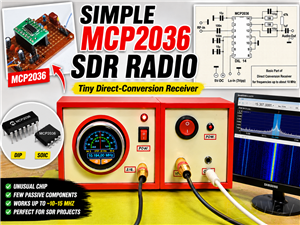 Simple MCP2036 SDR Radio - The Most Unusual Software Defined Radio
SDR (Software Defined Radio) is a radio communication system where many of the key electronic compo...
Simple MCP2036 SDR Radio - The Most Unusual Software Defined Radio
SDR (Software Defined Radio) is a radio communication system where many of the key electronic compo...
-
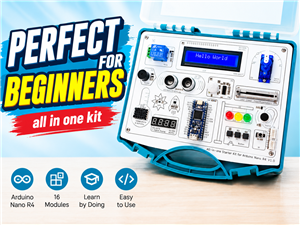 Elecrow All-in-One Arduino Starter Kit Review - 20 Projects & 16 Modules
This time I will describe a simple and practical way to enter the world of microcontrollers, specif...
Elecrow All-in-One Arduino Starter Kit Review - 20 Projects & 16 Modules
This time I will describe a simple and practical way to enter the world of microcontrollers, specif...
-
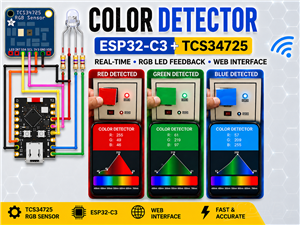 ESP32-C3 Color Detector with TCS34725, Real-Time RGB Detection & Web Interface
Color detection is a fundamental task in many embedded systems – from industrial sorting machines t...
ESP32-C3 Color Detector with TCS34725, Real-Time RGB Detection & Web Interface
Color detection is a fundamental task in many embedded systems – from industrial sorting machines t...
-
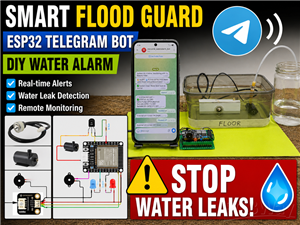 DIY ESP32 Telegram Flood Protection System - Smart Home Automation
Recently I had an unpleasant experience in my home, specifically my ground floor was flooded as a r...
DIY ESP32 Telegram Flood Protection System - Smart Home Automation
Recently I had an unpleasant experience in my home, specifically my ground floor was flooded as a r...
-
 Real-Time Air Traffic Radar using ESP32 + ADS-B Data
ADS-B, which stands for Automatic Dependent Surveillance-Broadcast, is the modern standard for trac...
Real-Time Air Traffic Radar using ESP32 + ADS-B Data
ADS-B, which stands for Automatic Dependent Surveillance-Broadcast, is the modern standard for trac...
-
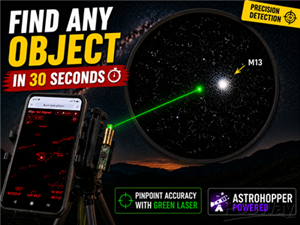 DIY Green Laser Night Sky Object Finder - Find Stars & Galaxies Instantly with great accuracy
As an amateur astronomer, especially at the beginning, the most difficult part of observing the nig...
DIY Green Laser Night Sky Object Finder - Find Stars & Galaxies Instantly with great accuracy
As an amateur astronomer, especially at the beginning, the most difficult part of observing the nig...
-
 DIY Avionics Simulator with ESP32 - Artificial Horizon, Compass & Altimeter
The inspiration for this project comes from classical aircraft cockpit instruments used for navigat...
DIY Avionics Simulator with ESP32 - Artificial Horizon, Compass & Altimeter
The inspiration for this project comes from classical aircraft cockpit instruments used for navigat...
-
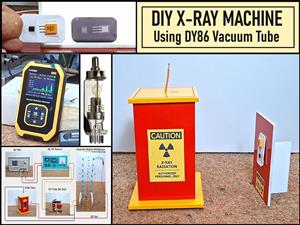 DIY Miniature X-Ray Machine using a TV Vacuum Tube DY86
An X-ray machine (or radiograph) is a quick, painless medical test that produces images of the struc...
DIY Miniature X-Ray Machine using a TV Vacuum Tube DY86
An X-ray machine (or radiograph) is a quick, painless medical test that produces images of the struc...
-
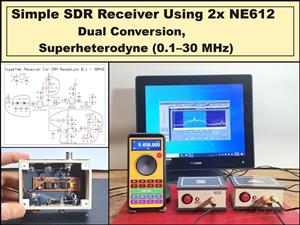 Simple SDR Receiver Using 2x NE612 - Dual Conversion, Superheterodyne (0.1–30 MHz)
SDR (Software Defined Radio) is a radio system in which most of the functions of a classic radio (f...
Simple SDR Receiver Using 2x NE612 - Dual Conversion, Superheterodyne (0.1–30 MHz)
SDR (Software Defined Radio) is a radio system in which most of the functions of a classic radio (f...
-
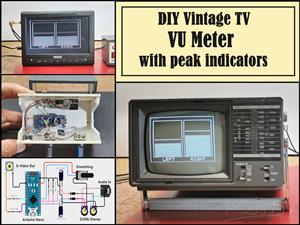 DIY Vintage TV VU Meter with peak indicators
Some time ago in one of my projects I presented you a way to turn a black and white old mini TV int...
DIY Vintage TV VU Meter with peak indicators
Some time ago in one of my projects I presented you a way to turn a black and white old mini TV int...
-
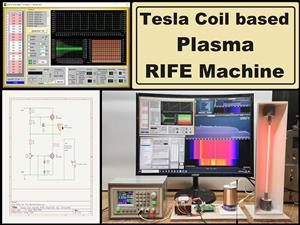 DIY Tesla Coil based Plasma Rife Machine
In several of my previous videos, I presented you with different ways to make a Rife Machine, from ...
DIY Tesla Coil based Plasma Rife Machine
In several of my previous videos, I presented you with different ways to make a Rife Machine, from ...
-
Programmable Mist Maker - XIAO / QT PY Extension
2374 2 2 -
RadioHAT - Raspberry Pi radio development platform
2056 0 4 -
-
-
-
ARPS-2 – Arduino-Compatible Robot Project Shield for Arduino UNO
4210 0 6 -
A Compact Charging Breakout Board For Waveshare ESP32-C3
4984 3 8 -
AI-driven LoRa & LLM-enabled Kiosk & Food Delivery System
5751 2 2 -