|
|
ZK-PP1K PWM generator |
x 1 | |
|
|
MOSFET Switch Driver Module |
x 4 | |
|
|
LEDGeneric
|
x 4 | |
|
|
Through Hole Resistor, 6.8 kohm |
x 4 | |
|
|
Coil |
x 4 | |
|
|
power supply 12V/10A |
x 1 | |
|
|
Rotary potentiometer |
x 1 |

|
Soldering Iron Kit |
How to make Multichannel PEMF Therapy device for PEMF Bed
PEMF therapy, or Pulsed Electromagnetic Field therapy, is a type of therapy that uses electromagnetic fields to promote health and well-being. PEMF therapy is based on the idea that electromagnetic fields can influence the cells and tissues in our bodies. Exposure to these pulsating fields can stimulate cellular activity, improve circulation, reduce inflammation, enhance tissue repair, and support overall healing processes. This therapy has been used for various purposes, including
- pain management,
- promoting bone healing,
- improving sleep quality,
- reducing inflammation,
- enhancing wound healing,
- reducing the effects of stress,
- Improving blood oxygenation, and much more.

In several of my previous videos, which you can view in the given Playlist , are described several simple ways of making such devices.
This time I will describe a simple way to make a multi-channel PEMF device that is used to make a special therapeutic bed, or therapeutic chair.
In this case, the coils are placed inside the mattress, usually distributed in three to four different places, so that when we lie down or sit down, the whole body is exposed to magnetic radiation.

The device is very simple to build, and contains components that are easily available online and are also very inexpensive. The electronic part without coils and power supply costs about $10 total. I used ready-made modules for construction, so it can be made relatively easily by builders who do not have extensive knowledge in this area.

The device contains several components
- ZK-PP1K signal generator module,
- High-Power MOSFET Switch Driver Module, one for each channel,
- 4 Coils,
- and power supply 12V / minimum 10A (power supply from PC can be used for this purpose)

The modules are interconnected with a conductor with a diameter of 1.5 mm or more, due to the large current that passes through them, while the diameter of the wire for the pulsating signal that is brought to their inputs is not important. I am using a 12V/4A power supply for this demonstration because I am only connecting one coil at a time. In real conditions, all four channels would be used, and it is cheaper and more practical to use a PC power supply.
At the output of each channel, I placed an LED diode that signals whether the channel is functioning. These diodes can be freely omitted. In the appendix at the end you can see that there are two similar circuits. In one, a potentiometer has been added, which can be used to continuously regulate the flux from zero to maximum. In my practical device, I have omitted the potentiometer for simplicity, and the intensity of the magnetic field can be partially changed by changing the duty cycle in the range of 5 to 30 percent. Otherwise, the standard value of the duty cycle should be around 10 percent.
I would like to suggest a very important note. Namely, very often on my channel I receive requests for advice on how to make a PEMF device that would output a very strong magnetic flux of 200 Gauss and much more. According to NASA's extensive research in this therapeutic method, the best results are obtained at magnetic flux strengths in the range of 0.5 to 4 Gauss. By increasing the strength of the flux, the effect of the therapy remains unchanged. So the rule "stronger magnetic field - stronger therapy" does not apply here. In this device, the magnetic flux strength is between 10 and 20 Gauss per channel, which is more than enough.
Also various "Exotic" coil shapes with "Magical" properties are definitely a scam and avoid even reading about them at all.

I still can't believe that they are sold at fantastic high prices. Unfortunately, it is a fact that there is a great demand for this type of coils, but only by people who do not understand the way this therapy works. Sellers invent countless silly theories to try to convince you of the effectiveness of their product.
We can test the functionality of this device, as well as other such devices, using an ordinary magnet. If we bring the magnet closer to the coil and if the device works, we should feel vibrations with a frequency set by the signal generator module.
And now a few sentences about making the coils. Coils should meet several conditions:
- The ohmic resistance of the coil (that is the resistance value measured with a standard ohmmeter) should be 4 Ohms or more. At higher resistance, the field is weaker and vice versa.
- The diameter of the wire with which the coil is wound should be greater than 0.5mm (cross-sectional area 0.2mm^2).
- The inductance of the coil is not critical and should be in the range of approximately 10 to 40 mH
- The dimensions of the coil are arbitrary:
A coil with a smaller diameter gives a stronger magnetic field, but over a smaller area, and a coil with a larger cross-section gives a weaker magnetic field over a larger area.
- You can easily make the necessary calculations for sizing the coil using online calculators, and for example I use the(given calculators) following:
https://www.omnicalculator.com/physics/wire-resistance
https://www.eeweb.com/tools/coil-inductance/

And finally, a short conclusion: I am not a medical person and I can not discuss the effect of the device, although I personally have many positive experiences from using it. I can also say with certainty that low frequency magnetic fields definitely have no negative impact, except in people where it is contraindicated(Pregnancy, Pacemakers, bleeding, Active tuberculosis, Malignancies). In fact, MRI imaging uses magnetic fields that are thousands of times stronger than those at PEMF and we all know that this imaging is completely harmless. It is always advisable to consult with a healthcare professional or a qualified practitioner before starting any new therapeutic intervention.
The device is installed in a suitable box made of PVC material with a thickness of 3 and 5 mm and covered with self-adhesive wallpaper


How to make Multichannel PEMF Therapy device for PEMF Bed


Raspberry Pi 5 7 Inch Touch Screen IPS 1024x600 HD LCD HDMI-compatible Display for RPI 4B 3B+ OPI 5 AIDA64 PC Secondary Screen(Without Speaker)
BUY NOW


- Comments(0)
- Likes(0)
More by Mirko Pavleski
-
 Arduino 3D Printed self Balancing Cube
Self-balancing devices are electronic devices that use sensors and motors to keep themselves balanc...
Arduino 3D Printed self Balancing Cube
Self-balancing devices are electronic devices that use sensors and motors to keep themselves balanc...
-
 Building a Mini Fostex Horn Speaker with a 2-Inch Full-Range Driver
A back-loaded horn speaker is a loudspeaker design that channels the rear sound wave of a driver th...
Building a Mini Fostex Horn Speaker with a 2-Inch Full-Range Driver
A back-loaded horn speaker is a loudspeaker design that channels the rear sound wave of a driver th...
-
 ESP32 Moon Lamp That Shows the Real Moon Phase on Crowpanel Round Dispaly
Recently on the Hackaday portal I came across a very interesting project called Moon Display by aut...
ESP32 Moon Lamp That Shows the Real Moon Phase on Crowpanel Round Dispaly
Recently on the Hackaday portal I came across a very interesting project called Moon Display by aut...
-
 40-Year-Old DIY Power Amplifiers – Do They Still Work - 500W MOSFET & Transistor Amps
This time I want to describe my two DIY super powerful audio amplifiers that I made about 40 years ...
40-Year-Old DIY Power Amplifiers – Do They Still Work - 500W MOSFET & Transistor Amps
This time I want to describe my two DIY super powerful audio amplifiers that I made about 40 years ...
-
 Wi-Fi HaLow Explained! Long-Range Camera Test up to 300m (ESP32 + ThinkNode G4 from ELECROW)
I recently needed to install a security camera at a relatively large distance from my home, more pre...
Wi-Fi HaLow Explained! Long-Range Camera Test up to 300m (ESP32 + ThinkNode G4 from ELECROW)
I recently needed to install a security camera at a relatively large distance from my home, more pre...
-
 Simple Object Recognition with the UNIHIKER K10 – No TensorFlow, No Internet, No Cloud AI
Object recognition has become one of the most popular applications of artificial intelligence and em...
Simple Object Recognition with the UNIHIKER K10 – No TensorFlow, No Internet, No Cloud AI
Object recognition has become one of the most popular applications of artificial intelligence and em...
-
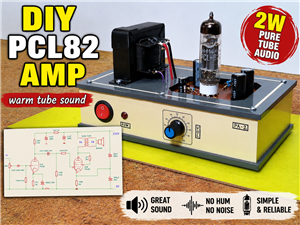 DIY PCL82 Tube Amplifier, Single-Ended Amp with Amazing Sound
The idea for this project came from a local electronics magazine called EMITER, issue 12/13 from 20...
DIY PCL82 Tube Amplifier, Single-Ended Amp with Amazing Sound
The idea for this project came from a local electronics magazine called EMITER, issue 12/13 from 20...
-
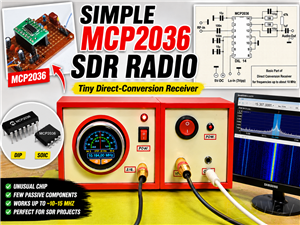 Simple MCP2036 SDR Radio - The Most Unusual Software Defined Radio
SDR (Software Defined Radio) is a radio communication system where many of the key electronic compo...
Simple MCP2036 SDR Radio - The Most Unusual Software Defined Radio
SDR (Software Defined Radio) is a radio communication system where many of the key electronic compo...
-
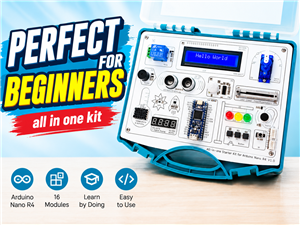 Elecrow All-in-One Arduino Starter Kit Review - 20 Projects & 16 Modules
This time I will describe a simple and practical way to enter the world of microcontrollers, specif...
Elecrow All-in-One Arduino Starter Kit Review - 20 Projects & 16 Modules
This time I will describe a simple and practical way to enter the world of microcontrollers, specif...
-
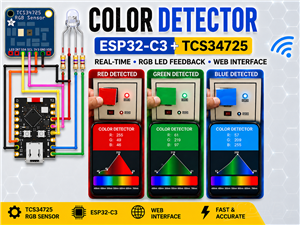 ESP32-C3 Color Detector with TCS34725, Real-Time RGB Detection & Web Interface
Color detection is a fundamental task in many embedded systems – from industrial sorting machines t...
ESP32-C3 Color Detector with TCS34725, Real-Time RGB Detection & Web Interface
Color detection is a fundamental task in many embedded systems – from industrial sorting machines t...
-
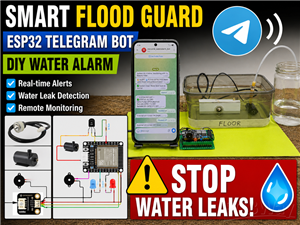 DIY ESP32 Telegram Flood Protection System - Smart Home Automation
Recently I had an unpleasant experience in my home, specifically my ground floor was flooded as a r...
DIY ESP32 Telegram Flood Protection System - Smart Home Automation
Recently I had an unpleasant experience in my home, specifically my ground floor was flooded as a r...
-
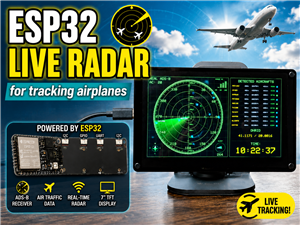 Real-Time Air Traffic Radar using ESP32 + ADS-B Data
ADS-B, which stands for Automatic Dependent Surveillance-Broadcast, is the modern standard for trac...
Real-Time Air Traffic Radar using ESP32 + ADS-B Data
ADS-B, which stands for Automatic Dependent Surveillance-Broadcast, is the modern standard for trac...
-
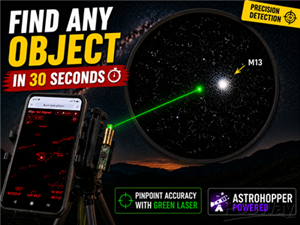 DIY Green Laser Night Sky Object Finder - Find Stars & Galaxies Instantly with great accuracy
As an amateur astronomer, especially at the beginning, the most difficult part of observing the nig...
DIY Green Laser Night Sky Object Finder - Find Stars & Galaxies Instantly with great accuracy
As an amateur astronomer, especially at the beginning, the most difficult part of observing the nig...
-
 DIY Avionics Simulator with ESP32 - Artificial Horizon, Compass & Altimeter
The inspiration for this project comes from classical aircraft cockpit instruments used for navigat...
DIY Avionics Simulator with ESP32 - Artificial Horizon, Compass & Altimeter
The inspiration for this project comes from classical aircraft cockpit instruments used for navigat...
-
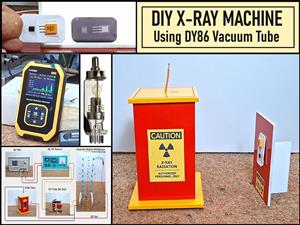 DIY Miniature X-Ray Machine using a TV Vacuum Tube DY86
An X-ray machine (or radiograph) is a quick, painless medical test that produces images of the struc...
DIY Miniature X-Ray Machine using a TV Vacuum Tube DY86
An X-ray machine (or radiograph) is a quick, painless medical test that produces images of the struc...
-
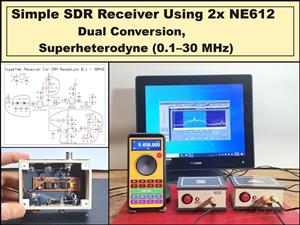 Simple SDR Receiver Using 2x NE612 - Dual Conversion, Superheterodyne (0.1–30 MHz)
SDR (Software Defined Radio) is a radio system in which most of the functions of a classic radio (f...
Simple SDR Receiver Using 2x NE612 - Dual Conversion, Superheterodyne (0.1–30 MHz)
SDR (Software Defined Radio) is a radio system in which most of the functions of a classic radio (f...
-
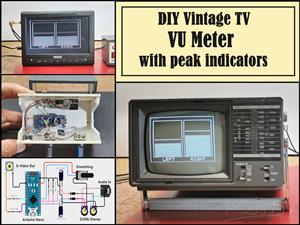 DIY Vintage TV VU Meter with peak indicators
Some time ago in one of my projects I presented you a way to turn a black and white old mini TV int...
DIY Vintage TV VU Meter with peak indicators
Some time ago in one of my projects I presented you a way to turn a black and white old mini TV int...
-
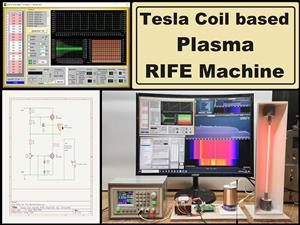 DIY Tesla Coil based Plasma Rife Machine
In several of my previous videos, I presented you with different ways to make a Rife Machine, from ...
DIY Tesla Coil based Plasma Rife Machine
In several of my previous videos, I presented you with different ways to make a Rife Machine, from ...
-
Programmable Mist Maker - XIAO / QT PY Extension
2374 2 2 -
RadioHAT - Raspberry Pi radio development platform
2059 0 4 -
-
-
-
ARPS-2 – Arduino-Compatible Robot Project Shield for Arduino UNO
4211 0 6 -
A Compact Charging Breakout Board For Waveshare ESP32-C3
4986 3 8 -
AI-driven LoRa & LLM-enabled Kiosk & Food Delivery System
5753 2 2 -