

|
|
Arduino Nano R3 |
x 1 | |
|
|
LDR module |
x 1 | |
|
|
IRF7303TRPBFonsemi
|
x 1 | |
|
|
LEDINDIFFERENT
|
x 2 | |

|
HY1-12VPanasonic Electric Works
|
x 1 | |
|
|
Resistors |
x 4 |

|
Soldering Iron Kit |
|

|
arduino IDEArduino
|
Arduino Door Lock with Smartphone Flashlight Login (Li-Fi project)
There are many different arduino door lock projects, where the access method is using a keyboard, RFID card, biometric device, WiFi, Bluetooth, etc... This time I will describe to you a project where access is made possible in a very unusual way with the help of a flashlight from a smartphone.
In this way, even double protection is enabled, once a password has to be entered in the APK application, and then that information is transmitted using the light generated by the smartphone flashlight, and there is no way to enter it directly on the lock.

I got the idea from Himanshu Sharma's Li-Fi project from where I also used the .APK application, and adapted the Arduino code for this particular project.
The device is very simple to make and contains only a few components
- Arduino Nano Microcontroller
- LDR resistor module
- 12V Relay
- Power Mosfet Transistor (IRF730)
- Buzzer
- Two LEDs
- and some resistors

On the occasion of the upcoming Christmas and New Year holiydays visit the PCBWay Christmas Big Sales where you will found discounts of up to 50%, as well as many other prizes and benefits. PCBway is one of the most experienced PCB manufacturing company in China in field of PCB prototype and fabrication. They provide completed PCB assembly service with worldwide free shipping, and ISO9001 quality control system. Also, on their site there is an online gerber viewer where you can upload your gerber and drill files to render your board.

The mosfet transistor can be any one with medium or high power, and the relay is designed for 12V operation. As for the LDR module, it contains a LM393 comparator IC, and when the resistor is illuminated, the output voltage should be 0V, and +5V in the dark.
The key to unlock is actually the mobile phone on which the corresponding application is recorded.

First, let's explain how the device works. The smartphone application contains several predefined passwords, and to activate the flash we must enter one of these passwords, in my case it is "hello". Each password generates a flash activation with an exact preset time in milliseconds. On the other hand, the lock is activated only when we bring light to the LDR resistor with the exact time specified in the Arduino code, which should be identical to the time defined in the smartphone application. This time is very precisely defined, so theoretically it is almost impossible to unlock by manually turning the flashlight on and off.

Now let's see how the device works in real conditions:
When switched on, the red LED lights up, which means that the lock is in standby position and is waiting for an opening signal. First, let's try manually turning the flash on and off. As I mentioned before, it is impossible to open the lock this way. Now we will try with the Application. If we enter some random password, the flash is not activated at all. If we enter one of the previously defined passwords that is not common with the Arduino code, the flash is activated, but does not open the lock. Only if we enter the selected password, the door will open, in our case it is "hello". The green LED lights up and the relay is activated for 2 seconds, during which time we can open the door.
And finally, a short conclusion. This is actually not a real Li-Fi communication, it's just a simple light beam with a certain duration, which duration is related to a given operation performed by the arduino. This is just Proof of concept, and in a more advanced case, some useful signal should be modulated in the light, which would then be demodulated in the receiver. This will be the subject of one of my next projects.

#define Solenoid 12
#define ldr 8
int Buzzer = 4;
int GreenLed = 6;
int RedLed = 11;
int val;
int val2;
String duration;

void setup() {
  // put your setup code here, to run once:
  Serial.begin(9600);
  pinMode(ldr, INPUT_PULLUP);
  pinMode(Solenoid, OUTPUT);
  pinMode(GreenLed, OUTPUT);
  pinMode(RedLed, OUTPUT);
  digitalWrite(RedLed, HIGH);
}

  void OpenDoor(){             //Lock opening function open for 3s

  digitalWrite(Solenoid,HIGH);
  tone(Buzzer, 500);
  digitalWrite(RedLed, LOW);
  digitalWrite(GreenLed, HIGH);

  delay(3000);
  digitalWrite(Solenoid,LOW);
  noTone(Buzzer);
  digitalWrite(RedLed, HIGH);
  digitalWrite(GreenLed, LOW);
}

void loop() {
  // put your main code here, to run repeatedly:
  int val = digitalRead(ldr);
  while(val == 0)
  {
    int val2 = digitalRead(ldr);
    duration += val2;

    if(duration == "0001")
    {

      OpenDoor();
    }

    if(val2 == 1)
    {
      duration = "";
      break;
    }


    delay(200);
  }

}

Arduino Door Lock with Smartphone Flashlight Login (Li-Fi project)


Raspberry Pi 5 7 Inch Touch Screen IPS 1024x600 HD LCD HDMI-compatible Display for RPI 4B 3B+ OPI 5 AIDA64 PC Secondary Screen(Without Speaker)
BUY NOW


- Comments(0)
- Likes(0)
More by Mirko Pavleski
-
 Arduino 3D Printed self Balancing Cube
Self-balancing devices are electronic devices that use sensors and motors to keep themselves balanc...
Arduino 3D Printed self Balancing Cube
Self-balancing devices are electronic devices that use sensors and motors to keep themselves balanc...
-
 DIY ESP32 Universal Timer with Touchscreen & Rotary Encoder
In several of my previous videos, I presented different projects based on the CrowPanel 2.1-inch HM...
DIY ESP32 Universal Timer with Touchscreen & Rotary Encoder
In several of my previous videos, I presented different projects based on the CrowPanel 2.1-inch HM...
-
 Build a Real 5-Band Parametric EQ with ESP32 + WM8960 - Stereo DSP Audio Processor
Audio equalizer (EQ) is an electronic device that allows control over the strength of different fre...
Build a Real 5-Band Parametric EQ with ESP32 + WM8960 - Stereo DSP Audio Processor
Audio equalizer (EQ) is an electronic device that allows control over the strength of different fre...
-
 Bass Reflex vs Sealed vs Horn – Same 2 inch Speaker Test
In one of the previous videos I presented the making of a miniature Horn type speaker box with a 2 ...
Bass Reflex vs Sealed vs Horn – Same 2 inch Speaker Test
In one of the previous videos I presented the making of a miniature Horn type speaker box with a 2 ...
-
 Building a Mini Fostex Horn Speaker with a 2-Inch Full-Range Driver
A back-loaded horn speaker is a loudspeaker design that channels the rear sound wave of a driver th...
Building a Mini Fostex Horn Speaker with a 2-Inch Full-Range Driver
A back-loaded horn speaker is a loudspeaker design that channels the rear sound wave of a driver th...
-
 ESP32 Moon Lamp That Shows the Real Moon Phase on Crowpanel Round Dispaly
Recently on the Hackaday portal I came across a very interesting project called Moon Display by aut...
ESP32 Moon Lamp That Shows the Real Moon Phase on Crowpanel Round Dispaly
Recently on the Hackaday portal I came across a very interesting project called Moon Display by aut...
-
 40-Year-Old DIY Power Amplifiers – Do They Still Work - 500W MOSFET & Transistor Amps
This time I want to describe my two DIY super powerful audio amplifiers that I made about 40 years ...
40-Year-Old DIY Power Amplifiers – Do They Still Work - 500W MOSFET & Transistor Amps
This time I want to describe my two DIY super powerful audio amplifiers that I made about 40 years ...
-
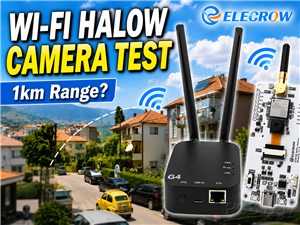 Wi-Fi HaLow Explained! Long-Range Camera Test up to 300m (ESP32 + ThinkNode G4 from ELECROW)
I recently needed to install a security camera at a relatively large distance from my home, more pre...
Wi-Fi HaLow Explained! Long-Range Camera Test up to 300m (ESP32 + ThinkNode G4 from ELECROW)
I recently needed to install a security camera at a relatively large distance from my home, more pre...
-
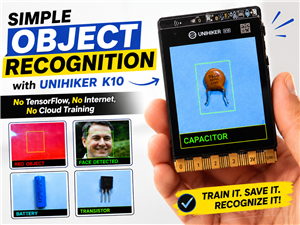 Simple Object Recognition with the UNIHIKER K10 – No TensorFlow, No Internet, No Cloud AI
Object recognition has become one of the most popular applications of artificial intelligence and em...
Simple Object Recognition with the UNIHIKER K10 – No TensorFlow, No Internet, No Cloud AI
Object recognition has become one of the most popular applications of artificial intelligence and em...
-
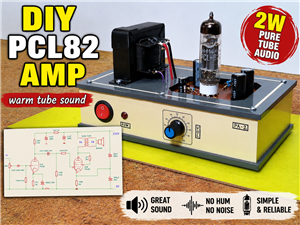 DIY PCL82 Tube Amplifier, Single-Ended Amp with Amazing Sound
The idea for this project came from a local electronics magazine called EMITER, issue 12/13 from 20...
DIY PCL82 Tube Amplifier, Single-Ended Amp with Amazing Sound
The idea for this project came from a local electronics magazine called EMITER, issue 12/13 from 20...
-
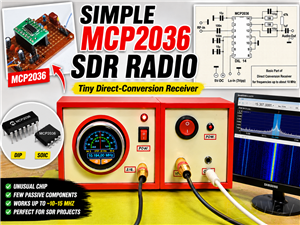 Simple MCP2036 SDR Radio - The Most Unusual Software Defined Radio
SDR (Software Defined Radio) is a radio communication system where many of the key electronic compo...
Simple MCP2036 SDR Radio - The Most Unusual Software Defined Radio
SDR (Software Defined Radio) is a radio communication system where many of the key electronic compo...
-
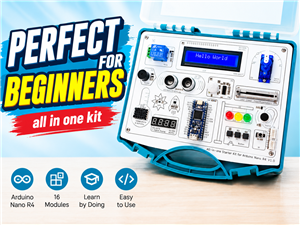 Elecrow All-in-One Arduino Starter Kit Review - 20 Projects & 16 Modules
This time I will describe a simple and practical way to enter the world of microcontrollers, specif...
Elecrow All-in-One Arduino Starter Kit Review - 20 Projects & 16 Modules
This time I will describe a simple and practical way to enter the world of microcontrollers, specif...
-
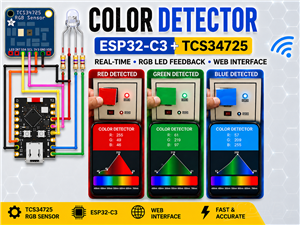 ESP32-C3 Color Detector with TCS34725, Real-Time RGB Detection & Web Interface
Color detection is a fundamental task in many embedded systems – from industrial sorting machines t...
ESP32-C3 Color Detector with TCS34725, Real-Time RGB Detection & Web Interface
Color detection is a fundamental task in many embedded systems – from industrial sorting machines t...
-
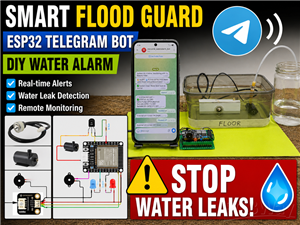 DIY ESP32 Telegram Flood Protection System - Smart Home Automation
Recently I had an unpleasant experience in my home, specifically my ground floor was flooded as a r...
DIY ESP32 Telegram Flood Protection System - Smart Home Automation
Recently I had an unpleasant experience in my home, specifically my ground floor was flooded as a r...
-
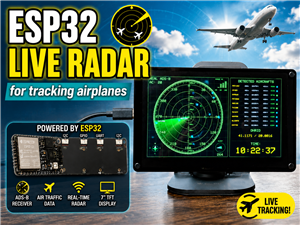 Real-Time Air Traffic Radar using ESP32 + ADS-B Data
ADS-B, which stands for Automatic Dependent Surveillance-Broadcast, is the modern standard for trac...
Real-Time Air Traffic Radar using ESP32 + ADS-B Data
ADS-B, which stands for Automatic Dependent Surveillance-Broadcast, is the modern standard for trac...
-
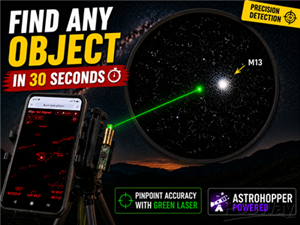 DIY Green Laser Night Sky Object Finder - Find Stars & Galaxies Instantly with great accuracy
As an amateur astronomer, especially at the beginning, the most difficult part of observing the nig...
DIY Green Laser Night Sky Object Finder - Find Stars & Galaxies Instantly with great accuracy
As an amateur astronomer, especially at the beginning, the most difficult part of observing the nig...
-
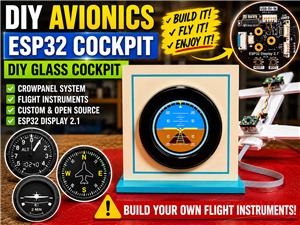 DIY Avionics Simulator with ESP32 - Artificial Horizon, Compass & Altimeter
The inspiration for this project comes from classical aircraft cockpit instruments used for navigat...
DIY Avionics Simulator with ESP32 - Artificial Horizon, Compass & Altimeter
The inspiration for this project comes from classical aircraft cockpit instruments used for navigat...
-
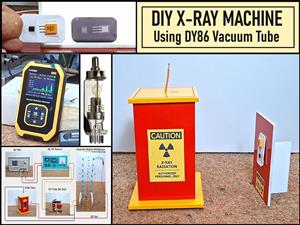 DIY Miniature X-Ray Machine using a TV Vacuum Tube DY86
An X-ray machine (or radiograph) is a quick, painless medical test that produces images of the struc...
DIY Miniature X-Ray Machine using a TV Vacuum Tube DY86
An X-ray machine (or radiograph) is a quick, painless medical test that produces images of the struc...
-
Émetteur Récepteur Optique Expérimental (communication UART ATtiny + fibre optique)
139 0 1 -
SmallOLED - Live PC Stats, Animated Clocks & Audio Visualizer
988 0 3 -
"Talking Multimeter": Arduino-Based Speech Add-on for Multimeters with SCPI Protocol
564 0 1 -
Programmable Mist Maker - XIAO / QT PY Extension
3035 2 3 -
RadioHAT - Raspberry Pi radio development platform
2583 0 4 -
-
-