

|
|
Raspberry Pi Pico |
x 1 | |
|
|
TFT Touchscreen, 320x240 |
x 1 | |
|
|
Resistor 10k ohm |
x 1 | |
|
|
Capacitor 100 nF |
x 1 |

|
Soldering Iron Kit |
|

|
arduino IDEArduino
|
Raspberry Pi Pico SSTV Decoder- Receive Images Over Radio
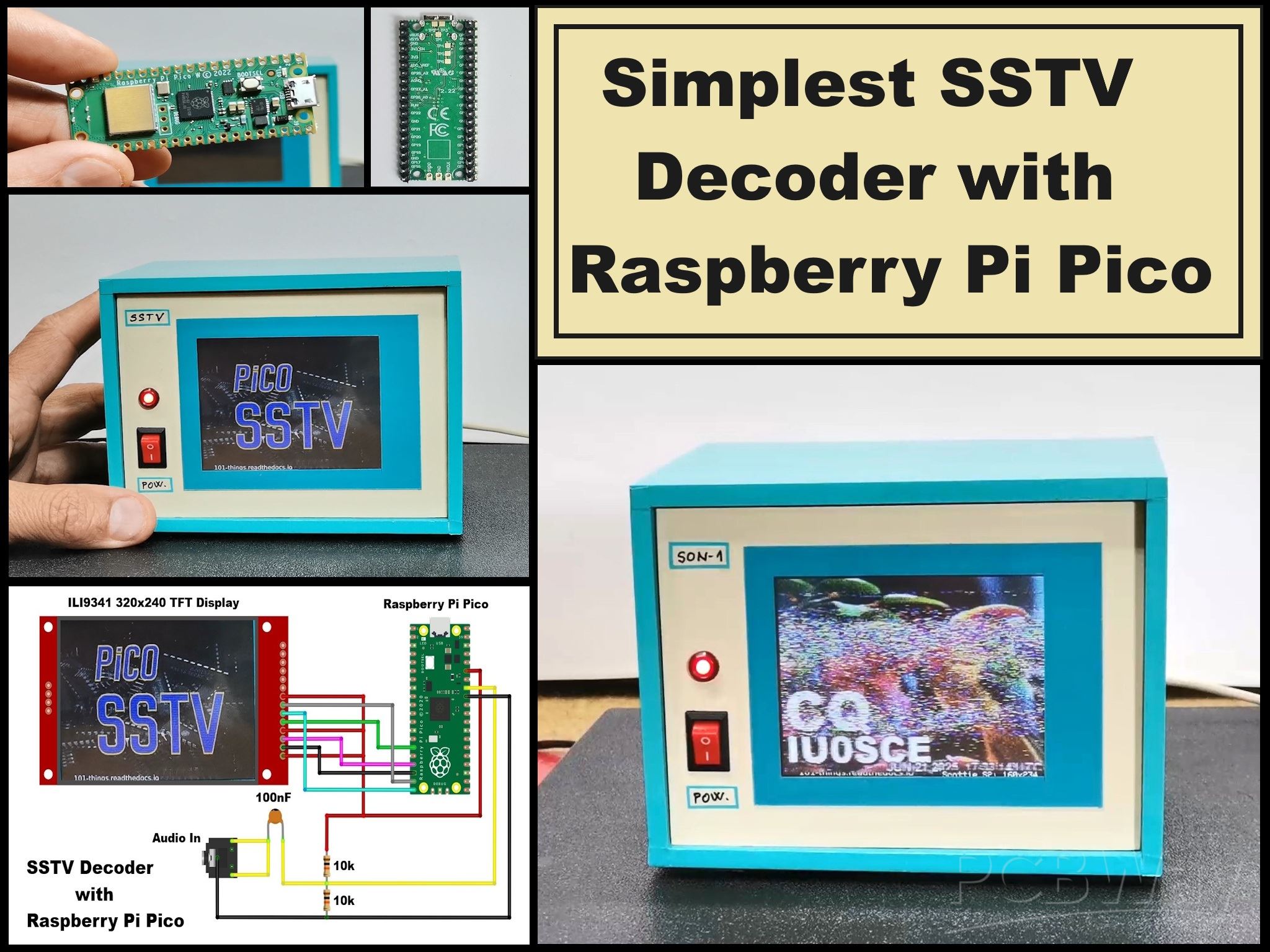
Slow-scan television (SSTV) is a method for transmitting and receiving still pictures over radio waves, primarily used by amateur radio operators. Traditionally, decoding SSTV signals requires a PC and a soundcard, but this project demonstrates a simpler, more accessible solution.

The project is completely taken from the 101Things blog and all credits go to the author of this project. There are many more wonderful radio projects on the same site and I hope to test and promote some of them in the near future.
The heart of this project is Raspberry Pi Pico which is a flexible and powerful microcontroller, ideal for makers, students and hobbyists. With a dual RP2040 ARM Cortex-M0+ processor at 133 MHz and 264 KB of SRAM, the Pico brings serious computing power for making demanding projects.
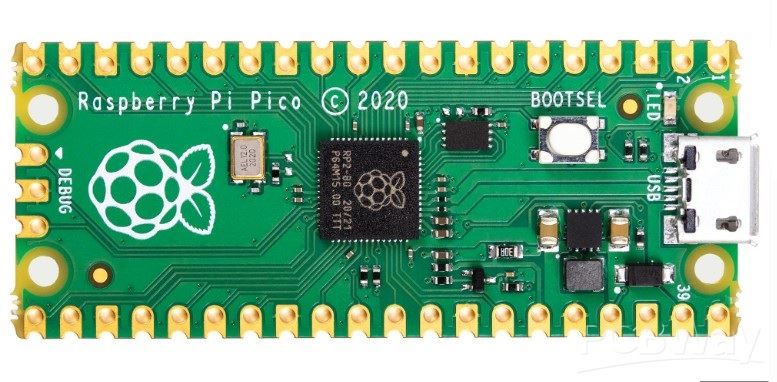
This is my first encounter and first project with this microcontroller, so I will take some time to describe in detail the method of uploading the code. Of course, this time I will use the Arduino IDE with the C++ version of the code because I have previous experience with them. Raspberry Pi Pico also supports the MicroPython language, but about that in one of the following projects.
This project is sponsored by PCBWay. They has all the services you need to create your project at the best price, whether is a scool project, or complex professional project. On PCBWay you can share your experiences, or get inspiration for your next project. They also provide completed Surface mount SMT PCB assemblY service at a best price, and ISO9001 quality control. Visit pcbway.com for more services
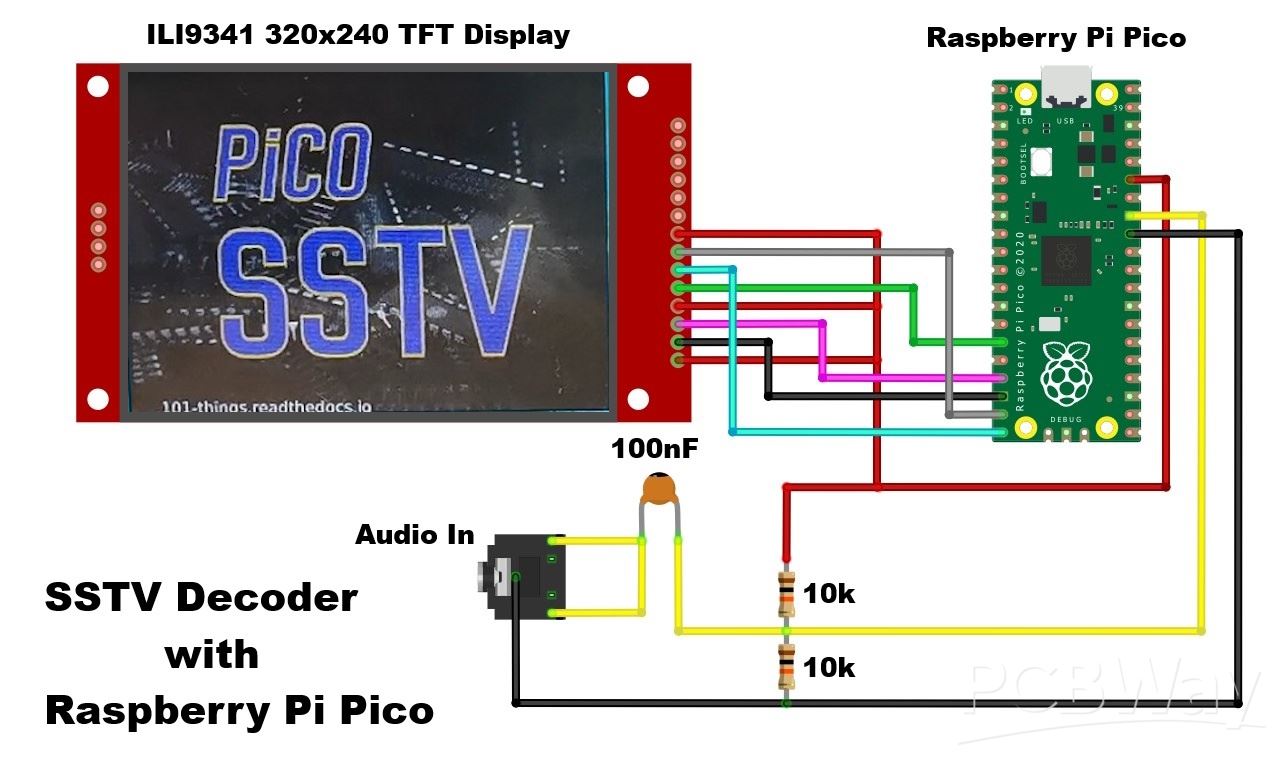
Otherwise, the device is extremely simple to make and consists of only a few components:
- Raspberry Pi Pico microcontroller board
- 320x240 LCD Display with ILI 9341 driver chip
- 2pcs resistor 10K
- and ceramic capacitor 100nF
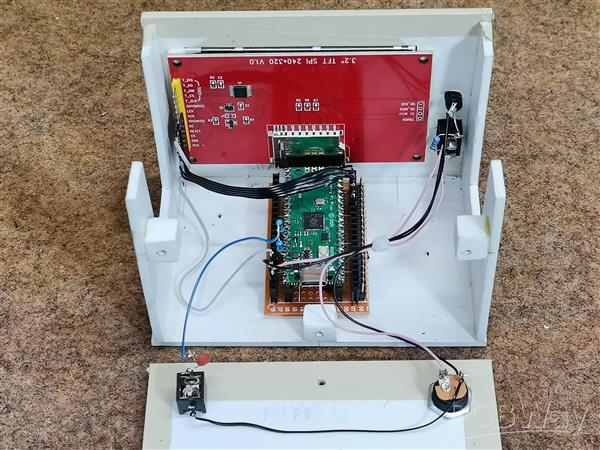
As you can see, I placed the microcontroller on a suitable base, around which there are connectors for connecting external components. In fact, I made a kind of development board so that I could use the microcontroller for other projects.
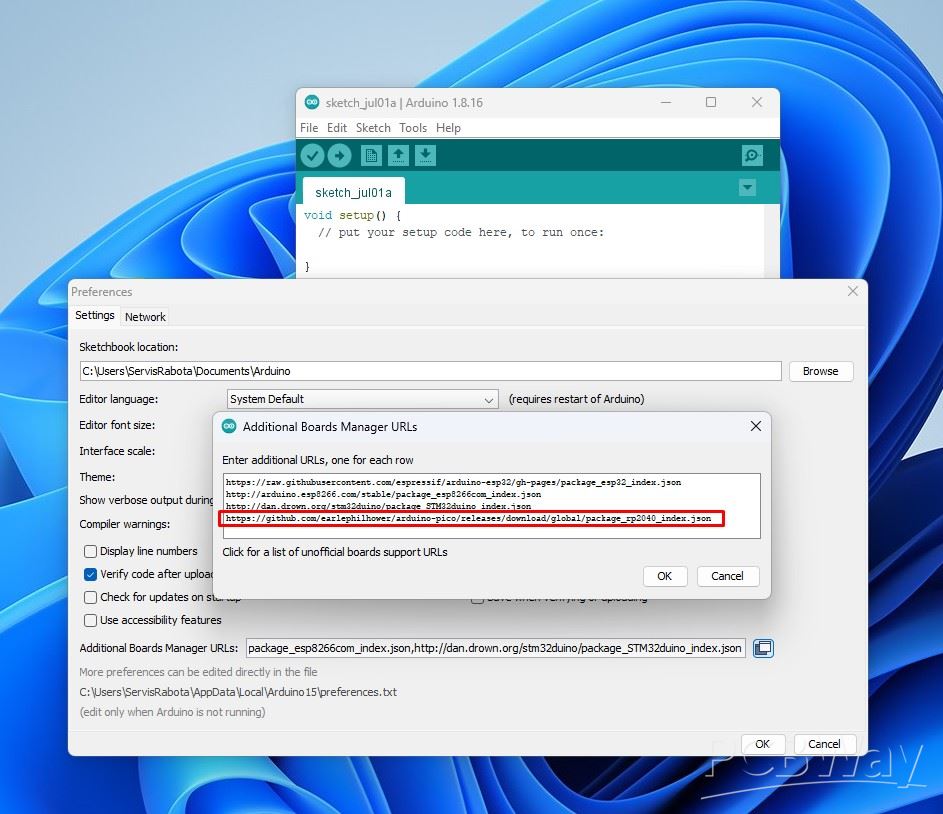
To install the given code, we first need to install support for Raspberry Pi Pico in Arduino IDE. For that purpose we go to File - Preferences - and in additional boards manager URLs we paste the given link:
https://github.com/earlephilhower/arduino-pico/releases/download/global/package_rp2040_index.json
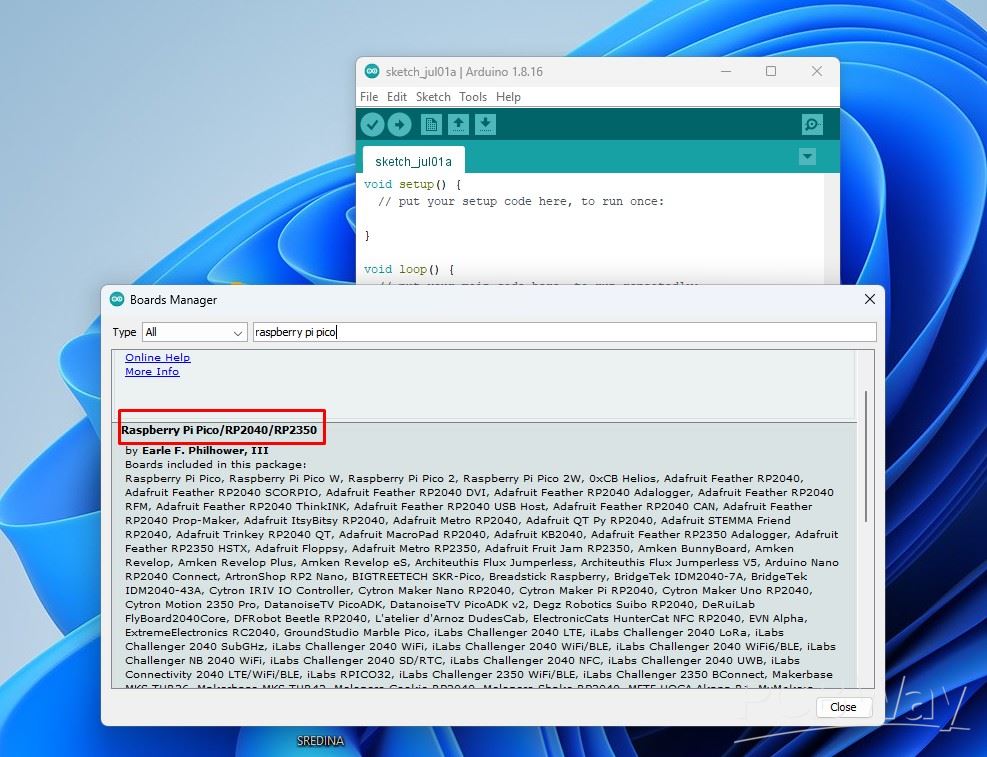
Then in Tools- Board Manager- enter raspberry pi pico, and press install.
Next in Tools - Rspberry Pi 2040 - we select Raspberry Pi Pico.
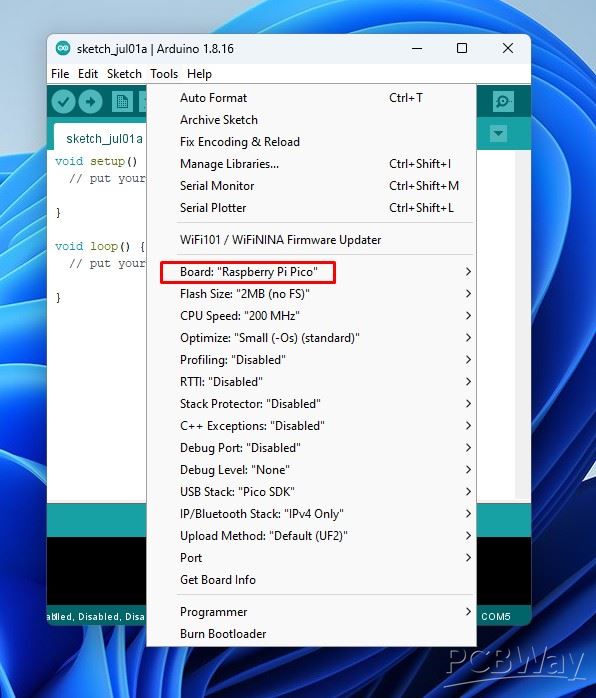
Now the support is installed and we can proceed to installing the code.
If the microcontroller board is new and we need to upload C++ code for the first time, we need to do the following procedure:
In File-Example-Basics we select the Blink example. Now we press the BOOTSEL button on the Pico board and press upload , and keep the BOOTSEL button pressed all the time while the code is being compiled and uploaded.
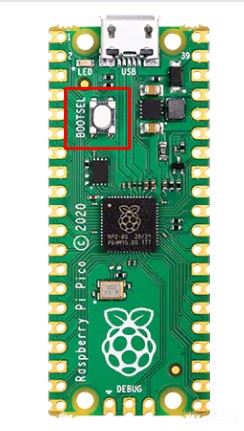
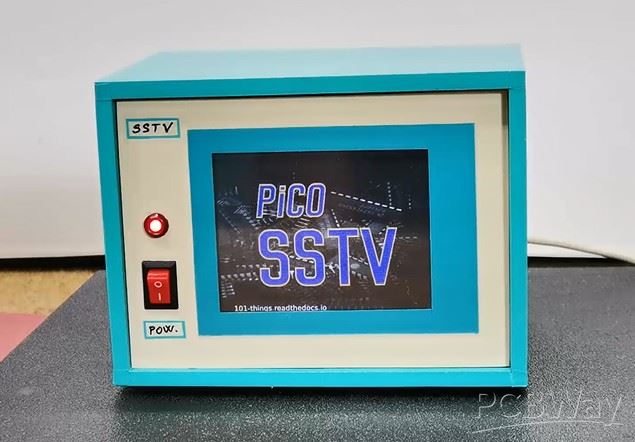
When the Upload is complete, the LED on the board will start blinking. This procedure is performed only at the beginning when uploading the first code, and then the codes are installed by default as with Arduino boards. So we go to File - Open and go to the folder where the specific code is given, select the appropriate port and press upload. If we have connected everything correctly according to the given scheme, the Pico SSTV logo will immediately appear on the display and from that moment the device is ready to receive and process SSTV audio signals.
Test audio files are provided in a separate folder as part of the code. These are actually recorded SSTV signals from real radio reception. Now we will use them to see what the decoding of a SSTV signal looks like, in fact, with this device these specific audio signals will be converted into images.
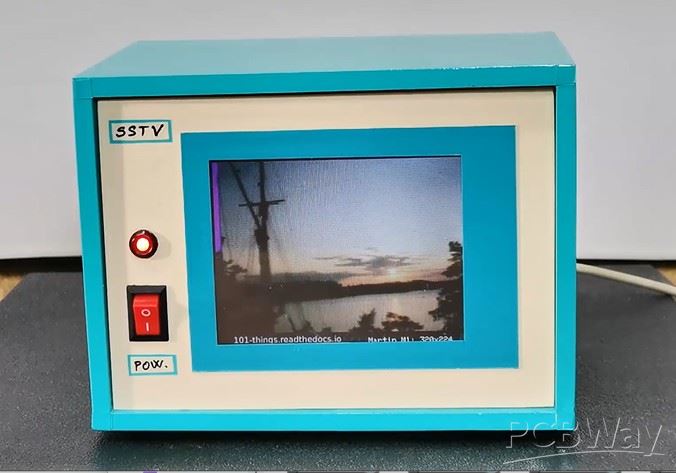
Next, I will try to receive and decode a SSTV signal in real time with one of my radio receivers.
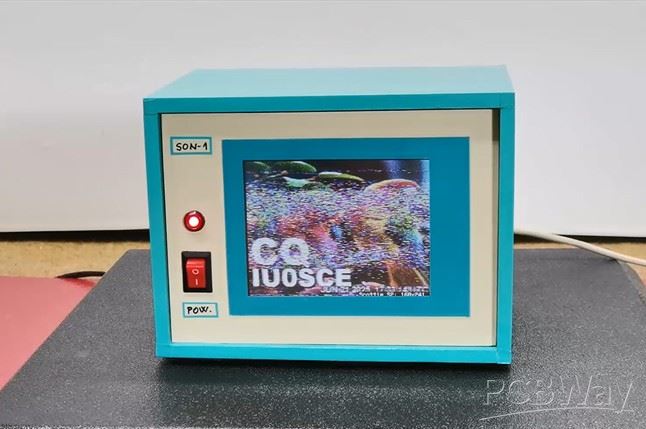
The quality of the received picture depends proportionally on the quality of the SSTV signal reception.
And finally, a brief conclusion: This project successfully demonstrates how the Raspberry Pi Pico can independently transform SSTV audio signals into viewable images, offering a truly stand-alone and accessible solution that bypasses the traditional need for a PC and soundcard. I hope this guide inspires you to explore the exciting world of SSTV and microcontroller-based radio projects.
Raspberry Pi Pico SSTV Decoder- Receive Images Over Radio


Raspberry Pi 5 7 Inch Touch Screen IPS 1024x600 HD LCD HDMI-compatible Display for RPI 4B 3B+ OPI 5 AIDA64 PC Secondary Screen(Without Speaker)
BUY NOW


- Comments(0)
- Likes(0)
More by Mirko Pavleski
-
 Arduino 3D Printed self Balancing Cube
Self-balancing devices are electronic devices that use sensors and motors to keep themselves balanc...
Arduino 3D Printed self Balancing Cube
Self-balancing devices are electronic devices that use sensors and motors to keep themselves balanc...
-
 DIY ESP32 Universal Timer with Touchscreen & Rotary Encoder
In several of my previous videos, I presented different projects based on the CrowPanel 2.1-inch HM...
DIY ESP32 Universal Timer with Touchscreen & Rotary Encoder
In several of my previous videos, I presented different projects based on the CrowPanel 2.1-inch HM...
-
 Build a Real 5-Band Parametric EQ with ESP32 + WM8960 - Stereo DSP Audio Processor
Audio equalizer (EQ) is an electronic device that allows control over the strength of different fre...
Build a Real 5-Band Parametric EQ with ESP32 + WM8960 - Stereo DSP Audio Processor
Audio equalizer (EQ) is an electronic device that allows control over the strength of different fre...
-
 Bass Reflex vs Sealed vs Horn – Same 2 inch Speaker Test
In one of the previous videos I presented the making of a miniature Horn type speaker box with a 2 ...
Bass Reflex vs Sealed vs Horn – Same 2 inch Speaker Test
In one of the previous videos I presented the making of a miniature Horn type speaker box with a 2 ...
-
 Building a Mini Fostex Horn Speaker with a 2-Inch Full-Range Driver
A back-loaded horn speaker is a loudspeaker design that channels the rear sound wave of a driver th...
Building a Mini Fostex Horn Speaker with a 2-Inch Full-Range Driver
A back-loaded horn speaker is a loudspeaker design that channels the rear sound wave of a driver th...
-
 ESP32 Moon Lamp That Shows the Real Moon Phase on Crowpanel Round Dispaly
Recently on the Hackaday portal I came across a very interesting project called Moon Display by aut...
ESP32 Moon Lamp That Shows the Real Moon Phase on Crowpanel Round Dispaly
Recently on the Hackaday portal I came across a very interesting project called Moon Display by aut...
-
 40-Year-Old DIY Power Amplifiers – Do They Still Work - 500W MOSFET & Transistor Amps
This time I want to describe my two DIY super powerful audio amplifiers that I made about 40 years ...
40-Year-Old DIY Power Amplifiers – Do They Still Work - 500W MOSFET & Transistor Amps
This time I want to describe my two DIY super powerful audio amplifiers that I made about 40 years ...
-
 Wi-Fi HaLow Explained! Long-Range Camera Test up to 300m (ESP32 + ThinkNode G4 from ELECROW)
I recently needed to install a security camera at a relatively large distance from my home, more pre...
Wi-Fi HaLow Explained! Long-Range Camera Test up to 300m (ESP32 + ThinkNode G4 from ELECROW)
I recently needed to install a security camera at a relatively large distance from my home, more pre...
-
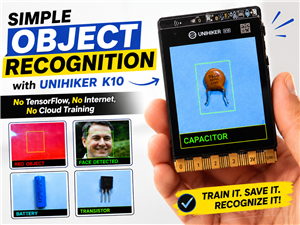 Simple Object Recognition with the UNIHIKER K10 – No TensorFlow, No Internet, No Cloud AI
Object recognition has become one of the most popular applications of artificial intelligence and em...
Simple Object Recognition with the UNIHIKER K10 – No TensorFlow, No Internet, No Cloud AI
Object recognition has become one of the most popular applications of artificial intelligence and em...
-
 DIY PCL82 Tube Amplifier, Single-Ended Amp with Amazing Sound
The idea for this project came from a local electronics magazine called EMITER, issue 12/13 from 20...
DIY PCL82 Tube Amplifier, Single-Ended Amp with Amazing Sound
The idea for this project came from a local electronics magazine called EMITER, issue 12/13 from 20...
-
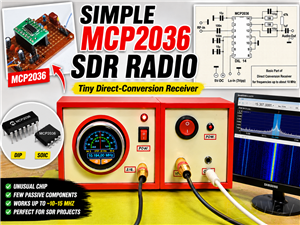 Simple MCP2036 SDR Radio - The Most Unusual Software Defined Radio
SDR (Software Defined Radio) is a radio communication system where many of the key electronic compo...
Simple MCP2036 SDR Radio - The Most Unusual Software Defined Radio
SDR (Software Defined Radio) is a radio communication system where many of the key electronic compo...
-
 Elecrow All-in-One Arduino Starter Kit Review - 20 Projects & 16 Modules
This time I will describe a simple and practical way to enter the world of microcontrollers, specif...
Elecrow All-in-One Arduino Starter Kit Review - 20 Projects & 16 Modules
This time I will describe a simple and practical way to enter the world of microcontrollers, specif...
-
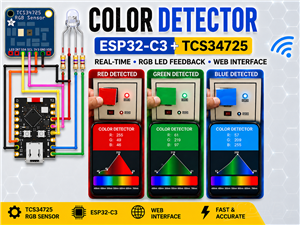 ESP32-C3 Color Detector with TCS34725, Real-Time RGB Detection & Web Interface
Color detection is a fundamental task in many embedded systems – from industrial sorting machines t...
ESP32-C3 Color Detector with TCS34725, Real-Time RGB Detection & Web Interface
Color detection is a fundamental task in many embedded systems – from industrial sorting machines t...
-
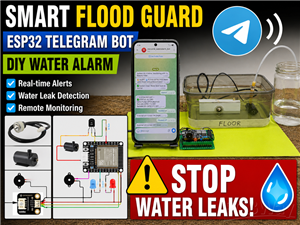 DIY ESP32 Telegram Flood Protection System - Smart Home Automation
Recently I had an unpleasant experience in my home, specifically my ground floor was flooded as a r...
DIY ESP32 Telegram Flood Protection System - Smart Home Automation
Recently I had an unpleasant experience in my home, specifically my ground floor was flooded as a r...
-
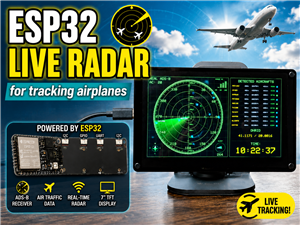 Real-Time Air Traffic Radar using ESP32 + ADS-B Data
ADS-B, which stands for Automatic Dependent Surveillance-Broadcast, is the modern standard for trac...
Real-Time Air Traffic Radar using ESP32 + ADS-B Data
ADS-B, which stands for Automatic Dependent Surveillance-Broadcast, is the modern standard for trac...
-
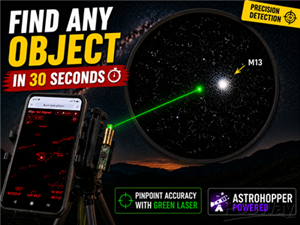 DIY Green Laser Night Sky Object Finder - Find Stars & Galaxies Instantly with great accuracy
As an amateur astronomer, especially at the beginning, the most difficult part of observing the nig...
DIY Green Laser Night Sky Object Finder - Find Stars & Galaxies Instantly with great accuracy
As an amateur astronomer, especially at the beginning, the most difficult part of observing the nig...
-
 DIY Avionics Simulator with ESP32 - Artificial Horizon, Compass & Altimeter
The inspiration for this project comes from classical aircraft cockpit instruments used for navigat...
DIY Avionics Simulator with ESP32 - Artificial Horizon, Compass & Altimeter
The inspiration for this project comes from classical aircraft cockpit instruments used for navigat...
-
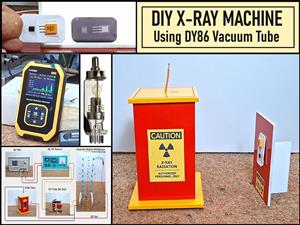 DIY Miniature X-Ray Machine using a TV Vacuum Tube DY86
An X-ray machine (or radiograph) is a quick, painless medical test that produces images of the struc...
DIY Miniature X-Ray Machine using a TV Vacuum Tube DY86
An X-ray machine (or radiograph) is a quick, painless medical test that produces images of the struc...
-
Émetteur Récepteur Optique Expérimental (communication UART ATtiny + fibre optique)
138 0 1 -
SmallOLED - Live PC Stats, Animated Clocks & Audio Visualizer
985 0 3 -
"Talking Multimeter": Arduino-Based Speech Add-on for Multimeters with SCPI Protocol
563 0 1 -
Programmable Mist Maker - XIAO / QT PY Extension
3033 2 3 -
RadioHAT - Raspberry Pi radio development platform
2582 0 4 -
-
-