|
|
STM32F103C8T6 microcontroller board |
x 1 | |
|
|
ILI9341 320x240 TFT Display |
x 1 | |
|
|
1N4007 – High Voltage, High Current Rated Diode |
x 2 | |
|
|
Resistor 4.75k ohm |
x 2 | |
|
|
Capacitor 10 µF |
x 1 | |
|
|
Pushbutton Switch, Momentary |
x 4 |

|
arduino IDEArduino
|
|

|
Soldering Iron Kit |
How to make Simple 500KHz Oscilloscope with STM32 ( Arduino IDE )
An oscilloscope, often referred to as an "scope," is a test instrument used to visualize and analyze the waveform of electronic signals. It is an essential tool for engineers, technicians, and researchers working in fields like electronics, telecommunications, physics, and more.
In some of my previous videos I described how to make a digital oscilloscope using Arduino, which has a maximum frequency range of up to 50kHz.

This time I will present you a more advanced oscilloscope with STM32 Microcontroller which has better performances than Arduino and is also cheaper. With this instrument we can now observe the shape of signals with a frequency of up to 500KHz. You can see the original project on the RCL-Radio site.
Otherwise, STM32 is a 32-bit ARM microcontroller developed by STMicroelectronics, and Arduino Bootloader can be installed on it, and it can be used as a standard Arduino. The Arduino IDE application can be used for writing, compiling, and uploading code to microcontroller board. This time we will not dwell on the method of installation and uploading the code, because we can find many detailed tutorials on the Internet, such as this one.

If you want to make a PCB for this project, or for any other electronic project, PCBway is a great choice for you. PCBway is one of the most experienced PCB manufacturing company in China in field of PCB prototype and fabrication. They provide completed PCB assembly service with worldwide free shipping , and ISO9001 quality control system. Also, on their site there is an online gerber viewer where you can upload your gerber and drill files to render your board.

The device is extremely simple to make and contains only a few components
- STM32F103C8T6 Microcontroller
- 3.2 or 2.8 inch TFT color display with a resolution of 240 by 320 points powered by the ILI9341 chip
- two diodes
- two resistors
- and five buttons
The maximum input positive voltage is 6.6 V and can be increased by using an external voltage divider. If the device is made according to the given schematic diagram and code, it works immediately after the first power-on without any previous setting in the code or libraries.

Let's first explain the function of the buttons:
- With the SET button we enter a menu where we can change more settings
- Up and Down buttons are used to change the value of the selected function
- The Hold button serves to freeze the current image of the signal for further analysis
- and with the AC/DC switch we select the type of input signal
In the upper left part of the screen, the amplitude value of the signal is given, followed by the sweep duration. When the Hold button is activated, we have additional functions for analyzing the input signal.
As you can see in the video, the colors of the curve can be changed very easily in the code in line:
tft.drawLine(i*mn, 230-data1[i+i2],i*mn+mn-1, 230-data1[i+1+i2], ILI9341_RED);i++;}i=0;

And finally, a short conclusion. Unlike the previous oscilloscopes with Arduino, this device, due to its frequency range and speed, represents a relatively serious functional instrument that can find a place in any laboratory, and at the same time, the price for its making is extremely low, no more than 15 dollars. The oscilloscope is installed in a suitable box made of PVC material with a thickness of 3 and 5 mm and covered with self-adhesive colored wallpaper.

#include "SPI.h"
#include <EEPROM.h>
#include <Adafruit_GFX_AS.h>   // http://rcl-radio.ru/wp-content/uploads/2020/06/Adafruit_GFX.zip
#include <Adafruit_ILI9341_STM.h>
#include <STM32ADC.h>
#include <HardwareTimer.h>
 STM32ADC myADC(ADC1);
 uint8 pin = PA0;
 volatile static bool dma1_ch1_Active;
 #define maxSamples 1000
 uint16_t buffer[maxSamples];
 uint16 dataPoints[maxSamples];

#define TFT_CS         PB1
#define TFT_DC         PB10
#define TFT_RST        PB11
  Adafruit_ILI9341_STM tft = Adafruit_ILI9341_STM(TFT_CS, TFT_DC, TFT_RST); // Mosi - PA7, SCK - PA5

byte data[1000],data_old[1000];
int setting,hold_set,i,x,y,i2,u_max,u_min,minn,u_sinh,mn=2,raz,per,razv,sinhro;
int u1,u2,t1,t2,zap,ux=1,uxx=1,fun;
long h0,h1;
long times,times1,hhh,times2,times3,tim;
byte hold,www,w=1,w1=1,w2=1,w3=1,w4=1,link,w5=1,b1=1,b2=1;
String raz_x;
float k1,k2,del=1;

int data1[1000];


void setup() {
 Serial.begin(115200);
 EEPROM.init(0x801F000,0x801F800,0x400);// 1024 byte
 pinMode(PA0, INPUT_ANALOG);
 pinMode(PB12,INPUT_PULLUP);// HOLD
 pinMode(PB13,INPUT_PULLUP);//+
 pinMode(PB14,INPUT_PULLUP);//-
 pinMode(PB15,INPUT_PULLUP);// SET
 tft.begin();tft.setRotation(1);
 tft.fillScreen(ILI9341_BLACK);
 razv=EEPROM.read(0);
 sinhro=EEPROM.read(1);


ADC1->regs->CR1 = 0; // Обнулить регистр управления
ADC1->regs->SQR1 = 0; // Обнулить регистр SQR1
ADC1->regs->CR2 |= ADC_CR2_CAL; // Пуск калибровки
while (!(ADC1->regs->CR2 & ADC_CR2_CAL)){};

}

void loop() {

if(digitalRead(PB15)==LOW&&hold==0){w=1;w1=1;b1=1;b2=0;setting++;if(setting>2){setting=0;}delay(300);}
if(digitalRead(PB15)==LOW&&hold==1){w=1;w2=1;w4=1;hold_set++;if(hold_set>4){hold_set=0;}delay(300); }

//////  TFT  //////////////////////////////////////////
  tft.setCursor(295, 0);
  tft.setTextColor(ILI9341_WHITE);  tft.setTextSize(1);
  //////////////////// HOLD ON OFF ///////////////////////////////////////////
 if(digitalRead(PB12)==LOW&&hold==0){hold=1;w2=1;w4=1;link=1;setting=0;delay(300);}
 if(digitalRead(PB12)==LOW&&hold==1){hold=0;www=1;b2=0;hold_set=0;delay(300);}

 if(link==1){link=0;tft.fillRect(170,0,100,30,ILI9341_BLACK);}
 if(hold==0){tft.setCursor(170, 0);tft.print("OSCILLOSCOPE");tft.setCursor(170, 10);tft.print("VERSION 0.1");tft.setCursor(170, 20);tft.print("RCL-RADIO.RU");}

razmer();
 if(hold==0){
 if(setting==0){
  if(digitalRead(PB14)==LOW&&hold==0){razv++;if(razv>12){razv=12;}EEPROM.update(0,razv);delay(300);b2=1;w3=1;w=1;w1=1;u1=0;u2=0;t1=0;t2=0;}
  if(digitalRead(PB13)==LOW&&hold==0){razv--;if(razv<0){razv=0;}EEPROM.update(0,razv);delay(300);b2=1;w3=1;w=1;w1=1;w5=1;}
  razmer();
  if(b2<5){b2++;tft.fillRect(80,0,65,8,ILI9341_RED);tft.setCursor(90, 0);tft.print((float)times3/10/mn,1);tft.print(" uS");}
  }

 if(setting==1){
  if(digitalRead(PB14)==LOW&&hold==0){uxx++;if(uxx>5){uxx=5;}del=1;ux=uxx;delay(300);w=1;w1=1;u1=0;u2=0;t1=0;t2=0;}
  if(digitalRead(PB13)==LOW&&hold==0){uxx--;ux=uxx;if(uxx<=0){del=2;uxx=0;ux=1;}delay(300);w=1;w1=1;}
  if(w1==1){w1=0; tft.fillRect(85,10,50,8,ILI9341_RED);tft.setCursor(90, 10);tft.print("U x ");if(uxx==0){tft.print(0.5,1);}else{tft.print(uxx);}}
  }

 if(setting==2){
  if(digitalRead(PB13)==LOW&&hold==0){sinhro++;if(sinhro>200){sinhro=200;}EEPROM.update(1,sinhro);delay(10);w=1;w1=1;}
  if(digitalRead(PB14)==LOW&&hold==0){sinhro--;if(sinhro<0){sinhro=0;}EEPROM.update(1,sinhro);delay(10);w=1;w1=1;}
    tft.fillRect(0, 230-sinhro+3, 3, 3, ILI9341_BLACK);tft.fillRect(0, 230-sinhro, 3, 3, 0xFFFFDD);tft.fillRect(0, 230-sinhro-3, 3, 3, ILI9341_BLACK);
 if(w1==1){w1=0;tft.fillRect(85,20,50,8,ILI9341_RED);tft.setCursor(90, 20);tft.print("SINH");}
 }
 }

  if(hold==0&&w==1){w=0;
  if(setting!=0){tft.fillRect(80,0,65,8,ILI9341_BLACK);tft.setCursor(90, 0);tft.print((float)times3/10/mn,1);tft.print(" uS");}
  if(setting!=1){tft.fillRect(70,10,65,8,ILI9341_BLACK);tft.setCursor(90, 10);tft.print("U x ");if(uxx==0){tft.print(0.5,1);}else{tft.print(uxx);}}
  if(setting!=2){tft.fillRect(70,20,65,8,ILI9341_BLACK);tft.setCursor(90, 20);tft.print("SINH");
  tft.fillRect(0, 230-sinhro+3, 3, 3, ILI9341_BLACK);tft.fillRect(0, 230-sinhro, 3, 3, 0x333333);tft.fillRect(0, 230-sinhro-3, 3, 3, ILI9341_BLACK);
  }}


if(uxx==0){pinMode(PA2,OUTPUT);digitalWrite(PA2,LOW);}
if(uxx>0){pinMode(PA2,INPUT);analogRead(PA2);}


//////////////// HOLD SET ////////////////////////////////////////////////////////////////////////////////
 if(hold==1){
  if(w4==1){w4=0;
  tft.fillRect(80,0,65,8,ILI9341_BLUE);tft.setCursor(90, 0);tft.print((float)times3/10/mn,1);;tft.print(" uS");tft.fillRect(70,10,65,8,ILI9341_BLACK);
  tft.fillRect(0, 230-sinhro, 3, 3, 0x000000);tft.setCursor(90, 10);tft.print("U x ");tft.fillRect(70,20,65,8,ILI9341_BLACK);if(uxx==0){tft.print(0.5,1);}else{tft.print(uxx);}}

  tft.setCursor(295, 0);
  if(digitalRead(PB14)==LOW&&hold_set==0){i2+=2;if(i2>290){i2=290;}delay(50);
  tft.drawLine(0, u1+30,320, u1+30,  0x000000);
  tft.drawLine(0, 230-u2,320, 230-u2,  0x000000);
  tft.drawLine(t1,   230, t1, 30,  0x000000);
  tft.drawLine(318-t2,   230, 318-t2, 30,  0x000000);

  u1=0;u2=0;t1=0;t2=0;}
  if(digitalRead(PB13)==LOW&&hold_set==0){i2-=2;if(i2<0){i2=0;}delay(50);
  tft.drawLine(0, u1+30,320, u1+30, 0x000000);
  tft.drawLine(0, 230-u2,320, 230-u2,  0x000000);
  tft.drawLine(t1,   230, t1, 30,  0x000000);
  tft.drawLine(318-t2,   230, 318-t2, 30,  0x000000);

  u1=0;u2=0;t1=0;t2=0;}
  if(hold==1){tft.fillRect(i2,235,4,3,ILI9341_BLACK);tft.fillRect(i2+2,235,30,3,ILI9341_GREEN);tft.fillRect(i2+32,235,4,3,ILI9341_BLACK);}
  if(hold==0){tft.fillRect(295,0,25,8,ILI9341_RED);tft.fillRect(0,235,240,3,ILI9341_BLACK);}else{tft.print("HOLD");}

  if(digitalRead(PB14)==LOW&&hold==1&&hold_set==1){if(u1<199-u2){u1++;}w2=1;if(u1>200){u1=200;}delay(30);w=1;w1=1;}
  if(digitalRead(PB13)==LOW&&hold==1&&hold_set==1){if(u1<201-u2){u1--;}w2=1;if(u1<0){u1=0;}delay(30);w=1;w1=1;}
  if(digitalRead(PB13)==LOW&&hold==1&&hold_set==2){if(u2<199-u1){u2++;}w2=1;if(u2>200){u2=200;}delay(30);w=1;w1=1;}
  if(digitalRead(PB14)==LOW&&hold==1&&hold_set==2){if(u2<201-u1){u2--;}w2=1;if(u2<0){u2=0;}delay(30);w=1;w1=1;}

  if(digitalRead(PB14)==LOW&&hold==1&&hold_set==3){if(t1<319-t2){t1++;};w2=1;if(t1>320){t1=320;}delay(30);w=1;w1=1;}
  if(digitalRead(PB13)==LOW&&hold==1&&hold_set==3){if(t1<321-t2){t1--;}w2=1;if(t1<0){t1=0;}delay(30);w=1;w1=1;}
  if(digitalRead(PB13)==LOW&&hold==1&&hold_set==4){if(t2<319-t1){t2++;}w2=1;if(t2>320){t2=320;}delay(30);w=1;w1=1;}
  if(digitalRead(PB14)==LOW&&hold==1&&hold_set==4){if(t2<321-t1){t2--;}w2=1;if(t2<0){t2=0;}delay(30);w=1;w1=1;}

 if(w2==1){w2=0;
   tft.drawLine(0, u1-1+30,320, u1-1+30,  ILI9341_BLACK);if(hold_set==1){tft.drawLine(0, u1+30,320, u1+30,  0xFFDAB9);}else{tft.drawLine(0, u1+30,320, u1+30,  0x222222);} tft.drawLine(0, u1+1+30,320, u1+1+30,  ILI9341_BLACK);
   tft.drawLine(0, 230-u2-1,320, 230-u2-1,  ILI9341_BLACK);if(hold_set==2){tft.drawLine(0, 230-u2,320, 230-u2,  0xFFDAB9);}else{tft.drawLine(0, 230-u2,320, 230-u2,  0x222222);} tft.drawLine(0, 230-u2+1,320, 230-u2+1,  ILI9341_BLACK);
   tft.drawLine(t1-1, 230, t1-1, 30,  ILI9341_BLACK);if(hold_set==3){tft.drawLine(t1,   230, t1, 30,  0xFFDAB9);}else{tft.drawLine(t1,   230, t1, 30,  0x222222);}tft.drawLine(t1+1, 230, t1+1, 30,  ILI9341_BLACK);
   tft.drawLine(318-t2-1, 230, 318-t2-1, 30,  ILI9341_BLACK);if(hold_set==4){tft.drawLine(318-t2,   230, 318-t2, 30,  0xFFDAB9);}else{{tft.drawLine(318-t2,   230, 318-t2, 30,  0x222222);}}tft.drawLine(318-t2+1, 230, 318-t2+1, 30,  ILI9341_BLACK);

   if(hold_set==1){tft.fillRect(150,0,55,8,ILI9341_RED);}else{tft.fillRect(150,0,55,8,ILI9341_BLACK);}
   if(hold_set==2){tft.fillRect(150,10,55,8,ILI9341_RED);}else{tft.fillRect(150,10,55,8,ILI9341_BLACK);}
   if(hold_set==3){tft.fillRect(220,0,60,8,ILI9341_RED);}else{tft.fillRect(220,0,60,8,ILI9341_BLACK);}
   if(hold_set==4){tft.fillRect(220,10,60,8,ILI9341_RED);}else{tft.fillRect(220,10,60,8,ILI9341_BLACK);}


    tft.fillRect(150,20,55,8,ILI9341_BLACK);
    tft.setCursor(150, 0);tft.print("U1 = ");tft.print((3.3-u1*0.0165)/ux*del,2);
    tft.setCursor(150, 10);tft.print("U2 = ");tft.print((abs(u2*0.0165))/ux*del,2);
    tft.setCursor(150, 20);tft.print("U  = ");tft.print(((3.3-u1*0.0165)-abs(u2*0.0165))/ux*del,2);

    tft.fillRect(220,20,65,8,ILI9341_BLACK);
    if(razv<6){zap=1;}else{zap=0;}
    tft.setCursor(220, 0);tft.print("T1 = ");tft.print(t1*(float)times3/1000/mn,zap);
    tft.setCursor(220, 10);tft.print("T2 = ");tft.print(((float)times3/3.125-t2*(float)times3/1000)/mn,zap);
    tft.setCursor(220, 20);tft.print("T  = ");tft.print(((((float)times3/3.125-t2*(float)times3/1000))/mn-((t1*(float)times3/1000))/mn),zap);
    tft.fillRect(280,20,30,8,ILI9341_BLACK);tft.print(" uS");
 }}
////////// END HOLD SET ///////////////////////////////////////////////////////////////////////////////////
  setka();

  if(hold==0){DMA();if(dma1_ch1_Active == 0){for(int x=0; x<maxSamples; x++){data[x]=map(buffer[x],0,4095/ux,0,200);}}u1=0;u2=0;t1=0;t2=0;}
  arr();

 if(hold==0){i2=0;for(i=1;i<1000;i++){if(data[i+5]>sinhro&&data[i+3]<sinhro){fun=i;if(fun>680){fun=0;}i=2000;}}
  for(i=0;i<1000-fun;i++){data1[i]=data[fun+i];}i=0;}

 while(i<320){
 tft.drawLine(i*mn, 230-data_old[i],i*mn+mn-1, 230-data_old[i+1], ILI9341_BLACK);
 tft.drawLine(i*mn, 230-data1[i+i2],i*mn+mn-1, 230-data1[i+1+i2],  ILI9341_RED);i++;}i=0;
 while(i<639){data_old[i]=data1[i+i2];i++;}i=0;
 if((mn>1&&w1==1&&hold==0&&setting==0)||www==1){www=0;w=1;w1=0;tft.fillScreen(ILI9341_BLACK);}
 if(razv==2&&w5==1){w5=0;w=1;w1=0;tft.fillScreen(ILI9341_BLACK);}
}

void DMA(){

     switch(per){
       case 0: rcc_set_prescaler(RCC_PRESCALER_ADC, RCC_ADCPRE_PCLK_DIV_2); break;
       case 1: rcc_set_prescaler(RCC_PRESCALER_ADC, RCC_ADCPRE_PCLK_DIV_4); break;
       case 2: rcc_set_prescaler(RCC_PRESCALER_ADC, RCC_ADCPRE_PCLK_DIV_6); break;
       case 3: rcc_set_prescaler(RCC_PRESCALER_ADC, RCC_ADCPRE_PCLK_DIV_8); break;
      }
     switch (raz) {
      case 0: adc_set_sample_rate(ADC1, ADC_SMPR_1_5); break;
      case 1: adc_set_sample_rate(ADC1, ADC_SMPR_7_5); break;
      case 2: adc_set_sample_rate(ADC1, ADC_SMPR_13_5); break;
      case 3: adc_set_sample_rate(ADC1, ADC_SMPR_28_5); break;
      case 4: adc_set_sample_rate(ADC1, ADC_SMPR_41_5); break;
      case 5: adc_set_sample_rate(ADC1, ADC_SMPR_55_5); break;
      case 6: adc_set_sample_rate(ADC1, ADC_SMPR_71_5); break;
      case 7: adc_set_sample_rate(ADC1, ADC_SMPR_239_5); break;
       }

  adc_set_reg_seqlen(ADC1, 1);
  ADC1->regs->SQR3 = PIN_MAP[pin].adc_channel;
  ADC1->regs->CR2 |= ADC_CR2_CONT;
  ADC1->regs->CR2 |= ADC_CR2_EXTSEL;
  ADC1->regs->CR2 |= ADC_CR2_SWSTART;

  dma_init(DMA1);
  dma_attach_interrupt(DMA1, DMA_CH1, DMA1_CH1_Event);
  myADC.setDMA(buffer, maxSamples, (DMA_MINC_MODE | DMA_TRNS_CMPLT), DMA1_CH1_Event);
  dma1_ch1_Active = 1;


  times3 = micros();
  dma_enable(DMA1, DMA_CH1);
  while (dma1_ch1_Active == 1);
  dma_disable(DMA1, DMA_CH1);
  times3 = micros() - times3;
}


void setka(){
 for(y=30;y<240;y=y+50){for(x=10;x<320;x=x+5){tft.drawPixel(x, y, ILI9341_DARKGREY);}}
 for(x=0;x<320;x=x+64){for(y=40;y<240;y=y+10){tft.drawPixel(x, y, ILI9341_DARKGREY);}}}

static void DMA1_CH1_Event(){dma1_ch1_Active = 0;}

void arr(){
   ///// U max max
 if(millis()-times>500){u_max=0;u_min=4100;w3=1;
 tft.fillRect(40,0,30,28,ILI9341_BLACK);
  for(int mmm=0;mmm<640;mmm++){u_min=min(u_min,buffer[mmm]);u_max=max(u_max,buffer[mmm]);}
 tft.setCursor(0, 0);tft.print("Vmax = ");tft.print(u_max*3.3/4095*del,2);
 tft.setCursor(0, 10);tft.print("Vmin = ");tft.print(u_min*3.3/4095*del,2);
 u_sinh = u_max-u_min;
 tft.setCursor(0, 20);tft.print("Vpp  = ");tft.print(u_sinh*3.3/4095*del,2);
 times=millis();
 if(u_max*3.3/4095>=3.3){uxx=0;ux=1;del=2;w3=1;tft.fillRect(70,10,65,8,ILI9341_BLACK);tft.setCursor(90, 10);tft.print("U x ");tft.print(0.5,1);}}
  }

void razmer(){
     switch(razv){
    case 0: mn=4;      per=0;raz=0;;break;
    case 1: mn=2;      per=0;raz=0;;break;
    case 2: mn=1;      per=0;raz=0;break;
    case 3: mn=1;      per=0;raz=1;break;
    case 4: mn=1;      per=1;raz=1;break;
    case 5: mn=1;      per=2;raz=1;break;
    case 6: mn=1;      per=3;raz=1;break;
    case 7: mn=1;      per=3;raz=2;break;
    case 8: mn=1;      per=3;raz=3;break;
    case 9: mn=1;      per=3;raz=4;break;
    case 10: mn=1;     per=3;raz=5;break;
    case 11: mn=1;     per=3;raz=6;break;
    case 12: mn=1;     per=3;raz=7;break;
    }
  }
How to make Simple 500KHz Oscilloscope with STM32 ( Arduino IDE )


Raspberry Pi 5 7 Inch Touch Screen IPS 1024x600 HD LCD HDMI-compatible Display for RPI 4B 3B+ OPI 5 AIDA64 PC Secondary Screen(Without Speaker)
BUY NOW


- Comments(2)
- Likes(1)
More by Mirko Pavleski
-
 Arduino 3D Printed self Balancing Cube
Self-balancing devices are electronic devices that use sensors and motors to keep themselves balanc...
Arduino 3D Printed self Balancing Cube
Self-balancing devices are electronic devices that use sensors and motors to keep themselves balanc...
-
 Building a Mini Fostex Horn Speaker with a 2-Inch Full-Range Driver
A back-loaded horn speaker is a loudspeaker design that channels the rear sound wave of a driver th...
Building a Mini Fostex Horn Speaker with a 2-Inch Full-Range Driver
A back-loaded horn speaker is a loudspeaker design that channels the rear sound wave of a driver th...
-
 ESP32 Moon Lamp That Shows the Real Moon Phase on Crowpanel Round Dispaly
Recently on the Hackaday portal I came across a very interesting project called Moon Display by aut...
ESP32 Moon Lamp That Shows the Real Moon Phase on Crowpanel Round Dispaly
Recently on the Hackaday portal I came across a very interesting project called Moon Display by aut...
-
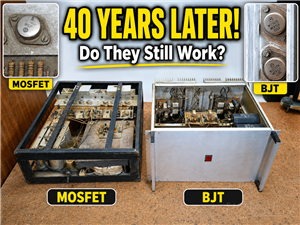 40-Year-Old DIY Power Amplifiers – Do They Still Work - 500W MOSFET & Transistor Amps
This time I want to describe my two DIY super powerful audio amplifiers that I made about 40 years ...
40-Year-Old DIY Power Amplifiers – Do They Still Work - 500W MOSFET & Transistor Amps
This time I want to describe my two DIY super powerful audio amplifiers that I made about 40 years ...
-
 Wi-Fi HaLow Explained! Long-Range Camera Test up to 300m (ESP32 + ThinkNode G4 from ELECROW)
I recently needed to install a security camera at a relatively large distance from my home, more pre...
Wi-Fi HaLow Explained! Long-Range Camera Test up to 300m (ESP32 + ThinkNode G4 from ELECROW)
I recently needed to install a security camera at a relatively large distance from my home, more pre...
-
 Simple Object Recognition with the UNIHIKER K10 – No TensorFlow, No Internet, No Cloud AI
Object recognition has become one of the most popular applications of artificial intelligence and em...
Simple Object Recognition with the UNIHIKER K10 – No TensorFlow, No Internet, No Cloud AI
Object recognition has become one of the most popular applications of artificial intelligence and em...
-
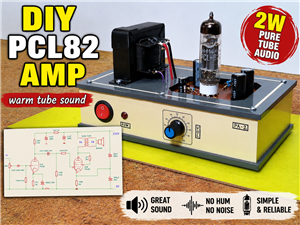 DIY PCL82 Tube Amplifier, Single-Ended Amp with Amazing Sound
The idea for this project came from a local electronics magazine called EMITER, issue 12/13 from 20...
DIY PCL82 Tube Amplifier, Single-Ended Amp with Amazing Sound
The idea for this project came from a local electronics magazine called EMITER, issue 12/13 from 20...
-
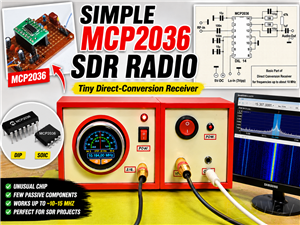 Simple MCP2036 SDR Radio - The Most Unusual Software Defined Radio
SDR (Software Defined Radio) is a radio communication system where many of the key electronic compo...
Simple MCP2036 SDR Radio - The Most Unusual Software Defined Radio
SDR (Software Defined Radio) is a radio communication system where many of the key electronic compo...
-
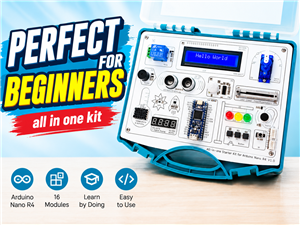 Elecrow All-in-One Arduino Starter Kit Review - 20 Projects & 16 Modules
This time I will describe a simple and practical way to enter the world of microcontrollers, specif...
Elecrow All-in-One Arduino Starter Kit Review - 20 Projects & 16 Modules
This time I will describe a simple and practical way to enter the world of microcontrollers, specif...
-
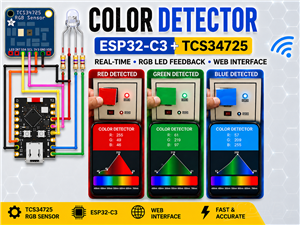 ESP32-C3 Color Detector with TCS34725, Real-Time RGB Detection & Web Interface
Color detection is a fundamental task in many embedded systems – from industrial sorting machines t...
ESP32-C3 Color Detector with TCS34725, Real-Time RGB Detection & Web Interface
Color detection is a fundamental task in many embedded systems – from industrial sorting machines t...
-
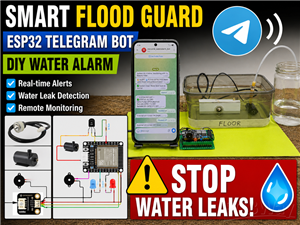 DIY ESP32 Telegram Flood Protection System - Smart Home Automation
Recently I had an unpleasant experience in my home, specifically my ground floor was flooded as a r...
DIY ESP32 Telegram Flood Protection System - Smart Home Automation
Recently I had an unpleasant experience in my home, specifically my ground floor was flooded as a r...
-
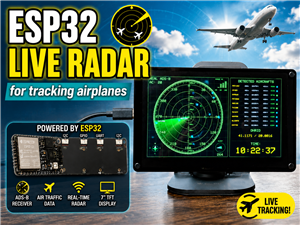 Real-Time Air Traffic Radar using ESP32 + ADS-B Data
ADS-B, which stands for Automatic Dependent Surveillance-Broadcast, is the modern standard for trac...
Real-Time Air Traffic Radar using ESP32 + ADS-B Data
ADS-B, which stands for Automatic Dependent Surveillance-Broadcast, is the modern standard for trac...
-
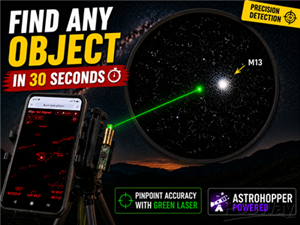 DIY Green Laser Night Sky Object Finder - Find Stars & Galaxies Instantly with great accuracy
As an amateur astronomer, especially at the beginning, the most difficult part of observing the nig...
DIY Green Laser Night Sky Object Finder - Find Stars & Galaxies Instantly with great accuracy
As an amateur astronomer, especially at the beginning, the most difficult part of observing the nig...
-
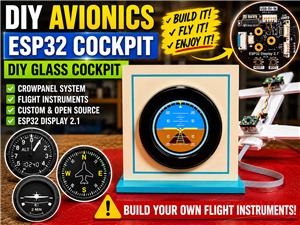 DIY Avionics Simulator with ESP32 - Artificial Horizon, Compass & Altimeter
The inspiration for this project comes from classical aircraft cockpit instruments used for navigat...
DIY Avionics Simulator with ESP32 - Artificial Horizon, Compass & Altimeter
The inspiration for this project comes from classical aircraft cockpit instruments used for navigat...
-
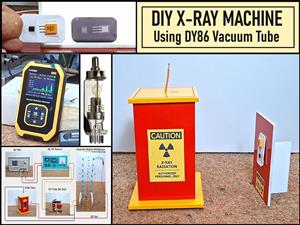 DIY Miniature X-Ray Machine using a TV Vacuum Tube DY86
An X-ray machine (or radiograph) is a quick, painless medical test that produces images of the struc...
DIY Miniature X-Ray Machine using a TV Vacuum Tube DY86
An X-ray machine (or radiograph) is a quick, painless medical test that produces images of the struc...
-
 Simple SDR Receiver Using 2x NE612 - Dual Conversion, Superheterodyne (0.1–30 MHz)
SDR (Software Defined Radio) is a radio system in which most of the functions of a classic radio (f...
Simple SDR Receiver Using 2x NE612 - Dual Conversion, Superheterodyne (0.1–30 MHz)
SDR (Software Defined Radio) is a radio system in which most of the functions of a classic radio (f...
-
 DIY Vintage TV VU Meter with peak indicators
Some time ago in one of my projects I presented you a way to turn a black and white old mini TV int...
DIY Vintage TV VU Meter with peak indicators
Some time ago in one of my projects I presented you a way to turn a black and white old mini TV int...
-
 DIY Tesla Coil based Plasma Rife Machine
In several of my previous videos, I presented you with different ways to make a Rife Machine, from ...
DIY Tesla Coil based Plasma Rife Machine
In several of my previous videos, I presented you with different ways to make a Rife Machine, from ...
-
Programmable Mist Maker - XIAO / QT PY Extension
2119 2 2 -
RadioHAT - Raspberry Pi radio development platform
1801 0 4 -
-
-
-
ARPS-2 – Arduino-Compatible Robot Project Shield for Arduino UNO
4013 0 6 -
A Compact Charging Breakout Board For Waveshare ESP32-C3
4750 3 8 -
AI-driven LoRa & LLM-enabled Kiosk & Food Delivery System
5564 2 2 -