

|
Soldering Iron Kit |
|

|
arduino IDEArduino
|
DIY ESP32 Bioresonance Rife Machine with ZAPPER function
Rife machine therapy is an alternative treatment developed by Dr. Royal Raymond Rife in the 1930s. He believed that certain frequencies could target and eliminate pathogens like bacteria, viruses, and even cancer cells.

The machine purportedly generates frequencies that match those of the targeted organisms, thereby disrupting and "destroying" them without harming the surrounding tissue. However, the scientific and medical communities largely reject Rife therapy due to the lack of solid, peer-reviewed evidence supporting its efficacy. The original Rife machine uses plasma as a medium for radiation at certain frequencies. Today on the Internet you can find several types of Rife machines in which the given set of frequencies is transmitted to the human body through metal electrodes that should be held in the palms during the treatment. Unfortunately, they are sold at extremely high prices even though their effectiveness has not been proven at all.
For these reasons, in one of the previous videos (https://youtu.be/C6WQc_vT1gY), I described a simple and inexpensive way to make such a device if you have basic knowledge of electronics and microcontrollers. Due to the software requirements I used an Arduino mega microcontroller which is harder to get and relatively expensive.
At the request of several of my followers, I reworked the same device, but this time to work with the cheap and widespread ESP32 microcontroller, and even now new functions can be added, but I will consider that option in the future.The code is made a little differently because the ESP32 platform doesn't support the "Tone" library, but in the end the device works great and I think it's worth all the effort.
Like the previous time, the device is simple to make and consists of several components:

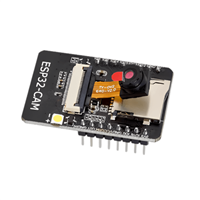
- ESP32 Developement Board
- ST7920 chip based LCD with 128x64 dots resolution
- General Purpose Transistor NPN (in my case 2N2222)
- 3 Buttons
- Resistor 10K and 470R
- 7805 voltage regulator
- and battery
First, let's describe in more detail how to upload the code to the microcontroller.
For this purpose we go to Arduino IDE - File - Preferences - where we add the ESP32 URL to "Board Manager URLs" as follows: (https://raw.githubusercontent.com/espressif/arduino-esp32/gh-pages/package_esp32_index.json
- Now click "Tool-->Board-->Board Manager", and search for "esp32" then click "Install"
- Next on Tools-> ESP32 arduino -> ESP32 dev module
- Follows installation of the U8g2lib library
- For this purpose, we go to sketch - include library - manage libraries - and search for U8G2lib -> install
- After that we paste the code to Arduino IDE , choose apropriate COM port, and press Upload.
By completing this procedure, the code is installed and the device is ready for operation. And now let's see how the device works in real conditions. The start menu appears when turned on.

By pressing the down button we enter the submenu in which we select the disease for which we want to apply therapy. This time, I added a Zapper function to the code that generates a rectangular signal with a frequency of 30 KHz with a duration of 5 minutes, but the therapy can be extended if desired by pressing the middle (enter) button once.

Specifically, the code includes frequencies for therapies for 31 diseases, but we can very easily change and enter frequency arrays for many other diseases. The set of frequencies for each disease can be downloaded for free online if you request a "rife frequency list".
Now that we have selected the therapy for a certain disease, we press the Start button and the duration of the whole therapy, and the elapsed time from its beginning, appears on the screen.

The signal from the generator can be applied to the "patient" through contact of the electrodes with the skin. The electrodes should be stainless and may be in the form of cylinders or plates. During therapy it would be good to immerse them in salt solution for better conductivity.

I am not a medical person and I can not discuss the effect of the device now, but as the output voltage does not exceed the 9V, the use of the device is completely safe for health. And of course, we need to treat bioresonance as supporting conventional therapy.
To confirm what was said before, I will now observe the shape of the generated signal on an Oscilloscope. First, the Zapper program which, as we see, generates a rectangular signal with a frequency of 30 MHz. Next, as an example, let's take Acute Pain, which consists of a series of 10 different frequencies lasting one minute each.

As We see on Scope, the signal has a different frequencies which change every minute of therapy. The elapsed time as well as the end of the therapy are also marked on the display, while to continue the same therapy we have to press Enter, and to select another therapy press on the bottom button.
And finally a short conclusion. I am not a medical expert and I cannot discuss the effect of the device, but only a simple and inexpensive way to make such a device yourself, because similar commercial devices are sold at astronomical prices. If you are considering using this device for health-related purposes, it is crucial to consult a qualified healthcare professional to ensure safety and efficacy. This video only explains the technical aspect of this device (how to build it). Тhe device is built into a suitable box made of PVC with a thickness of 3 ansd 5 mm and coated with self-adhesive colored wallpaper.

#include <U8g2lib.h>
#include <driver/ledc.h>  // ESP32 PWM library

// U8G2_ST7920_128X64_1_SW_SPI u8g2(U8G2_R0, /* clock=*/ 18, /* data=*/ 23, /* CS=*/ 5, /* reset=*/ 16);
U8G2_ST7920_128X64_F_SW_SPI u8g2(U8G2_R0, /* clock=*/ 18, /* data=*/ 23, /* CS=*/ 5, /* reset=*/ 22); // ESP32
#define DEBOUNCE_DELAY 50 // 50ms debounce time
unsigned long lastDebounceTime1 = 0;
unsigned long lastDebounceTime2 = 0;
unsigned long lastDebounceTime3 = 0;
const int index_choroby = 37;
const char* choroby[index_choroby] = {
  "ZAPPER", "Angina", "Stomachache", "Pain in general", "Headaches",
  "Infection", "Acute pain", "Back pain 2", "Arthralgia", "Toothache",
  "No appetite", "No taste", "Motion sickness", "Hoarseness", "Dolegl. gastric",
  "Prostate ailments", "Deafness", "Flu", "Hemorrhoids", "Kidney stones",
  "Cough", "runny nose", "Hair loss", "Hypertension", "Low pressure",
  "Disease. thyroid gland", "Bad breath", "General herpes", "Epilepsy", "Constipation",
  "Dizziness"
};

const int liczby[index_choroby * 10] = {
  30000 ,30000 ,30000  ,30000  ,30000  ,0      ,0      ,0      ,0      ,0      , //"ZAPPER"
  787   ,776   ,727    ,690    ,465    ,428    ,660    ,0      ,0      ,0      , //"Angina"
  10000 ,3000  ,95     ,0      ,0      ,0      ,0      ,0      ,0      ,0      , //"Stomachache"
  3000  ,2720  ,95     ,666    ,80     ,40     ,0      ,0      ,0      ,0      , //"Pain in general"
  10000 ,144   ,160    ,520    ,304    ,0      ,0      ,0      ,0      ,0      , //"Headaches"
  3000  ,95    ,880    ,1550   ,802    ,787    ,776    ,727    ,0      ,0      , //"Infection"
  3000  ,95    ,10000  ,1550   ,802    ,880    ,787    ,727    ,690    ,666    , //"Acute pain"
  787   ,784   ,776    ,728    ,727    ,465    ,432    ,0      ,0      ,0      , //"Back pain 2"
  160   ,500   ,1600   ,5000   ,324    ,528    ,0      ,0      ,0      ,0      , //"Arthralgia"
  5170  ,3000  ,2720   ,2489   ,1800   ,1600   ,1550   ,880    ,832    ,666    , //"Toothache"
  10000 ,465   ,444    ,1865   ,125    ,95     ,72     ,880    ,787    ,727    , //"No appetite"
  10000 ,20    ,0      ,0      ,0      ,0      ,0      ,0      ,0      ,0      , //"No taste"
  10000 ,5000  ,648    ,624    ,600    ,465    ,440    ,648    ,444    ,1865   , //"Motion sickness"
  880   ,760   ,727    ,0      ,0      ,0      ,0      ,0      ,0      ,0      , //"Hoarseness"
  10000 ,1550  ,802    ,880    ,832    ,787    ,727    ,465    ,0      ,0      , //"Dolegl. gastric",
  2050  ,880   ,1550   ,802    ,787    ,727    ,465    ,20     ,0      ,0      , //"Bladder and prostate ailments",
  10000 ,1550  ,880    ,802    ,787    ,727    ,20     ,0      ,0      ,0      , //"Deafness",
  954   ,889   ,841    ,787    ,763    ,753    ,742    ,523    ,513    ,482    , //"Flu",
  4474  ,6117  ,774    ,1550   ,447    ,880    ,802    ,727    ,0      ,0      , //"Hemorrhoids",
  10000 ,444   ,727    ,787    ,880    ,6000   ,3000   ,1552   ,0      ,0      , //"Kidney stones",
  7760  ,7344  ,3702   ,3672   ,1550   ,1500   ,1234   ,776    ,766    ,728    , //"Cough",
  1800  ,1713  ,1550   ,802    ,800    ,880    ,787    ,727    ,444    ,20     , //"runny nose",
  10000 ,5000  ,2720   ,2170   ,1552   ,880    ,800    ,787    ,727    ,465    , //"Hair loss",
  10000 ,3176  ,2112   ,95     ,324    ,528    ,880    ,787    ,727    ,304    , //"Hypertension",
  727   ,787   ,880    ,0      ,0      ,0      ,0      ,0      ,0      ,0      , //"Low pressure",
  16000 ,10000 ,160    ,80     ,35     ,0      ,0      ,0      ,0      ,0      , //"Disease. thyroid gland"
  1550  ,802   ,880    ,787    ,727    ,0      ,0      ,0      ,0      ,0      , //"Bad breath",
  2950  ,1900  ,1577   ,1550   ,1489   ,1488   ,629    ,464    ,450    ,383    , //"General herpes",
  10000 ,880   ,802    ,787    ,727    ,700    ,650    ,600    ,210    ,125    , //"Epilepsy"'
  3176  ,1550  ,880    ,832    ,802    ,787    ,776    ,727    ,444    ,422    , //"Constipation",
  1550  ,880   ,802    ,784    ,787    ,786    ,766    ,522    ,727    ,72       //"Dizziness",
};

byte inPin1 = 15;
byte inPin2 = 2;
byte inPin3 = 4;
int buzzerPin = 14;  // Define your buzzer pin (make sure it's a valid GPIO pin)

byte i, a, b, c, intr;
byte reading, reading1, reading2, reading3;
byte P1, P2;
unsigned long time0, time1, time2, time3;
const char* tytul;
byte ilosc_f;
byte strona;
char f_str[3];
char i_str[3];
char* k_str;
int f_gen;

void setup(void) {
  u8g2.begin();
  Serial.begin(115200);
  pinMode(13, OUTPUT);
  digitalWrite(13, LOW);
  pinMode(inPin1, INPUT_PULLUP);
  pinMode(inPin2, INPUT_PULLUP);
  pinMode(inPin3, INPUT_PULLUP);
  pinMode(buzzerPin, OUTPUT);
  P1 = 0; P2 = 1;
  intr = 0; strona = 0;
}

void loop(void) {
  if (intr == 1) { stuffHappened(); }
  u8g2.firstPage();
  do {
    if (intr == 0) { Intro(); }
    if (intr == 1) { Menu(); }
  } while (u8g2.nextPage());
  if (intr == 0) { delay(1000); intr = 1; }
  delay(20);
}

void Intro(void) {
  u8g2.setFont(u8g2_font_helvB12_te);
  u8g2.drawStr(8, 20, "Bio resonance");
  u8g2.drawStr(11, 45, "RIFE machine");
  u8g2.setFont(u8g2_font_6x12_te);
  u8g2.drawStr(20, 62, "Click  to start");
  u8g2.setFont(u8g2_font_open_iconic_arrow_1x_t);
  u8g2.drawGlyph(52, 62, 64);
}

void Menu(void) {
  u8g2.setFont(u8g2_font_6x12_te);
  tytul = "  ILLNESS";
  Ramka();
  for (i = strona; i < 6 + strona; i++) {
    if (i <= index_choroby - 1) {
      u8g2.drawStr(10, 20 + 10 * (i - strona), choroby[i]);
    }
  }
}

void Ramka(void) {
  u8g2.drawFrame(0, 0, 128, 64);
  u8g2.drawBox(0, 0, 128, 10);
  u8g2.setDrawColor(2);
  u8g2.setFontMode(1);
  u8g2.drawStr(30, 8, tytul);
  u8g2.setDrawColor(1);
  u8g2.setFontMode(1);
}

void stuffHappened(void) {
  P1 = 0; P2 = 0;
  do { Dipsw(); } while (P2 == 0);
}

void Dipsw(void) {
  unsigned long currentTime = millis();

  // Read button 1
  reading = digitalRead(inPin1);
  if (reading == LOW && (currentTime - lastDebounceTime1) > DEBOUNCE_DELAY) {
    lastDebounceTime1 = currentTime;
    P1++;
    if (P1 > index_choroby) { P1 = index_choroby; }
    strona = (P1 > 35) ? 35 : (P1 / 5) * 5;
    Wyswietl_kursor();
  }

  // Read button 2
  reading2 = digitalRead(inPin2);
  if (reading2 == LOW && (currentTime - lastDebounceTime2) > DEBOUNCE_DELAY) {
    lastDebounceTime2 = currentTime;
    P1--;
    if (P1 < 1) { P1 = 1; }
    strona = (P1 > 35) ? 35 : (P1 / 5) * 5;
    Wyswietl_kursor();
  }

  // Read button 3
  reading3 = digitalRead(inPin3);
  if (reading3 == LOW && (currentTime - lastDebounceTime3) > DEBOUNCE_DELAY) {
    lastDebounceTime3 = currentTime;
    tytul = choroby[P1 - 1];
    Generuj();
  }
}

void Wyswietl_kursor(void) {
  u8g2.firstPage();
  do {
    u8g2.drawHLine(5, 11 + (P1 - strona) * 10, 118);
    u8g2.drawHLine(5, 2 + (P1 - strona) * 10, 118);
    u8g2.drawVLine(5, 2 + (P1 - strona) * 10, 10);
    u8g2.drawVLine(122, 2 + (P1 - strona) * 10, 10);
    Menu();
  } while (u8g2.nextPage());
}

void Generuj(void) {
  int f;
  f = 0; ilosc_f = 0; k_str = "";

  // Count how many frequencies are associated with the illness
  for (i = 0; i < 10; i++) {
    f = liczby[10 * (P1 - 1) + i];
    if (f > 0) ilosc_f++;
  }

  // Convert the count of frequencies to a string for display
  strcpy(f_str, u8x8_u8toa(ilosc_f, 2));

  // Loop through each frequency and generate the tone for 1 minute
  for (i = 0; i < ilosc_f; i++) {
    f_gen = liczby[10 * (P1 - 1) + i];  // Get the current frequency
    strcpy(i_str, u8x8_u8toa(i + 1, 2)); // Update the index of frequency being played

    DisplayRamka();  // Display the frequency information

    // Call the beep function for 1 minute (60000 milliseconds)
    beep(f_gen, 60000);  // Play the frequency for 1 minute

    delay(1000);  // Add a 1-second delay between frequencies
  }

  // Show "FINISH" once all frequencies have been played
  k_str = "FINISH";
  DisplayRamka();
}

void beep(int note, int duration) {

  // Channel 0, Frequency set by `note`, 8-bit resolution
  ledcSetup(0, note, 8);

  // Attach the buzzer pin to PWM channel 0
  ledcAttachPin(buzzerPin, 0);

  // Write the duty cycle (128 out of 255 for 50% duty cycle)
  ledcWrite(0, 128);

  delay(duration);  // Hold the note for the desired duration

  // Stop the tone by setting the duty cycle to 0
  ledcWrite(0, 0);
}

void   DisplayRamka() {
  u8g2.firstPage();
  do {
    u8g2.setFont(u8g2_font_6x12_te);           // choosing small fonts
    Ramka();
    u8g2.drawStr(22, 25, "Start of therapy");
    u8g2.drawStr(25, 38, "Time:");
    u8g2.drawStr(58, 38, f_str);
    u8g2.drawStr(75, 38, "min.");
    u8g2.setFont(u8g2_font_helvB14_te);         // choosing large fonts
    if (k_str == "") u8g2.drawStr(55, 58, i_str);
    if (k_str != "") u8g2.drawStr(22, 58, k_str);
  } while (u8g2.nextPage());
}

DIY ESP32 Bioresonance Rife Machine with ZAPPER function


Raspberry Pi 5 7 Inch Touch Screen IPS 1024x600 HD LCD HDMI-compatible Display for RPI 4B 3B+ OPI 5 AIDA64 PC Secondary Screen(Without Speaker)
BUY NOW


- Comments(2)
- Likes(2)
More by Mirko Pavleski
-
 Arduino 3D Printed self Balancing Cube
Self-balancing devices are electronic devices that use sensors and motors to keep themselves balanc...
Arduino 3D Printed self Balancing Cube
Self-balancing devices are electronic devices that use sensors and motors to keep themselves balanc...
-
 Building a Mini Fostex Horn Speaker with a 2-Inch Full-Range Driver
A back-loaded horn speaker is a loudspeaker design that channels the rear sound wave of a driver th...
Building a Mini Fostex Horn Speaker with a 2-Inch Full-Range Driver
A back-loaded horn speaker is a loudspeaker design that channels the rear sound wave of a driver th...
-
 ESP32 Moon Lamp That Shows the Real Moon Phase on Crowpanel Round Dispaly
Recently on the Hackaday portal I came across a very interesting project called Moon Display by aut...
ESP32 Moon Lamp That Shows the Real Moon Phase on Crowpanel Round Dispaly
Recently on the Hackaday portal I came across a very interesting project called Moon Display by aut...
-
 40-Year-Old DIY Power Amplifiers – Do They Still Work - 500W MOSFET & Transistor Amps
This time I want to describe my two DIY super powerful audio amplifiers that I made about 40 years ...
40-Year-Old DIY Power Amplifiers – Do They Still Work - 500W MOSFET & Transistor Amps
This time I want to describe my two DIY super powerful audio amplifiers that I made about 40 years ...
-
 Wi-Fi HaLow Explained! Long-Range Camera Test up to 300m (ESP32 + ThinkNode G4 from ELECROW)
I recently needed to install a security camera at a relatively large distance from my home, more pre...
Wi-Fi HaLow Explained! Long-Range Camera Test up to 300m (ESP32 + ThinkNode G4 from ELECROW)
I recently needed to install a security camera at a relatively large distance from my home, more pre...
-
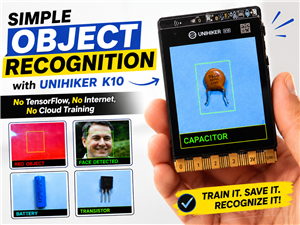 Simple Object Recognition with the UNIHIKER K10 – No TensorFlow, No Internet, No Cloud AI
Object recognition has become one of the most popular applications of artificial intelligence and em...
Simple Object Recognition with the UNIHIKER K10 – No TensorFlow, No Internet, No Cloud AI
Object recognition has become one of the most popular applications of artificial intelligence and em...
-
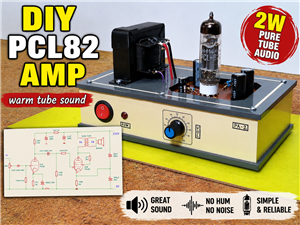 DIY PCL82 Tube Amplifier, Single-Ended Amp with Amazing Sound
The idea for this project came from a local electronics magazine called EMITER, issue 12/13 from 20...
DIY PCL82 Tube Amplifier, Single-Ended Amp with Amazing Sound
The idea for this project came from a local electronics magazine called EMITER, issue 12/13 from 20...
-
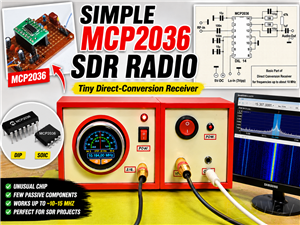 Simple MCP2036 SDR Radio - The Most Unusual Software Defined Radio
SDR (Software Defined Radio) is a radio communication system where many of the key electronic compo...
Simple MCP2036 SDR Radio - The Most Unusual Software Defined Radio
SDR (Software Defined Radio) is a radio communication system where many of the key electronic compo...
-
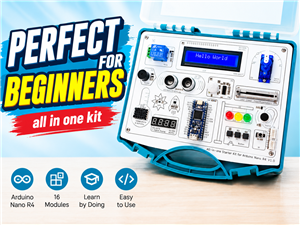 Elecrow All-in-One Arduino Starter Kit Review - 20 Projects & 16 Modules
This time I will describe a simple and practical way to enter the world of microcontrollers, specif...
Elecrow All-in-One Arduino Starter Kit Review - 20 Projects & 16 Modules
This time I will describe a simple and practical way to enter the world of microcontrollers, specif...
-
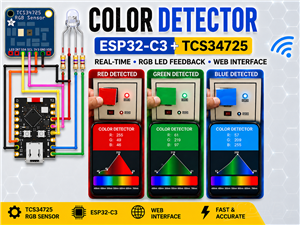 ESP32-C3 Color Detector with TCS34725, Real-Time RGB Detection & Web Interface
Color detection is a fundamental task in many embedded systems – from industrial sorting machines t...
ESP32-C3 Color Detector with TCS34725, Real-Time RGB Detection & Web Interface
Color detection is a fundamental task in many embedded systems – from industrial sorting machines t...
-
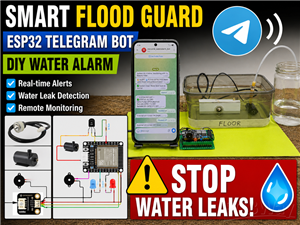 DIY ESP32 Telegram Flood Protection System - Smart Home Automation
Recently I had an unpleasant experience in my home, specifically my ground floor was flooded as a r...
DIY ESP32 Telegram Flood Protection System - Smart Home Automation
Recently I had an unpleasant experience in my home, specifically my ground floor was flooded as a r...
-
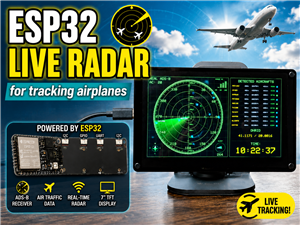 Real-Time Air Traffic Radar using ESP32 + ADS-B Data
ADS-B, which stands for Automatic Dependent Surveillance-Broadcast, is the modern standard for trac...
Real-Time Air Traffic Radar using ESP32 + ADS-B Data
ADS-B, which stands for Automatic Dependent Surveillance-Broadcast, is the modern standard for trac...
-
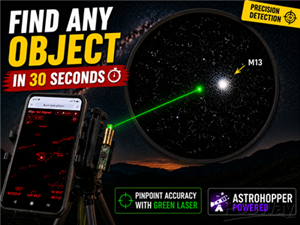 DIY Green Laser Night Sky Object Finder - Find Stars & Galaxies Instantly with great accuracy
As an amateur astronomer, especially at the beginning, the most difficult part of observing the nig...
DIY Green Laser Night Sky Object Finder - Find Stars & Galaxies Instantly with great accuracy
As an amateur astronomer, especially at the beginning, the most difficult part of observing the nig...
-
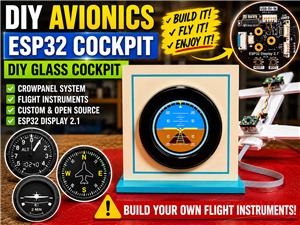 DIY Avionics Simulator with ESP32 - Artificial Horizon, Compass & Altimeter
The inspiration for this project comes from classical aircraft cockpit instruments used for navigat...
DIY Avionics Simulator with ESP32 - Artificial Horizon, Compass & Altimeter
The inspiration for this project comes from classical aircraft cockpit instruments used for navigat...
-
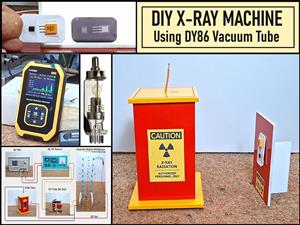 DIY Miniature X-Ray Machine using a TV Vacuum Tube DY86
An X-ray machine (or radiograph) is a quick, painless medical test that produces images of the struc...
DIY Miniature X-Ray Machine using a TV Vacuum Tube DY86
An X-ray machine (or radiograph) is a quick, painless medical test that produces images of the struc...
-
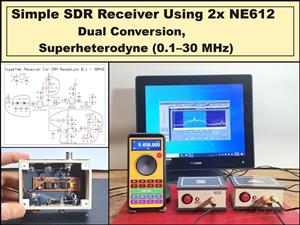 Simple SDR Receiver Using 2x NE612 - Dual Conversion, Superheterodyne (0.1–30 MHz)
SDR (Software Defined Radio) is a radio system in which most of the functions of a classic radio (f...
Simple SDR Receiver Using 2x NE612 - Dual Conversion, Superheterodyne (0.1–30 MHz)
SDR (Software Defined Radio) is a radio system in which most of the functions of a classic radio (f...
-
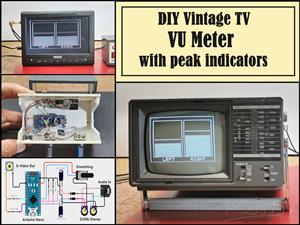 DIY Vintage TV VU Meter with peak indicators
Some time ago in one of my projects I presented you a way to turn a black and white old mini TV int...
DIY Vintage TV VU Meter with peak indicators
Some time ago in one of my projects I presented you a way to turn a black and white old mini TV int...
-
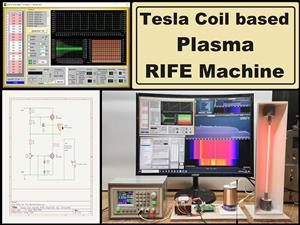 DIY Tesla Coil based Plasma Rife Machine
In several of my previous videos, I presented you with different ways to make a Rife Machine, from ...
DIY Tesla Coil based Plasma Rife Machine
In several of my previous videos, I presented you with different ways to make a Rife Machine, from ...
-
Programmable Mist Maker - XIAO / QT PY Extension
2056 2 2 -
RadioHAT - Raspberry Pi radio development platform
1752 0 4 -
-
-
-
ARPS-2 – Arduino-Compatible Robot Project Shield for Arduino UNO
3980 0 6 -
A Compact Charging Breakout Board For Waveshare ESP32-C3
4714 3 8 -
AI-driven LoRa & LLM-enabled Kiosk & Food Delivery System
5520 2 2 -