|
|
Arduino Nano R3 |
x 1 | |
|
|
LCD display with ST7920 driver chip |
x 1 | |
|
|
Si5351 Signal Generator Module |
x 1 | |
|
|
Rotary Encoder with Push-Button |
x 1 | |
|
|
Pushbutton |
x 1 | |
|
|
Switch |
x 1 |

|
Soldering Iron Wire |
|

|
arduino IDEArduino
|
Arduino VFO Project with a Large LCD Display
A Variable Frequency Oscillator (VFO) is an electronic oscillator whose output frequency can be adjusted or varied over a specified range. It generates periodic waveforms, whose frequency can be dynamically controlled. VFOs are crucial in a wide range of applications, particularly in communications, testing, and signal processing.
In one of my previous videos I presented a way to make such a device with an ESP32 microcontroller on a color TFT display. This time I will present you a VFO which according to its characteristics is identical to the previously mentioned one, although it has an incomparably simpler code, and is made with an Arduino Nano microcontroller.
The original device that I present to you in this video is the work of Julio Cesar and all credits go to him. In fact, I made the original device more than a year ago on the SH1106 OLED display, which is larger than the SSD 1306, but even this display is relatively small and difficult to read. Therefore, I decided with my modest programming experience to rewrite the code for the ST7920 LCD Display, which is significantly larger, with a visual area of 70x40 mm.

This project is sponsored by PCBWay. They has all the services you need to create your project at the best price, whether is a scool project, or complex professional project. On PCBWay you can share your experiences, or get inspiration for your next project. They also provide completed Surface mount SMT PCB assemblY service at a best price, and ISO9001 quality control. Visit pcbway.com for more services

Since this display is not supported by the Adafruit GFX library, I used the U8G2 library in my project, which currently has support for a huge number of different display types, so by changing only one line in the code, you could use a related display.
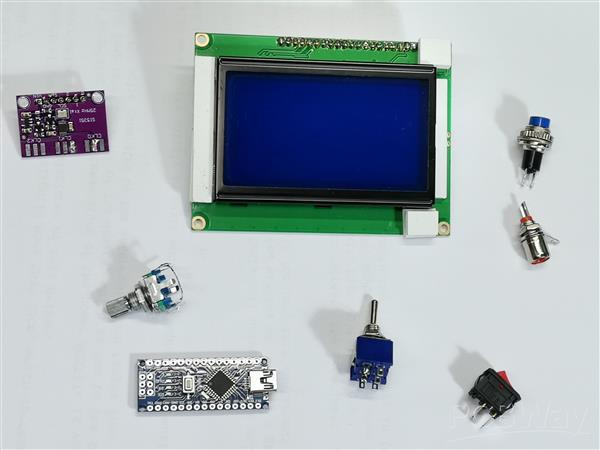
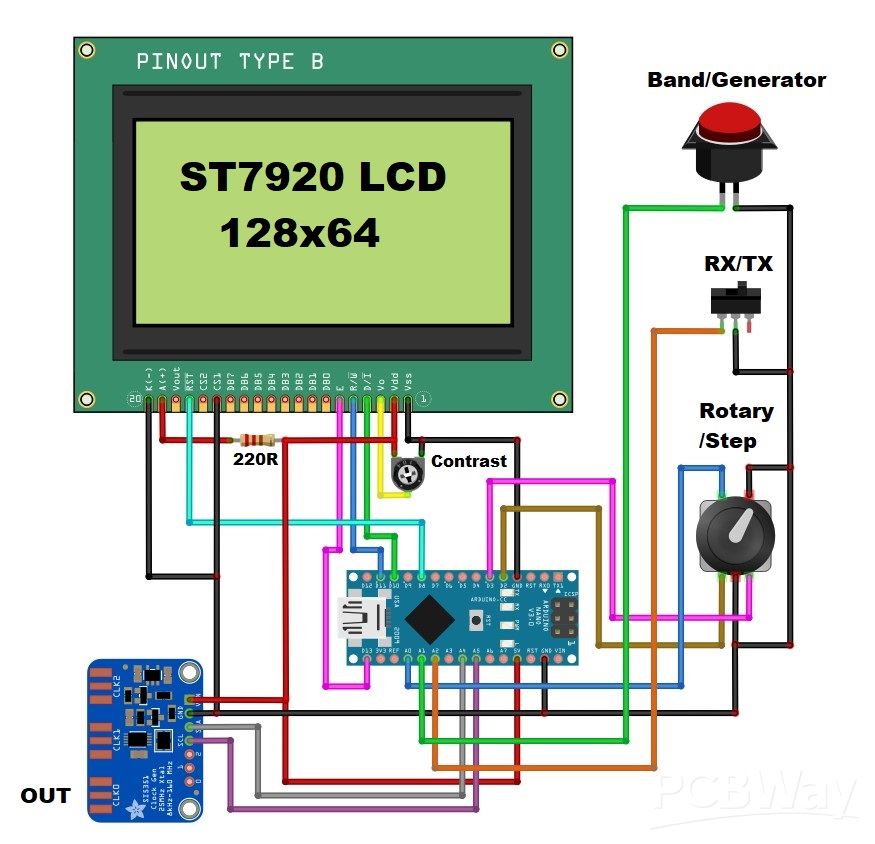
The device is really very simple to make and consists of a few components.
- Arduino nano microcontroller
- Si5351 Signal Generator module
- LCD display with ST7920 driver chip
- Rotary Encoder with push button
- band selection button
- and RX-TX switch

Now let me briefly describe how the device works. Immediately after switching on, the display is initialized and then the working screen appears. The starting frequency is entered previously in the code and in this case it is the 40m amateur band. The frequency is changed with the rotary encoder. The tuning step is selected with the encoder knob and can be 1Hz, 10Hz, 1kHz, 5kHz, 10kHz and 1MHz. With this button we can select one of the 20Band Presets, as well as the Generator function mode. Operation range is from 10kHz to up to 200 MHz. In the code we can set the Intermediate Frequency (IF) offset (+ or -) for use in Superheterodyne or other type of radio receivers. It also has a selector for RX or TX mode of operation which is ideal for use in Homebrew QRP Transceivers. VFO also consist bargraph type S-meter. The signal for the S-meter is fed to the A3 analog input of the Arduino. This input has adjustable sensitivity, the gain must be adjusted in Sketch, accepting signals from 500mV to 5V (max).

A more detailed description of the method of operation can be found on the author's page. And now let's do a short test to see if the output signal corresponds to the value presented on the display. For this purpose I will use an oscilloscope. As can be seen, at lower frequencies the signal is rectangular, and with increasing the generated frequency, it gradually turns into a sinusoidal one as a result of the slow transition from low to high level and vice versa.

However, this is not a problem at all, at least in radio engineering where I most often plan to use this device. In fact, I plan for one of my next projects to be a simple Direct Conversion receiver with a VFO presented in this video.
And finally, a short conclusion. This is a cheap and easy-to-build VFO device that is almost indispensable in radio engineering, especially in DIY radio receivers. Credits to the creator of the original project, CesarSound.

#include <Wire.h>
#include <Rotary.h>
#include <si5351.h>
#include <U8g2lib.h>

// Pin definitions
#define PIN_TUNESTEP A0
#define PIN_BAND     A1
#define PIN_RX_TX    A2
#define PIN_ADC      A3
#define PIN_ROT_1    2
#define PIN_ROT_2    3
#define PIN_RST      8
#define PIN_CS       10
#define PIN_MOSI     11
#define PIN_SCK      13

// Constants
#define IF_FREQ    455
#define BAND_INIT  7
#define XT_CAL_F   33000
#define S_GAIN     303

// Frequency range limits
const uint32_t MIN_FREQ = 10000UL;      // 10 kHz
const uint32_t MAX_FREQ = 225000000UL;  // 225 MHz

// Band names stored in program memory
const char BAND_0[] PROGMEM = " GEN";
const char BAND_1[] PROGMEM = " MW";
const char BAND_2[] PROGMEM = " 160m";
const char BAND_3[] PROGMEM = " 80m";
const char BAND_4[] PROGMEM = " 60m";
const char BAND_5[] PROGMEM = " 49m";
const char BAND_6[] PROGMEM = " 40m";
const char BAND_7[] PROGMEM = " 31m";
const char BAND_8[] PROGMEM = " 25m";
const char BAND_9[] PROGMEM = " 22m";
const char BAND_10[] PROGMEM = " 20m";
const char BAND_11[] PROGMEM = " 19m";
const char BAND_12[] PROGMEM = " 16m";
const char BAND_13[] PROGMEM = " 13m";
const char BAND_14[] PROGMEM = " 11m";
const char BAND_15[] PROGMEM = " 10m";
const char BAND_16[] PROGMEM = " 6m";
const char BAND_17[] PROGMEM = " WFM";
const char BAND_18[] PROGMEM = " AIR";
const char BAND_19[] PROGMEM = " 2m";
const char BAND_20[] PROGMEM = " 1m";

const char* const BAND_NAMES[] PROGMEM = {
  BAND_0, BAND_1, BAND_2, BAND_3, BAND_4, BAND_5, BAND_6, BAND_7, BAND_8, BAND_9,
  BAND_10, BAND_11, BAND_12, BAND_13, BAND_14, BAND_15, BAND_16, BAND_17,
  BAND_18, BAND_19, BAND_20
};

// Frequency presets stored in program memory
const uint32_t FREQ_PRESETS[] PROGMEM = {
  100000UL,    // GEN
  800000UL,    // MW
  1800000UL,   // 160m
  3650000UL,   // 80m
  4985000UL,   // 60m
  6180000UL,   // 49m
  7200000UL,   // 40m
  10000000UL,  // 31m
  11780000UL,  // 25m
  13630000UL,  // 22m
  14100000UL,  // 20m
  15000000UL,  // 19m
  17655000UL,  // 16m
  21525000UL,  // 13m
  27015000UL,  // 11m
  28400000UL,  // 10m
  50000000UL,  // 6m
  100000000UL, // WFM
  130000000UL, // AIR
  144000000UL, // 2m
  220000000UL  // 1m
};

// Frequency steps
const uint32_t FREQ_STEPS[] PROGMEM = {
  1000000UL,  // 1 MHz
  1UL,        // 1 Hz
  10UL,       // 10 Hz
  1000UL,     // 1 kHz
  5000UL,     // 5 kHz
  10000UL     // 10 kHz
};

// Object initialization
U8G2_ST7920_128X64_1_SW_SPI u8g2(U8G2_R0, PIN_SCK, PIN_MOSI, PIN_CS, PIN_RST);
Rotary r = Rotary(PIN_ROT_1, PIN_ROT_2);
Si5351 si5351;

// Global variables
uint32_t freq = 7200000UL;      // Start at 7.2MHz
uint32_t freqold;
uint32_t fstep = 1000;          // Default step 1kHz
int16_t interfreq = IF_FREQ;
int16_t cal = XT_CAL_F;
uint8_t smval;
uint8_t encoder = 1;
uint8_t stp = 4;
uint8_t n = 1;
uint8_t count = BAND_INIT;
uint8_t prevCount = BAND_INIT;
uint8_t x, xo;
bool sts = 0;
bool displayOK = false;

// Function prototypes
bool setSi5351Frequency(Si5351& si5351, uint32_t freq, int16_t interfreq);
void check_inputs();
void update_display_paged();
void initializeSi5351();

// Encoder interrupt service routine
ISR(PCINT2_vect) {
  char result = r.process();
  if (result == DIR_CW) {
    if (encoder == 1) {
      uint32_t new_freq = freq + fstep;
      if (new_freq <= MAX_FREQ) {
        freq = new_freq;
        n = (n >= 42) ? 1 : n + 1;
      }
    }
  }
  else if (result == DIR_CCW) {
    if (encoder == 1) {
      uint32_t new_freq = freq;
      if (freq >= fstep) {
        new_freq = freq - fstep;
        if (new_freq >= MIN_FREQ) {
          freq = new_freq;
          n = (n <= 1) ? 42 : n - 1;
        }
      }
    }
  }
}

void setup() {
  Serial.begin(9600);
  Serial.println(F("VFO Starting..."));

  Wire.begin();

  if (!u8g2.begin()) {
    Serial.println(F("Display init failed!"));
    while (1) { delay(1000); }
  }

  // Display initialization test
  u8g2.setFont(u8g2_font_6x12_tr);
  u8g2.firstPage();
  do {
    u8g2.drawFrame(0, 0, 128, 64);
    u8g2.drawStr(20, 32, "Initializing...");
  } while (u8g2.nextPage());
  delay(1000);

  Serial.println(F("Display initialized"));
  displayOK = true;

  // Initialize pins
  pinMode(PIN_ROT_1, INPUT_PULLUP);
  pinMode(PIN_ROT_2, INPUT_PULLUP);
  pinMode(PIN_TUNESTEP, INPUT_PULLUP);
  pinMode(PIN_BAND, INPUT_PULLUP);
  pinMode(PIN_RX_TX, INPUT_PULLUP);

  // Initialize Si5351
  initializeSi5351();

  // Setup rotary encoder interrupts
  PCICR |= (1 << PCIE2);
  PCMSK2 |= (1 << PCINT18) | (1 << PCINT19);
  sei();

  // Set initial frequency
  freq = pgm_read_dword(&FREQ_PRESETS[count - 1]);

  Serial.println(F("Setup complete"));
}

void initializeSi5351() {
  Serial.println(F("Initializing Si5351..."));
  if (!si5351.init(SI5351_CRYSTAL_LOAD_8PF, 0, 0)) {
    Serial.println(F("Si5351 init failed!"));
  }
  si5351.reset();
  delay(10);
  si5351.set_correction(cal, SI5351_PLL_INPUT_XO);
  si5351.drive_strength(SI5351_CLK0, SI5351_DRIVE_8MA);
  si5351.output_enable(SI5351_CLK0, 1);
}

bool setSi5351Frequency(Si5351& si5351, uint32_t freq, int16_t interfreq) {
  // Check if frequency is within valid range
  if (freq < MIN_FREQ || freq > MAX_FREQ) {
    return false;
  }

  uint64_t output_freq = (freq + (interfreq * 1000ULL)) * 100ULL;

  // Handle GEN mode specially
  if (count == 1) {
    si5351.reset();
    delay(10);
    si5351.set_correction(cal, SI5351_PLL_INPUT_XO);
    si5351.drive_strength(SI5351_CLK0, SI5351_DRIVE_8MA);
  }

  // Set the frequency
  si5351.set_freq(output_freq, SI5351_CLK0);
  si5351.output_enable(SI5351_CLK0, 1);

  return true;
}

void loop() {
  if (!displayOK) return;

  // Process frequency changes with error handling
  if (freqold != freq) {
    if (!setSi5351Frequency(si5351, freq, interfreq)) {
      // If frequency setting fails, try to recover
      si5351.reset();
      delay(10);
      si5351.set_correction(cal, SI5351_PLL_INPUT_XO);
      si5351.drive_strength(SI5351_CLK0, SI5351_DRIVE_8MA);
      setSi5351Frequency(si5351, freq, interfreq);
    }
    freqold = freq;
  }

  // Check inputs
  check_inputs();

  // Update display
  update_display_paged();

  // Read signal meter
  smval = analogRead(PIN_ADC);
  x = constrain(map(smval, 0, S_GAIN, 1, 14), 1, 14);
}

void check_inputs() {
  if (digitalRead(PIN_TUNESTEP) == LOW) {
    stp = (stp % 6) + 1;
    fstep = pgm_read_dword(&FREQ_STEPS[stp - 1]);
    delay(300);
  }

  if (digitalRead(PIN_BAND) == LOW) {
    uint8_t newCount = (count % 21) + 1;

    // Reset Si5351 when entering or leaving GEN mode
    if (newCount == 1 || count == 1) {
      si5351.reset();
      delay(10);
      si5351.set_correction(cal, SI5351_PLL_INPUT_XO);
      si5351.drive_strength(SI5351_CLK0, SI5351_DRIVE_8MA);
      si5351.output_enable(SI5351_CLK0, 1);
    }

    count = newCount;
    freq = pgm_read_dword(&FREQ_PRESETS[count - 1]);
    prevCount = count;
    delay(300);
  }

  sts = (digitalRead(PIN_RX_TX) == LOW);
  interfreq = (sts || count == 1) ? 0 : IF_FREQ;
}

void update_display_paged() {
  u8g2.firstPage();
  do {
    // Display frequency
    char buffer[16];
    uint32_t m = freq / 1000000UL;
    uint32_t k = (freq % 1000000UL) / 1000UL;
    uint32_t h = (freq % 1000UL);

    u8g2.setFont(u8g2_font_10x20_tr);

    if (m < 1) {
      sprintf(buffer, "%03lu.%03lu", k, h);
      u8g2.drawStr(41, 17, buffer);
    } else if (m < 100) {
      sprintf(buffer, "%lu.%03lu.%03lu", m, k, h);
      u8g2.drawStr(15, 17, buffer);
    } else {
      sprintf(buffer, "%lu.%03lu.%03lu", m, k, h);
      u8g2.drawStr(15, 17, buffer);
    }

    // Draw interface elements
    u8g2.setFont(u8g2_font_6x12_tr);
    u8g2.drawHLine(0, 22, 128);
    u8g2.drawHLine(0, 45, 128);
    u8g2.drawHLine(15, 54, 67);
    u8g2.drawVLine(105, 26, 15);
    u8g2.drawVLine(87, 26, 15);
    u8g2.drawVLine(87, 50, 15);

    // Display RX/TX status
    u8g2.drawStr(91, 37, sts ? "TX" : "RX");

    // Display IF frequency
    sprintf(buffer, "IF:%d", interfreq);
    u8g2.drawStr(90, 59, buffer);

    // Display LO value
    sprintf(buffer, "LO:%d", interfreq);
    u8g2.drawStr(110, 38, buffer);

    // Display step
    u8g2.drawStr(54, 32, "STEP");
    switch(stp) {
      case 1: u8g2.drawStr(54, 42, "1MHz"); break;
      case 2: u8g2.drawStr(54, 42, "1Hz"); break;
      case 3: u8g2.drawStr(54, 42, "10Hz"); break;
      case 4: u8g2.drawStr(54, 42, "1kHz"); break;
      case 5: u8g2.drawStr(54, 42, "5kHz"); break;
      case 6: u8g2.drawStr(54, 42, "10kHz"); break;
    }

    // Display band name
    u8g2.setFont(u8g2_font_10x20_tr);
    strcpy_P(buffer, (char*)pgm_read_word(&(BAND_NAMES[count - 1])));
    u8g2.drawStr(0, 40, buffer);

    // Draw meters
    u8g2.setFont(u8g2_font_6x12_tr);
    byte y = map(n, 1, 42, 1, 14);

    u8g2.drawStr(0, 54, "TU");
    u8g2.drawBox(15 + (y-1)*5, 47, 2, 6);

    u8g2.drawStr(0, 63, "SM");
    for (byte i = 1; i <= x; i++) {
      u8g2.drawBox(15 + (i-1)*5, 57, 2, 6);
    }

  } while (u8g2.nextPage());
}
Arduino VFO Project with a Large LCD Display


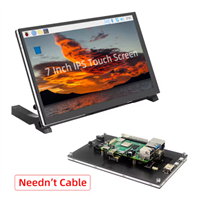
Raspberry Pi 5 7 Inch Touch Screen IPS 1024x600 HD LCD HDMI-compatible Display for RPI 4B 3B+ OPI 5 AIDA64 PC Secondary Screen(Without Speaker)
BUY NOW


- Comments(3)
- Likes(1)
More by Mirko Pavleski
-
 Arduino 3D Printed self Balancing Cube
Self-balancing devices are electronic devices that use sensors and motors to keep themselves balanc...
Arduino 3D Printed self Balancing Cube
Self-balancing devices are electronic devices that use sensors and motors to keep themselves balanc...
-
 DIY ESP32 Universal Timer with Touchscreen & Rotary Encoder
In several of my previous videos, I presented different projects based on the CrowPanel 2.1-inch HM...
DIY ESP32 Universal Timer with Touchscreen & Rotary Encoder
In several of my previous videos, I presented different projects based on the CrowPanel 2.1-inch HM...
-
 Build a Real 5-Band Parametric EQ with ESP32 + WM8960 - Stereo DSP Audio Processor
Audio equalizer (EQ) is an electronic device that allows control over the strength of different fre...
Build a Real 5-Band Parametric EQ with ESP32 + WM8960 - Stereo DSP Audio Processor
Audio equalizer (EQ) is an electronic device that allows control over the strength of different fre...
-
 Bass Reflex vs Sealed vs Horn – Same 2 inch Speaker Test
In one of the previous videos I presented the making of a miniature Horn type speaker box with a 2 ...
Bass Reflex vs Sealed vs Horn – Same 2 inch Speaker Test
In one of the previous videos I presented the making of a miniature Horn type speaker box with a 2 ...
-
 Building a Mini Fostex Horn Speaker with a 2-Inch Full-Range Driver
A back-loaded horn speaker is a loudspeaker design that channels the rear sound wave of a driver th...
Building a Mini Fostex Horn Speaker with a 2-Inch Full-Range Driver
A back-loaded horn speaker is a loudspeaker design that channels the rear sound wave of a driver th...
-
 ESP32 Moon Lamp That Shows the Real Moon Phase on Crowpanel Round Dispaly
Recently on the Hackaday portal I came across a very interesting project called Moon Display by aut...
ESP32 Moon Lamp That Shows the Real Moon Phase on Crowpanel Round Dispaly
Recently on the Hackaday portal I came across a very interesting project called Moon Display by aut...
-
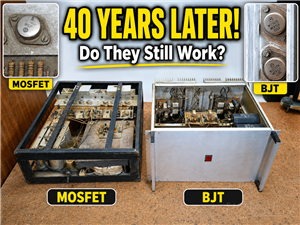 40-Year-Old DIY Power Amplifiers – Do They Still Work - 500W MOSFET & Transistor Amps
This time I want to describe my two DIY super powerful audio amplifiers that I made about 40 years ...
40-Year-Old DIY Power Amplifiers – Do They Still Work - 500W MOSFET & Transistor Amps
This time I want to describe my two DIY super powerful audio amplifiers that I made about 40 years ...
-
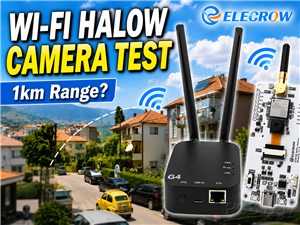 Wi-Fi HaLow Explained! Long-Range Camera Test up to 300m (ESP32 + ThinkNode G4 from ELECROW)
I recently needed to install a security camera at a relatively large distance from my home, more pre...
Wi-Fi HaLow Explained! Long-Range Camera Test up to 300m (ESP32 + ThinkNode G4 from ELECROW)
I recently needed to install a security camera at a relatively large distance from my home, more pre...
-
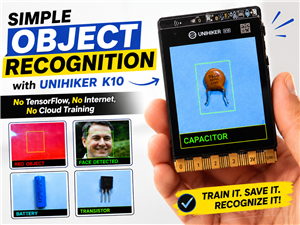 Simple Object Recognition with the UNIHIKER K10 – No TensorFlow, No Internet, No Cloud AI
Object recognition has become one of the most popular applications of artificial intelligence and em...
Simple Object Recognition with the UNIHIKER K10 – No TensorFlow, No Internet, No Cloud AI
Object recognition has become one of the most popular applications of artificial intelligence and em...
-
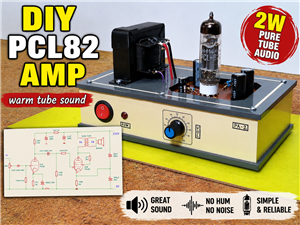 DIY PCL82 Tube Amplifier, Single-Ended Amp with Amazing Sound
The idea for this project came from a local electronics magazine called EMITER, issue 12/13 from 20...
DIY PCL82 Tube Amplifier, Single-Ended Amp with Amazing Sound
The idea for this project came from a local electronics magazine called EMITER, issue 12/13 from 20...
-
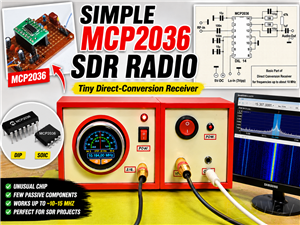 Simple MCP2036 SDR Radio - The Most Unusual Software Defined Radio
SDR (Software Defined Radio) is a radio communication system where many of the key electronic compo...
Simple MCP2036 SDR Radio - The Most Unusual Software Defined Radio
SDR (Software Defined Radio) is a radio communication system where many of the key electronic compo...
-
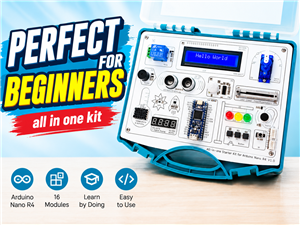 Elecrow All-in-One Arduino Starter Kit Review - 20 Projects & 16 Modules
This time I will describe a simple and practical way to enter the world of microcontrollers, specif...
Elecrow All-in-One Arduino Starter Kit Review - 20 Projects & 16 Modules
This time I will describe a simple and practical way to enter the world of microcontrollers, specif...
-
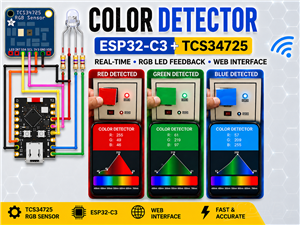 ESP32-C3 Color Detector with TCS34725, Real-Time RGB Detection & Web Interface
Color detection is a fundamental task in many embedded systems – from industrial sorting machines t...
ESP32-C3 Color Detector with TCS34725, Real-Time RGB Detection & Web Interface
Color detection is a fundamental task in many embedded systems – from industrial sorting machines t...
-
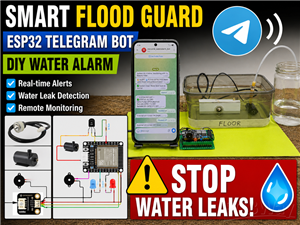 DIY ESP32 Telegram Flood Protection System - Smart Home Automation
Recently I had an unpleasant experience in my home, specifically my ground floor was flooded as a r...
DIY ESP32 Telegram Flood Protection System - Smart Home Automation
Recently I had an unpleasant experience in my home, specifically my ground floor was flooded as a r...
-
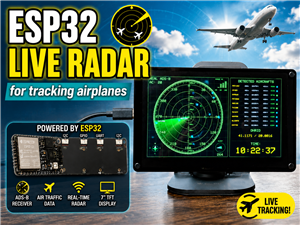 Real-Time Air Traffic Radar using ESP32 + ADS-B Data
ADS-B, which stands for Automatic Dependent Surveillance-Broadcast, is the modern standard for trac...
Real-Time Air Traffic Radar using ESP32 + ADS-B Data
ADS-B, which stands for Automatic Dependent Surveillance-Broadcast, is the modern standard for trac...
-
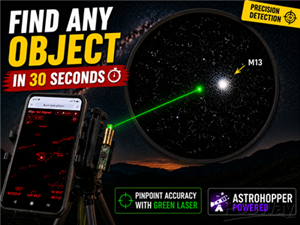 DIY Green Laser Night Sky Object Finder - Find Stars & Galaxies Instantly with great accuracy
As an amateur astronomer, especially at the beginning, the most difficult part of observing the nig...
DIY Green Laser Night Sky Object Finder - Find Stars & Galaxies Instantly with great accuracy
As an amateur astronomer, especially at the beginning, the most difficult part of observing the nig...
-
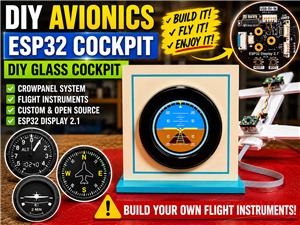 DIY Avionics Simulator with ESP32 - Artificial Horizon, Compass & Altimeter
The inspiration for this project comes from classical aircraft cockpit instruments used for navigat...
DIY Avionics Simulator with ESP32 - Artificial Horizon, Compass & Altimeter
The inspiration for this project comes from classical aircraft cockpit instruments used for navigat...
-
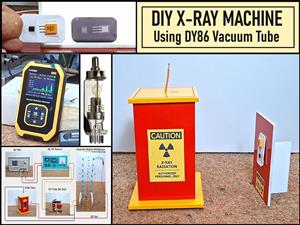 DIY Miniature X-Ray Machine using a TV Vacuum Tube DY86
An X-ray machine (or radiograph) is a quick, painless medical test that produces images of the struc...
DIY Miniature X-Ray Machine using a TV Vacuum Tube DY86
An X-ray machine (or radiograph) is a quick, painless medical test that produces images of the struc...
-
Émetteur Récepteur Optique Expérimental (communication UART ATtiny + fibre optique)
146 0 1 -
SmallOLED - Live PC Stats, Animated Clocks & Audio Visualizer
997 0 3 -
"Talking Multimeter": Arduino-Based Speech Add-on for Multimeters with SCPI Protocol
573 0 1 -
Programmable Mist Maker - XIAO / QT PY Extension
3043 2 3 -
RadioHAT - Raspberry Pi radio development platform
2587 0 4 -
-
-