|
Soldering Iron Kit |
DIY simple GU81 Tube Hybrid Amplifier (130 watts RMS in A class)
Tube amplifiers are highly respected by audiophiles for their distinctive sound as well as their esoteric appearance. However, their construction is relatively complex, especially in the part of power supply and output audio transformer. For these reasons, often are made so-called "Hybrid" audio Amplifiers in which the input preamplifier part is made with Tubes, and the output part is usually made with MOSFET transistors due to their high internal resistance, similar to Tubes. Thus the distortions of the even harmonics, which are in fact the reason for the colored warm sound of the Tube amplifiers, are amplified by the output transistor stage. But unfortunately these positive distortions occur most often in the output stage of the Tube amplifiers, so the aforementioned Hybrid amplifiers do not have very similar characteristics to the Tube amplifiers.
The amplifier described in this project is also Hybrid but now the case is reversed and the Tube is used at the output, thus preserving all the positive features of a pure Tube Amplifier. Russian big power pentode (transmitter tube) GU81 is used at the output, which can still be easily bought in the countries of the former Eastern Bloc.

Supposedly this tube in this connection (SE) should bring 130 watts RMS as pure Class A. The circuit was presented by M. Anders in 2011, but I could not find any data on whether anyone made it and it works well. It is basically very simple and consists of components that we can have, or can be very easily found, with the exception of the output audio transformer. Luckily I had such a transformer taken of an old 50 watt Dynacord instrumental amplifier.
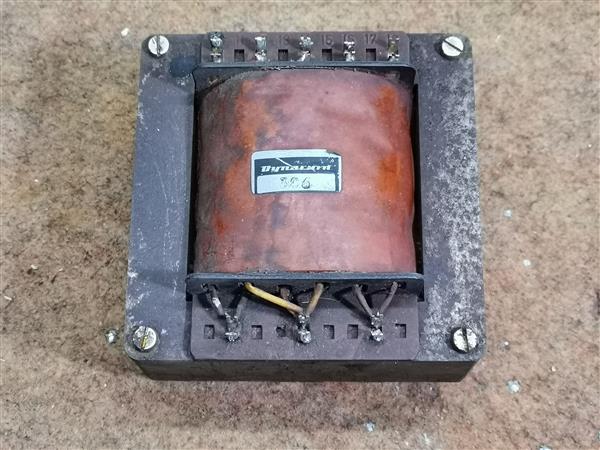
In order to simplify the project even more, I used some ready-made modules. In the following, I will describe in more detail the construction of this amplifier.
GU81 for heating uses 12 volts 10.5 Amps. For that purpose, the simplest way is to use cheap power supply from PC, and in my case it is power supply from old server PC. To extend the service life of the Tube, a series resistor of 2.2 Ohms / 10 Watts is used, which is bridged after twenty seconds from the moment of activation of the power supply. This avoids the shock of a sudden current impact.
The next part is the anode power supply of Tube. For this purpose, a microwave oven transformer is used, which is relatively inexpensive and can be easily purchased at a service center.

These transformers are not intended for long-term continuous operation, so it is desirable to use two such transformers to which both the primary and the secondary are connected in series, as shown on the circuit.

In both cases the output voltage is about 2.2 kilovolts. I use one transformer because I only use this amplifier during this presentation.
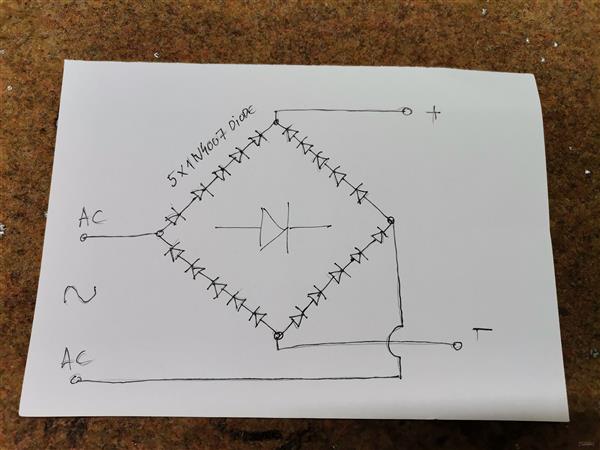
Follows the Graetz Bridge. Since it is very difficult to find such a component for very high voltage, I made it as follows:
Each branch of the Gertz Bridge consists of 5 series connected diodes of type 1n4007 so that the total breakdown voltage of the equivalent Diode is 5000V which is quite enough for this case.
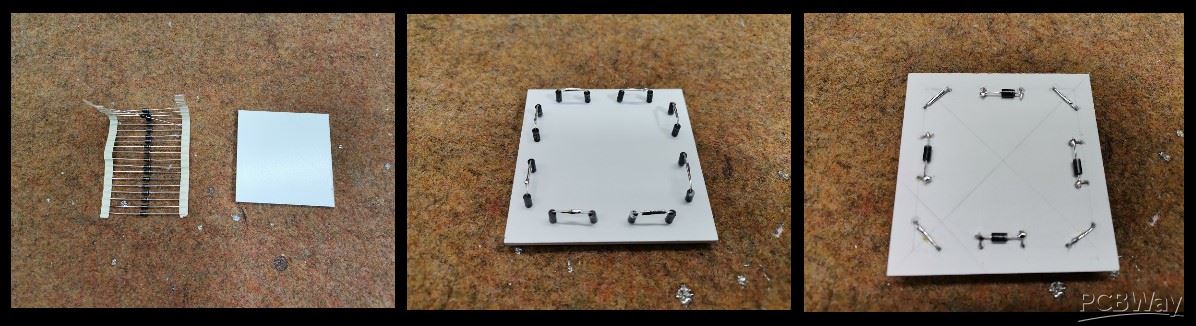
Voltage filtering is performed with eight serially connected electrolytic capacitors for high voltage of 400 Volts, and on each capacitor is connected а parallel resistor of 470 Kohms, which are used to discharge capacitors after shutdown.
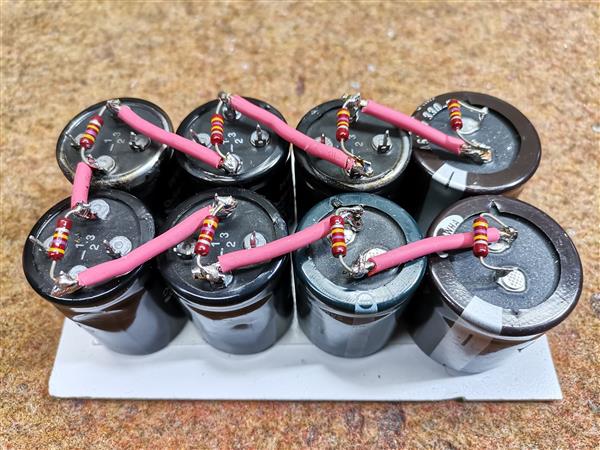
For better quality it is recomended that the total capacitance of these capacitors be higher to avoid noise. The power supply of the amplifier containing the transformers, capacitors and the Gretz bridge is covered with Plexiglas for safety reasons, as there are very high voltages here

Next is the drive stage for the output Tube which is actually a standard AB-class transistor amplifier. Initially, my idea was to use small and cheap 30W D-Class amplifier with active tone control (on the picture), but unfortunately its outputs are not grounded at all, so in this configuration a lot of unwanted noises appeared at the final signal.

Since the rest of the amplifier was completely ready , I decided to use my old 30W AB-class JVC amplifier to drive the output Tube. For this purpose you can use any home amplifier with an approximately such output power. Of course, you can use one of the cheap AB-class amplifier modules that can be purchased online, but in that case another power supply would be needed, which complicates the construction.
And now comes the most important part, to hear how this amplifier sounds in reality: Unfortunately I do not have a quality sound box to fully feel the sound coming out of this amplifier so I present only its functionality. Anyway, you could not capture the real sound recorded by my smartphone and then played on Youtube. And finally a conclusion based on my previous extensive experience in the field of self-construction and listening, mostly on transistor amplifiers.
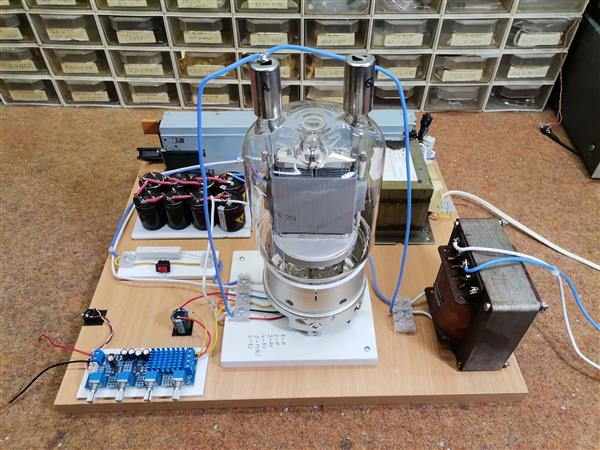
Generally it can not be a high-end device, but it is a very interesting project because it shows how a relatively strong Hybrid Tube output amplifier can be made in a relatively simple way. It can theoretically deliver up to 130 watts of RMS in pure A class. I tested it up to about 50 watts of output power in real conditions, for which power is provided and the output audio transformer. It is very important to tell you that during the hearing tests I did not notice the distortions, at least not such that it would be uncomfortable for the ears. I also listened to it on a larger quality sound box and I am really satisfied with the sound quality, and I was especially surprised by the large output power that the Tube output can deliver in terms of simplicity. Note that at no input signal, a relatively loud noise is heard coming from the high voltage anode power supply, but the reason for this is primarily the small capacity of the filter capacitors (a total of about 17 microfarads in my case) and the fact that the amplifier is not properly grounded and shielded in metal box.
All in all, this is a very interesting and valuable project. Just imagine what it would look like to make a stereo version in a beautiful box lined with glossy lacquered wood. Let me just mention the visual effect at work when these two Tubes emit a yellowish light and look great.
And as a very important note, keep in mind that this circuit is not a toy or a beginner's craft project. Experimenting with it should only be done with well-founded specialist knowledge in the fields of electrical engineering / electronics. This circuit is only intended to show how enormous power amplifier can be generated with little effort. For safety reasons, the capacitors, transformer, and the bridge rectifier should be housed in a protected housing (wood / plexiglass).

DIY simple GU81 Tube Hybrid Amplifier (130 watts RMS in A class)



Raspberry Pi 5 7 Inch Touch Screen IPS 1024x600 HD LCD HDMI-compatible Display for RPI 4B 3B+ OPI 5 AIDA64 PC Secondary Screen(Without Speaker)
BUY NOW


- Comments(0)
- Likes(1)
More by Mirko Pavleski
-
 Arduino 3D Printed self Balancing Cube
Self-balancing devices are electronic devices that use sensors and motors to keep themselves balanc...
Arduino 3D Printed self Balancing Cube
Self-balancing devices are electronic devices that use sensors and motors to keep themselves balanc...
-
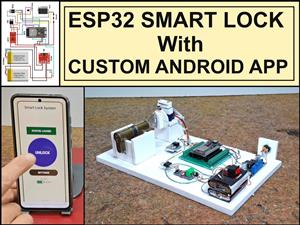 Professional grade Smart Lock with ESP32, BLE and Android App Control
An electronic codelock is a security device that grants access using a numerical sequence—a PIN cod...
Professional grade Smart Lock with ESP32, BLE and Android App Control
An electronic codelock is a security device that grants access using a numerical sequence—a PIN cod...
-
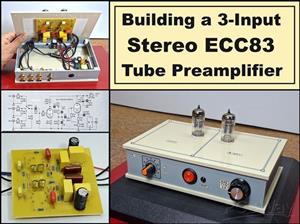 Building a 3-Input Stereo ECC83 (12AX7) Tube Preamp
Some time ago I presented you a project for a 3W stereo tube amplifier with a GU32 output vacuum t...
Building a 3-Input Stereo ECC83 (12AX7) Tube Preamp
Some time ago I presented you a project for a 3W stereo tube amplifier with a GU32 output vacuum t...
-
 ESP32 Weather Dashboard with Satellite Maps and 16-day Weather Forecast
As you can see from my previous videos, besides Electronics, my fields of experimentation and proje...
ESP32 Weather Dashboard with Satellite Maps and 16-day Weather Forecast
As you can see from my previous videos, besides Electronics, my fields of experimentation and proje...
-
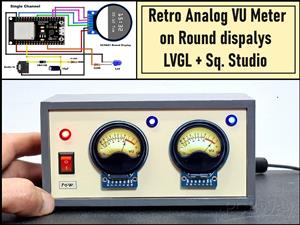 Retro Analog VU Meter on Round dispalys (ESP32 and GC9A01)
Recently, in one of my previous videos I presented you a Retro VU Meter project on round displays ...
Retro Analog VU Meter on Round dispalys (ESP32 and GC9A01)
Recently, in one of my previous videos I presented you a Retro VU Meter project on round displays ...
-
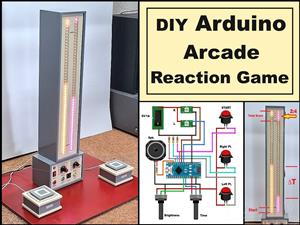 Ultimate 2-Player Reaction Timer with WS2812B LED Strips & Arduino
Arcade reaction game is a genre of play designed to test a player's physical response time and hand...
Ultimate 2-Player Reaction Timer with WS2812B LED Strips & Arduino
Arcade reaction game is a genre of play designed to test a player's physical response time and hand...
-
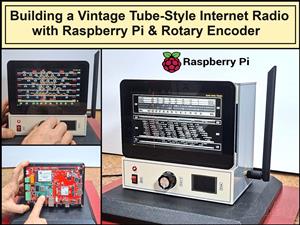 Building a Vintage Tube-Style Internet Radio with Raspberry Pi & Rotary Encoder
Internet radio (also known as web radio or net radio) is a digital audio service transmitted via th...
Building a Vintage Tube-Style Internet Radio with Raspberry Pi & Rotary Encoder
Internet radio (also known as web radio or net radio) is a digital audio service transmitted via th...
-
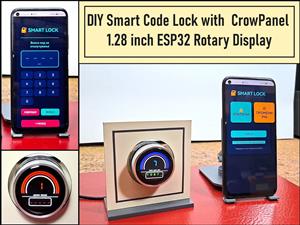 DIY Smart Code Lock with CrowPanel 1.28 ESP32 Rotary Display
A code lock is a keyless security device—either mechanical or electronic—that restricts access to d...
DIY Smart Code Lock with CrowPanel 1.28 ESP32 Rotary Display
A code lock is a keyless security device—either mechanical or electronic—that restricts access to d...
-
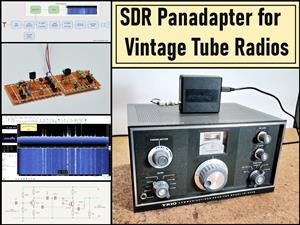 SDR Panadapter for Vintage Tube Radios – Step-by-Step Tutorial
A radio panadapter (or panoramic adapter) is a device or software tool used in amateur radio and ot...
SDR Panadapter for Vintage Tube Radios – Step-by-Step Tutorial
A radio panadapter (or panoramic adapter) is a device or software tool used in amateur radio and ot...
-
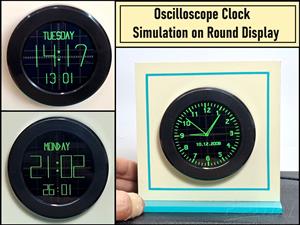 Oscilloscope Clock Simulation on a Round ESP32 Display
An oscilloscope clock is a circuit that turns an old analog oscilloscope into a stylish, retro-them...
Oscilloscope Clock Simulation on a Round ESP32 Display
An oscilloscope clock is a circuit that turns an old analog oscilloscope into a stylish, retro-them...
-
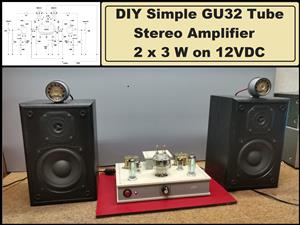 DIY Simple GU32 Tube Stereo Amplifier (2x3W on 12VDC)
Vacuum tube amplifiers are often favored for their smooth harmonic distortion, especially in the low...
DIY Simple GU32 Tube Stereo Amplifier (2x3W on 12VDC)
Vacuum tube amplifiers are often favored for their smooth harmonic distortion, especially in the low...
-
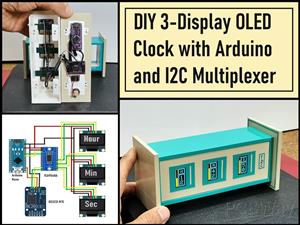 DIY 3-Display OLED Clock with Arduino and I2C Multiplexer
In this video I want to present you another unusual clock to add to my large collection of such DIY...
DIY 3-Display OLED Clock with Arduino and I2C Multiplexer
In this video I want to present you another unusual clock to add to my large collection of such DIY...
-
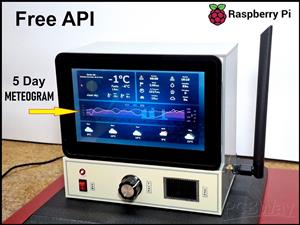 Build a 5-Day forecast Raspberry Pi Weather Dashboard (Step-by-Step)
Recently in one of my previous videos,I introduced you to the 7 inch Elecrow Pi Terminal and how to...
Build a 5-Day forecast Raspberry Pi Weather Dashboard (Step-by-Step)
Recently in one of my previous videos,I introduced you to the 7 inch Elecrow Pi Terminal and how to...
-
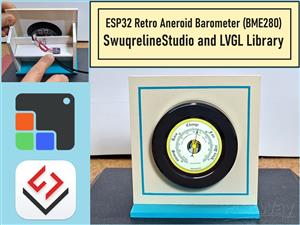 ESP32 Aneroid Barometer using Squareline Studio and LVGL on CrowPanel Round display
A barometer is a scientific instrument used to measure atmospheric pressure. Rising Pressure genera...
ESP32 Aneroid Barometer using Squareline Studio and LVGL on CrowPanel Round display
A barometer is a scientific instrument used to measure atmospheric pressure. Rising Pressure genera...
-
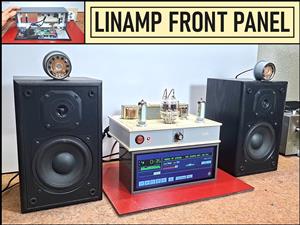 LINAMP Project – Winamp-Style Audio Front Panel on Raspberry Pi 5
Winamp is one of the most iconic and historically significant digital media players ever created. I...
LINAMP Project – Winamp-Style Audio Front Panel on Raspberry Pi 5
Winamp is one of the most iconic and historically significant digital media players ever created. I...
-
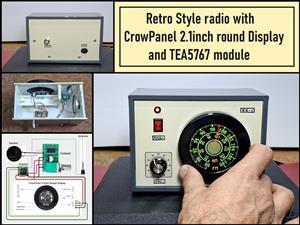 Retro Style radio with CrowPanel 2.1inch round Display (TEA5767)
Some time ago I presented you a clock project with CrowPanel 2.1inch-HMI ESP32 Rotary Display 480*4...
Retro Style radio with CrowPanel 2.1inch round Display (TEA5767)
Some time ago I presented you a clock project with CrowPanel 2.1inch-HMI ESP32 Rotary Display 480*4...
-
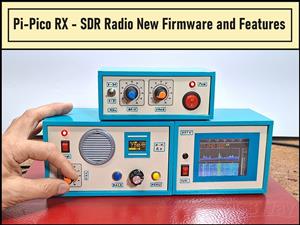 Pi-Pico RX - SDR Radio with New Firmware and Features
A few months ago I presented you a wonderful SDR radio project by DawsonJon 101 Things. In short, i...
Pi-Pico RX - SDR Radio with New Firmware and Features
A few months ago I presented you a wonderful SDR radio project by DawsonJon 101 Things. In short, i...
-
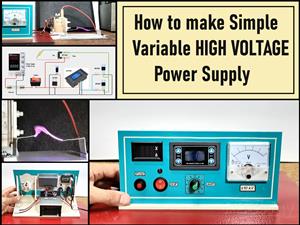 How to make simple Variable HIGH VOLTAGE Power Supply
High Voltage Power Supply is usually understood as a device that is capable of generating a voltage...
How to make simple Variable HIGH VOLTAGE Power Supply
High Voltage Power Supply is usually understood as a device that is capable of generating a voltage...
-
-
ARPS-2 – Arduino-Compatible Robot Project Shield for Arduino UNO
1851 0 5 -
A Compact Charging Breakout Board For Waveshare ESP32-C3
2453 3 7 -
AI-driven LoRa & LLM-enabled Kiosk & Food Delivery System
2518 2 0 -
-
-
-
ESP32-C3 BLE Keyboard - Battery Powered with USB-C Charging
2642 0 2 -