

|
|
STM32G071KBU6 Microcontroller |
x 1 | |
|
|
128x64 OLED Display Module |
x 1 | |
|
|
MAX4239AUTMaxim
|
x 1 |

|
fritzing |
Build Your Own Precision Digital Micro-Current Meter with STM32
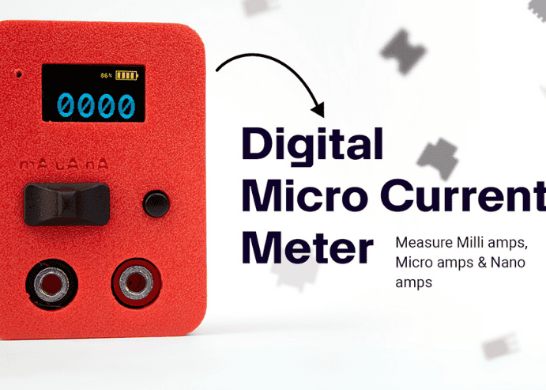
In many electronic projects — especially those involving battery-powered devices or low-power sensors — being able to precisely measure extremely small currents (microamps or even nanoamps) is very useful. This project describes how to build a compact, accurate digital micro-ampere meter using a small microcontroller, high-precision analog front end, and an OLED display. The result is a portable, bench-ready tool that offers lab-grade current measurements.

✅ What Makes This Meter Stand Out
Uses a modern microcontroller (STM32G071KBU) for accurate data acquisition and processing. Circuit Digest
Provides multiple measurement ranges — from nanoamps (nA) to microamps (µA) and up to milliamp (mA) — making it versatile for a wide variety of circuits.
Has a built-in 128×64 OLED display for real-time digital readouts, allowing you to see current measurements immediately and clearly. Circuit Digest
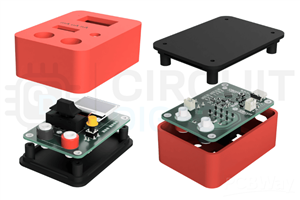
Compact design with a custom PCB and optional 3D-printed enclosure, making it practical for bench use or portable carrying. Circuit Digest+1
Powered via USB-C or a LiPo battery, with a built-in charger and soft-power switch for convenience.
Because of these features, this micro-ampere meter is much more precise and user-friendly than a basic multimeter when it comes to measuring very small currents — perfect for testing low-power devices, measuring sleep currents, or evaluating the efficiency of battery-powered modules.
🛠️ Core Components and Hardware Design
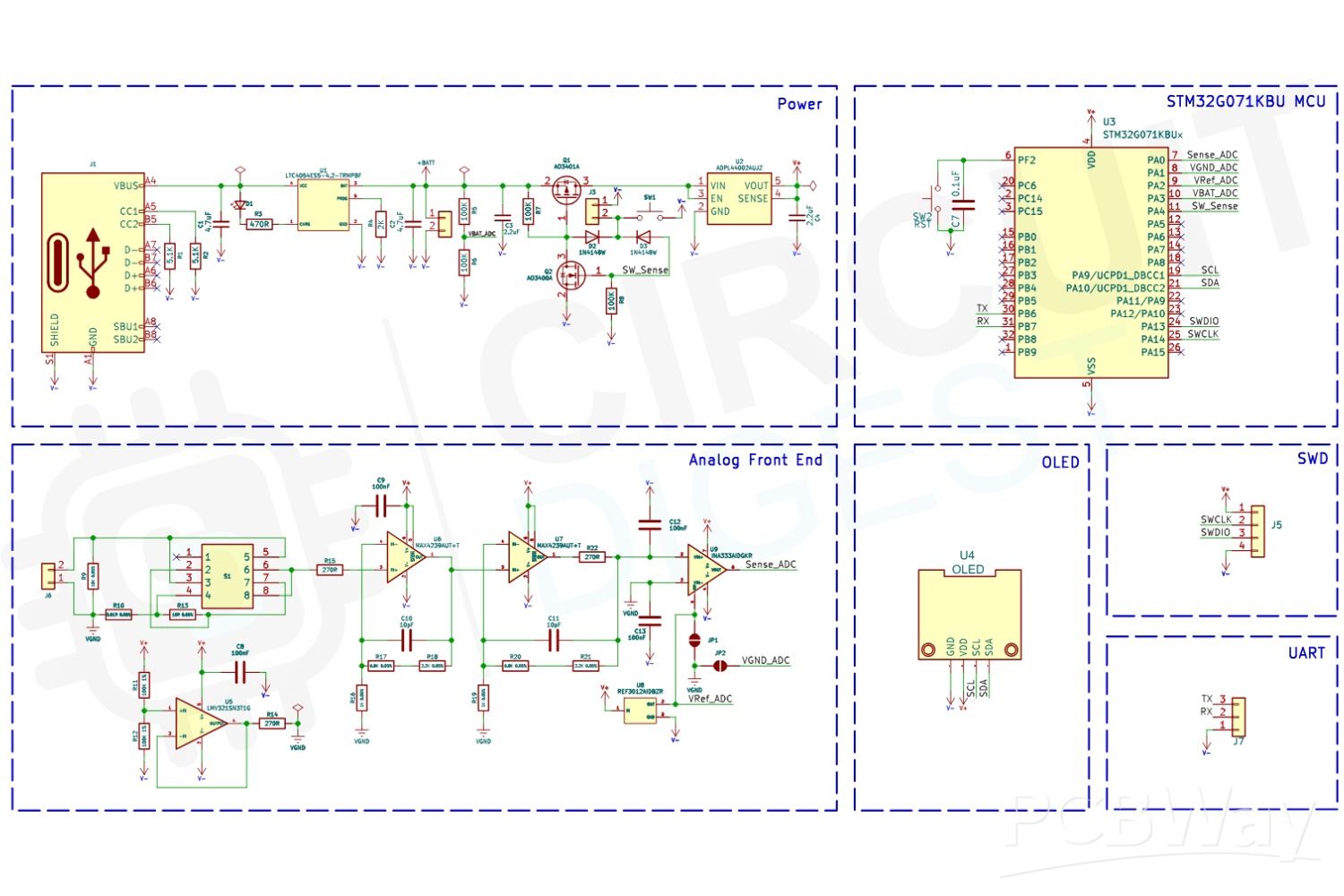
Some of the main components used in this design include: Circuit Digest+1
The STM32G071KBU microcontroller handles analog-to-digital conversion, processing, display control, and power management. Circuit Digest
A 128×64 OLED display module (connected via I2C) — shows current readings and battery status on a crisp screen. Circuit Digest+1
Precision operational/instrumentation amplifiers such as MAX4239 (ultra-low offset auto-zero op-amp) and INA333 (instrumentation amplifier) — used for amplification of the tiny voltage drop across sense resistors, ensuring accurate conversion of current to a measurable signal.
A set of precision resistors “shunts” configured for different ranges (nA, µA, mA) to handle very different currents while keeping the burden voltage low.
Range-selection switch (e.g. a DP3T selector) to manually select between measurement ranges.
Power management circuitry: USB-C input for external power, LiPo battery + charger IC (e.g. LTC4054ES5 charger), low-dropout regulator (e.g. ADP44002) for stable analog supply, and a soft-latch MOSFET-based power switch for easy on/off control.
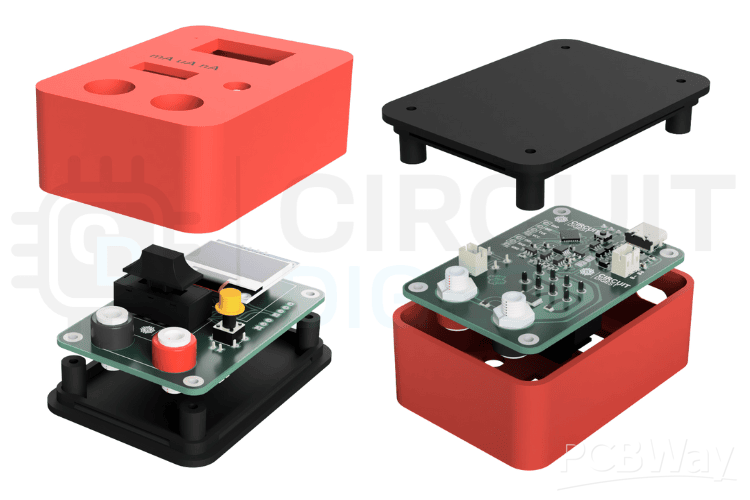
A custom PCB (for compactness and stability), and optionally a 3D-printed enclosure to house the electronics neatly, making it a portable and professional-looking tool.
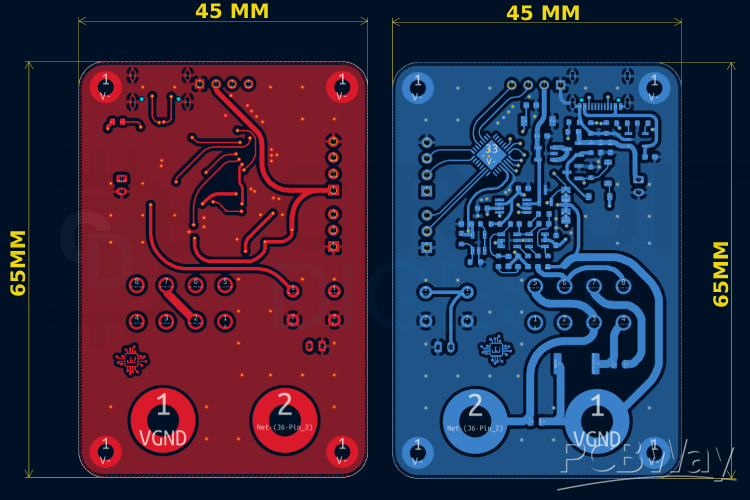
The layout on the PCB is carefully arranged to minimise noise and interference, which is critical when you're measuring very small currents. Analog ground planes, short signal paths, and proper placement of analog vs digital parts — all contribute to stable, accurate measurement.
🔬 How It Works: Measuring Tiny Currents Accurately
At a high level, the circuit works by using precision shunt resistors to convert a tiny current into a small voltage drop. Because the currents being measured might be in the nanoamp or microamp range, the resulting voltage is very small, so the circuit uses ultra-low offset, low-noise amplifiers to boost that voltage to a level that the microcontroller’s ADC can reliably digitise.
The design is inspired by well-known low-current measurement architectures (like the classic “µCurrent” style), where multi-range sensing and auto-zero amplifiers help achieve high accuracy, low noise, and negligible burden voltage — meaning the meter itself doesn’t significantly affect the circuit under test.
Once the analog signal is amplified and conditioned, the STM32 microcontroller reads the voltage, converts it to the corresponding current based on the selected range (and known shunt resistor value), then displays the result on the OLED in real time. The firmware also handles battery monitoring, soft-power control, calibration routines, and more.
Because of the careful design — from the analog front-end to the ADC code — this meter can reliably detect currents from the nanoamp scale up through milliamp — a much broader and more precise range than most off-the-shelf ammeters.
🎯 Why This is Useful & Who It's For
This digital micro-ampere meter is ideal for:
Embedded-system developers or hobbyists testing ultra-low-power devices (sleep-mode currents, battery drain, sensor nodes).
Anyone needing precise current measurements far below what a standard multimeter can reliably read.
PCB designers or power-sensitive circuit developers who want to debug, monitor, or optimise power consumption.
Labs or workbenches where a portable, battery-powered, neatly enclosed meter makes experiments easier.
Because the design is open (schematics, PCB layout, code, enclosure), you can customise it — e.g. adapt for different current ranges, add extra features (logging, USB output, more accurate calibration), or integrate into your own projects.
📝 Conclusion
Building this Precision Digital Micro Current Meter offers a practical, polished tool for anyone dealing with low-power electronics. With a smart selection of components, careful analog design, and a modern STM32 core, the project delivers accurate, real-time, multi-range current measurement, packaged in a compact, portable form factor.

Build Your Own Precision Digital Micro-Current Meter with STM32
Project images are for reference only. Actual production is based on the manufacturing files on the project page.
Please review the designer's notes (e.g., PCB thickness) and select the appropriate options.
PCBWay is not responsible
for issues caused by unsuitable parameter selections.
For more important ordering information, please refer to
Read More


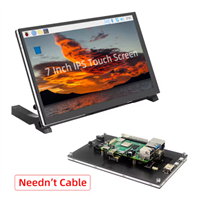
Raspberry Pi 5 7 Inch Touch Screen IPS 1024x600 HD LCD HDMI-compatible Display for RPI 4B 3B+ OPI 5 AIDA64 PC Secondary Screen(Without Speaker)
BUY NOW


- Comments(1)
- Likes(0)
More by Jobit Joseph
-
 How to build a Wearable Air Quality Monitor Pendant using STM32 & SGP40 Sensor
This DIY Wearable Air Quality Monitor Pendant is a compact, battery-powered device designed to conti...
How to build a Wearable Air Quality Monitor Pendant using STM32 & SGP40 Sensor
This DIY Wearable Air Quality Monitor Pendant is a compact, battery-powered device designed to conti...
-
 Smart Digital Ludo Game Board with Multicolour PCB
Ludo, a beloved childhood game, holds a special place in our hearts with its simple and engaging gam...
Smart Digital Ludo Game Board with Multicolour PCB
Ludo, a beloved childhood game, holds a special place in our hearts with its simple and engaging gam...
-
 Electronic Dice with BLE Connectivity
Many of us fondly remember the joy of playing board games like Snakes and Ladders or Ludo during our...
Electronic Dice with BLE Connectivity
Many of us fondly remember the joy of playing board games like Snakes and Ladders or Ludo during our...
-
 3D printed Enclosure Backplate for Riden RD60xx power supplies
3D printed Enclosure for Riden RD60xx power supplies such as RD6006, RD6012, RD6018, RD6024 and RD60...
3D printed Enclosure Backplate for Riden RD60xx power supplies
3D printed Enclosure for Riden RD60xx power supplies such as RD6006, RD6012, RD6018, RD6024 and RD60...
-
 3D printed Enclosure for Riden RD60xx power supplies
 such as RD6006, RD6012, RD6018, RD6024 and RD60...
3D printed Enclosure for Riden RD60xx power supplies
3D printed Enclosure for Riden RD60xx power supplies such as RD6006, RD6012, RD6018, RD6024 and RD60...
-
 Suzuki Ignis Universal Armrest No Screw Adapter
I own a 2024 Suzuki Ignis. When I searched for an armrest for my car I couldn't find any domesticall...
Suzuki Ignis Universal Armrest No Screw Adapter
I own a 2024 Suzuki Ignis. When I searched for an armrest for my car I couldn't find any domesticall...
-
 Wireless Potentiostat for Electrochemical Analysis
This wireless potentiostat is based on the ADuCM355 SoC from Analog Devices, tailored for portable e...
Wireless Potentiostat for Electrochemical Analysis
This wireless potentiostat is based on the ADuCM355 SoC from Analog Devices, tailored for portable e...
-
 160 Channel Configurable DAC Controller
The DAC controller board features 160 individually controllable 16-bit DAC output. It can output vol...
160 Channel Configurable DAC Controller
The DAC controller board features 160 individually controllable 16-bit DAC output. It can output vol...
-
 ESP32 IoT Water Flow Meter with Real-Time Monitoring
OverviewThis project demonstrates how to build a smart water flow meter using an ESP32 microcontroll...
ESP32 IoT Water Flow Meter with Real-Time Monitoring
OverviewThis project demonstrates how to build a smart water flow meter using an ESP32 microcontroll...
-
 DIY GSM GPS Location Tracker with Arduino
Project OverviewThis project demonstrates how to build a simple and reliable location tracking syste...
DIY GSM GPS Location Tracker with Arduino
Project OverviewThis project demonstrates how to build a simple and reliable location tracking syste...
-
 IoT GPS Tracker with NodeMCU and Google Maps
OverviewThis project demonstrates how to build an IoT-based GPS tracking system using a NodeMCU (ESP...
IoT GPS Tracker with NodeMCU and Google Maps
OverviewThis project demonstrates how to build an IoT-based GPS tracking system using a NodeMCU (ESP...
-
 ESP32 Retro Game Console with OLED Display
OverviewThis project demonstrates how to build a compact, handheld retro gaming console using the ES...
ESP32 Retro Game Console with OLED Display
OverviewThis project demonstrates how to build a compact, handheld retro gaming console using the ES...
-
 High Power Boost Converter Using TL494
OverviewThis project demonstrates the design and implementation of a high-power, high-efficiency DC-...
High Power Boost Converter Using TL494
OverviewThis project demonstrates the design and implementation of a high-power, high-efficiency DC-...
-
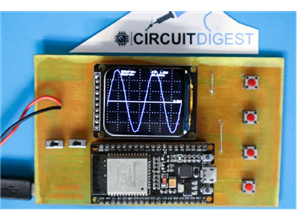 DIY ESP32 Oscilloscope Project
OverviewThis project demonstrates how to build a simple and affordable oscilloscope using an ESP32. ...
DIY ESP32 Oscilloscope Project
OverviewThis project demonstrates how to build a simple and affordable oscilloscope using an ESP32. ...
-
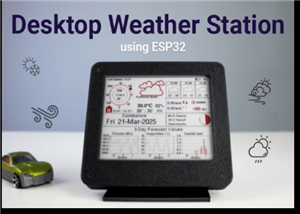 ESP32 Desktop Weather Station
Project OverviewBuild a compact desktop weather station using an ESP32 that measures temperature, hu...
ESP32 Desktop Weather Station
Project OverviewBuild a compact desktop weather station using an ESP32 that measures temperature, hu...
-
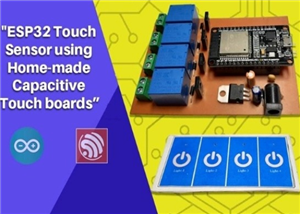 ESP32 Capacitive Touch Home Automation
OverviewMechanical switches wear out over time and can be prone to failure due to dust, moisture, or...
ESP32 Capacitive Touch Home Automation
OverviewMechanical switches wear out over time and can be prone to failure due to dust, moisture, or...
-
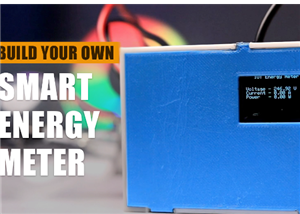 ESP32-Powered Smart Energy Meter for Real-Time Monitoring
ESP32-Powered Smart Energy Meter for Accurate Consumption TrackingIn modern electronics and IoT appl...
ESP32-Powered Smart Energy Meter for Real-Time Monitoring
ESP32-Powered Smart Energy Meter for Accurate Consumption TrackingIn modern electronics and IoT appl...
-
 Build Your Own ESP32 AI Voice Assistant with MCP Integration
Project OverviewThe ESP32 AI Voice Assistant with MCP Integration is an advanced voice-controlled sm...
Build Your Own ESP32 AI Voice Assistant with MCP Integration
Project OverviewThe ESP32 AI Voice Assistant with MCP Integration is an advanced voice-controlled sm...
-
Programmable Mist Maker - XIAO / QT PY Extension
2213 2 2 -
RadioHAT - Raspberry Pi radio development platform
1903 0 4 -
-
-
-
ARPS-2 – Arduino-Compatible Robot Project Shield for Arduino UNO
4084 0 6 -
A Compact Charging Breakout Board For Waveshare ESP32-C3
4845 3 8 -
AI-driven LoRa & LLM-enabled Kiosk & Food Delivery System
5641 2 2 -