5V Buck Converter Using LM2596
Introduction
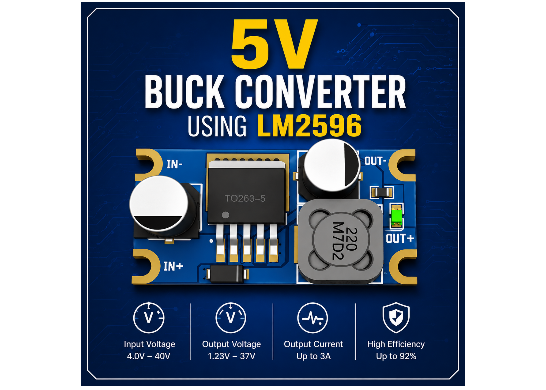
If you need to convert 12V, 24V, or any higher DC voltage into a stable 5V output, the LM2596 Buck Converter is one of the most reliable and efficient solutions available. Unlike linear voltage regulators, the LM2596 uses switching technology to achieve efficiencies of up to 92%, making it ideal for Arduino, ESP32, Raspberry Pi, robotics, IoT devices, automotive electronics, and battery-powered projects.
In this comprehensive guide, you'll learn how the LM2596 works, its specifications, advantages, circuit operation, applications, and how to safely configure it as a 5V DC power supply.
For Full Project:
https://electronicsworkshops.com/5v-buck-converter-using-lm2596/
For Best Electronics Calculator:
https://numericalcalculator.com/
What is an LM2596 Buck Converter?
The LM2596 Buck Converter is a high-efficiency DC-DC step-down voltage regulator that converts higher DC voltages into lower DC voltages with minimal energy loss.
Unlike traditional linear regulators that waste excess energy as heat, the LM2596 uses pulse-width modulation (PWM) switching technology to maintain stable voltage while consuming less power.
This makes it one of the most popular voltage regulator modules for electronics enthusiasts, engineers, and students.
What is a Buck Converter?
A buck converter is a switching power supply designed to reduce DC voltage while increasing efficiency.
For example:
24V → 5V
12V → 5V
9V → 5V
Instead of burning extra voltage as heat, the converter stores and releases energy using an inductor and switching transistor.
LM2596 Specifications
ParameterValueInput Voltage4V–40V DCOutput Voltage1.25V–37V AdjustableFixed Output Version5VMaximum Output Current3ASwitching Frequency150kHzEfficiencyUp to 92%Operating Temperature-40°C to +85°CProtectionThermal Shutdown, Overcurrent Protection
LM2596 Pinout
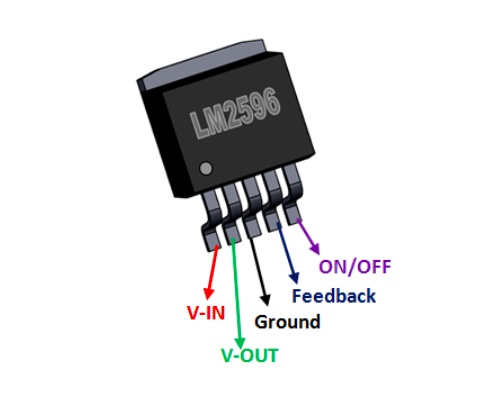
The LM2596 IC consists of five primary pins:
VIN – Input Voltage
OUTPUT – Switching Output
GND – Ground
Feedback (FB) – Voltage Regulation
ON/OFF – Enable or Disable the Regulator
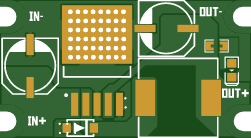
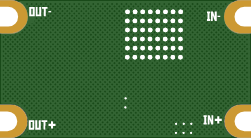
On ready-made modules, the terminals are typically labeled:
IN+
IN-
OUT+
OUT-
How the LM2596 Works
The LM2596 operates using high-frequency switching at approximately 150 kHz.
Its working process involves:
The internal switch rapidly turns ON and OFF.
Energy is stored in the inductor.
The Schottky diode conducts when the switch turns OFF.
Capacitors filter the output.
The feedback circuit continuously adjusts the switching duty cycle to maintain a constant 5V output.
This process results in significantly higher efficiency compared to linear regulators.
LM2596 vs 7805 Voltage Regulator
FeatureLM25967805EfficiencyUp to 92%40–60%Maximum Current3A1AHeat GenerationLowHighInput VoltageUp to 40VLimitedCooling RequiredRarelyOftenBattery LifeLongerShorter
Circuit Diagram
The circuit shown is a 5V fixed-output buck converter based on the LM2596S-5.0 switching voltage regulator, designed to efficiently convert a higher DC input voltage (typically 7V to 40V) into a stable 5V DC output. The input voltage is applied to the VIN terminal, where the 330 µF input capacitor (C1) filters noise and voltage fluctuations before supplying power to the LM2596 IC. Inside the regulator, an internal high-speed switching transistor operates at approximately 150 kHz, rapidly switching the input voltage on and off. The 47 µH inductor (L1) stores energy during the ON cycle and releases it during the OFF cycle, while the SS34 Schottky diode (D1) provides a current path when the internal switch is off, ensuring continuous current flow and improving overall efficiency.
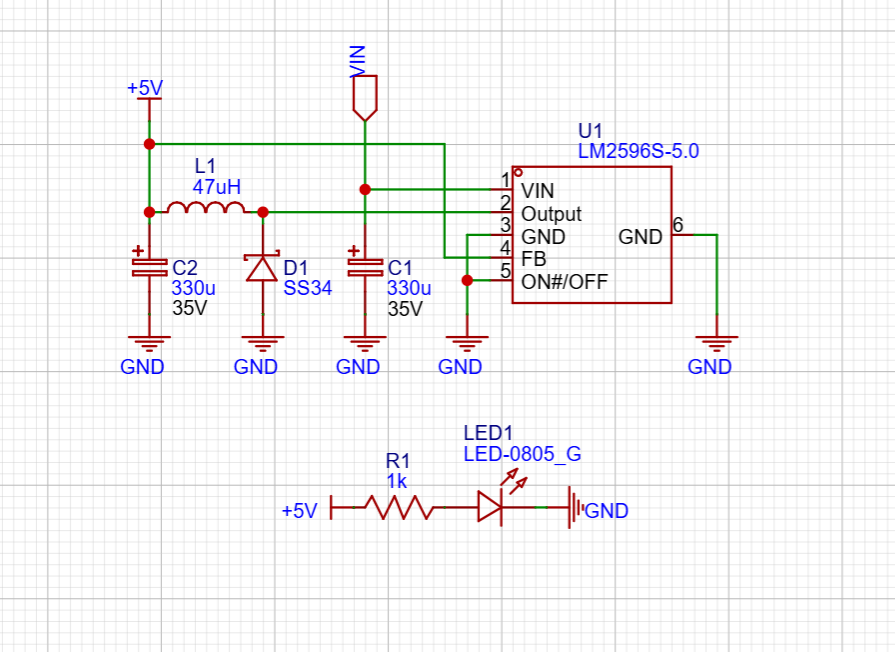
The output stage consists of a 330 µF capacitor (C2) that smooths the switching pulses into a clean and stable 5V output with minimal ripple, making it suitable for powering microcontrollers, sensors, and other electronic devices. The ON/OFF pin of the LM2596 is connected to ground, keeping the regulator permanently enabled. Additionally, a green LED (LED1) connected in series with a 1 kΩ resistor (R1) acts as a power indicator, illuminating whenever the 5V output is available. Thanks to its high efficiency of up to 92%, low heat generation, and ability to deliver output currents of up to 3A, this LM2596 buck converter circuit is widely used in Arduino projects, IoT devices, robotics, automotive electronics, and portable power supply applications.
PCB Files
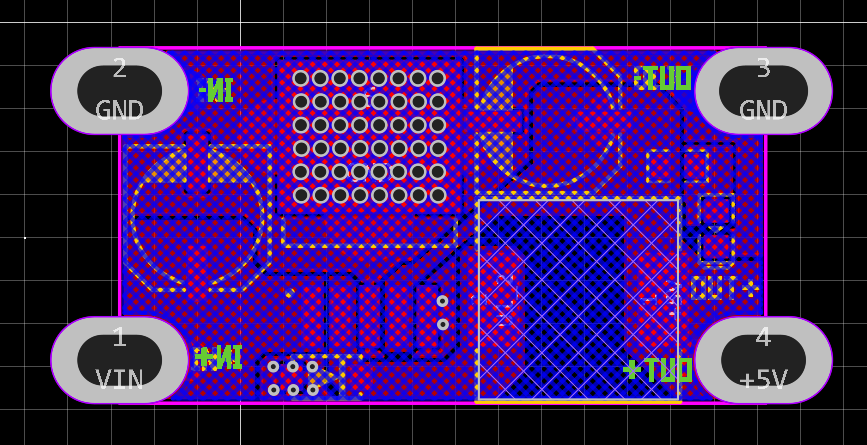
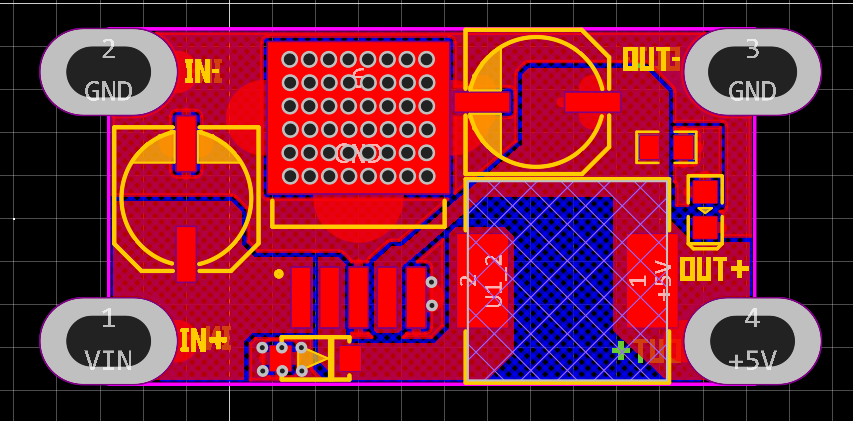
3D Files
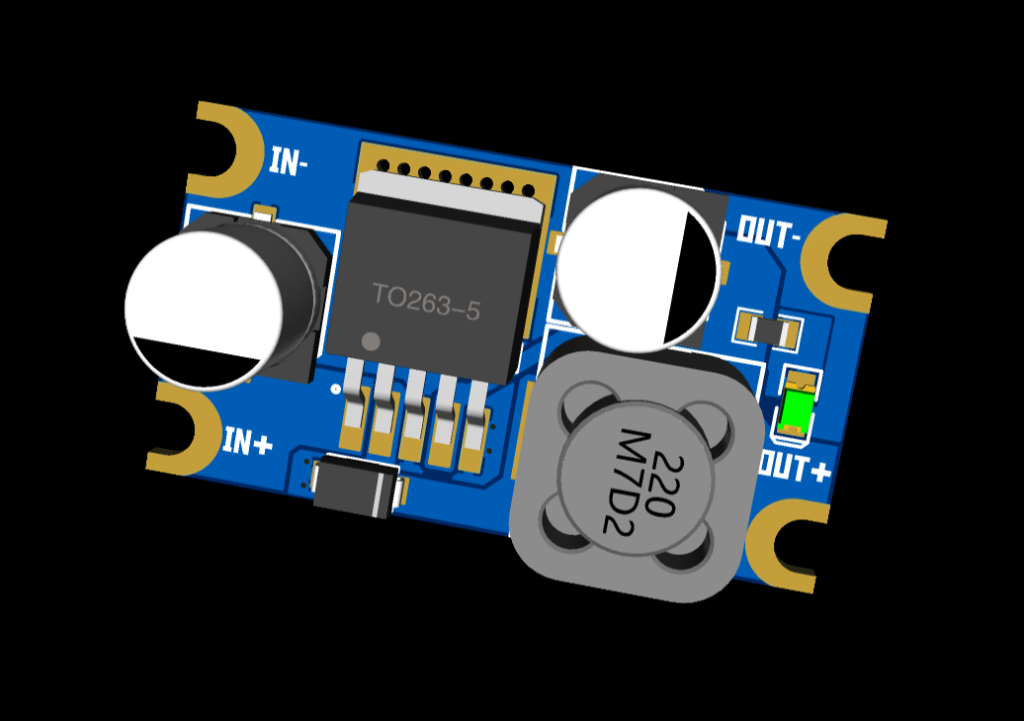
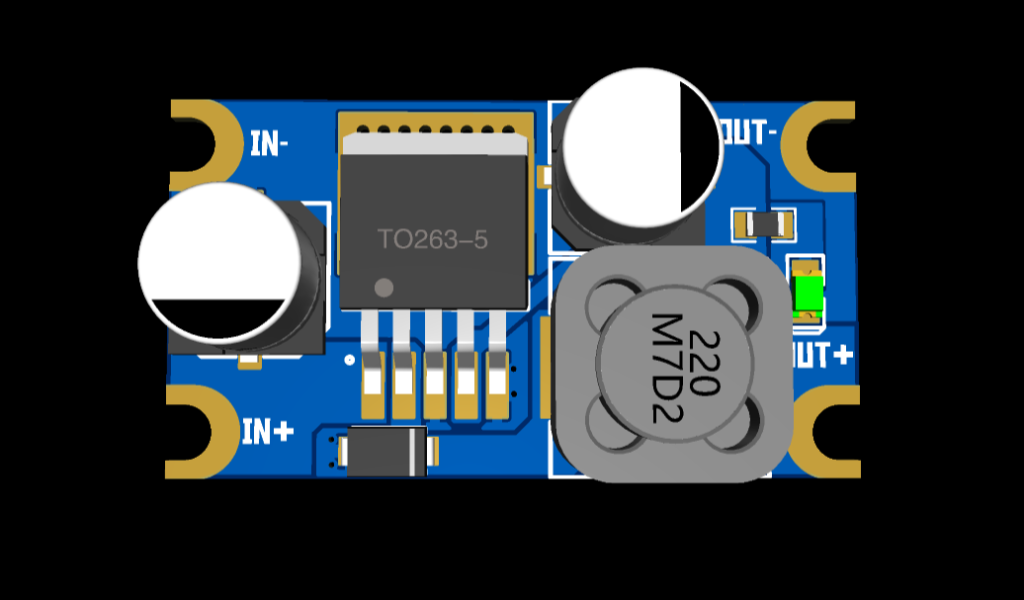
Conclusion
The LM2596 5V Buck Converter is one of the best choices for efficient DC voltage regulation. With support for input voltages from 4V to 40V, output currents up to 3A, and efficiencies approaching 92%, it is well suited for hobbyists, students, and professionals alike. Whether you're powering an Arduino, ESP32, robotics project, or custom embedded system, the LM2596 provides a compact, reliable, and energy-efficient solution.
For Full Project:
https://electronicsworkshops.com/5v-buck-converter-using-lm2596/
For Best Electronics Calculator:
5V Buck Converter Using LM2596
*PCBWay community is a sharing platform. We are not responsible for any design issues and parameter issues (board thickness, surface finish, etc.) you choose.


Raspberry Pi 5 7 Inch Touch Screen IPS 1024x600 HD LCD HDMI-compatible Display for RPI 4B 3B+ OPI 5 AIDA64 PC Secondary Screen(Without Speaker)
BUY NOW

- Comments(0)
- Likes(0)
More by Rabin Poudel
-
 Automatic Water Pump Control System Using ESP-12F
IntroductionWater scarcity and wastage are major challenges in residential, agricultural, and indust...
Automatic Water Pump Control System Using ESP-12F
IntroductionWater scarcity and wastage are major challenges in residential, agricultural, and indust...
-
 Flood Detection and warning system using LORA and Arduino
IntroductionFloods are one of the most devastating natural disasters, causing immense damage to life...
Flood Detection and warning system using LORA and Arduino
IntroductionFloods are one of the most devastating natural disasters, causing immense damage to life...
-
 DIY LED Decoration Tiny Star PCB Project
IntroductionThe Tiny Star PCB is a small and fun DIY electronics project that is perfect for hobbyis...
DIY LED Decoration Tiny Star PCB Project
IntroductionThe Tiny Star PCB is a small and fun DIY electronics project that is perfect for hobbyis...
-
 Simple and Cheap Clap Switch Circuit
IntroductionThe Simple and Cheap Clap Switch Circuit is a practical and fun DIY electronics project ...
Simple and Cheap Clap Switch Circuit
IntroductionThe Simple and Cheap Clap Switch Circuit is a practical and fun DIY electronics project ...
-
 Arduino-based Mist Maker and Hand Dryer
IntroductionIn today’s world, automation and hygiene have become essential, especially in public pla...
Arduino-based Mist Maker and Hand Dryer
IntroductionIn today’s world, automation and hygiene have become essential, especially in public pla...
-
 MPL3115A2 Barometric Pressure, Altitude, and Temperature Sensor
IntroductionThe MPL3115A2 is a highly accurate, low-power digital barometric pressure sensor from NX...
MPL3115A2 Barometric Pressure, Altitude, and Temperature Sensor
IntroductionThe MPL3115A2 is a highly accurate, low-power digital barometric pressure sensor from NX...
-
 E-Speaker Using ESP32
IntroductionThe E-Speaker is a smart, portable, and versatile audio system built using the ESP32 mic...
E-Speaker Using ESP32
IntroductionThe E-Speaker is a smart, portable, and versatile audio system built using the ESP32 mic...
-
 Heart Rate Monitor Circuit Using Photoplethysmography (PPG)
IntroductionHeart rate is a vital physiological parameter that reflects the health and fitness of an...
Heart Rate Monitor Circuit Using Photoplethysmography (PPG)
IntroductionHeart rate is a vital physiological parameter that reflects the health and fitness of an...
-
 Automated Greenhouse Control System using ESP32
IntroductionAn automated greenhouse control system leverages technology to optimize plant growth con...
Automated Greenhouse Control System using ESP32
IntroductionAn automated greenhouse control system leverages technology to optimize plant growth con...
-
 STD CH330N USB to Serial Converter 5V
IntroductionThe CH330N is a versatile USB-to-serial converter chip that simplifies interfacing betwe...
STD CH330N USB to Serial Converter 5V
IntroductionThe CH330N is a versatile USB-to-serial converter chip that simplifies interfacing betwe...
-
 KY-032 Obstacle avoidance sensor module
IntroductionIntroduction to Obstacle Avoidance SensorsObstacle avoidance sensors are essential compo...
KY-032 Obstacle avoidance sensor module
IntroductionIntroduction to Obstacle Avoidance SensorsObstacle avoidance sensors are essential compo...
-
 BC547 BASED WATER LEVEL INDICATOR
IntroductionA water level indicator using a BC547 transistor is a simple and effective electronic pr...
BC547 BASED WATER LEVEL INDICATOR
IntroductionA water level indicator using a BC547 transistor is a simple and effective electronic pr...
-
 How to Design Own Arduino Wifi shield PCB
OverviewArduino wifi shield connects the Arduino with a wifi chip through the serial communication p...
How to Design Own Arduino Wifi shield PCB
OverviewArduino wifi shield connects the Arduino with a wifi chip through the serial communication p...
-
 DIY Air Quality Tester
OverviewIn this project “DIY Air Quality Tester” we use Node MCU microcontroller and air quality sen...
DIY Air Quality Tester
OverviewIn this project “DIY Air Quality Tester” we use Node MCU microcontroller and air quality sen...
-
 Digital Clock Using Arduino
OverviewIn this project, “Digital clock using Arduino” we will make a PCB board for digital clock an...
Digital Clock Using Arduino
OverviewIn this project, “Digital clock using Arduino” we will make a PCB board for digital clock an...
-
 Bluetooth Controlled car using Arduino
OverviewA Bluetooth Controlled Car Using Arduino is a fascinating DIY project that involves building...
Bluetooth Controlled car using Arduino
OverviewA Bluetooth Controlled Car Using Arduino is a fascinating DIY project that involves building...
-
 Monitoring Voltage, Current & Power with the INA219
IntroductionIf you’ve ever wanted to know exactly how much current your circuit is pulling, how much...
Monitoring Voltage, Current & Power with the INA219
IntroductionIf you’ve ever wanted to know exactly how much current your circuit is pulling, how much...
-
 MP2307 5V to 24V Buck Converter
IntroductionIf you've ever needed to step down a higher DC voltage say, from a 12V or 24V source dow...
MP2307 5V to 24V Buck Converter
IntroductionIf you've ever needed to step down a higher DC voltage say, from a 12V or 24V source dow...
-
Programmable Mist Maker - XIAO / QT PY Extension
756 1 0 -
RadioHAT - Raspberry Pi radio development platform
606 0 1 -
-
-
-
-
ARPS-2 – Arduino-Compatible Robot Project Shield for Arduino UNO
3086 0 6 -
A Compact Charging Breakout Board For Waveshare ESP32-C3
3699 3 8 -
AI-driven LoRa & LLM-enabled Kiosk & Food Delivery System
3996 2 2