|
|
ESP8266 |
x 1 | |
|
|
LCD i2C Display |
x 1 | |
|
|
Buzzer |
x 1 | |
|
|
Push Button |
x 3 |

|
KiCADKicad
|
|

|
arduino IDEArduino
|
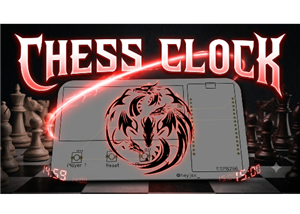
Chess Clock
Project Overview:
System Architecture & Control Logic:
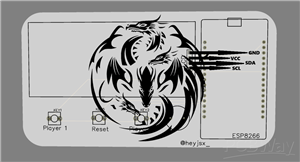
The ESP8266 acts as the central processor for the dynamic chess clock, orchestrating the entire match flow. It continuously monitors the game state and handles dual-player countdowns using non-blocking timing routines, ensuring the system remains completely responsive during rapid blitz games. The hardware layout features three dedicated tactile switches: KEY1 and KEY2 handle seamless turn swapping by instantly pausing one player's timer and starting the opponent's, while the Reset button (KEY5) serves as a system interrupt to immediately halt the countdowns, clear active alarms, and restore the default time limits.
Dynamic PWM Audio Feedback:
To heighten the intensity of the match, the microcontroller utilizes Pulse Width Modulation (PWM) to drive the buzzer with adaptive audio feedback rather than static beeps. Under normal conditions, pressing a turn button triggers a quick, satisfying audio chirp to confirm the switch. However, as the match progresses and a player's remaining time dips past a critical threshold, the ESP8266 dynamically manipulates the PWM frequency, causing the warnings to grow rapidly faster and higher in pitch to mirror the escalating tension, ultimately culminating in a solid, continuous time-out alarm if the clock hits zero.
User Interface & PCB Integration:
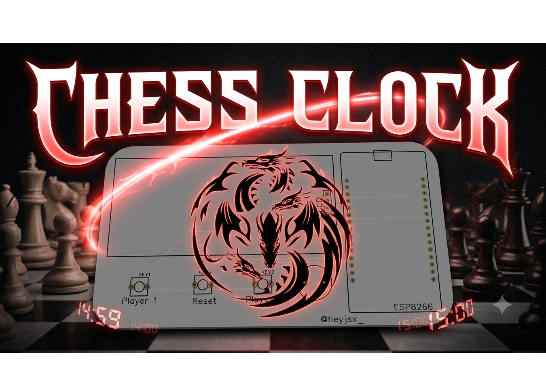
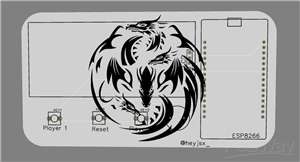
All real-time match data, including the shifting countdowns, is continuously pushed to the dedicated LCD screen through a four-pin I2C communication header. The physical layout neatly splits these functionalities, dedicating the expansive left section of the board to the visual display framework and the right side to the core microcontroller. The striking dragon ground plane emblem is strategically positioned right in the center, allowing the high-speed traces to cleanly route around the artwork from the input buttons straight to the ESP8266 pins without sacrificing aesthetic appeal or signal integrity.
Chess Clock
Project images are for reference only. Actual production is based on the manufacturing files on the project page.
Please review the designer's notes (e.g., PCB thickness) and select the appropriate options.
PCBWay is not responsible
for issues caused by unsuitable parameter selections.
For more important ordering information, please refer to
Read More


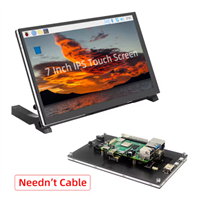
Raspberry Pi 5 7 Inch Touch Screen IPS 1024x600 HD LCD HDMI-compatible Display for RPI 4B 3B+ OPI 5 AIDA64 PC Secondary Screen(Without Speaker)
BUY NOW


- Comments(0)
- Likes(0)
More by Heymant Visaakan J
-
 Automatic Barrier Controller
The Automatic Barrier Controller is a compact, single-PCB automated gate entry system designed for m...
Automatic Barrier Controller
The Automatic Barrier Controller is a compact, single-PCB automated gate entry system designed for m...
-
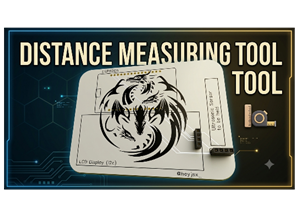 Distance Measuring Tool
# ESP8266 Distance Measurer - Complete Documentation---## 1. Project OverviewThis is an ESP8266-base...
Distance Measuring Tool
# ESP8266 Distance Measurer - Complete Documentation---## 1. Project OverviewThis is an ESP8266-base...
-
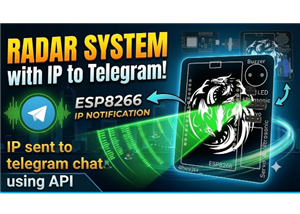 Radar System
# ESP8266 Radar System - Complete Documentation---## 1. Project OverviewThis is an ESP8266-based Rad...
Radar System
# ESP8266 Radar System - Complete Documentation---## 1. Project OverviewThis is an ESP8266-based Rad...
-
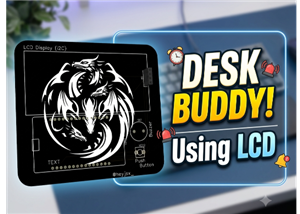 Desk Buddy
# Desk Buddy v2.0.0 - Complete Documentation---1. PROJECT OVERVIEWDesk Buddy v2.0.0 is a smart desk ...
Desk Buddy
# Desk Buddy v2.0.0 - Complete Documentation---1. PROJECT OVERVIEWDesk Buddy v2.0.0 is a smart desk ...
-
 Chess Clock
Project Overview:System Architecture & Control Logic:The ESP8266 acts as the central processor f...
Chess Clock
Project Overview:System Architecture & Control Logic:The ESP8266 acts as the central processor f...
-
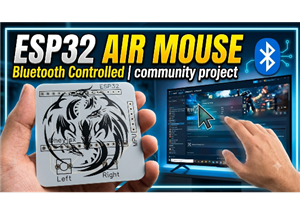 ESP32 Air Mouse
Project Overview:The ESP32 Air Mouse is an innovative, gesture-controlled mouse that lets you naviga...
ESP32 Air Mouse
Project Overview:The ESP32 Air Mouse is an innovative, gesture-controlled mouse that lets you naviga...
-
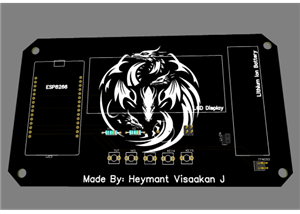 Smart Clock
 PCB – Product DescriptionThe Smart Clock PCB is a custom-designed, 2-layer FR-4 printed ...
Smart Clock
Smart Clock PCB – Product DescriptionThe Smart Clock PCB is a custom-designed, 2-layer FR-4 printed ...
-
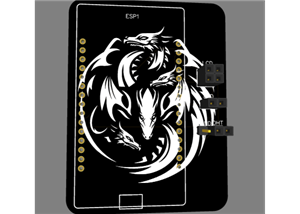 Smart ThermoStat
Smart Thermostat using ESP8266 & Blynk IoT:This project is a Wi-Fi enabled smart thermostat buil...
Smart ThermoStat
Smart Thermostat using ESP8266 & Blynk IoT:This project is a Wi-Fi enabled smart thermostat buil...
-
Émetteur Récepteur Optique Expérimental (communication UART ATtiny + fibre optique)
37 0 1 -
SmallOLED - Live PC Stats, Animated Clocks & Audio Visualizer
868 0 3 -
"Talking Multimeter": Arduino-Based Speech Add-on for Multimeters with SCPI Protocol
509 0 1 -
Programmable Mist Maker - XIAO / QT PY Extension
2976 2 3 -
RadioHAT - Raspberry Pi radio development platform
2524 0 4 -
-
-