CNC machining costs are mainly determined by machine running time, setup time, material costs, and post-processing requirements. Among these factors, machining time is usually the biggest contributor to the overall cost. The more complex the part geometry, the more setups required, and the tighter the machining tolerances, the more operations and longer production cycles are needed.
Therefore, optimizing part design to reduce machining complexity is one of the most effective ways to lower CNC machining costs.
1. Simplify Part Geometry to Reduce Machining Time
Avoid unnecessary complex surfaces and 3D geometries
Complex curved surfaces may require multi-axis CNC machining, such as 4-axis or 5-axis machining, to reduce setups and achieve complex toolpaths. These advanced machining methods can increase CNC machining costs, extend production time, and require more effort in programming and toolpath optimization.
Recommendations:
● Use simple geometric features whenever possible, such as flat surfaces, cylinders, and cones.
● Avoid unnecessary decorative surfaces and excessive complex curves.
● Simplifying part geometry helps create more cost-effective CNC machined parts.
Reduce deep pockets, deep holes, and narrow slots
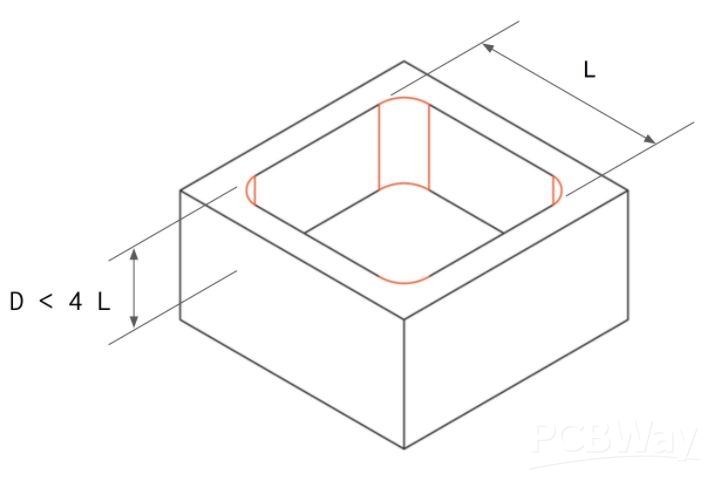
Deep pocket machining requires longer cutting tools with lower rigidity, which increases the risk of tool deflection, vibration, and dimensional accuracy issues. To maintain machining tolerances, cutting depth and feed rates often need to be reduced, significantly increasing machining time.
Recommendations:
As pocket depth increases, longer tools are required. However, longer tools have lower stiffness and are more prone to vibration and tool deflection. Therefore, pocket depth is generally recommended to be limited to 4 times the tool diameter, and should not exceed 6 times the tool diameter in special cases.
If deep pockets cannot be avoided, consider:
● Splitting the part into multiple components and assembling them afterward.
● Machining features after assembly when possible.
● Using cast or forged blanks to reduce CNC machining time.
Avoid Designing Thin Walls
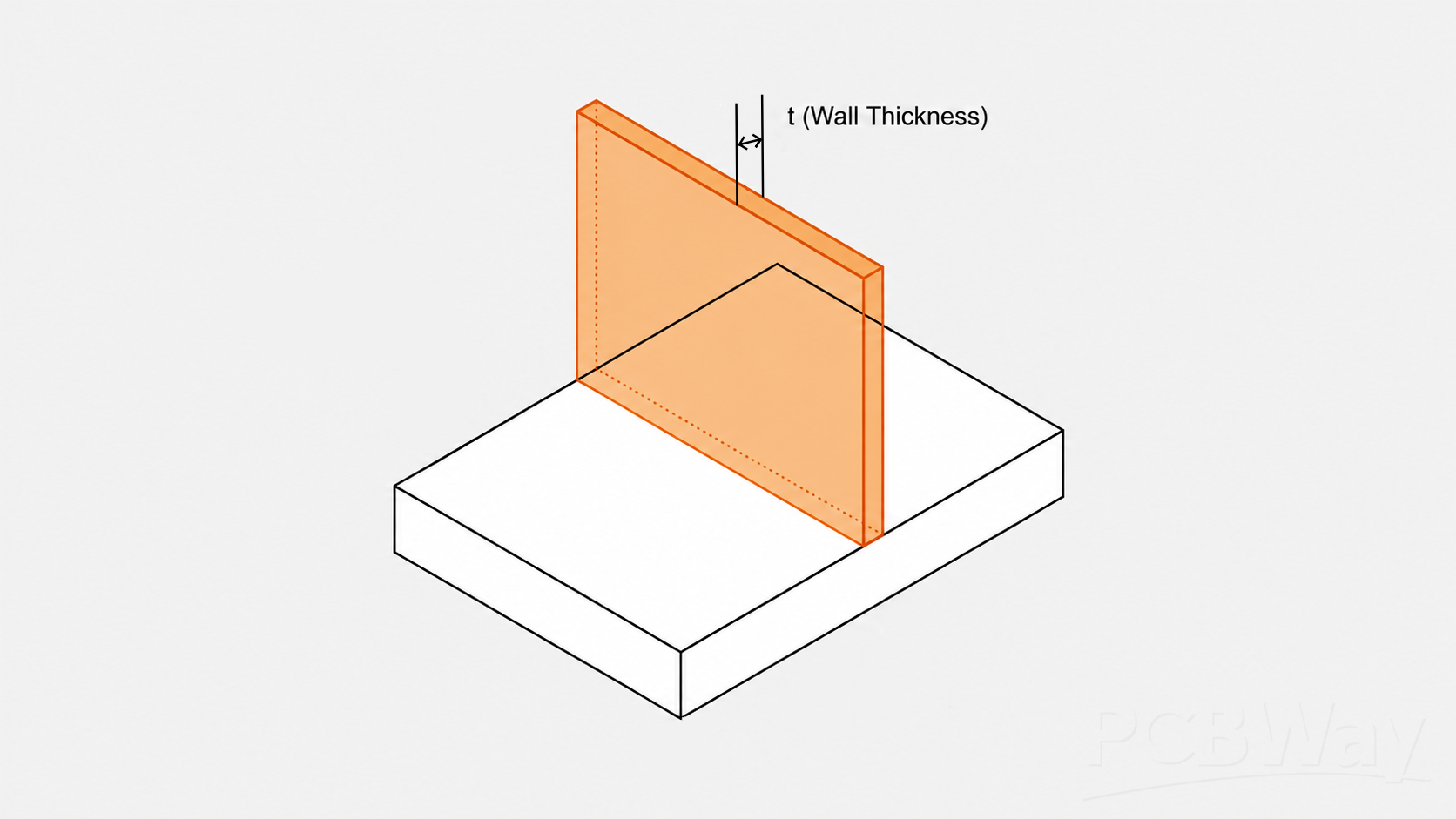
Thin wall structures are more susceptible to vibration and deformation during CNC machining due to cutting forces. To maintain dimensional accuracy, manufacturers may need to reduce cutting speed, use specialized tooling, or perform additional machining passes, which increases production time and cost.
Recommendations:
● For metal parts, maintain a minimum wall thickness of 0.8 mm.
● For plastic parts, maintain a minimum wall thickness of 1.5 mm.
● Avoid unnecessary thin features and unsupported structures.
● If thin walls are required, consider adding support ribs or modifying the design to improve rigidity.
2. Use Standard Sizes to Reduce Special Machining Requirements
Standardization is one of the key principles of CNC design for manufacturability (DFM). Reducing non-standard dimensions can minimize tooling requirements, simplify programming, and improve machining efficiency.
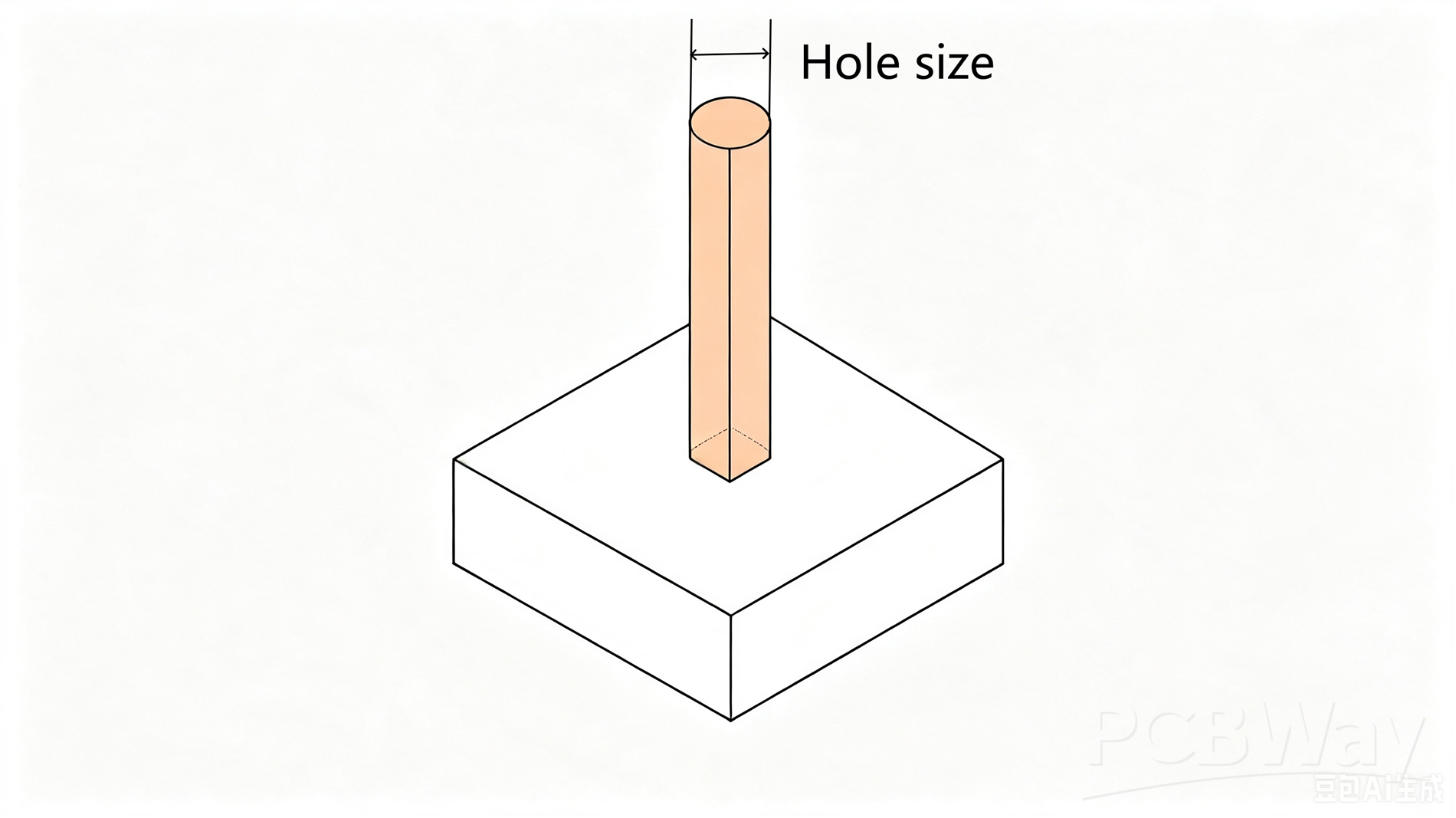
Use standard drill sizes whenever possible
Standard drill sizes can be machined using commonly available tools without requiring custom tooling.
Common metric drill sizes include: Φ3, Φ4, Φ5, Φ6, Φ8, and Φ10 mm.
Recommendations:
● Use standard hole sizes whenever possible.
● Avoid designing a large number of custom-sized holes.
● For non-critical holes, adjust dimensions based on standard tooling sizes.
Control hole depth and quantity
A large number of deep holes increases drilling time, tool changes, and chip removal difficulties.
Recommendations:
● Reduce unnecessary holes.
● Avoid excessively deep small-diameter holes.
● Deep holes may require specialized drilling processes, increasing machining time and cost.
Limit Thread Depth and Use Standard Threads
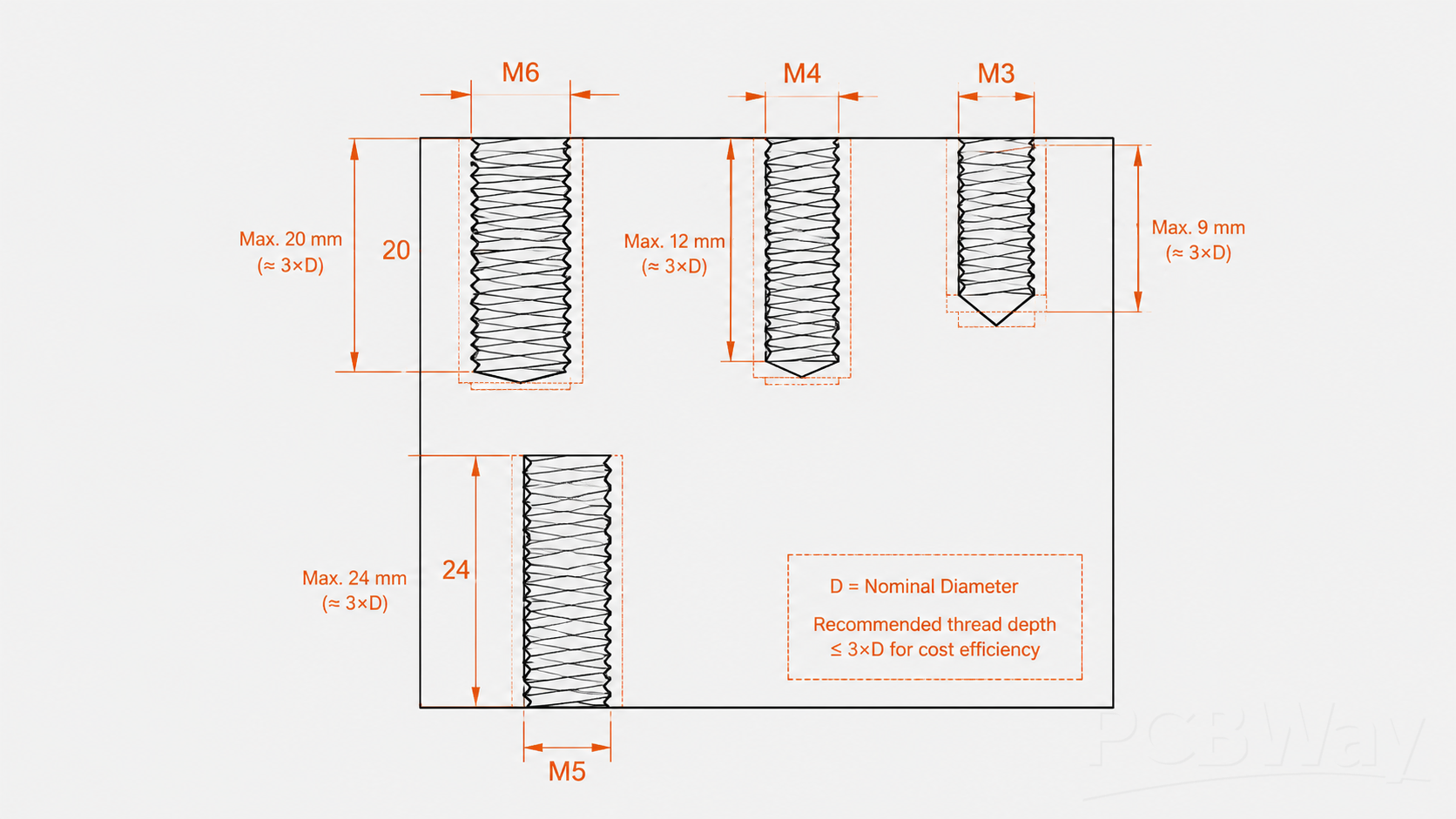
Long threads require additional machining time and increase the difficulty of chip removal, especially for deep threaded holes. Excessively long threads may also require special tooling or multiple machining operations, increasing CNC manufacturing costs. You can refer to the thread standards: CNC Thread Standards.
Recommendations:
● Avoid unnecessarily deep threaded holes.
● Use standard thread lengths whenever possible.
● For non-critical threaded features, reduce thread depth to meet functional requirements only.
● Avoid designing threads deeper than necessary, especially for small-diameter holes.
Reduce non-standard slots and special machining features
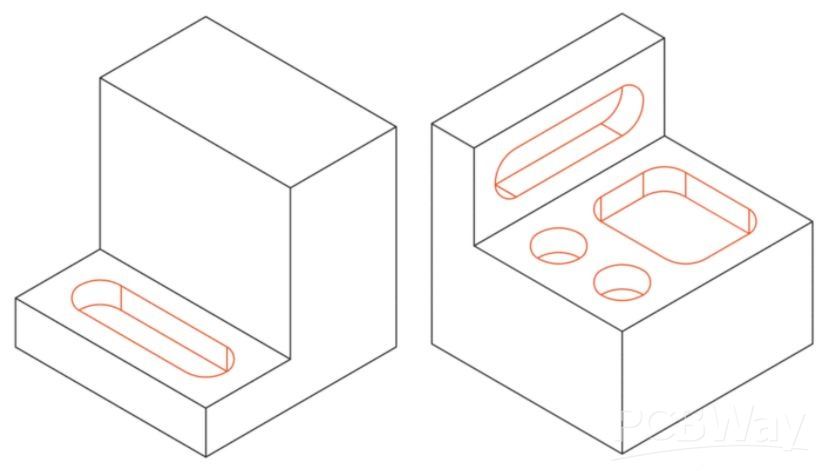
Non-standard machining features often require custom cutters, increasing CNC machining costs and lead times.
Recommendations:
Design slot widths based on standard end mill sizes, such as: 3 mm, 4 mm, 6 mm, 8 mm, 10 mm, and 12 mm. Whenever possible, replace complex slot designs with combinations of standard holes and straight slots to achieve more economical CNC machining.
3. Specify Reasonable Tolerances and Surface Roughness
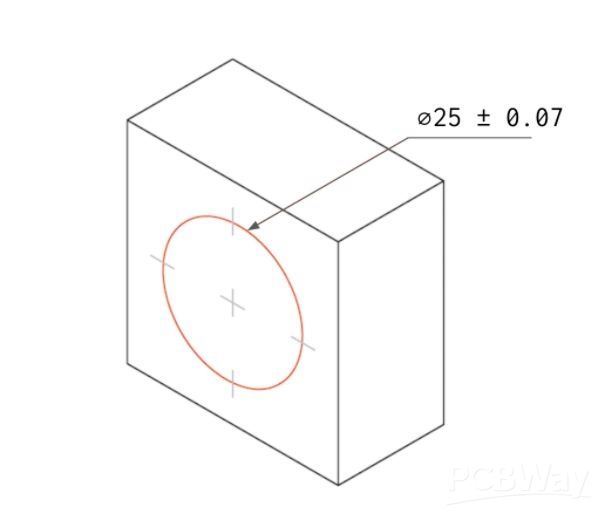
Tighter tolerance and surface finish requirements can significantly increase CNC machining costs. Higher precision requires slower cutting speeds, more demanding tooling, and additional inspection processes.
Standard CNC machining tolerances can be referenced here: ISO 2768 CNC Machining Tolerances.
Recommendations:
● Use looser tolerances for non-critical and non-mating features.
● Tight requirements for parallelism, perpendicularity, and concentricity increase fixturing, inspection, and finishing costs.
● A surface roughness of Ra 6.4 μm is commonly achievable. Surface finishes of Ra 3.2 μm or lower typically require additional finishing operations such as fine milling or polishing, increasing costs.
4. Reduce Unnecessary Surface Finishing Requirements
Surface finishing processes can improve appearance, corrosion resistance, and surface performance. However, special finishes usually require additional processing steps, increasing both cost and production time.
For example, fine polishing, special textures, custom anodizing colors, and high-grade surface finishes all add extra manufacturing requirements.
Recommendations:
● Select surface finish requirements based on actual functional needs.
● Avoid specifying high cosmetic requirements for non-visible surfaces.
● Avoid unnecessary mirror polishing, special textures, or custom colors.
● If anodizing, bead blasting, or other surface treatments are required, reserve proper machining allowance to prevent dimensional changes after finishing.
5. Choose Easy-to-Machine Materials to Reduce Costs
In general, machining cost trends are approximately: 6061 Aluminum < POM < Nylon < 7075 Aluminum < Brass < Stainless Steel < Titanium Alloy (This ranking is for reference only.) Aluminum alloys and engineering plastics are generally more economical to machine, while high-strength materials such as stainless steel and titanium alloys require more machining effort and usually result in higher costs.
Recommendations:
● Avoid selecting high-strength materials unnecessarily. Although 7075 aluminum and stainless steel provide better mechanical performance, they are more expensive to machine. For most structural parts, 6061 aluminum is usually sufficient.
● For appearance-focused parts, aluminum alloys are often preferred because anodizing provides better surface appearance.
● Use metal materials for heavily loaded threads, as plastic threads are more prone to wear and failure.
● Avoid standard plastics in high-temperature environments. Use heat-resistant engineering plastics instead.
For more information about material selection, refer to this article: CNC Machining Materials Selection Guide.
6. Reduce Setups and Optimize Part Design
Each additional setup in CNC machining requires repositioning and recalibration, which increases preparation time and may affect machining accuracy.
Recommendations:
● Design parts that can complete most machining operations in a single setup.
● If multiple sides require machining, consider adding locating features or datum holes for faster positioning.
● For complex parts, consider modular designs by splitting the part into multiple components and assembling them afterward.
● Increasing the number of machining axes does not always increase cost. If 5-axis machining reduces multiple setups and improves positioning accuracy, it may actually lower the total manufacturing cost.
7. Optimize Fillets, Chamfers, and Edge Features
Internal Fillets (R Corners)
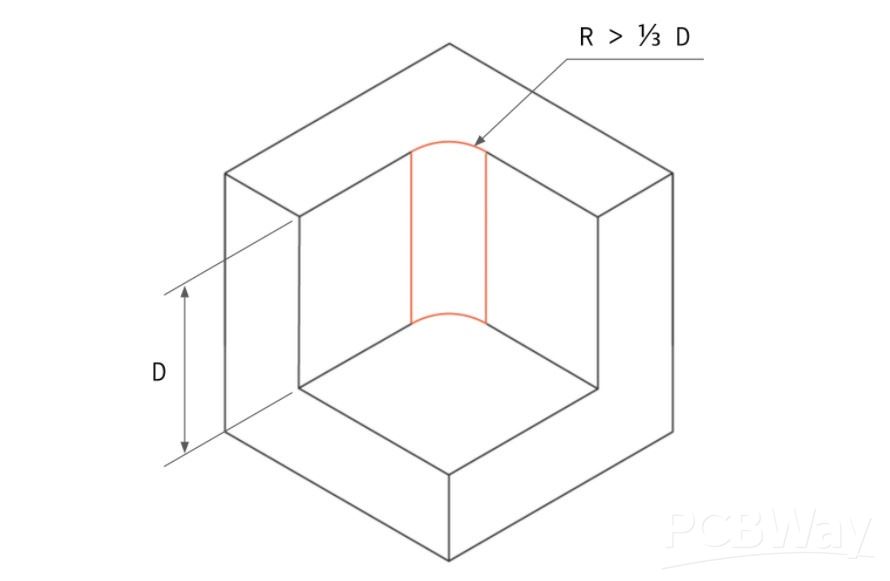
Internal fillets require milling cutters, so their size is limited by the tool radius.
Recommendations:
● Use standard R values whenever possible, such as R1, R2, R3, and R5.
● Avoid non-standard fillet sizes to reduce special tooling requirements.
● Larger internal radii generally improve machining efficiency.
● The internal fillet radius is recommended to be at least one-third of the pocket depth. For example, a 9 mm deep pocket is better suited for an R3 fillet.
Reduce unnecessary chamfers
Chamfers can improve assembly, remove sharp edges, and enhance appearance. However, excessive chamfers increase toolpaths and machining operations. Different chamfer sizes, such as C0.5, C1, and C1.5, may require different tools, increasing setup time.
Recommendations:
● Add chamfers only where needed for deburring, assembly guidance, or safety.
● Use consistent chamfer sizes whenever possible.
● Avoid decorative chamfers that do not provide functional benefits.
Reducing CNC machining costs does not mean simply removing design requirements. The goal is to optimize part design while maintaining required functionality and quality.
By using simpler geometries, standard dimensions, reasonable tolerances, machinable materials, and minimizing unnecessary machining requirements, manufacturers can effectively reduce machining time and production costs.
Through optimized part design, appropriate material selection, and efficient manufacturing processes, PCBWay provides fast CNC machining services for both prototyping and production, helping customers achieve high-quality and cost-effective part manufacturing.