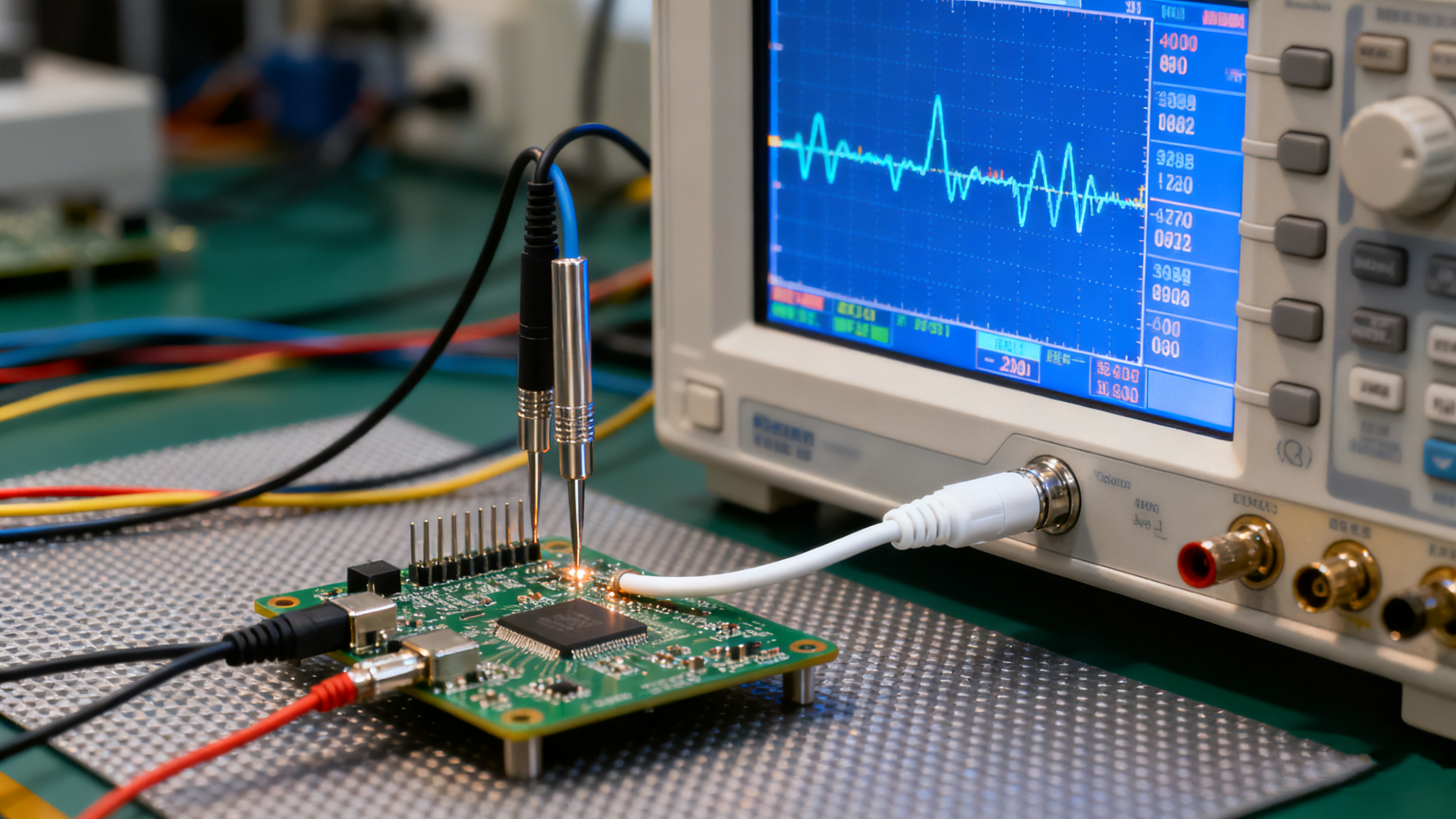
In hardware design process, especially for complex projects, we often recommend developing dedicated testing firmware to perform comprehensive hardware validation. In this article, we will explain the role and necessity of hardware testing firmware, and more importantly, clarify the key differences between testing firmware and complete embedded software used in final products.
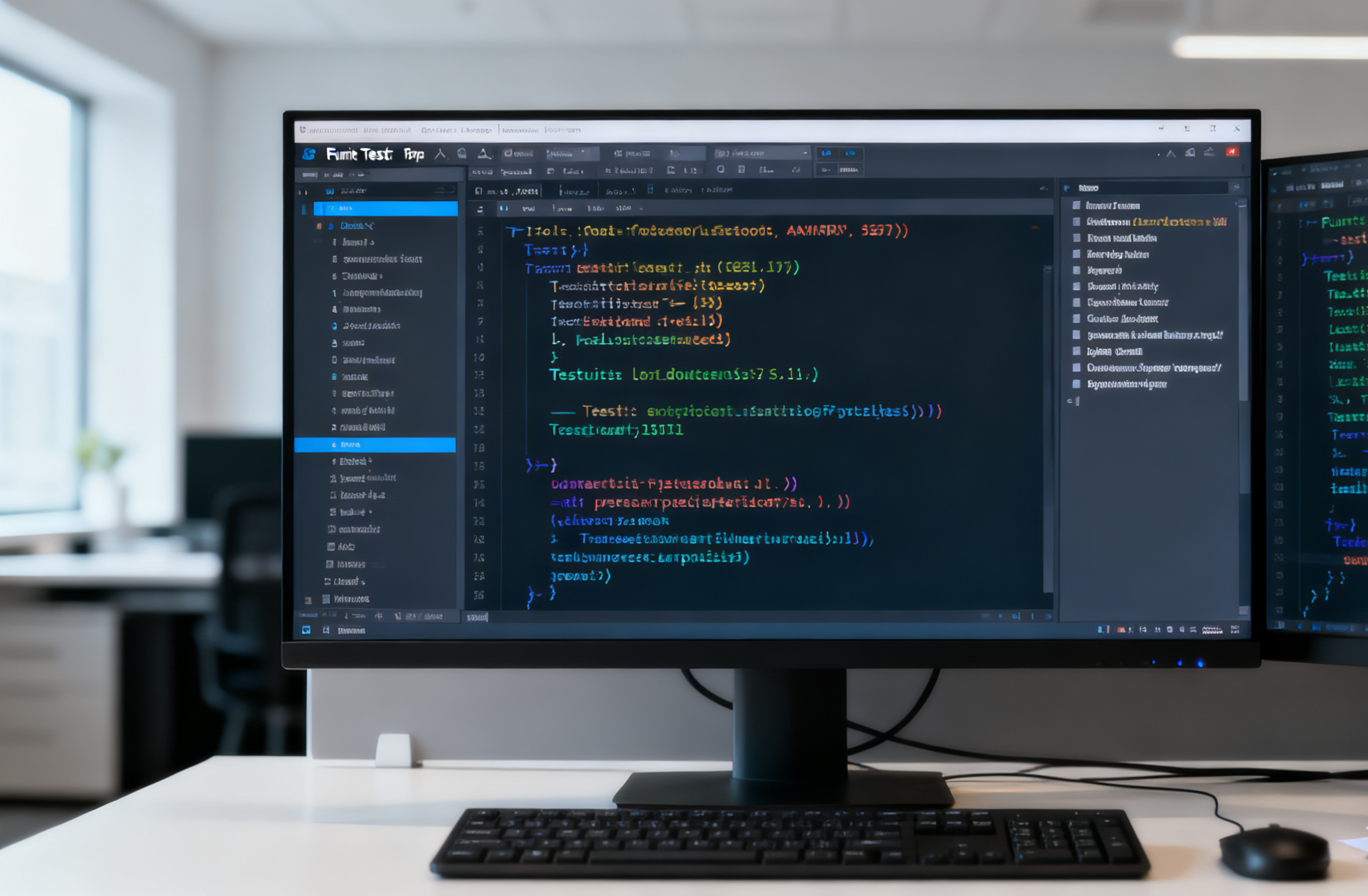
Test firmware is a lightweight diagnostic program created to verify and validate hardware functionality during early hardware testing or prototype bring-up.
Its main purpose is not to implement end-user features, but to serve as a hardware health check tool, ensuring that all essential components—such as the MCU, memory, communication interfaces (I²C, SPI, UART), sensors, and power systems—function correctly.
During firmware development and hardware validation, static electrical measurements alone cannot guarantee dynamic stability.
By running test firmware, engineers can perform comprehensive hardware verification through the following steps:
This firmware testing phase is crucial for detecting potential hardware issues early, minimizing project risks, and ensuring that subsequent embedded software development proceeds smoothly and efficiently.
Although both are forms of firmware, test firmware and embedded software serve completely different purposes within hardware product development and system validation.
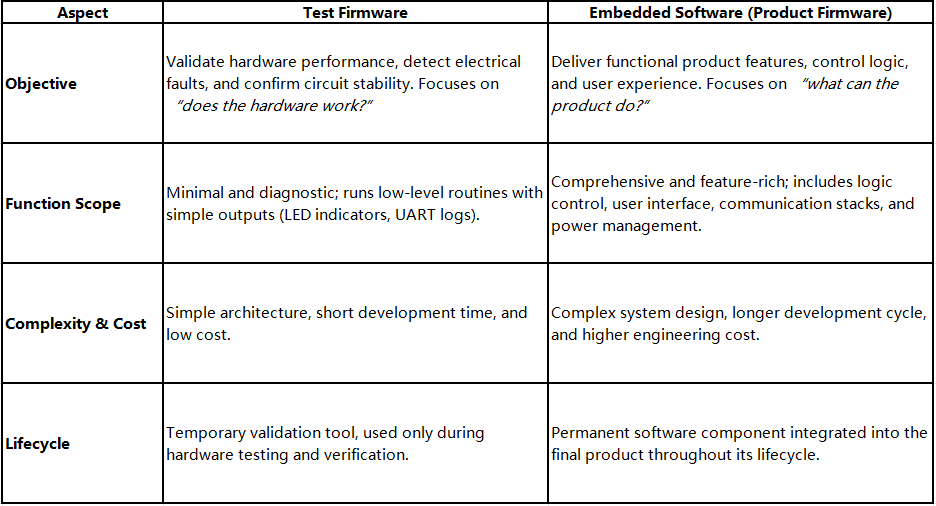
In summary, test firmware ensures that the hardware platform is electrically and functionally sound, while embedded software transforms that validated hardware into a complete, intelligent product ready for the market.
Test firmware is a necessity in modern hardware and firmware development.
It functions as a comprehensive quality inspection and firmware testing tool, ensuring that both hardware and firmware layers are safe, reliable, and efficient before production.
Here are several key reasons why test firmware development is essential in hardware design:
By integrating test firmware into the hardware validation process, engineering teams build a more stable foundation for embedded software development, enabling a smoother transition to full product firmware integration.
Ultimately, test firmware is the backbone of reliable hardware testing, paving the way for high-quality, secure, and dependable electronic products.
In summary, test firmware serves as an internal verification tool and a quality assurance measure in the hardware design process. Its purpose is to deliver a thoroughly tested, stable, and reliable hardware platform. In contrast, embedded software is the soul of the final product, built upon that verified and trusted foundation.
In certain projects, we recommend developing test firmware out of a strong sense of responsibility toward project success. By eliminating uncertainties at the hardware level, it paves the way for smoother software development that follows. From a long-term perspective, this proactive approach ultimately saves valuable time and cost for the entire project.