Since most 3D printing materials are plastic-based, traditional post-processing methods such as cutting or tapping threads often fail to meet durability requirements. To achieve stronger and more reliable threaded connections, brass inserts can be used instead of direct threading.
Brass inserts provide greater wear resistance and long-term durability compared to tapped threads in 3D printed parts. However, because the specifications and dimensions of brass inserts vary by country and manufacturer, the following design guidelines are provided for reference.
Note that the required hole size may differ depending on the specific insert model and type.
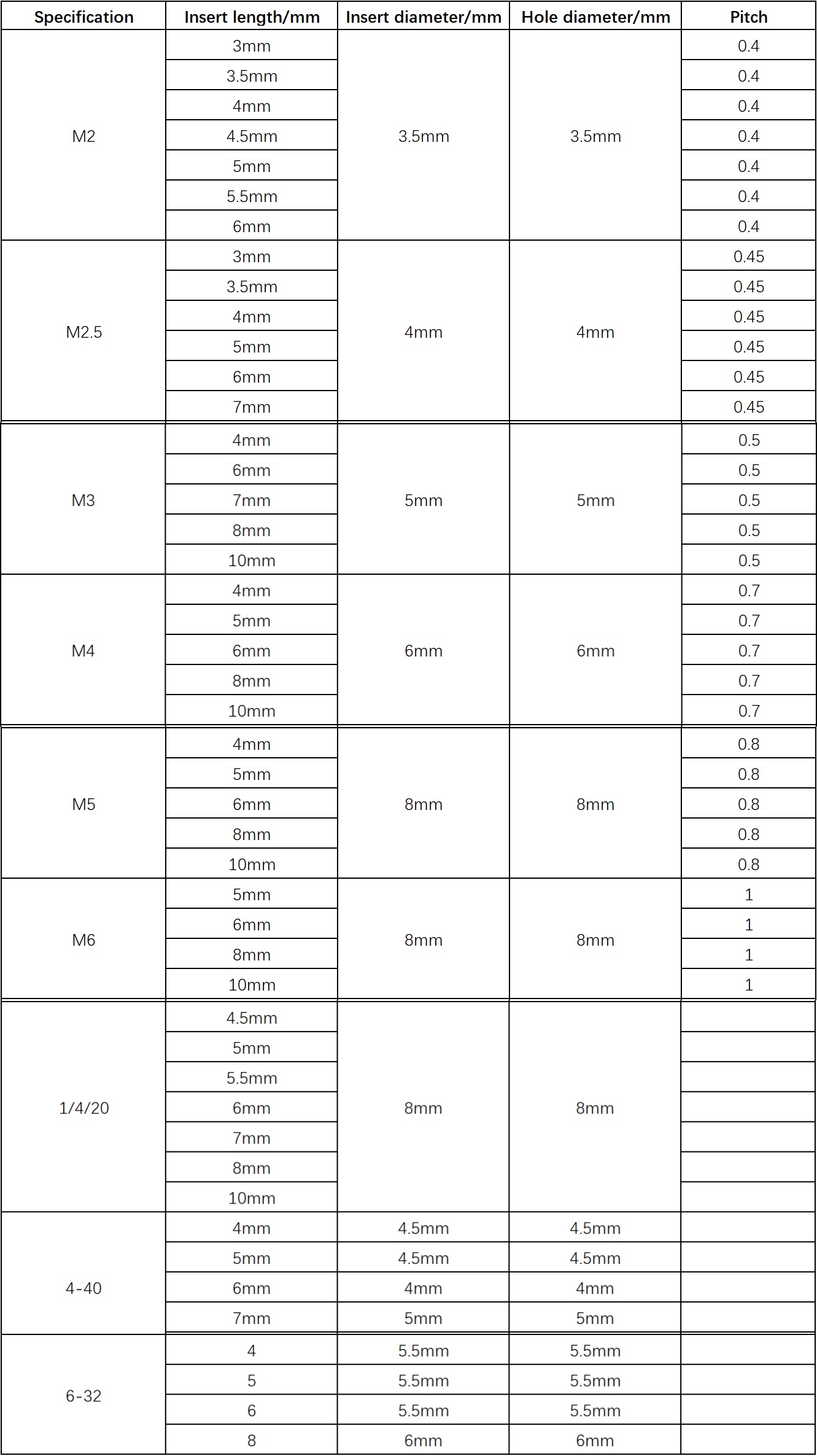
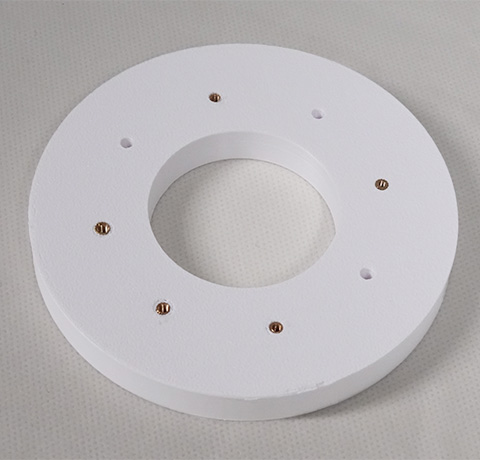
When designing for metal inserts in 3D printed parts, it is crucial to maintain a safe distance between the insert and the sidewall to prevent structural damage during installation. This factor largely determines whether the part is suitable for brass inserts. We recommend that after reserving the proper insert hole diameter, the minimum wall thickness should be at least 1.5 mm to ensure strength and stability.
For metal 3D printed materials, both thread cutting and threaded inserts can be considered. However, threads printed directly into metal parts often require supports, and once these supports are removed, the threads may not be reliable for functional use. Therefore, tapping the threads after printing is the preferred approach.
When designing for tapped threads, reserve the proper pilot hole diameter according to the thread size, and ensure that the sidewall thickness remains at least 1.5 mm.
It is not recommended to use brass inserts in metal 3D printed parts, as the bond between brass and metal is typically weak and may cause the insert to detach. Instead, stainless steel thread repair inserts (such as helicoils) are recommended as a more secure and durable alternative.
Tell us your specific requirements — we’ll do our best to provide the most suitable and reliable solution for your 3D printing needs.