

VelocitaE-Racing
WHO I AM
I am an Electronics and Communication Engineering student and a member of Team Velocita Racing, the electric Formula Student team from PSG Institute of Technology and Applied Research.
I have been involved in developing electrical and electronic systems for our electric race car, with a particular interest in PCB design, power electronics, embedded systems, electric vehicles, and automotive safety systems. Working on a Formula Student car has given me the opportunity to apply concepts from electronics and electrical engineering to a real vehicle where reliability, safety, weight, and performance all have to be considered simultaneously.
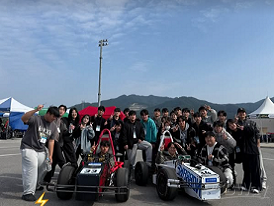
Team Velocita Racing consists of students from different engineering disciplines working together to design and build an electric race car. The team has been participating in Formula Bharat and other student motorsport competitions since 2016, with a strong focus on collaboration, innovation, continuous improvement, and developing practical engineering skills.
PROJECT DESCRIPTION
Building an Electric Race Car for Formula Bharat 2027
Our project is the development of an electric Formula Student race car for Formula Bharat 2027. Unlike a conventional road-going EV, a Formula Student car requires every subsystem to be optimized for performance, weight, reliability, and safety while operating under demanding racing conditions.
The vehicle's electrical system consists of a high-voltage traction system, accumulator, motor and motor controller, charging system, battery monitoring and safety systems, shutdown circuitry, sensors, and multiple custom electronic control boards.
Our previous vehicle's electrical architecture included systems such as the Accumulator Management System (AMS), Insulation Monitoring Device (IMD), Accumulator Isolation Relays (AIRs), precharge circuitry, current and voltage sensing, TSAL, shutdown circuit, BSPD, APPS, and other control electronics.
Where PCBs come in
PCBs are an important part of our electrical architecture because many of these systems require compact, reliable, and purpose-built electronics rather than off-the-shelf modules.
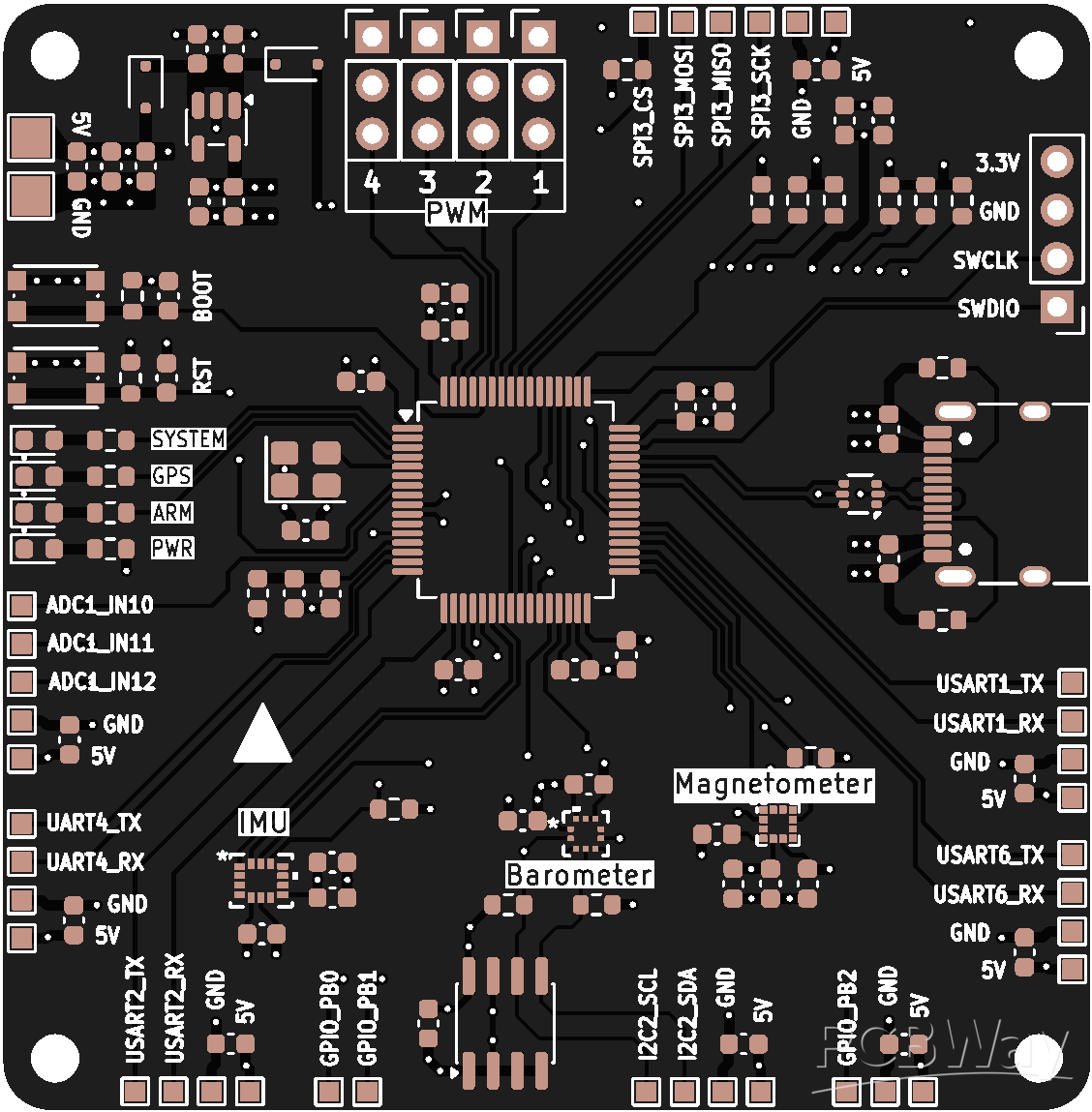
For our 2027 car, we are currently redesigning and developing our electronics architecture. We expect approximately 10–12 different PCB designs, covering various control, sensing, monitoring, and safety functions.
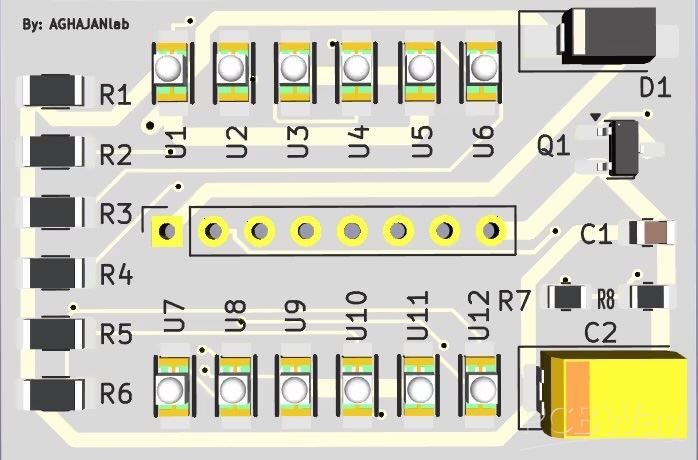
Most of these boards are expected to be 2-layer PCBs, with dimensions depending on their individual applications. Around three of the larger boards are expected to be approximately 200 × 200 mm, while the remaining boards will be smaller.
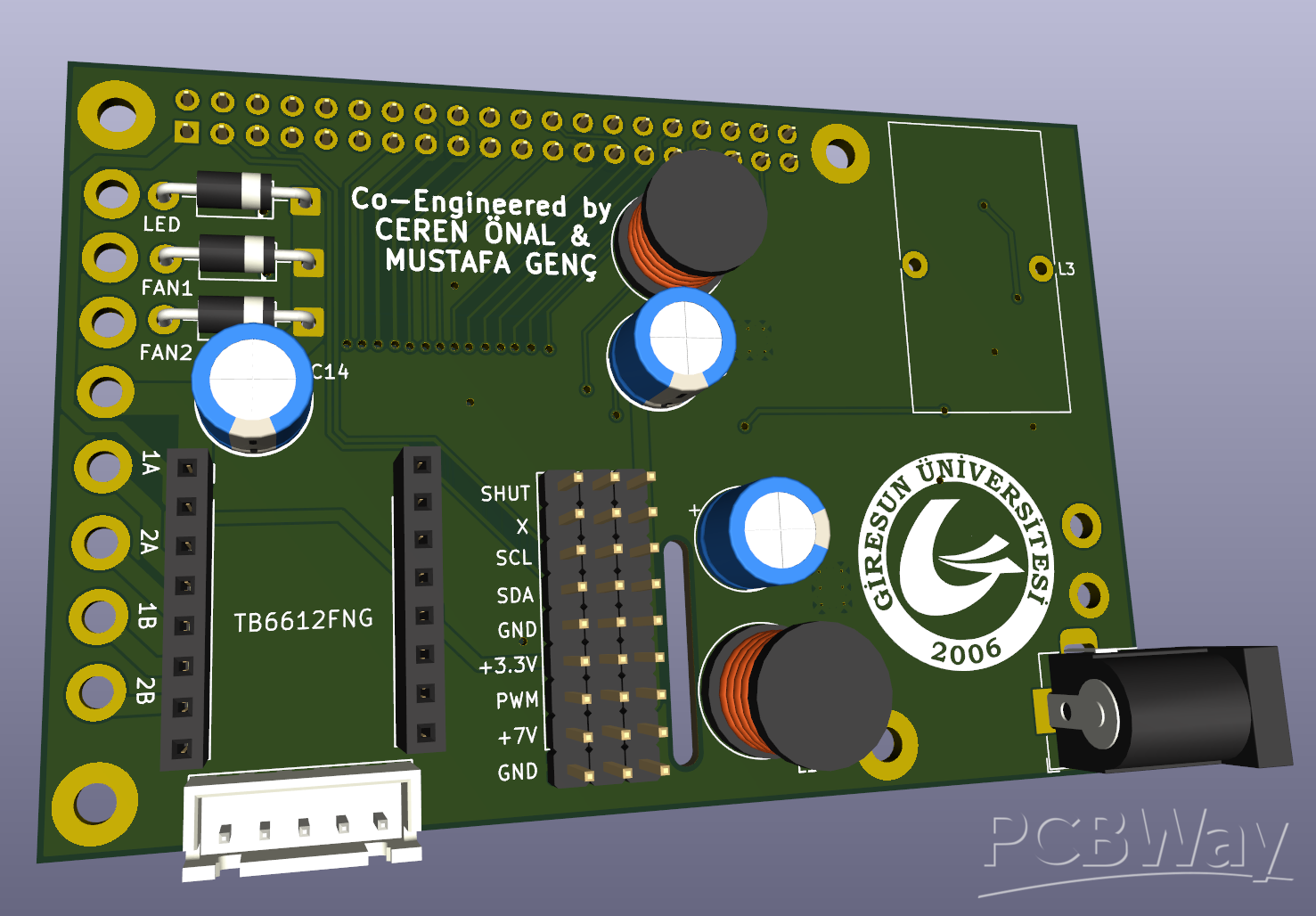
The PCB designs are currently under development, so the designs shown in our documentation are primarily from our previous year's vehicle and are included to demonstrate our previous work and electrical architecture.
How the system works
At the heart of the vehicle is the high-voltage accumulator, which supplies energy to the motor controller. The controller regulates the power delivered to the electric motor to produce the required torque and vehicle performance.
At the same time, several safety and monitoring systems continuously supervise the tractive system.
For example:
AMS/BMS monitors battery parameters such as cell voltage and temperature.
Current sensing monitors the traction-system current.
IMD monitors the isolation condition of the high-voltage system.
Precharge circuitry safely charges the motor controller's DC-link capacitor before the main contactors are closed.
Shutdown circuitry disconnects the tractive system when a critical fault is detected.
TSAL provides a visual indication of the tractive-system state.
BSPD and pedal-related electronics provide additional vehicle safety and control functions.
Our previous design implemented dedicated monitoring and protection for cell voltage and temperature, with the AMS capable of opening the AIRs when unsafe conditions are detected.
The previous design also included a dedicated shutdown architecture integrating the AIRs, precharge and discharge relays, AMS, and IMD.
From simulation to the race track
Our development process involves:
System Architecture → Circuit Design → PCB Design → Simulation/Verification → PCB Manufacturing → Assembly → Bench Testing → Vehicle Integration → Track Testing
For the 2027 project, we are currently at the circuit and PCB development stage. Once the designs are finalized, we will manufacture prototype boards, assemble and test them, integrate them into the vehicle, and validate their operation under real racing conditions.
We hope to document this development process through PCB layouts, circuit diagrams, photographs, CAD models, testing results, and eventually on-track footage.
OUR PREVIOUS WORK
The documentation we have provided contains the electrical design work from our previous Formula Student vehicle. It includes the accumulator architecture, high-voltage interconnections, monitoring systems, charger, shutdown circuit, TSAL, and motor-controller integration.
For example, the previous accumulator design incorporated cell voltage and temperature monitoring, current sensing, precharge circuitry, AIRs, IMD, TS fuse, high-voltage connectors, and dedicated PCBs.
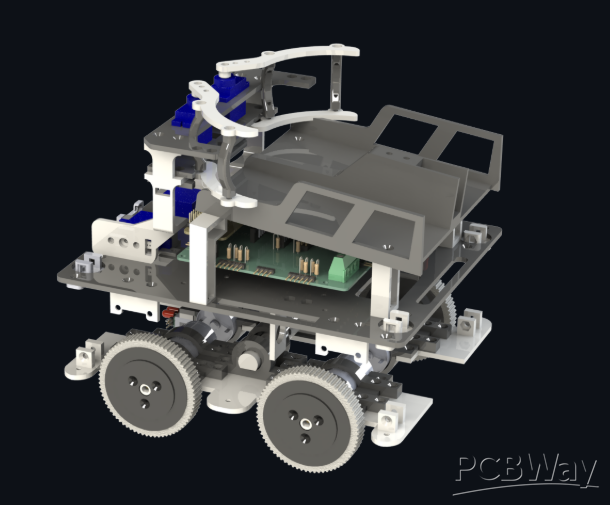
The documentation also contains CAD renders showing the arrangement of the accumulator, electrical components, wiring, sensors, and high-voltage connections. These give an overview of the level of system integration involved in our project.
The important distinction is that these are previous-year designs. Our Formula Bharat 2027 electronics are currently being redesigned and will be documented as the project progresses.
WHAT WE HOPE TO ACHIEVE
Our goal is not simply to build a race car, but to develop a reliable electric vehicle while giving students practical experience in electronics, embedded systems, power electronics, PCB design, battery systems, safety engineering, and vehicle integration.
Our team's vision is to promote sustainability in motorsport by developing competitive, emission-free vehicles, while our mission is to build reliable electric vehicles through collaboration between students, faculty, and industry.
With the Formula Bharat 2027 project, we want to take our electrical system a step further by developing more refined, compact, reliable, and serviceable custom electronics for the vehicle.
WORDS TO PCBWAY
To the PCBWay Team,
We are currently developing the electrical and electronic systems for our Formula Bharat 2027 electric race car, and PCBs are going to be an important part of this year's vehicle.
Our team designs many of its vehicle-specific electronics in-house, but manufacturing multiple prototype boards is a significant challenge for a student racing team, particularly when several iterations are required during testing and validation.
This is where we believe PCBWay can make a real difference.
We are currently developing approximately 10–12 PCB designs, most of them 2-layer boards, and we would greatly benefit from receiving 2–3 prototypes of each design for assembly, testing, and iteration. Having professionally manufactured PCBs would allow our team to move faster from circuit design to physical testing and spend more time validating our electronics on the actual vehicle.
We would be proud to have PCBWay as a manufacturing partner in our Formula Bharat 2027 journey. Your support would not only help us build our race car, but would also give our students valuable hands-on experience in taking a PCB from design → manufacturing → assembly → testing → real-world automotive application.
We hope to build a long-term relationship with PCBWay and showcase your support throughout our development journey, including our vehicle, team media, project documentation, and competition activities.
Thank you, PCBWay, for supporting student engineers and helping us turn our designs into hardware.
Team Velocita Racing
PSG Institute of Technology and Applied Research
Formula Bharat 2027

- Comments(0)
- Likes(0)