

UTRA Autonomous Rover: Custom PCBs for Autonomous Navigation
UTRA Autonomous Rover: Building the Electronics Behind Autonomous Navigation
About Our Team
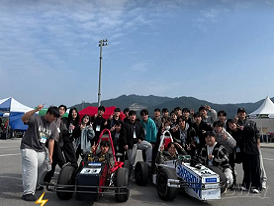
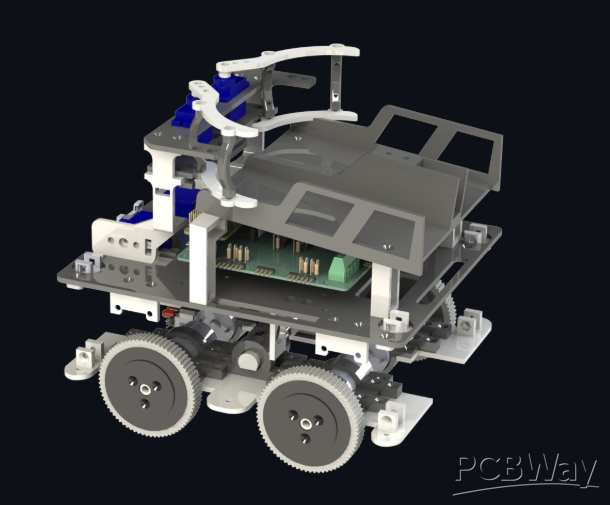
We are the Autonomous Rover Team (ART), a student engineering team within the University of Toronto Robotics Association (UTRA). Our mission is to design, build, and program a fully autonomous ground vehicle to compete in the International Ground Vehicle Competition (IGVC).
Our rover is designed to navigate its environment autonomously by detecting obstacles, estimating its position, and planning paths in real time. To achieve this, we integrate a range of sensors and control systems, including a ZED stereo camera, LiDAR, GPS, and an IMU.
Learn more about our team at https://utra.ca/teams/art.
The Project
As members of the embedded systems subteam, we develop the electrical hardware and control architecture that allows our rover to operate reliably. A key part of this work is designing custom printed circuit boards that improve system integration, simplify diagnostics, and support safe and precise vehicle operation.
For this project, we are developing several PCBs tailored to the rover's electrical requirements.
1. Fault Monitor with LED Indicators
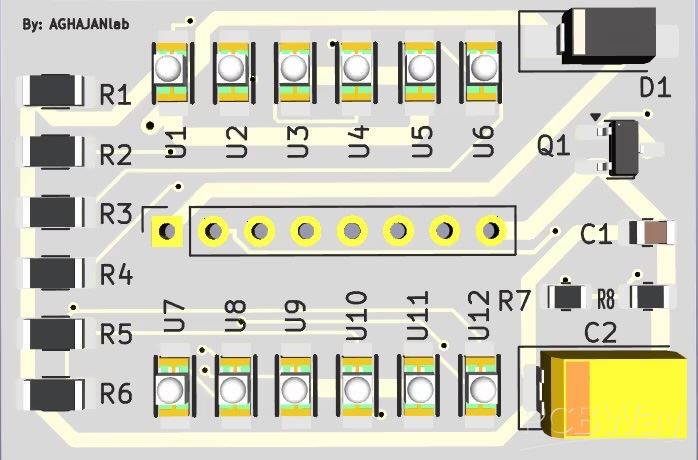
Electrical reliability is essential when testing an autonomous vehicle. Our fault monitoring board is designed to detect power system faults and provide immediate visual feedback through LED indicators. This allows team members to identify potential electrical issues more quickly during development, troubleshooting, and competition testing.
2. Speed Signal Translator
Accurate motor feedback is critical for vehicle control and autonomous navigation. Our speed signal translator interfaces with the rover's encoder and speed signal architecture, helping ensure that signals are properly translated and communicated between system components. This supports reliable feedback for motor control and vehicle movement.
3. Battery Amount Indicator
Unexpected power loss can interrupt testing and compromise vehicle performance. Our battery monitoring board is designed to measure electrical parameters such as voltage and current, helping the team monitor battery usage and estimate remaining capacity. This information will help us better manage power consumption and identify potential battery-related issues.
PCB Design and Prototyping
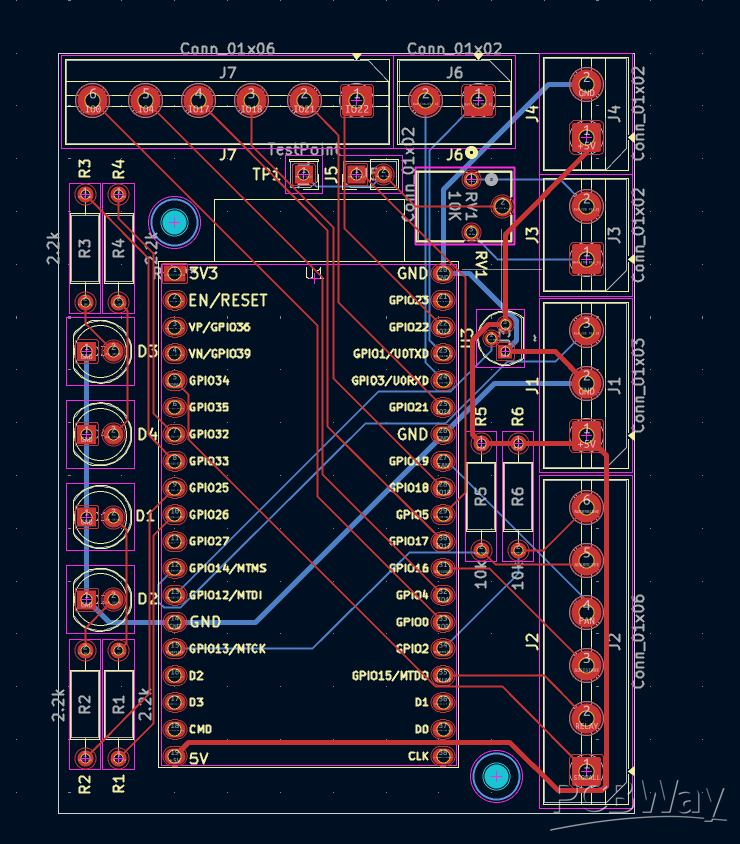
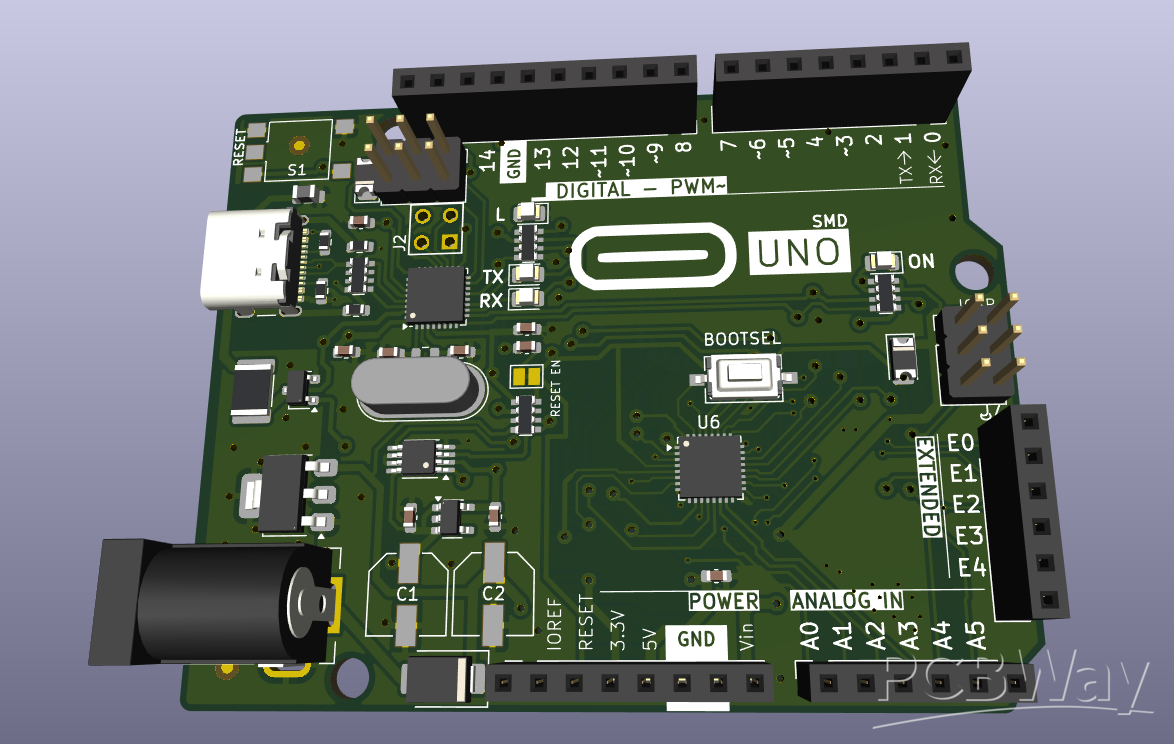
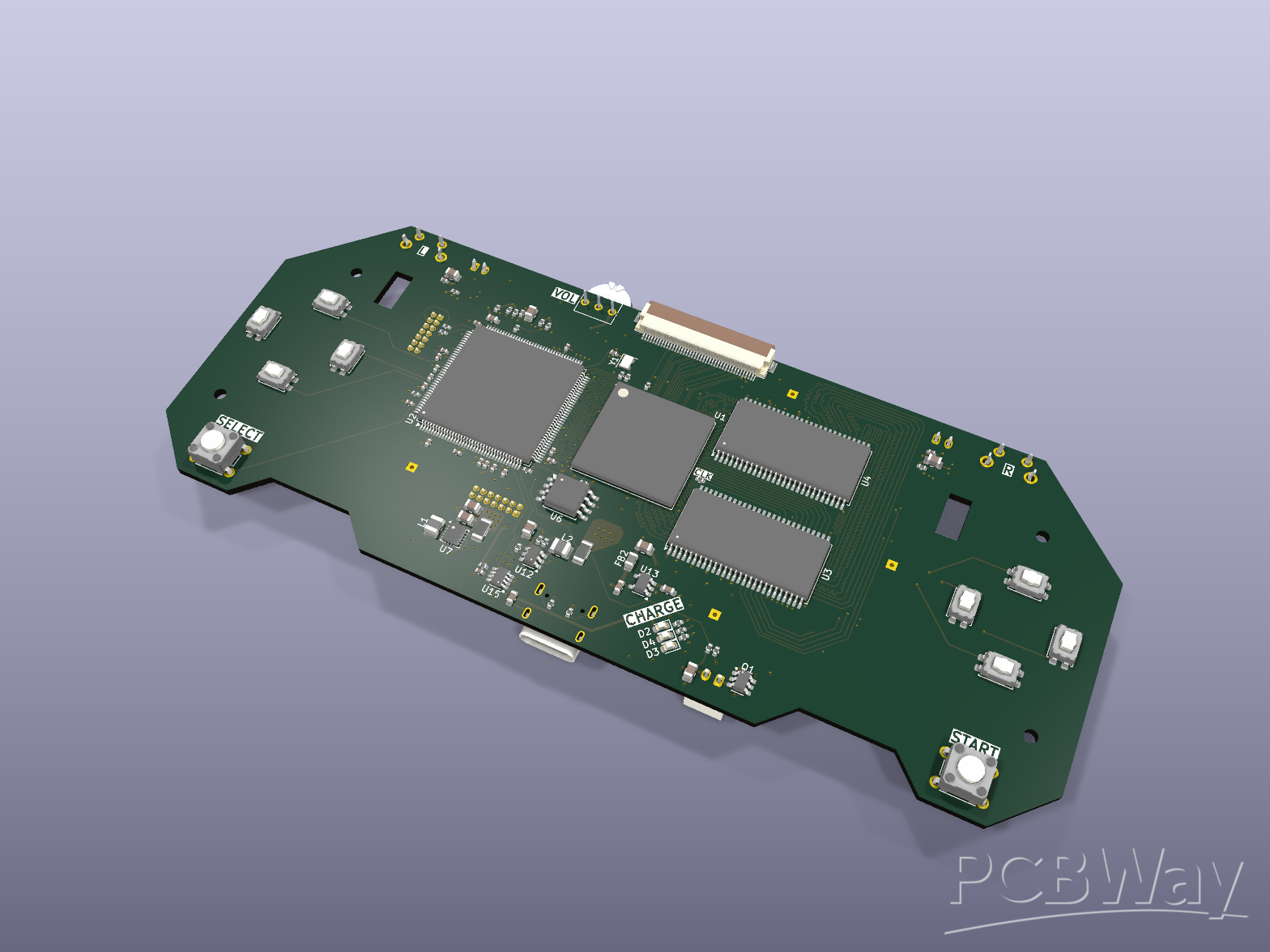
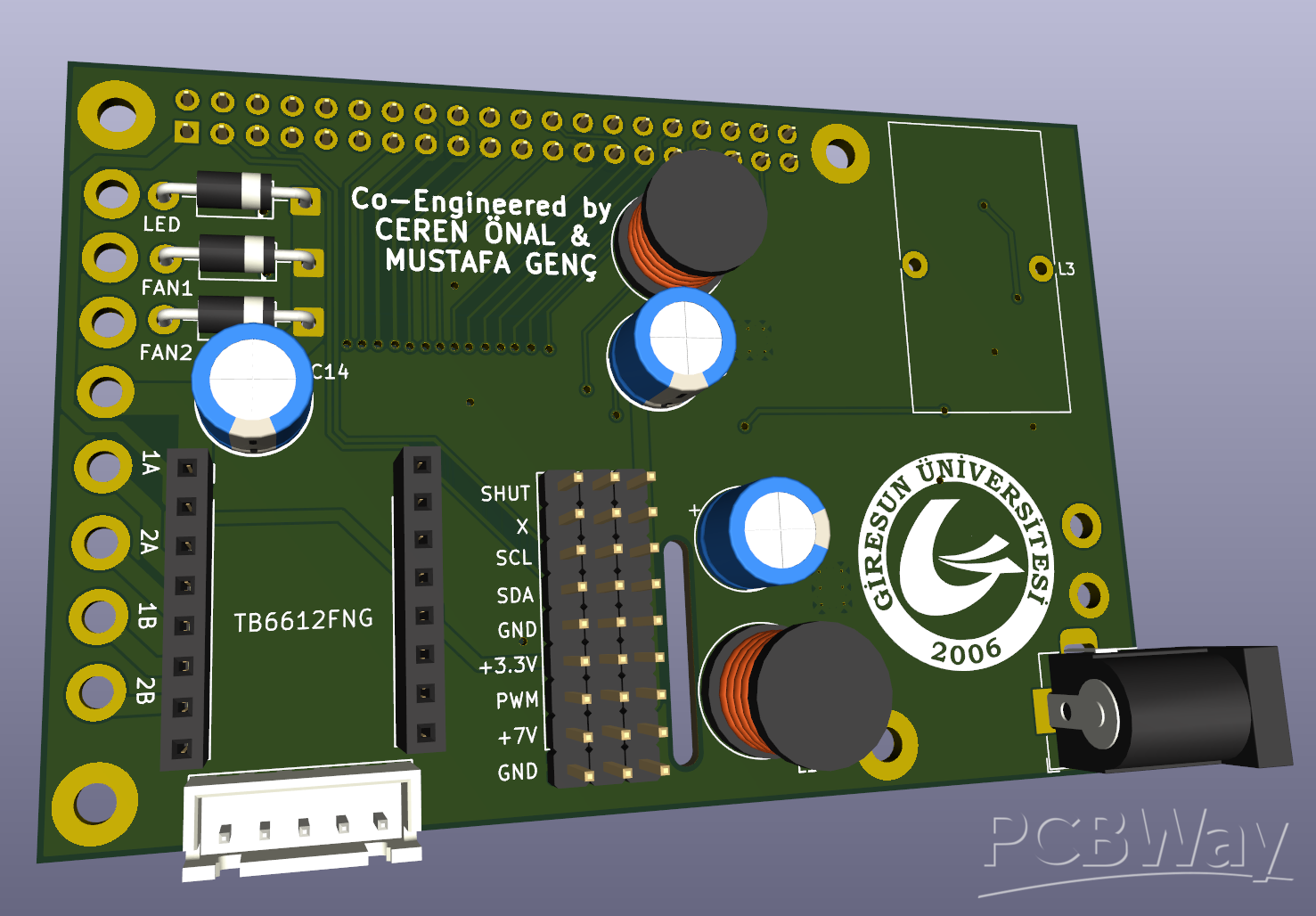
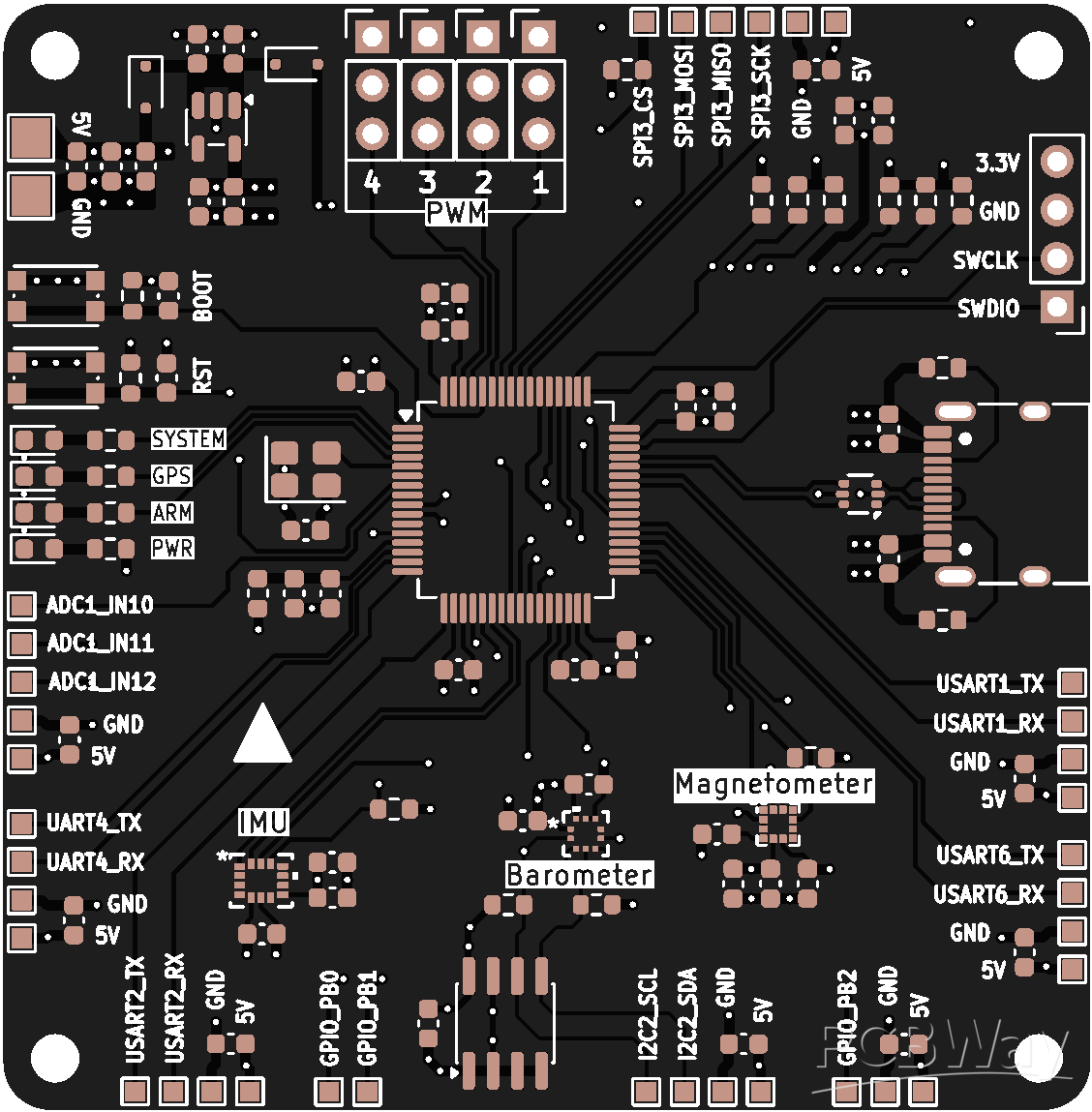
The attached PCB layout illustrates our custom hardware design work. Developing these boards allows us to move beyond individual modules and create integrated electronic solutions tailored to the needs of our rover.
Through iterative PCB design, fabrication, assembly, and testing, we aim to improve reliability while giving our members practical experience in circuit design, embedded systems, hardware debugging, and electrical integration.
Why This Project Matters
Building an autonomous rover brings together mechanical engineering, electronics, software development, and robotics. Reliable custom hardware is essential for connecting these disciplines and turning our autonomous navigation algorithms into a functioning physical system.
As a student-led team, we work within limited budgets while continually refining our designs. Access to high-quality PCB manufacturing and rapid prototyping helps us test ideas, resolve hardware issues, and develop more robust systems.
We are excited to continue developing our rover and expanding our team's technical capabilities as we prepare for IGVC.
Acknowledgments and Collaboration
We welcome opportunities to collaborate with companies that support student engineering, electronics prototyping, and robotics innovation. Manufacturing support would help us bring our custom PCB designs to life and enable more students to gain hands-on experience developing real-world autonomous systems.
Thank you for taking an interest in our project and the work of the UTRA Autonomous Rover Team.
Team website: https://utra.ca
Autonomous Rover Team: https://utra.ca/teams/art
Apply for sponsorship >>- Comments(0)
- Likes(0)