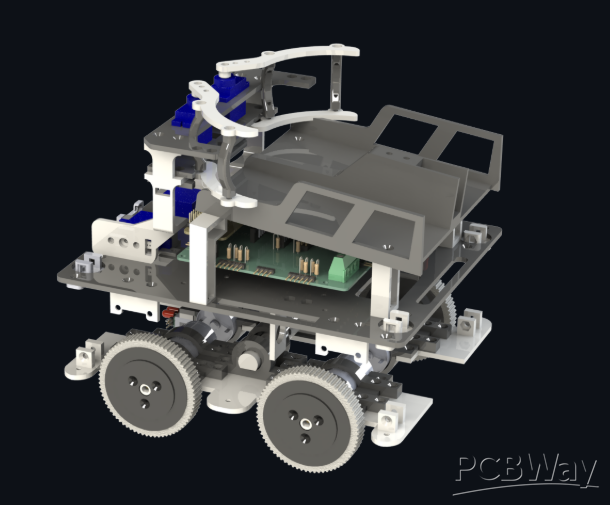
The cheetah bot - fastest line follower
GRUZIK 2.0 — High-Speed Autonomous Line Following Robot
A high-performance autonomous robot designed for extreme speed, precision, and real-time control — developed for Technoxian World Cup 2027 and a potential Guinness World Record attempt.
ABOUT THE PROJECT
GRUZIK 2.0 is my next-generation autonomous line-following robot, developed with a primary focus on high-speed performance, precise line detection, rapid control response, and reliable operation.
Unlike a basic line-following robot, this project is designed around the challenges of maintaining control at very high speeds. When a robot moves quickly, even a small delay in sensing, processing, motor response, or steering correction can cause it to lose the line.
The goal of GRUZIK 2.0 is therefore to optimize the entire system as one platform — from the sensor system and control algorithm to the custom PCB, motor drivers, power delivery, mechanical design, and software.
MY ROBOTICS JOURNEY
I have been working on robotics and autonomous systems with the goal of continuously improving my designs through practical testing and competition.
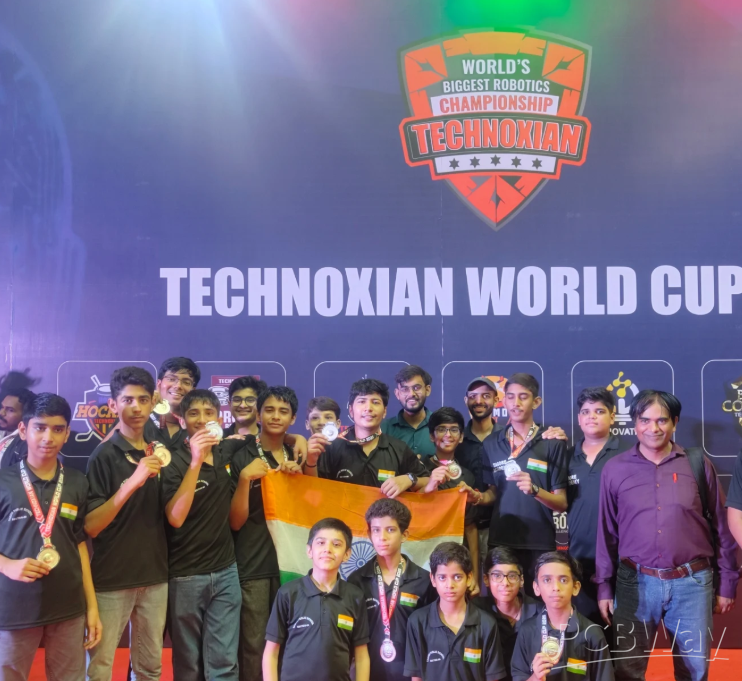
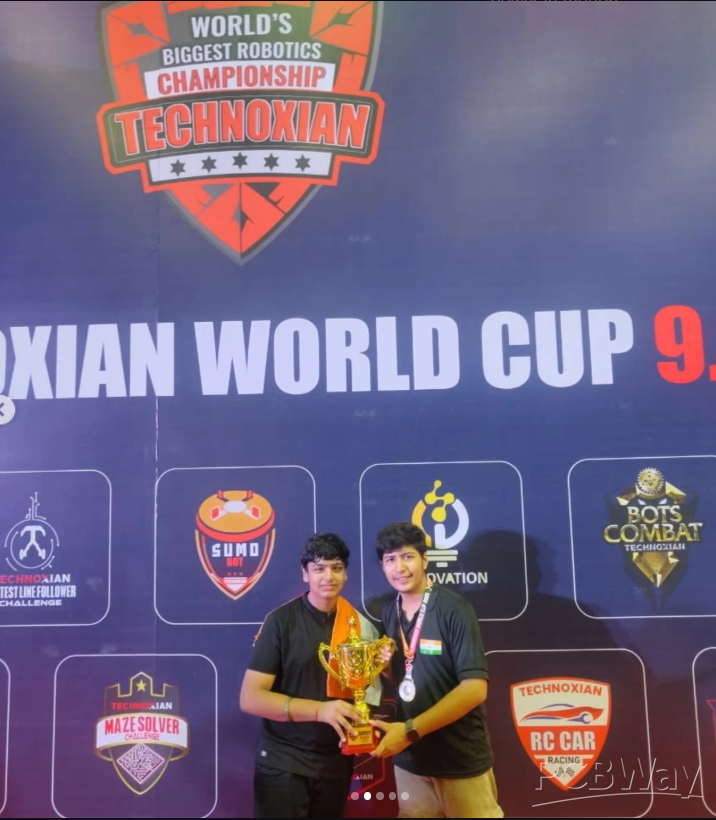
In the previous Technoxian World Robotics Championship, I achieved 1st Runner-Up. That experience gave me valuable insight into the challenges involved in building and tuning a competitive line-following robot.
Rather than stopping there, I wanted to use the experience from my previous robot to develop a more advanced platform.
This led to the development of GRUZIK 2.0.
My long-term goal is to compete with this platform at the Technoxian World Cup 2027 and push its performance far beyond my previous design. I am also working toward the possibility of attempting a Guinness World Record related to high-speed autonomous line following.
[INSERT IMAGES: Your Technoxian competition photo]
THE ENGINEERING CHALLENGE
The biggest challenge in high-speed line following is not simply detecting a line.
At higher speeds, the robot has significantly less time to react to changes in the track. A small error in line detection or a delayed correction can quickly become a major deviation.
GRUZIK 2.0 therefore focuses on reducing delays and improving the complete control loop:
Line Detection → Sensor Processing → Control Algorithm → Motor Command → Robot Movement → New Sensor Data
This creates a continuous real-time feedback system.
The project involves optimization of several interconnected systems:
High-speed line sensing
Real-time sensor processing
Motor control
Control algorithm tuning
Power delivery
Custom PCB design
Mechanical stability
Weight optimization
Traction and acceleration
Reliability during repeated high-speed runs
The objective is to make these systems work together as efficiently as possible rather than optimizing only one part of the robot.
[INSERT IMAGE: Robot on a line-following track]
CUSTOM PCB DESIGN
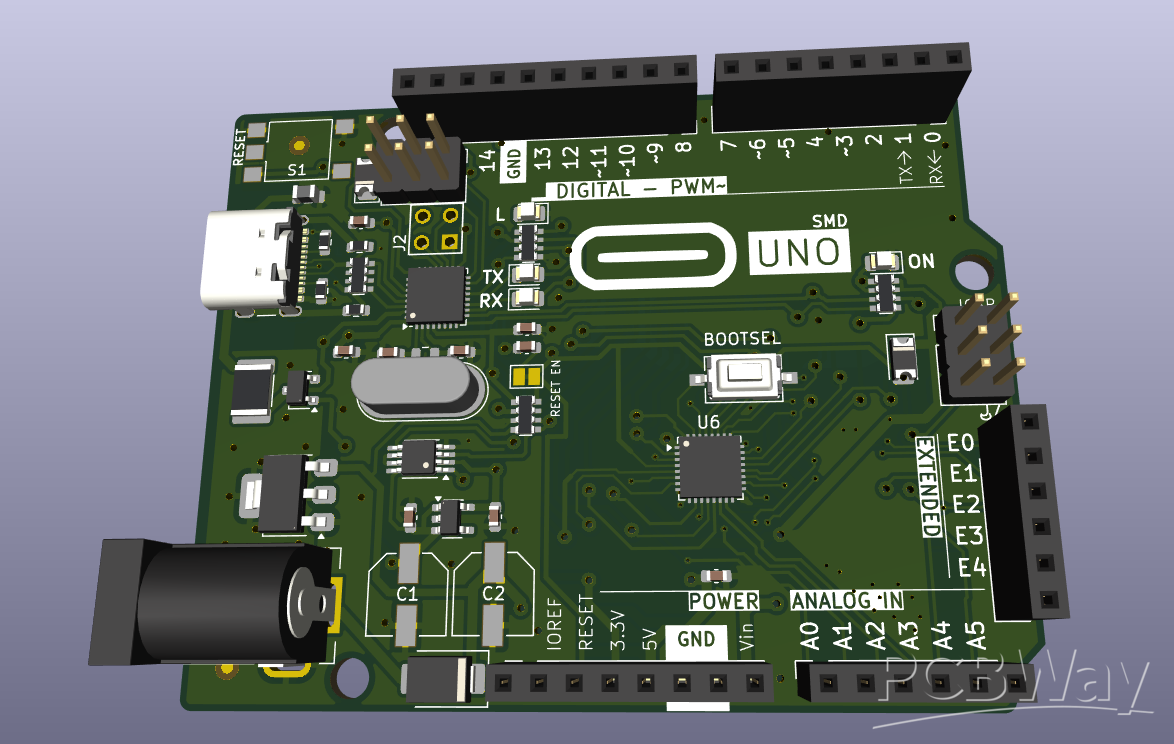
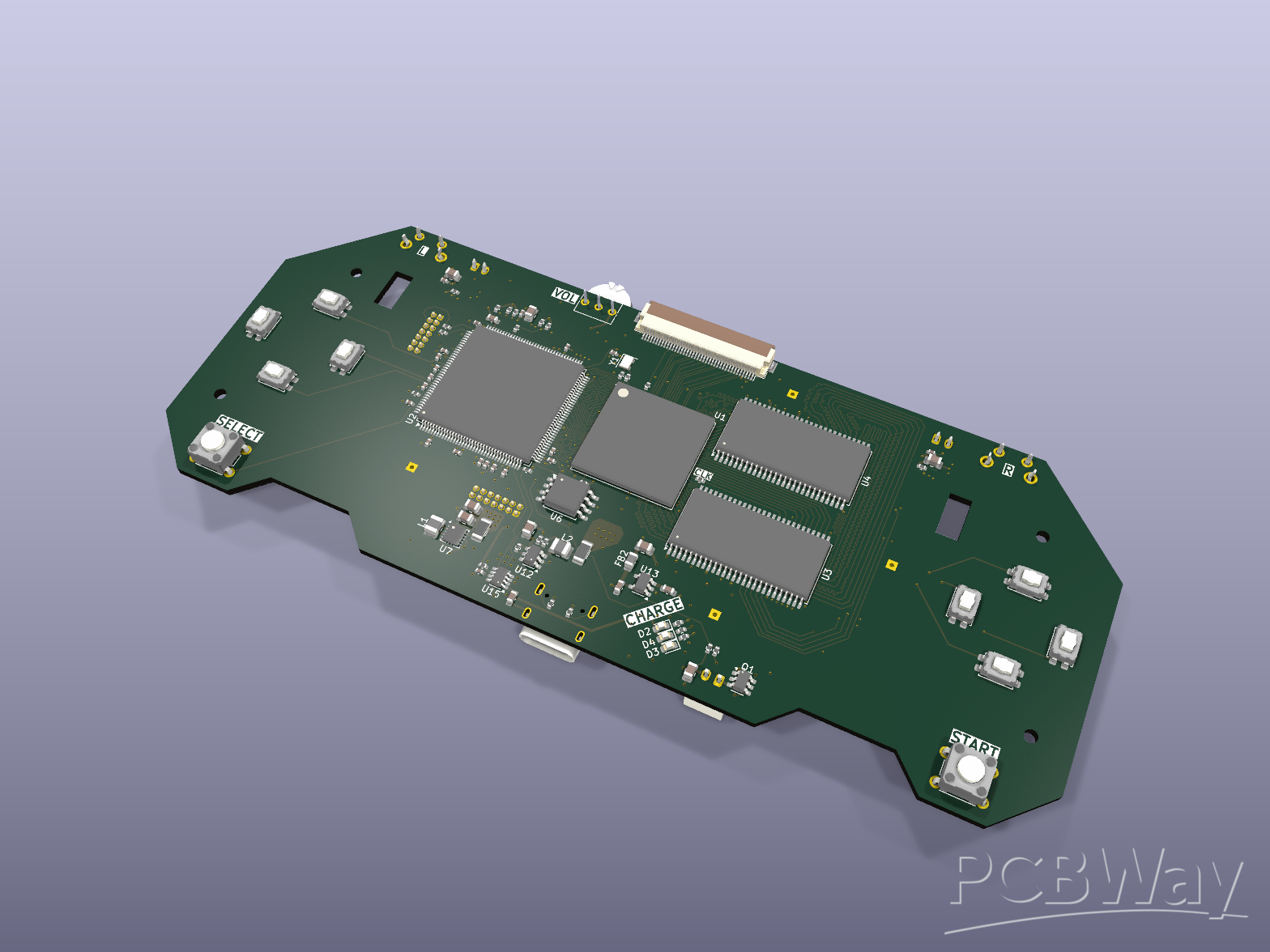
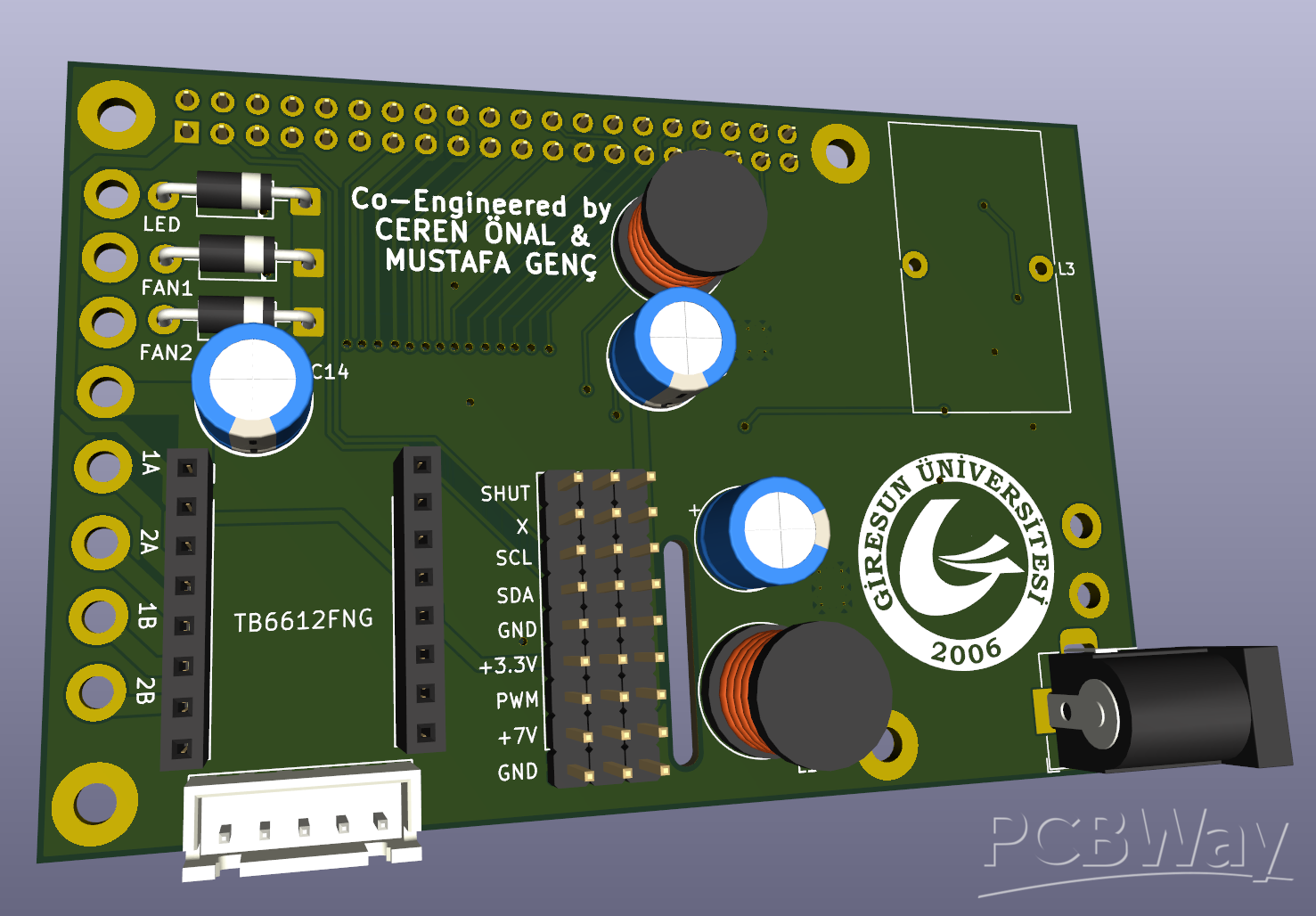
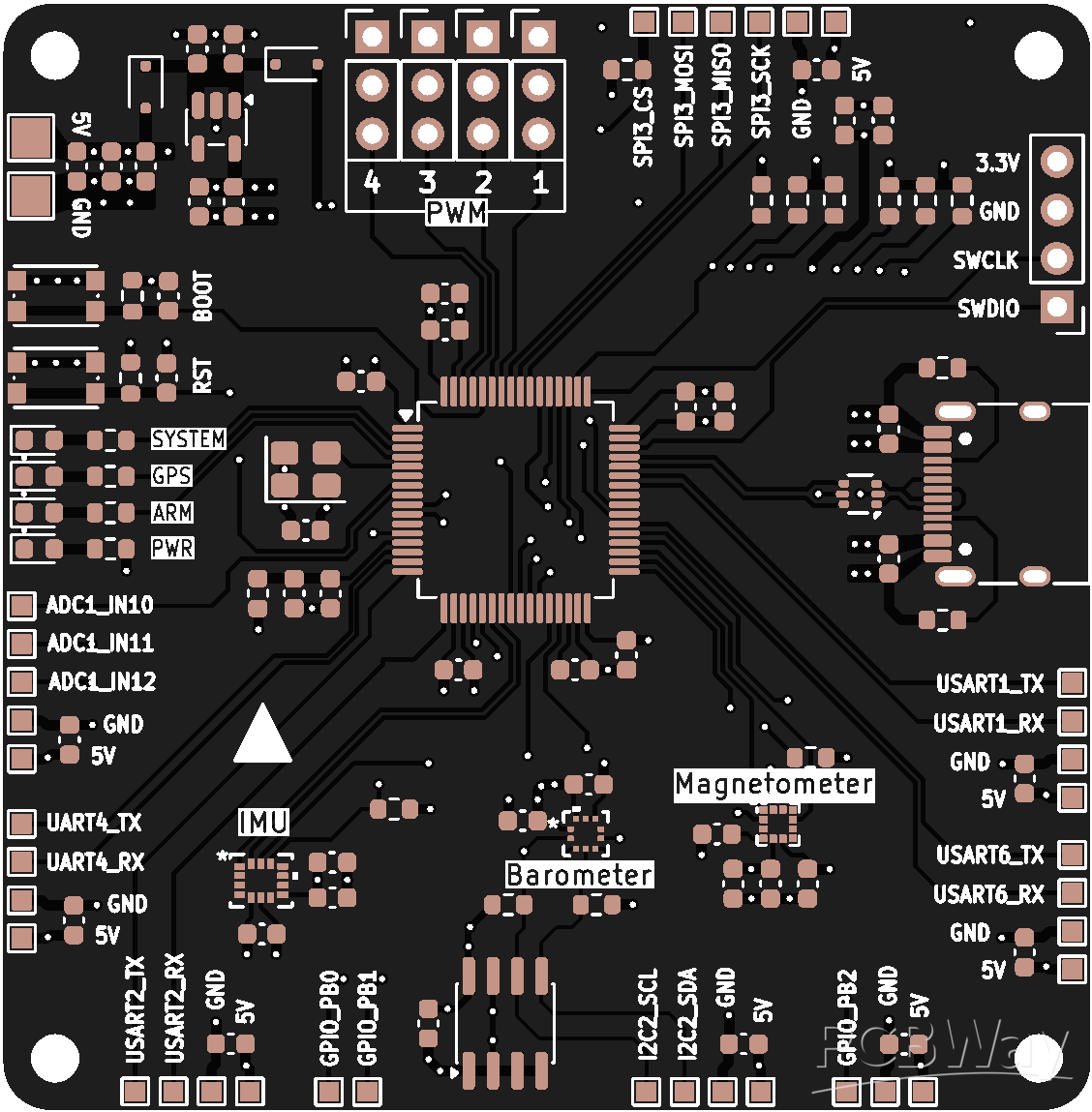
One of the most important parts of GRUZIK 2.0 is its custom-designed PCB.
Instead of building the robot around multiple separate development boards and modules, I designed a dedicated PCB around the requirements of the robot.
The PCB integrates the electronics required for the robot's control and operation into a compact platform.
The board is designed to handle the connections between the major systems, including:
Main microcontroller
Motor drivers
Sensor interfaces
Power regulation
Battery connection
Control and debugging connections
Peripheral connections
The PCB was designed specifically for this robot, allowing me to control the physical layout and electrical connections instead of depending entirely on off-the-shelf modules.
[INSERT IMAGE: PCB 3D view from KiCad/EasyEDA]
[INSERT IMAGE: PCB layout screenshot]
[INSERT IMAGE: Fabricated PCB in your hand]
PCB FABRICATION
The PCB has already been designed and fabricated, and I currently have the physical boards with me.
This is an important milestone in the project because the design has moved from the digital stage to a real hardware platform.
The next major step is to populate the PCB with all required components and integrate it into the robot for testing.
[INSERT IMAGE: Bare PCB front side]
[INSERT IMAGE: Bare PCB back side]
[INSERT IMAGE: PCB next to the robot / PCB in hand]
MAIN CONTROL SYSTEM
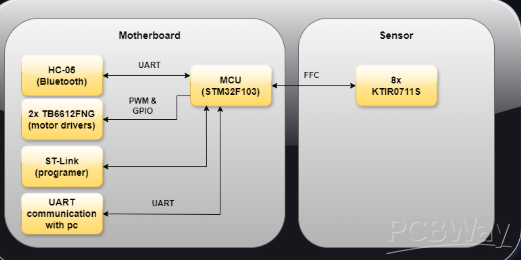
The main control system is responsible for processing sensor information and generating real-time commands for the motors.
During operation, the controller continuously receives information from the sensor system, calculates the position of the robot relative to the line, and adjusts the motor commands accordingly.
At high speeds, this control loop needs to operate reliably and consistently because there is very little time available for corrections.
The custom PCB provides the central hardware platform connecting the controller, sensors, motor drivers, and power system.
[INSERT IMAGE: MCU/control section of your PCB]
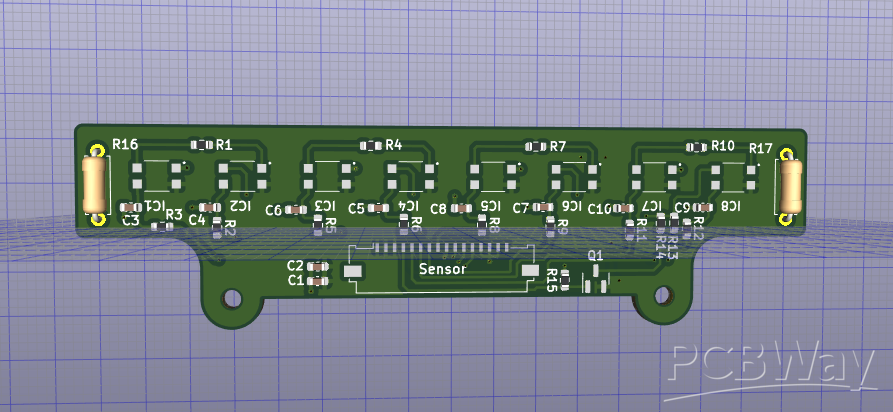
SENSOR SYSTEM
The sensor system is responsible for detecting the position of the line relative to the robot.
The sensor data forms the foundation of the control system. The controller uses this information to determine whether the robot is centered on the line or needs to make a correction.
For a high-speed robot, sensor placement, response time, signal quality, and processing are especially important because the robot can travel a significant distance in a very short period of time.
The sensor system is therefore designed and tuned together with the control algorithm rather than being treated as an independent component.
MOTOR CONTROL
The motor control system converts the decisions made by the control algorithm into physical movement.
The controller continuously adjusts the motor outputs based on the detected line position.
This allows the robot to accelerate, correct its direction, and maintain its trajectory while following the track.
The motor drivers are integrated into the custom PCB, allowing the wiring and power connections to be kept compact and organized.
 [INSERT IMAGE: Motor driver section of PCB]
POWER MANAGEMENT
Power delivery is another critical part of a high-speed autonomous robot.
The electronics and motors have different power requirements, and stable power delivery is essential for reliable operation.
The custom PCB incorporates the required power-management and regulation circuitry to provide the appropriate supply to the different parts of the system.
The PCB layout also considers the high-current paths associated with the motor system while keeping sensitive control electronics properly connected.
[INSERT IMAGE: Power section of PCB]
CONTROL ALGORITHM
The robot's performance depends not only on its hardware but also on how effectively it processes sensor information and reacts to it.
The control algorithm continuously evaluates the error between the robot's current position and the desired position on the line.
The resulting correction is translated into motor commands.
A major part of the development process is tuning the control system through repeated real-world testing.
Instead of relying entirely on theoretical calculations, I am using physical track testing to determine how the robot behaves at different speeds and under different track conditions.
DEVELOPMENT AND TESTING
GRUZIK 2.0 is being developed through an iterative engineering process.
The process involves:
Design → Fabrication → Assembly → Testing → Analysis → Optimization → Retesting
Every test provides information that can be used to improve the next version.
At higher speeds, issues that may not be noticeable during slow testing become much more significant. This makes repeated testing an essential part of the project.
My objective is not simply to make the robot work once, but to develop a platform that can repeatedly perform at a high level
FROM MY PREVIOUS ROBOT TO GRUZIK 2.0
My previous competition experience provided the foundation for this project.
After competing at Technoxian and achieving 1st Runner-Up, I identified areas where the robot could be improved.
GRUZIK 2.0 is my attempt to address those limitations through a more integrated hardware design, a custom PCB, improved control, and further testing.
The project is therefore not just a completely new robot — it is the result of taking lessons from previous competition experience and applying them to a new engineering platform.
[INSERT SIDE-BY-SIDE IMAGE: Previous robot vs GRUZIK 2.0]
THE GOAL — TECHNOXIAN WORLD CUP 2027
The immediate competitive goal for GRUZIK 2.0 is the Technoxian World Cup 2027.
Having already achieved 1st Runner-Up in my previous participation, I want to return with a significantly improved machine and compete at a higher level.
The development between now and the competition will focus on:
Improving maximum speed
Improving stability
Reducing response time
Optimizing sensor performance
Tuning the control system
Improving reliability
Reducing unnecessary weight
Repeated high-speed testing
GUINNESS WORLD RECORD GOAL
Beyond competition, I have a much bigger ambition for this project.
I want to explore the possibility of using GRUZIK 2.0 as the foundation for a Guinness World Record attempt related to high-speed autonomous line following.
A world-record-level attempt requires much more than simply making a fast robot. It requires reliability, repeatability, accurate measurement, controlled testing, and a carefully documented process.
That is why I am treating this as a long-term engineering project rather than only a competition build.
The current PCB and electronics platform are an important step toward that goal.
[INSERT IMAGE: Best/highest-speed testing photo]
CURRENT PROJECT STATUS
The project has already progressed through several important stages.
Development Stage Status Robot concept Completed Electronics architecture Completed Custom PCB design Completed PCB fabrication Completed Physical PCB receivedCompletedPCB assembly Next stageElectronics integration UpcomingHigh-speed testing Upcoming Competition optimization UpcomingTechnoxian World Cup 2027TargetGuinness World Record attempt Long-term goal
[INSERT IMAGE: PCB + components + robot together]
WHY PCBWAY SUPPORT MATTERS
The custom PCB has already been designed and fabricated, and I currently have the physical boards.
The next step is PCB assembly and component population.
As an individual student developing this project, the cost of sourcing components and assembling the boards has become a significant limitation. PCBWay's support at this stage would directly help me move the project from a fabricated PCB to a fully functional electronics platform.
With PCBWay's support, I would be able to:
Assemble the custom PCBs
Populate the required components
Integrate the board into the robot
Begin systematic electronics testing
Continue high-speed robot development
Prepare the platform for Technoxian World Cup 2027
This would have a direct impact on the development timeline of the project.
WHY THIS PROJECT IS IMPORTANT TO ME
For me, GRUZIK 2.0 is more than just another robot.
It represents the process of taking an idea, designing the electronics, manufacturing a custom PCB, building the hardware, writing the software, testing it in the real world, learning from failures, and continuously improving the system.
My previous Technoxian result showed me that I can compete at a high level. With GRUZIK 2.0, I want to push myself further and see how far I can take the engineering and performance of an autonomous robot.
My ultimate goal is to build a robot that can compete at the highest level of line-following robotics and potentially become part of a Guinness World Record attempt.
THANK YOU TO PCBWAY
PCBWay's support would help turn an already-designed and fabricated PCB into a working part of the next generation of my robot.
I would be extremely grateful for the opportunity to collaborate with PCBWay throughout the development of GRUZIK 2.0 and share the project's progress, testing, competition journey, and results.
Thank you for supporting students, makers, and engineers who are building ambitious hardware projects.
PROJECT HIGHLIGHTS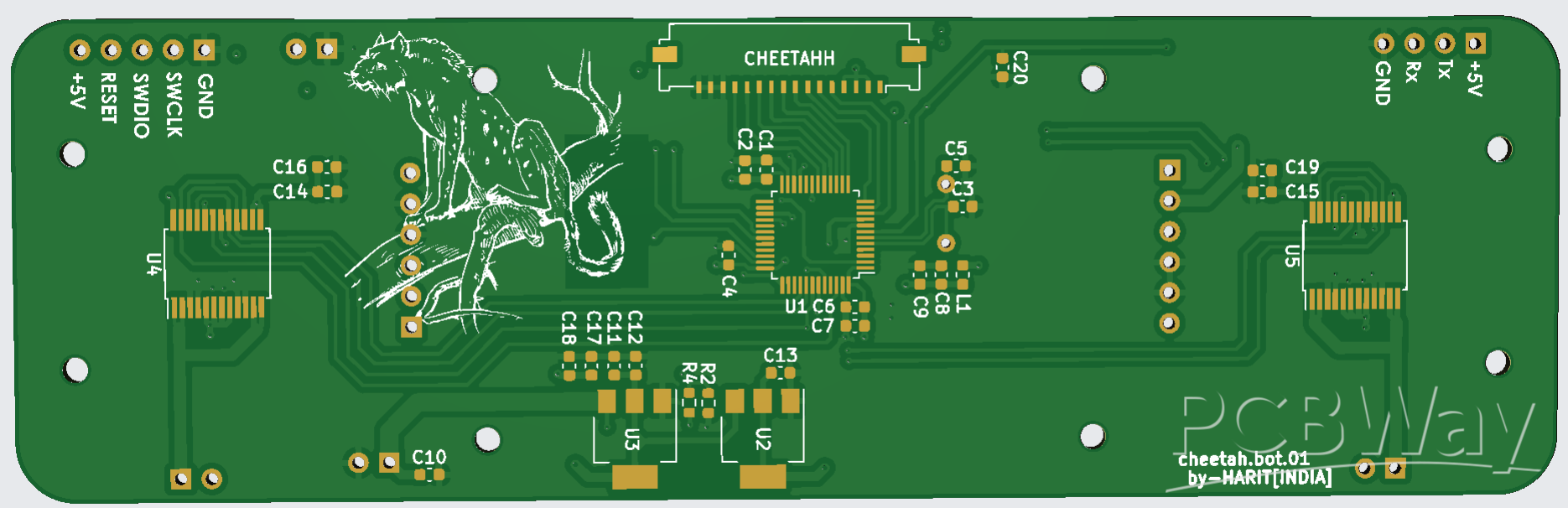
Project: GRUZIK 2.0
Category: Autonomous Robotics / High-Speed Line Following
Previous Achievement: 1st Runner-Up — Technoxian World Robotics Championship
PCB: Custom-designed and fabricated
Current Requirement: PCB Assembly and components
Competition Goal: Technoxian World Cup 2027
Long-Term Goal: Guinness World Record Attempt
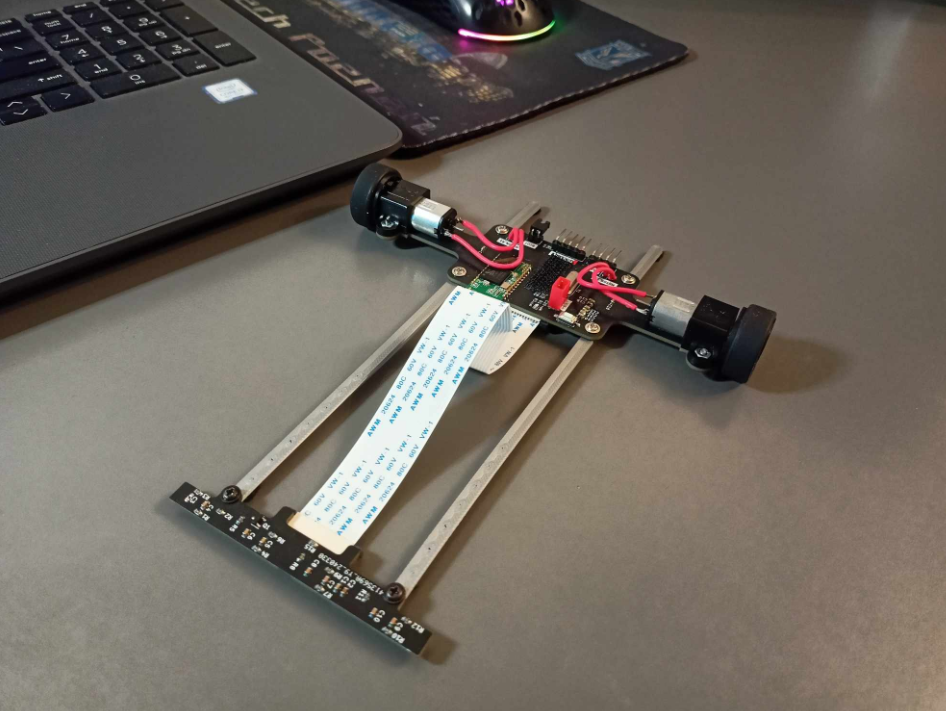
this is first version of cheetah bot
Apply for sponsorship >>- Comments(1)
- Likes(1)