Tesla Coil Business Card
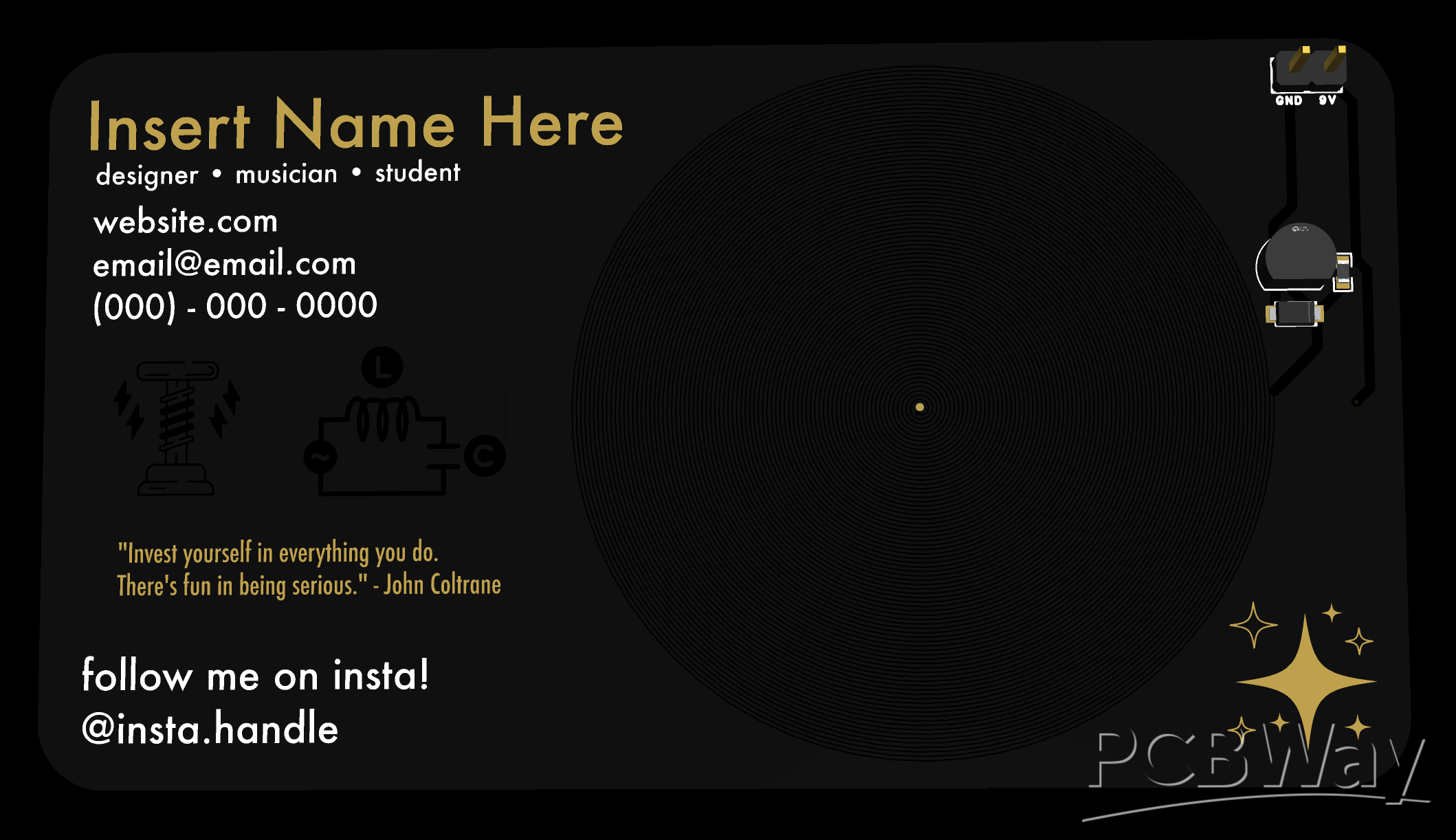
I've been a 'coiler' for a while now, building Spark-Gap Tesla Coils and Solid-State Tesla Coils. I've recently gotten the opportunity to present my projects at Open Sauce this year. I'll be showing off some coils, plasma devices, and manufacturing machines. However, I've also taken the opportunity to design my own PCB business cards. While they are very aesthetically pleasing, they also serve a very interesting function. The popular 'Slayer Exciter' circuit has been widely used for beginner coilers. While the plasma produced from such a coil is very minimal if any at all, it can wirelessly light up fluorescent and neon lamps. By powering the card with a recommended voltage of 9V (from a small battery), you can use it as a wireless high voltage power source, just like Nikola Tesla intended.
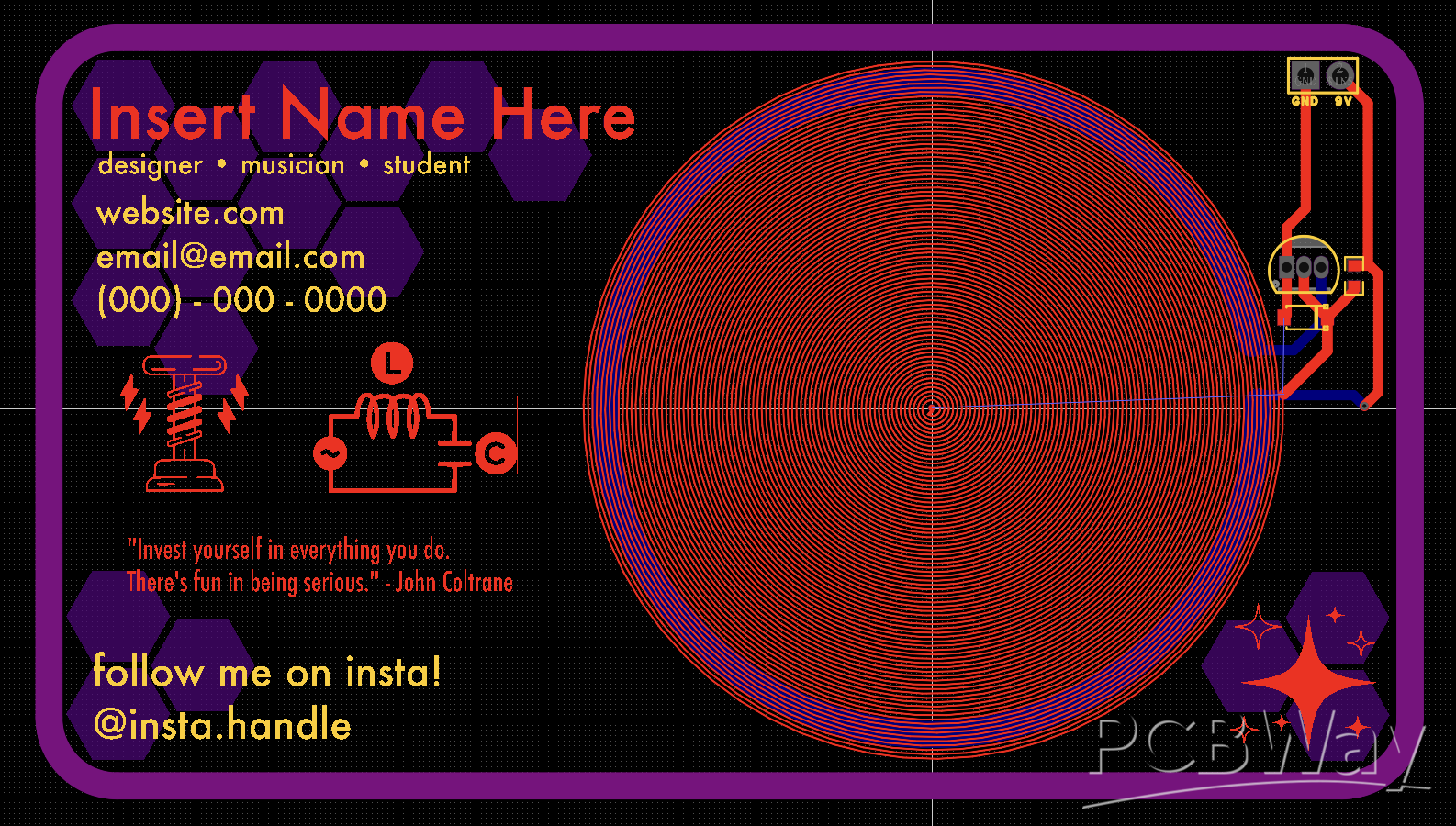
As you can see in this photo, the secondary coil consists of about 80 turns of 6 mil thick traces. Driven with a 2N2222 transistor, this is actually a very affordable and viable way to produce a Tesla Coil. While this form of coil is self-tuning (meaning it takes in feedback from the secondary to the transistor so that it is always oscillating in perfect resonance), I added a graphic of an LC circuit (because this is the core of a Tesla Coil).
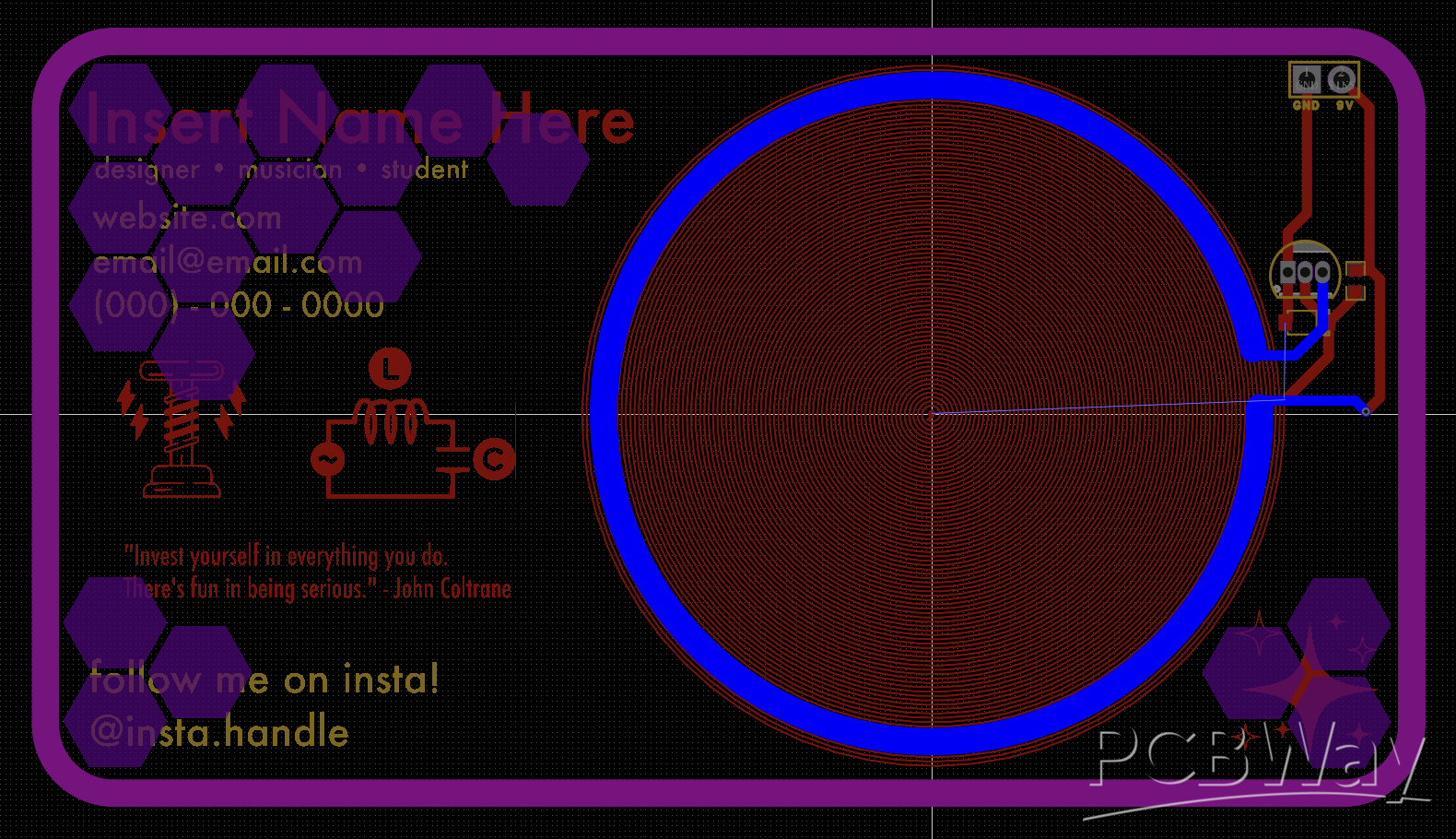
If you look at the back, you see that the primary coil consists of only one turn. In most Slayer Exciter coils, you see at least 3-4 turns on the primary. However, since the two coils are on layers very close to each other, the k-factor or their coupling is very high. This means that putting more turns and increasing the coupling would put more stress on the transistors than necessary.
This adaptation to a standard 2-layer PCB should make for one of the thinnest working Tesla coils in existence and will be a joy to give out at Open Sauce.
Apply for sponsorship >>- Comments(0)
- Likes(0)