

TESMOS - Electric Motocross Diploma Project
TESMOS - The e-moto of the future.
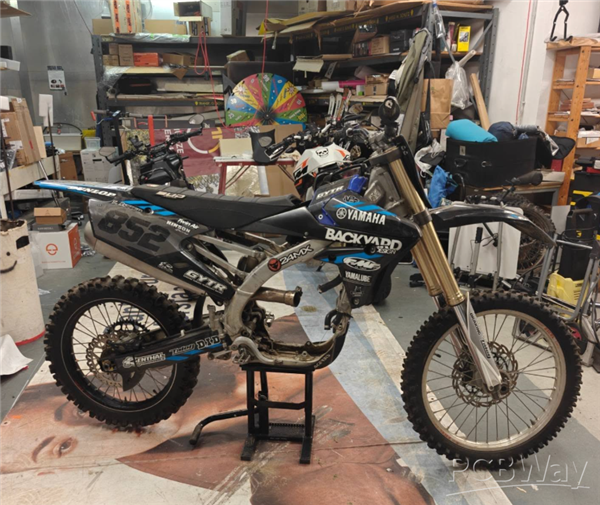
We are Team TESMOS, three engineering students from HTL Wien 3 Rennweg, a technical college in Vienna, Austria. For our diploma thesis, we are working on an ambitious project: converting a Yamaha YZ450F motocross bike with a defective combustion engine into a fully electric dirt bike.
Instead of starting from scratch, we want to give an existing motorcycle a second life. We are keeping the original frame, suspension, and brakes while replacing the combustion engine with a powerful electric drivetrain. Our goal is to build a reliable, high-performance electric motocross bike while gaining valuable hands-on experience in electronics, mechanical engineering, and electric vehicle development.
Our team consists of Vincent Juranitsch, Michael Dorn, and Timo Jenny. We all share a passion for engineering and technology. Vincent, our project lead, has been building electric vehicles for several years, starting with custom electric skateboards and VESC-based systems. With TESMOS, we want to take that experience to a completely new level.
One of the biggest challenges is developing and integrating the electrical systems. We are designing a custom 24s battery pack, integrating a VESC-based motor controller, and developing our own control electronics. Since the motorcycle will be used in demanding off-road conditions, reliability, durability, and proper integration are especially important to us. This makes high-quality electronic components and professionally manufactured PCBs an essential part of our development process.
As students, we are working with a limited budget, but we are determined to build something that goes beyond a typical school project. Support from PCBWay would help us manufacture and test our custom electronics, improve the quality of our prototypes, and bring our designs closer to a finished, working motorcycle.
In return, we would be excited to share our experience with PCBWay and document how its manufacturing services contribute to our project. We plan to regularly share our progress through photos, videos, and technical updates on our website and Instagram. We would also proudly feature PCBWay as a project sponsor on our website, social media, during our final diploma thesis presentation, and at our school's Innovation Day.
Our control electronics:
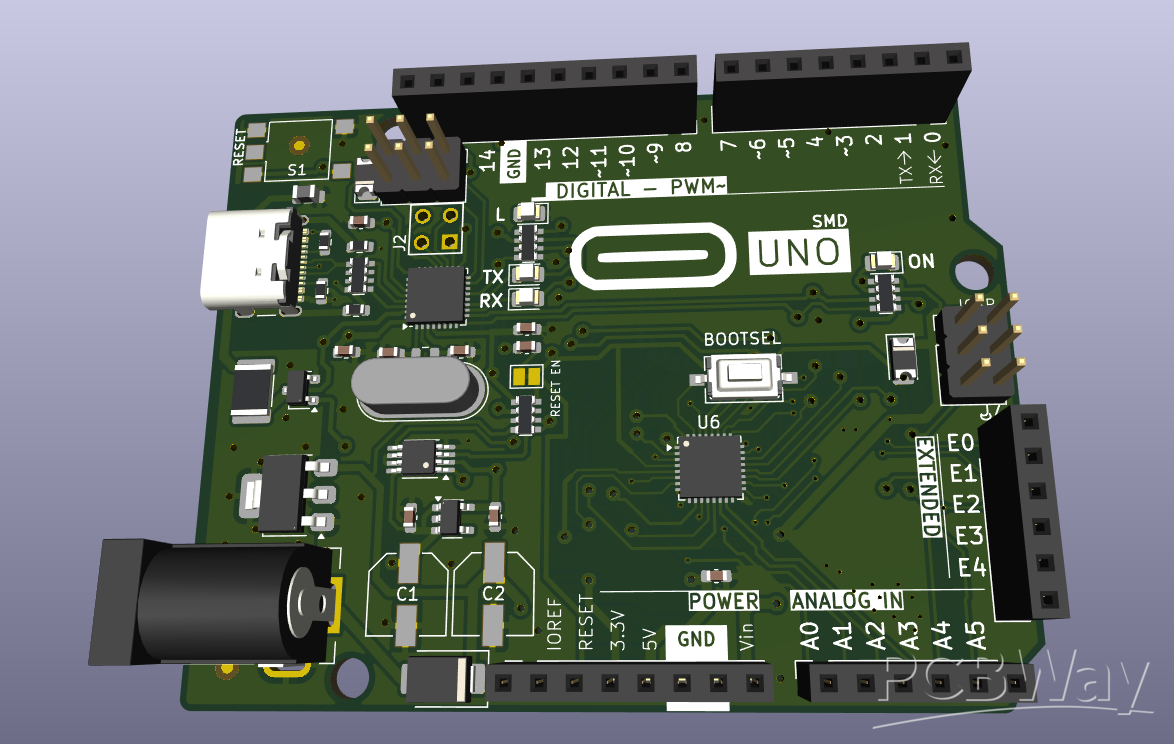
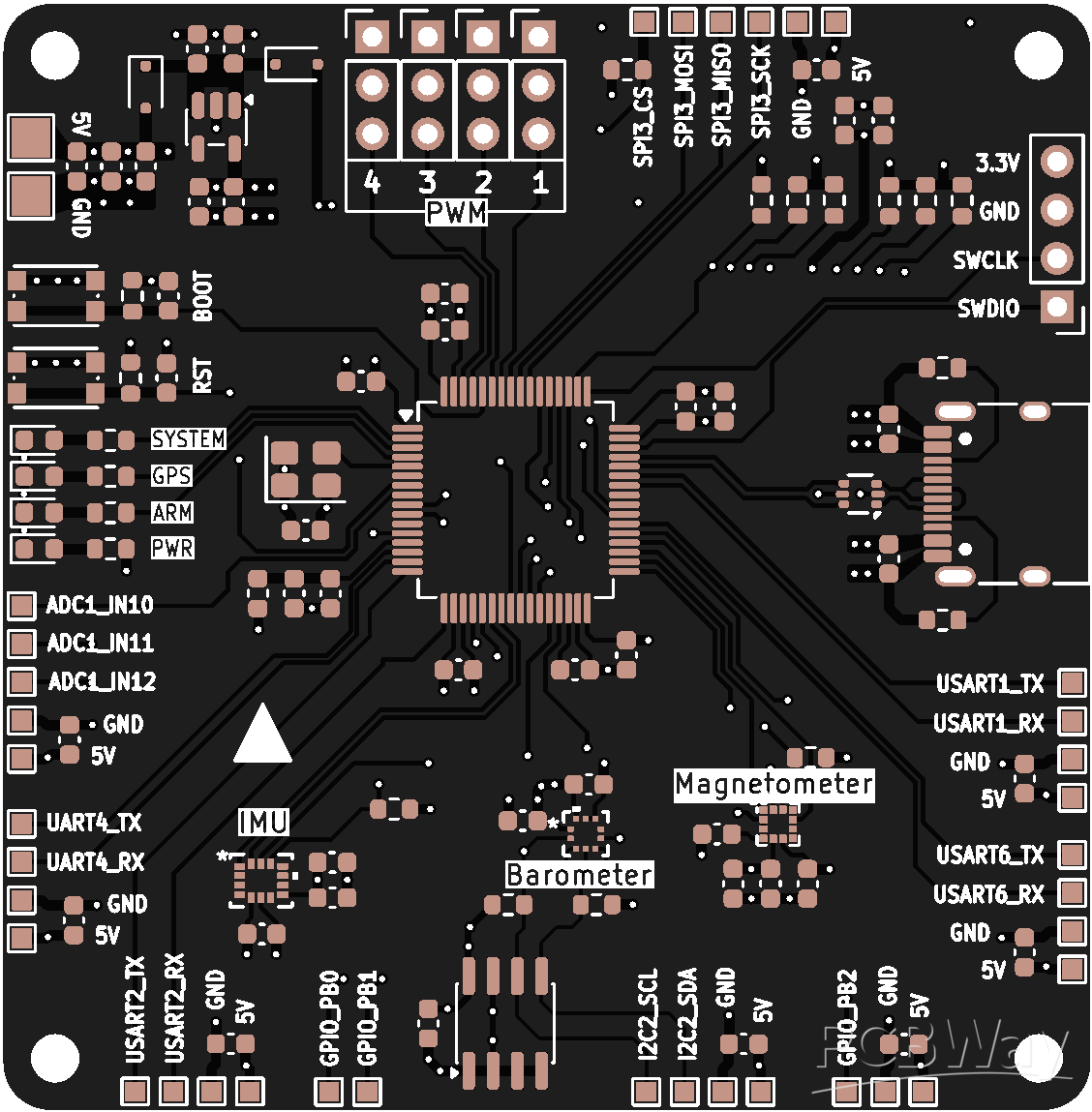
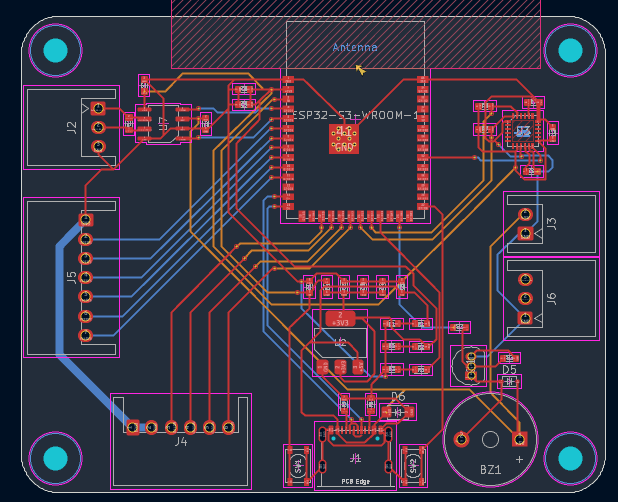
Our electronics consist of two custom boards that are stacked on standoffs. The main control board is built around an ESP32-S3-WROOM-1 module and is the brain of the bike’s electronics. It provides a CAN bus interface, two UART ports, inputs for temperature sensors and a flow meter, a motion sensor, USB-C for programming, a buzzer, status LEDs and a 5 V supply with an on-board 3.3 V regulator. A cable connects it to the second board, which switches five channels of the bike’s 12 V lighting. Each channel has a PWM-controlled MOSFET and a resettable fuse.
Main control board & connector overview
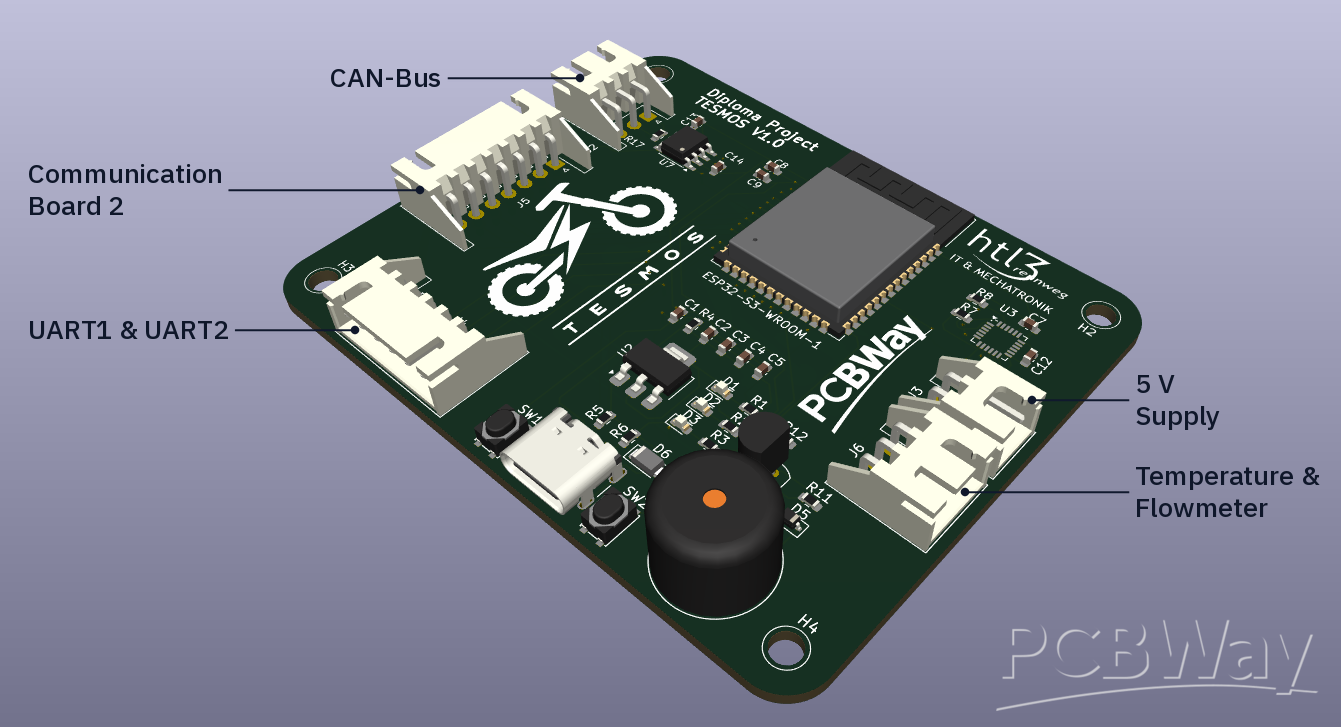
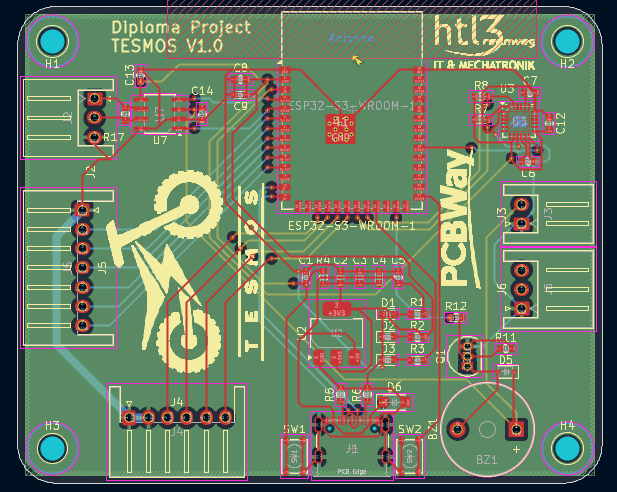
The main board has four layers. It combines a radio module, CAN, USB and sensor inputs on a vehicle full of electrical noise, so dedicated ground and power layers and a copper-free keep-out zone under the antenna are essential. This is exactly where professionally manufactured PCBs make a difference.
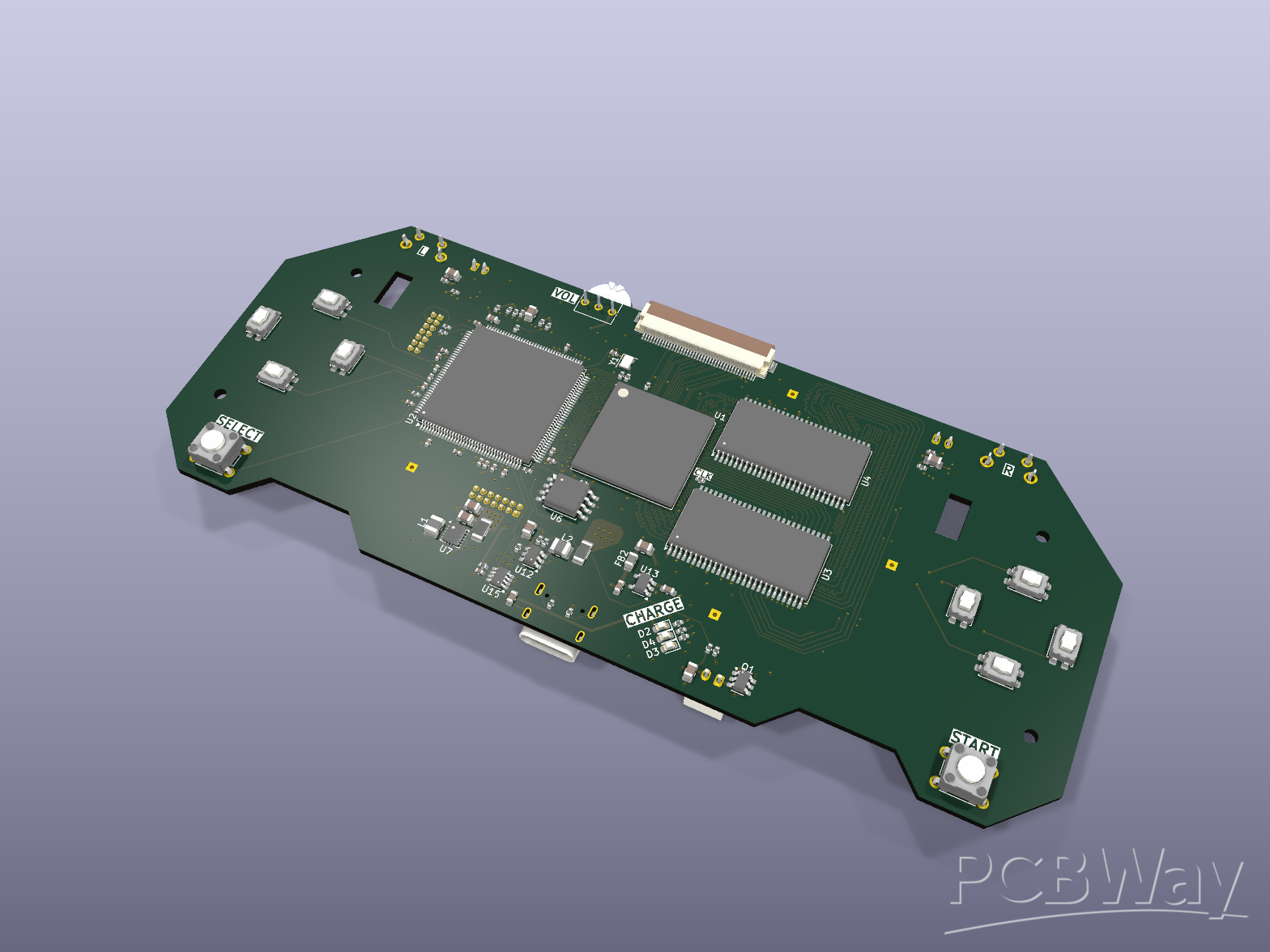
Main board in KiCad
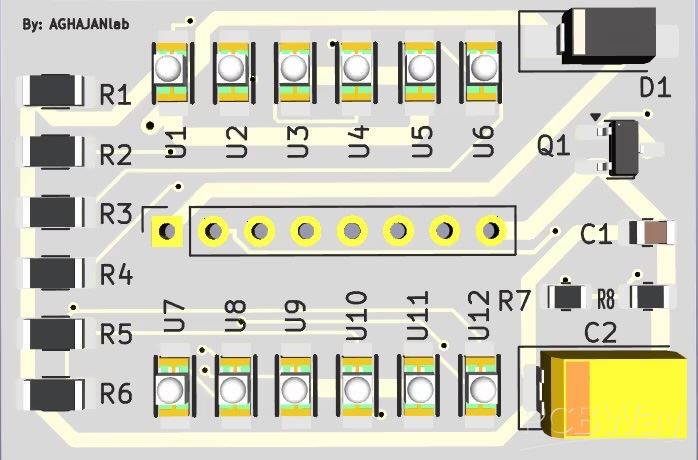
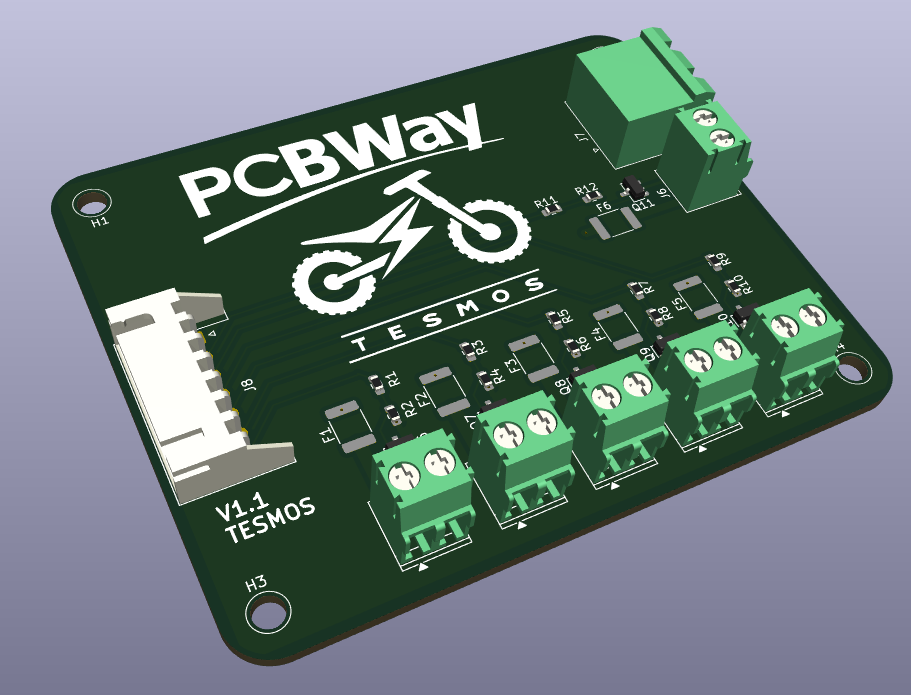
The second board is the power stage of our electronics. It receives its commands from the control board through a cable and switches five channels of the bike’s 12 V lighting. Each channel has its own PWM-controlled MOSFET and a resettable fuse, so every light can be dimmed individually and a fault on one channel cannot take down the others.
Because this board carries much higher currents than the control board, its power paths use wide copper traces and large copper areas, and every load is connected through a dedicated connector. On an off-road motorcycle, which has to withstand vibration, dirt and heat, a cleanly manufactured board with consistent copper quality matters more than anywhere else in our setup.
Our lighting board (High-current power stage)
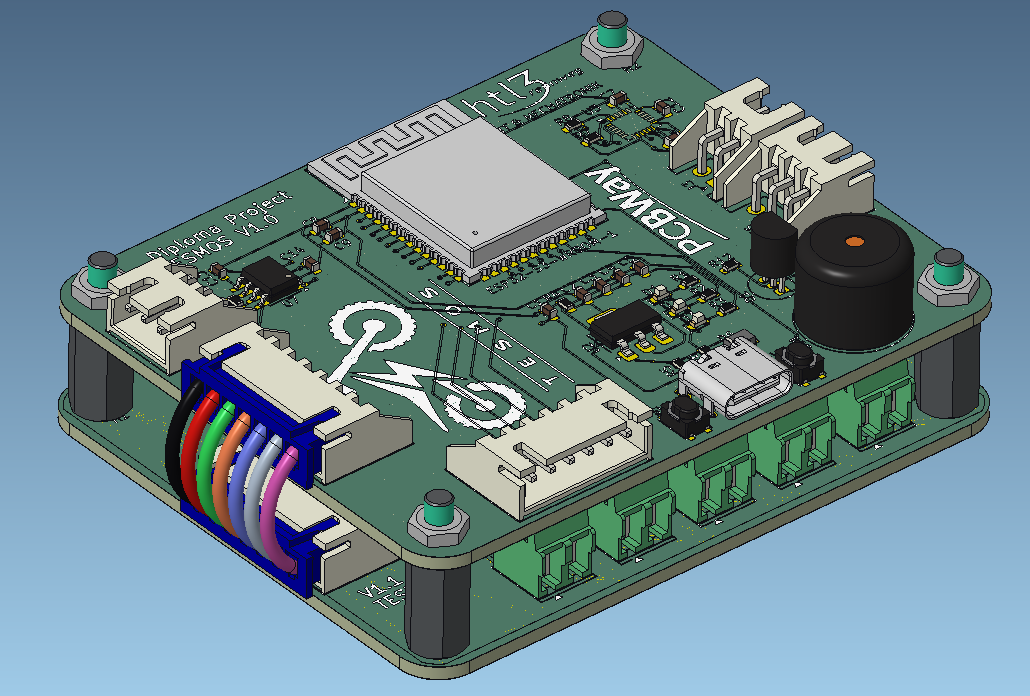
The two boards are stacked on standoffs and connected by a single cable. This keeps the electronics compact enough to fit into the limited space on the bike, while the sensitive control electronics stay physically separated from the high-current lighting board. The image below shows how both boards fit together as one unit.
How Both Boards Work Together
TESMOS is not just about converting a motorcycle to electric power. It's about challenging ourselves, learning through real engineering problems, and showing what a small team of motivated students can achieve.
We would be incredibly grateful for the opportunity to work with PCBWay and have them be part of our journey.
Motorcycle frame
What Comes Next
TESMOS does not end with the diploma thesis. Our next big goal is to make the bike street-legal in Austria, which means meeting the requirements for road approval, including proper lighting, protected electrical systems and a reliable battery system. Our lighting board is already a first step in this direction.
We also want to take part in Austrian competitions to present our work and get feedback from experts, for example:
Jugend Innovativ (jugendinnovativ.at): Austria’s competition for innovative projects by students and apprentices, with categories such as Engineering and Sustainability.
VCÖ Mobilitätspreis (vcoe.at/mobilitaetspreis): Austria’s largest competition for sustainable mobility, open to schools and students.
HTL Zero Emission Challenge (fsaustria.at): a challenge for zero-emission mobility, listed by Formula Student Austria.
What we offer PCBWay
We want to give PCBWay more than a logo on our website. Every board we order will be documented from delivery to the finished bike: unboxing photos, close-ups of the manufacturing quality, the assembly process and real test results from the motorcycle.
We will show how the four-layer control board and the high-current lighting board perform under the vibration, dirt and electrical noise of off-road riding, because that is exactly where manufacturing quality shows.
We will publish these updates on our website and Instagram, tag PCBWay in every post and write a project report that you are welcome to share. Our diploma presentation, our school’s Innovation Day and the competitions we enter will also put PCBWay in front of many young engineers. We will happily recommend PCBWay to our fellow students based on our own experience.
You can follow our progress here:
Website: tesmos.at
Instagram: @tesmos.htlrennweg
- Comments(0)
- Likes(1)