

Shift to the Future – Independent Brazilian Robotics Team
Shift to the Future is an independent student robotics team from Rio Grande do Sul, Brazil, focused on autonomous rescue robotics and the Brazilian Robotics Olympiad (OBR).
Our story began inside the extracurricular robotics program of Colégio Marista São Francisco. The students who would later form Shift to the Future were already involved in competitive robotics, developing, programming and improving robots for the Brazilian Robotics Olympiad.
In 2023, Shift to the Future was formally created with one main goal: to take our passion for robotics beyond the classroom and into the national competitive scene.
In only a few years, we transformed curiosity into engineering, countless hours of testing into experience, and effort into competitive results.
Throughout our journey, our group has achieved several awards in the Brazilian Robotics Olympiad, including:
- Programming Award – OBR 2022
- Dedication Award – OBR 2022
- Dedication Award – OBR 2023
- Robustness Award – OBR 2023
- Best Private School – OBR 2025
These achievements represent much more to us than trophies. Each one reflects hundreds of hours spent programming, redesigning mechanisms, solving electrical problems, testing strategies and learning from failures.
From a school robotics team to a garage team
Shift to the Future originally grew inside a school robotics environment, where we had access to an extracurricular robotics structure and began our competitive journey.
Eventually, however, our path changed.
We decided to continue the project independently.
Today, Shift to the Future is no longer a school robotics team. We are an independent garage team run by students.
Our robots are designed, assembled, programmed and tested by us. We work on electronics, mechanics, embedded programming, computer vision, sensors, PCB design and autonomous navigation ourselves.
Becoming independent gave us much more freedom to experiment and create our own engineering solutions, but it also introduced one of our biggest challenges: funding.
We no longer have an institution covering the costs of our development. Components, motors, batteries, sensors, PCBs, replacement parts, tools, transportation and competition expenses now depend on the resources we can obtain as a team.
Because of this, sponsorships and technical partnerships are becoming essential to allow Shift to the Future to continue growing and competing.
Our next-generation rescue robot
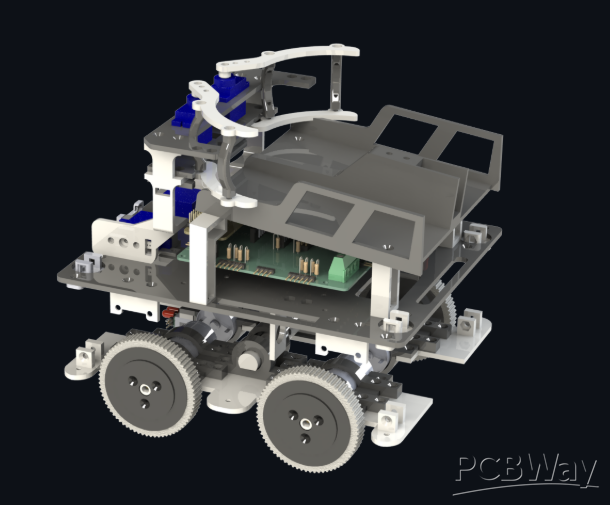
For the 2027 season, we are developing a new generation of our autonomous rescue robot.
One of the biggest lessons from our previous robot was the importance of electrical reliability.
Our previous electronics relied heavily on jumper wires and separate modules connected individually. While this approach works during prototyping, competition conditions showed us its limitations. Vibrations, transportation, repeated maintenance and quick repairs can cause loose connections and make troubleshooting much more difficult.
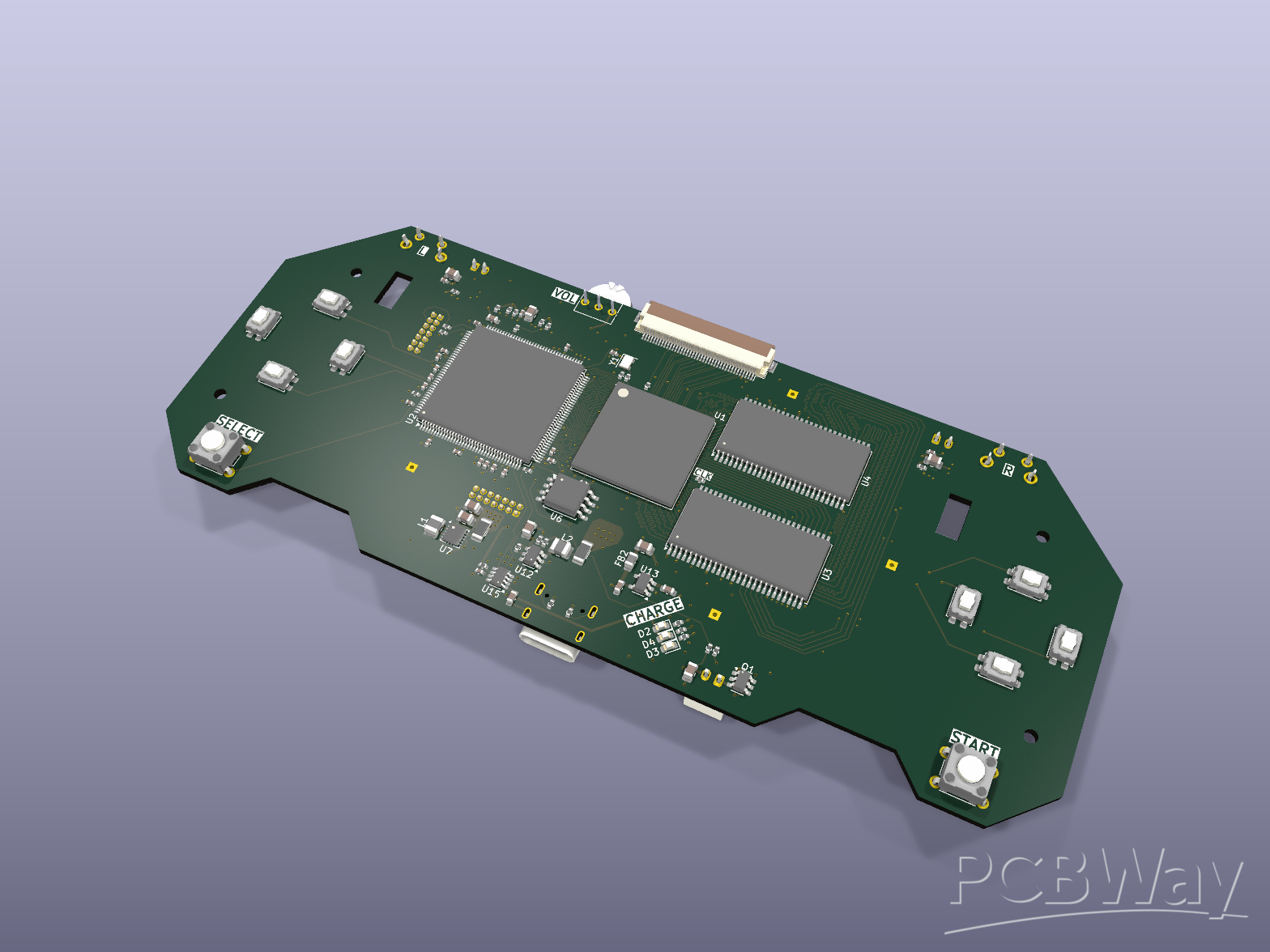
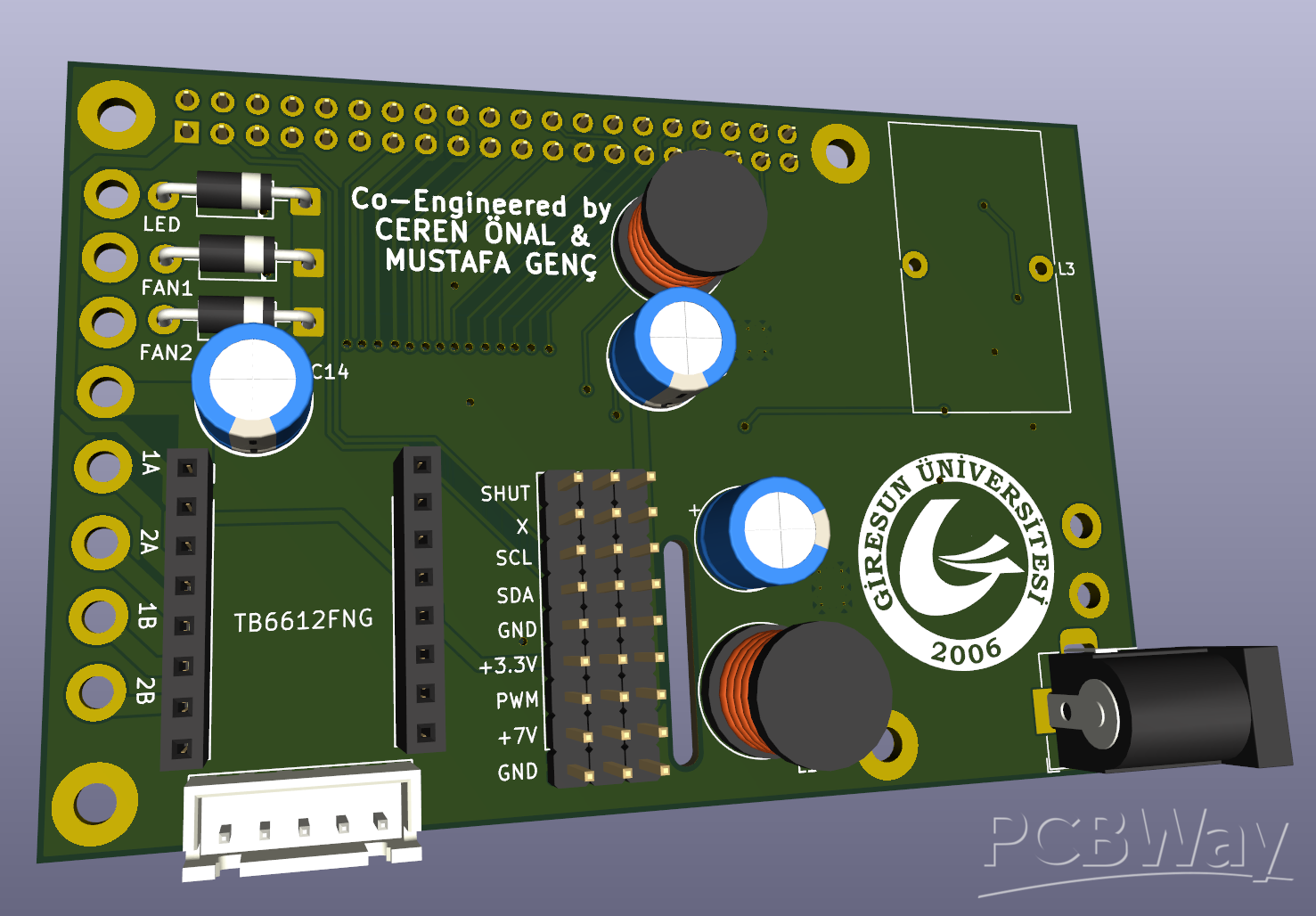
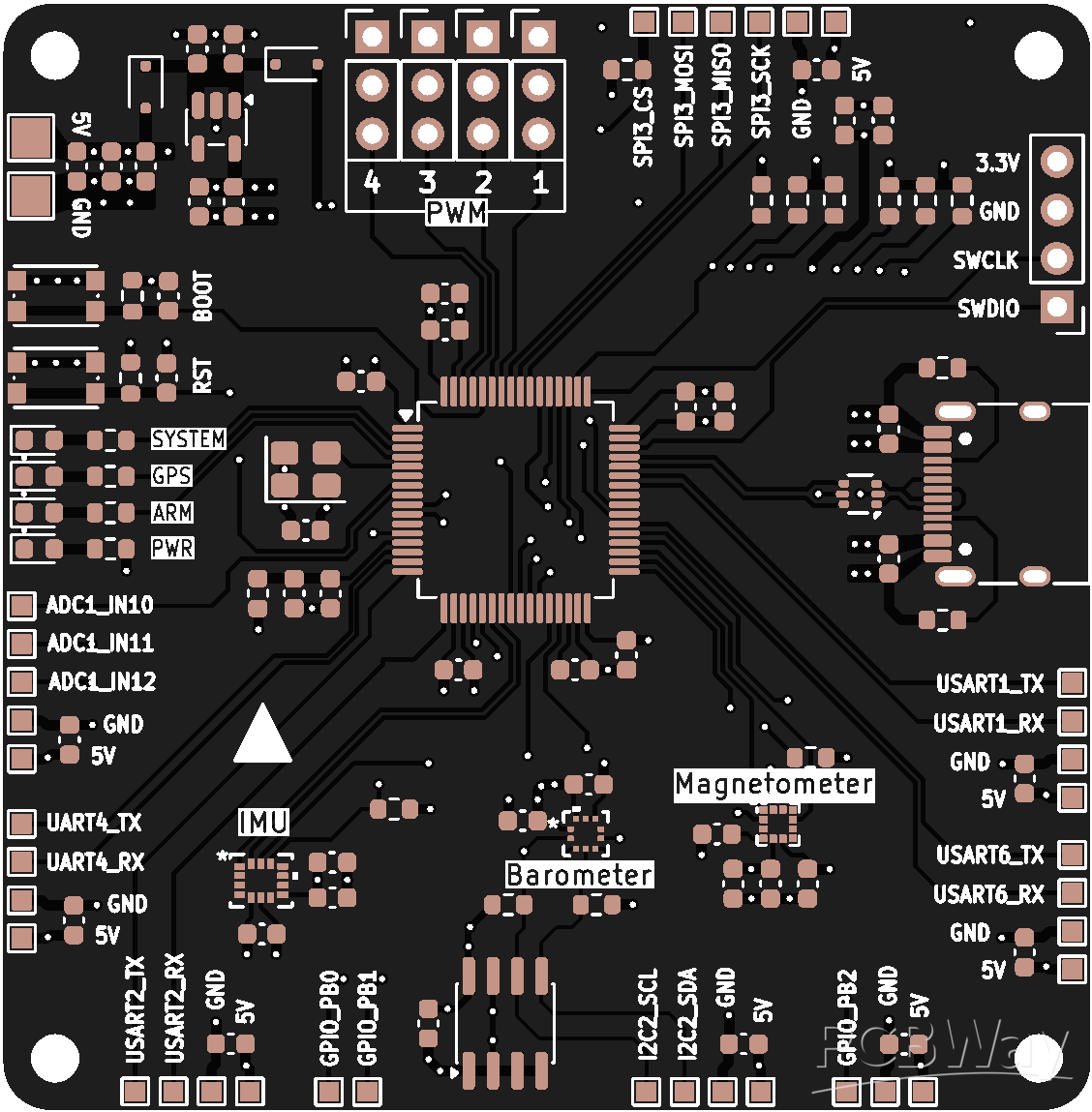
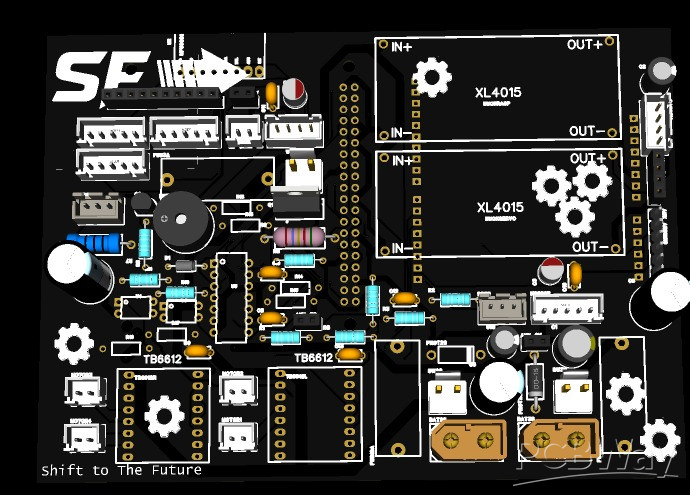
For our new robot, we decided to completely redesign this system around a custom PCB developed by our team.
The PCB acts as the electrical backbone of the robot, connecting its computing, sensing, motor control, actuators and power systems in a much more organized and reliable way.
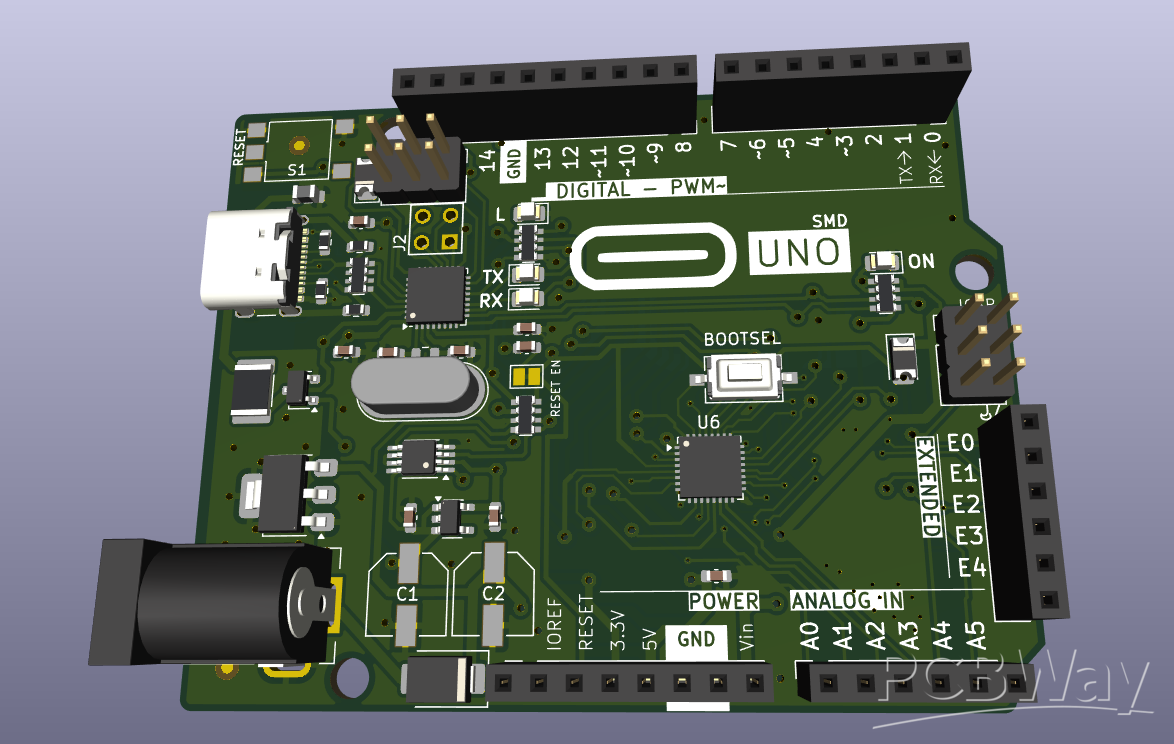
The system combines a Raspberry Pi 4B+ and an Arduino Uno R3.
The Raspberry Pi is responsible for high-level processing, including computer vision, sensor processing and autonomous decision-making, while the Arduino handles lower-level hardware control such as motor operation and auxiliary electronics.
Our custom board integrates:
- Raspberry Pi 4B+ and Arduino Uno R3;
- two TB6612 motor drivers;
- four DC geared motors;
- three VL53L0X Time-of-Flight sensors;
- MPU6050 inertial sensor;
- MG996R and SG90 servos;
- LED illumination and status systems;
- buzzer and start controls;
- voltage regulation;
- battery monitoring and protection;
- two independent LiPo power systems;
- additional expansion ports for future hardware.
- The drivetrain uses a dedicated 2S LiPo battery, while the Raspberry Pi, servos and auxiliary electronics are supplied by a separate 3S LiPo system.
Our current trello for 2027: https://trello.com/b/WioTHUG5/obr-2027-shift-to-the-future
Our last trello for 2026: https://trello.com/b/FaqJnH2f/obr-2026
Designing this PCB has become one of the most technically demanding parts of our new robot. During its development, we had to learn about schematic design, PCB routing, current capacity, voltage regulation, power distribution, protection circuits, signal integrity, component footprints and manufacturability.
Instead of simply connecting ready-made modules with jumper wires, we are now creating an electrical system designed specifically for our robot.
Why PCBWay support would make a difference
As an independent student team, prototype manufacturing represents a significant cost for us.
A PCB design only reaches its true test when it becomes physical hardware and is installed in the robot.
Manufacturing our first boards would allow us to validate the design under real conditions, identify improvements and develop a much more reliable robot for the next competition season.
We would like to request PCBWay's support in manufacturing the prototype boards for our 2027 rescue robot.
Having multiple units would allow us to test the PCB extensively while also keeping spare boards available for development and competition.
In return, we would be proud to:
- place the PCBWay logo directly on our PCB;
- apply stickers featuring the PCBWay logo directly onto the robot;
- distribute stickers featuring the PCBWay logo to other teams during the event;
- display PCBWay branding on our robot;
- acknowledge PCBWay on our social media (instagram, and youtube in the future);
- publish photos and videos of the manufactured PCB;
- show the board during the development of the robot;
- mention PCBWay in project documentation and competition-related content.
For us, this partnership would mean more than receiving discounts or free PCBs.
It would represent support for a group of students who decided to keep building, competing and learning even after leaving the structure where the team originally began.
We believe meaningful engineering does not always start in a professional laboratory.
Sometimes it starts with a few students, an idea, some tools, a robot — and a garage.
For contact info, images and more information about us, check our google drive!
Larry (Leader and Engineer) - Shift to the Future
Apply for sponsorship >>- Comments(0)
- Likes(1)