Compact Constant-Current LED Driver — LED2000 Reference Build
Compact Constant-Current LED Driver LED2000 Reference Build
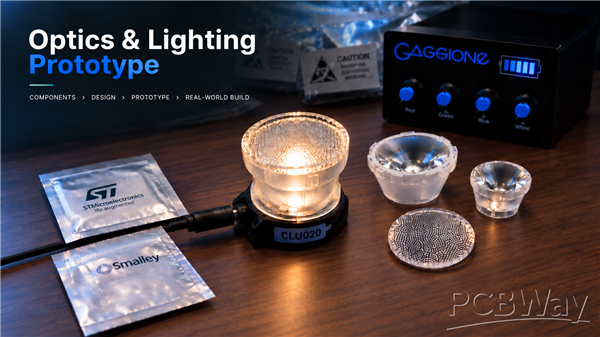
SRCo-RD-223 is an engineering development project focused on creating a compact, adjustable LED task luminaire built around the Bridgelux Vero 13 LED platform.
The current design direction uses a tall single mast, a long adjustable boom, a compact lamp head, a base swivel, a primary friction pivot, and independent head tilt. The goal is a simple architectural task light with reliable dimming, serviceable construction, and a clean mechanical form.
This project began as an investigation into flicker and reliability problems in an existing low-voltage task light. That investigation developed into a broader effort to understand how a more robust and serviceable task luminaire could be designed.
Project overview:
SRCo-RD-223 combines mechanical, optical, electrical, and control-system development into one task-luminaire project.
The current work includes:
- Bridgelux Vero 13 LED evaluation
- LED optics and beam-shaping work
- Adjustable mast, boom, and pivot architecture
- Low-voltage power and LED-driver architecture
- Brightness and mode controls
- Internal wiring and strain relief
- Thermal and mechanical packaging
- Two documented LED-driver reference builds
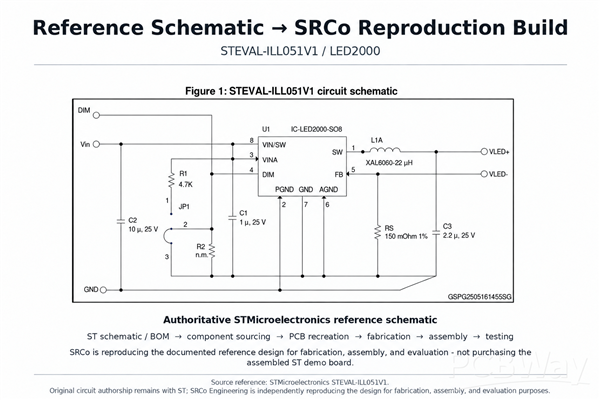
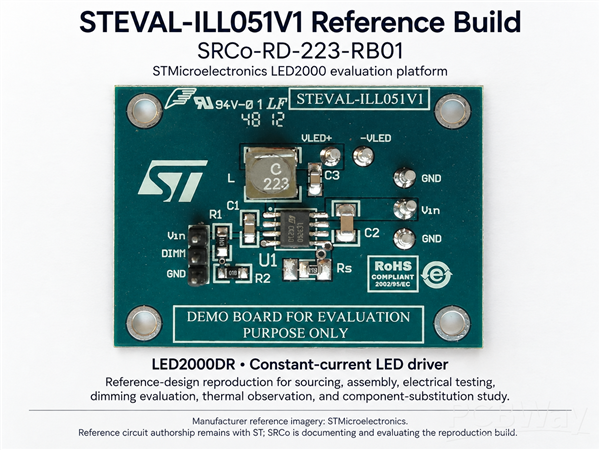
Current engineering work:
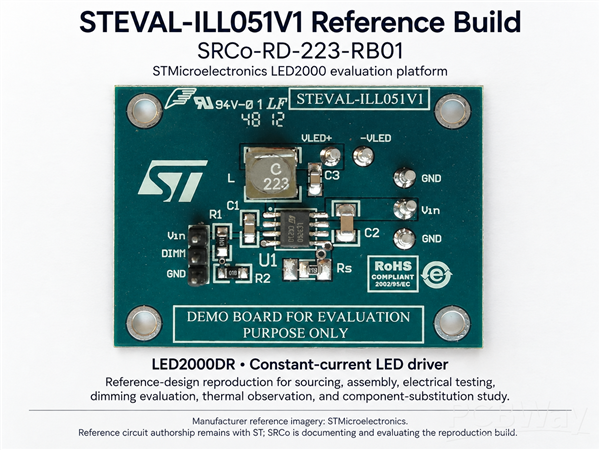
- Two STMicroelectronics reference designs are being reproduced and evaluated as part of the electrical development work.
- The first uses the LED2000 constant-current buck driver and is being used as a low-voltage learning and reference build.
- The second uses the ALED6001 boost-controller architecture and is the more relevant reference path for studying how a low-voltage source can drive a Vero-class LED load.
- These boards are engineering reference reproductions. They are not claimed as original SRCo circuit designs.
Why PCB fabrication matters:
- Much of the component sourcing work is already underway through manufacturer engineering-sample programs.
- Current sourcing includes components from STMicroelectronics, Coilcraft, Murata, Bourns, and other manufacturers being evaluated for the project.
- The next important step is to move the reference builds from documentation and sourcing into physical hardware.
- Professionally fabricated PCBs would allow the boards to be assembled, powered, tested, photographed, and evaluated under controlled conditions.
- PCBWay sponsorship would directly support that transition from engineering analysis into physical prototype testing.
What I plan to evaluate:
Once the reference boards are assembled, I plan to document:
- Initial power-up
- Constant-current operation
- PWM dimming behavior
- Electrical performance
- Thermal behavior
- Component substitutions
- Assembly and rework
- Physical PCB quality
- Serviceability considerations
- How the results influence the final SRCo-RD-223 task-luminaire architecture
- The ALED6001 reference build is especially important because it provides a practical boost-driver architecture relevant to the voltage required by the Bridgelux Vero 13.
- The LED2000 build remains valuable as a lower-voltage buck-driver reference and learning platform, but it is not intended to directly power the Vero 13 from a 12 V source.
Project development approach:
The goal is not simply to reproduce a manufacturer reference board.
The reference builds are being used as controlled engineering evidence within a larger product-development process.
Reference design → component sourcing → PCB fabrication → assembly → electrical and thermal testing → comparison of component alternatives → engineering findings → SRCo-RD-223 design decisions
This keeps the source design, test results, substitutions, and later original SRCo engineering work clearly separated and traceable.
Expected project documentation:
If the boards are fabricated, the project record will include:
- PCB photographs
- Assembly photographs
- Populated-board documentation
- Component and BOM records
- Test setup photographs
- Initial power-up results
- Dimming observations
- Thermal observations
- Component-substitution findings
- Problems encountered during assembly or testing
- Lessons learned from reproducing the reference designs
- The relationship of those findings to the final Vero 13 task lamp
Design provenance:
- STMicroelectronics remains the source of the original LED2000 and ALED6001 reference circuits and associated published design documentation.
- This project does not claim authorship of those manufacturer reference designs.
- Any later SRCo-developed PCB, circuit, control system, mechanical structure, or other engineering work will be documented separately and clearly distinguished from the original manufacturer reference material.
Project goal:
The larger goal of SRCo-RD-223 is to develop a compact, adjustable Vero 13 task luminaire with reliable lighting performance, practical dimming and controls, serviceable construction, and a simple mechanical design.
PCBWay support would help move an important part of that work from documented engineering analysis into real, testable hardware.
- Comments(0)
- Likes(1)