SAGUI BAJA SAE PCB
BAJA SAE Baja SAE
Was established by the Society of Automotive Engineers to give students the ultimate hands-on engineering challenge: designing, building, and racing an all-terrain sporting vehicle. Simulating real world engineering projects, students function as a team to introduce a new product to the consumer market while navigating harsh, rugged landscapes. Today, Baja SAE is a premier global competition that brings together thousands of students from hundreds of universities worldwide, preparing the next generation of engineers for the automotive and heavy machinery industries.
What is Sagui Baja UFPR
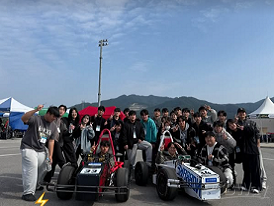
SAGUI is one of the oldest Baja SAE teams in Brazil, based in the Federal University of Paraná (UFPR). Founded in 1995 as an undergraduate thesis (TCC), our team built its first two prototypes, "Pinhão Doidão" and "Coiote," competing for the first time in 1997. Over the years, we evolved into an open extension project named "Piá de Baja," breaking into the national top 20. To professionalize the project, we rebranded as "UFPR Baja SAE." This change brought incredible results, including our first podium in 2013 and securing 1st place overall at the Southern Brazil competition “Baja Sul" in 2015 with our Mohave prototype. While our roots are in mechanical engineering, we are now a multi-disciplinary team open to all university majors, combining diverse perspectives to design, build, and manage an engineering project.
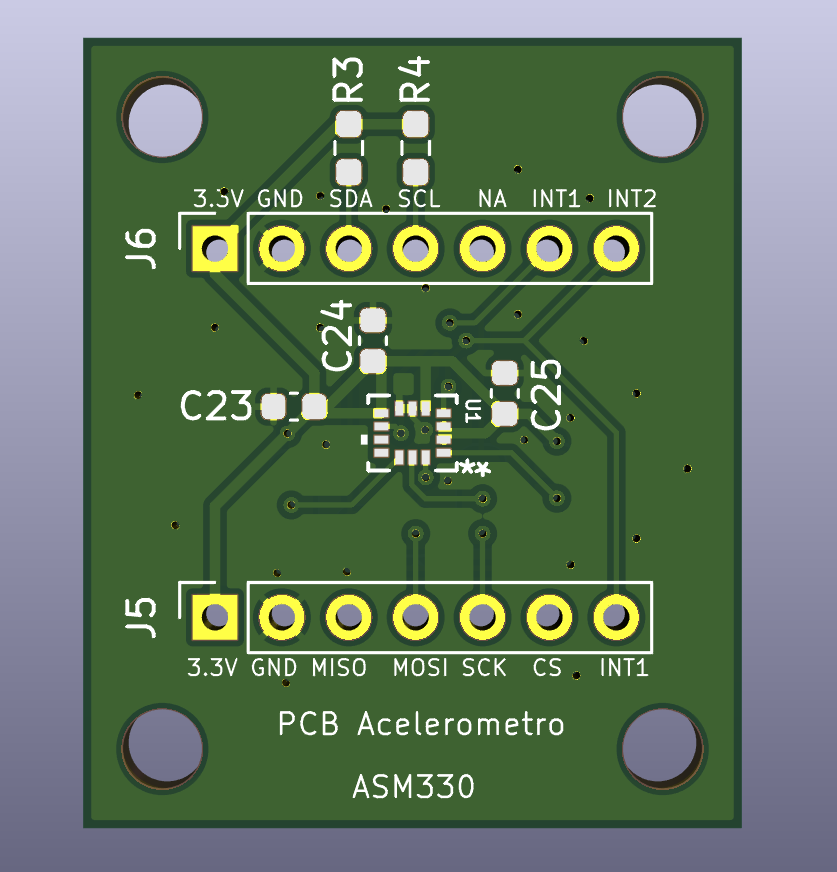
Accelerometer PCB
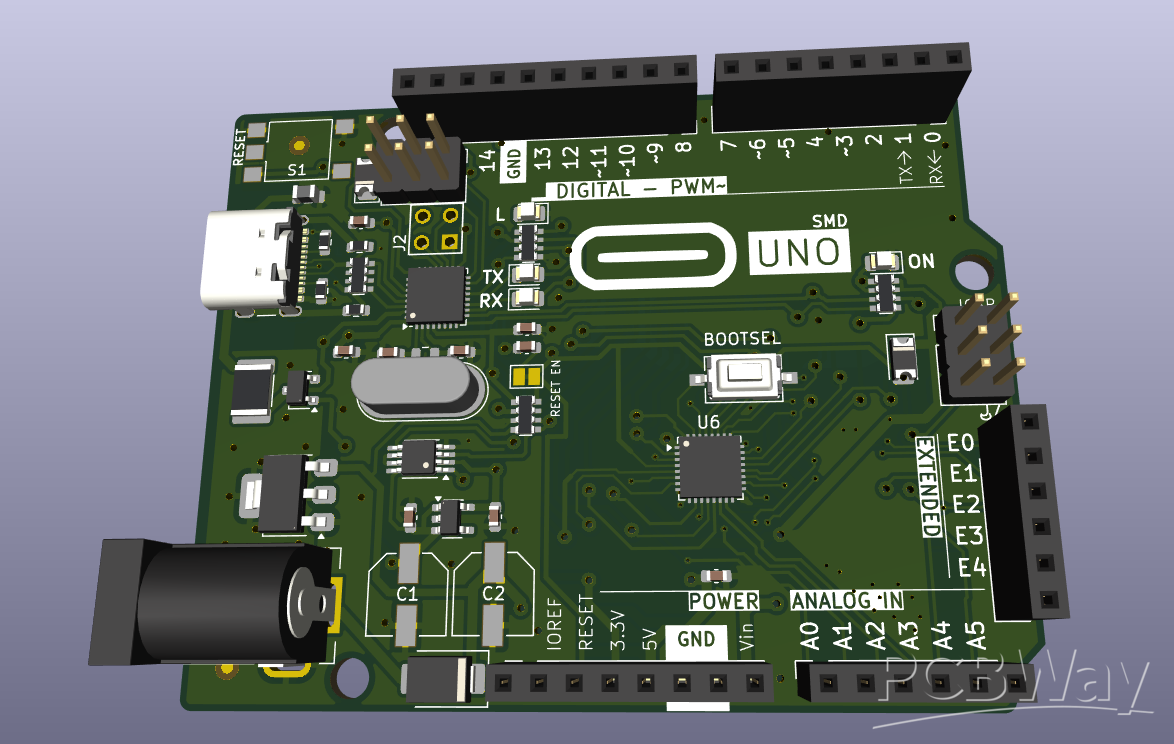
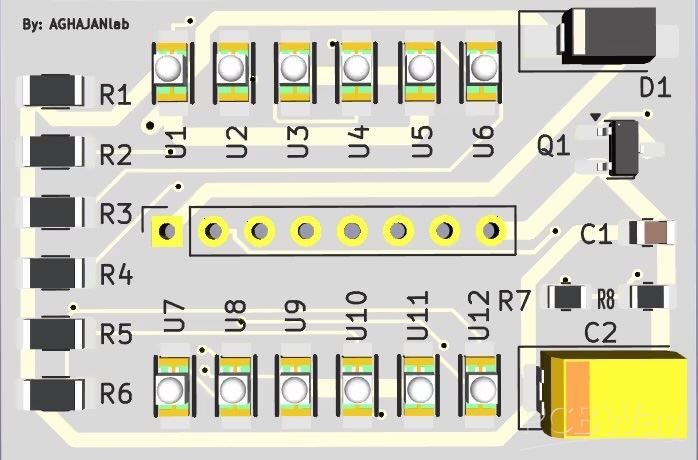
The accelerometer PCB is a cornerstone of our vehicle dynamics testing suite. It is primarily utilized to measure and map inclination, high-frequency vibrations, forces, total acceleration, and inertial positioning. This module is the protagonist of our diagnostic efforts; by isolating specific vibrational frequencies and the force profiles, it helps us identify structural weaknesses and electrical noise within the vehicle’s harness. It is highly valued for our team because it allows us to "see" the mechanical stress on the chassis in real-time. By integrating these results into our main electric system, we can correlate specific sensor spikes with physical failures, enabling us to refine our suspension and powertrain calibrations with a high degree of precision.
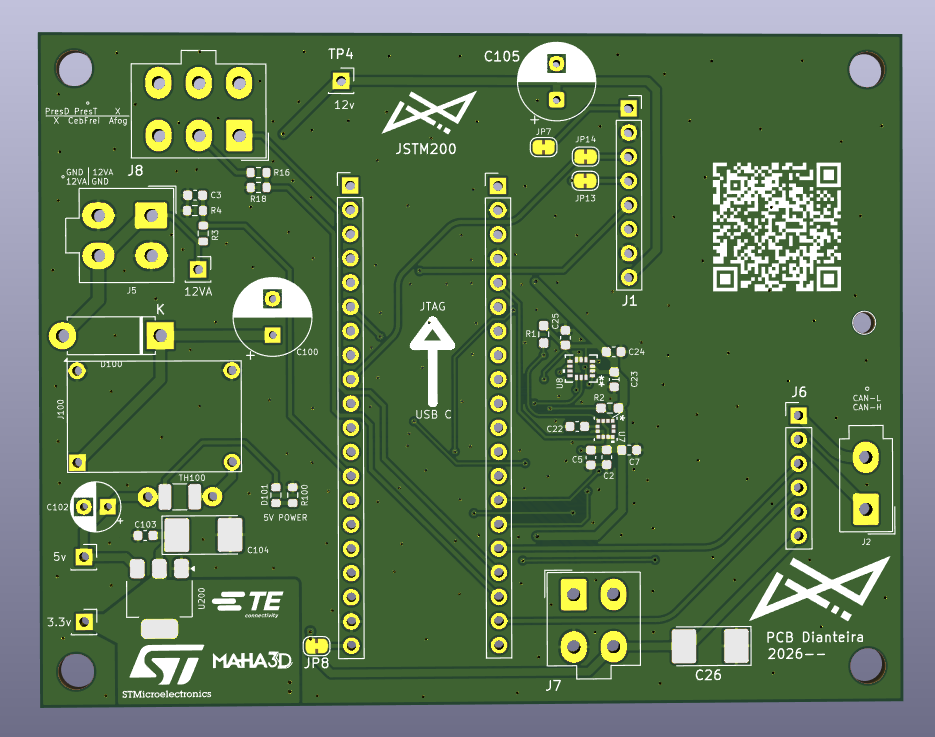
Front PCB
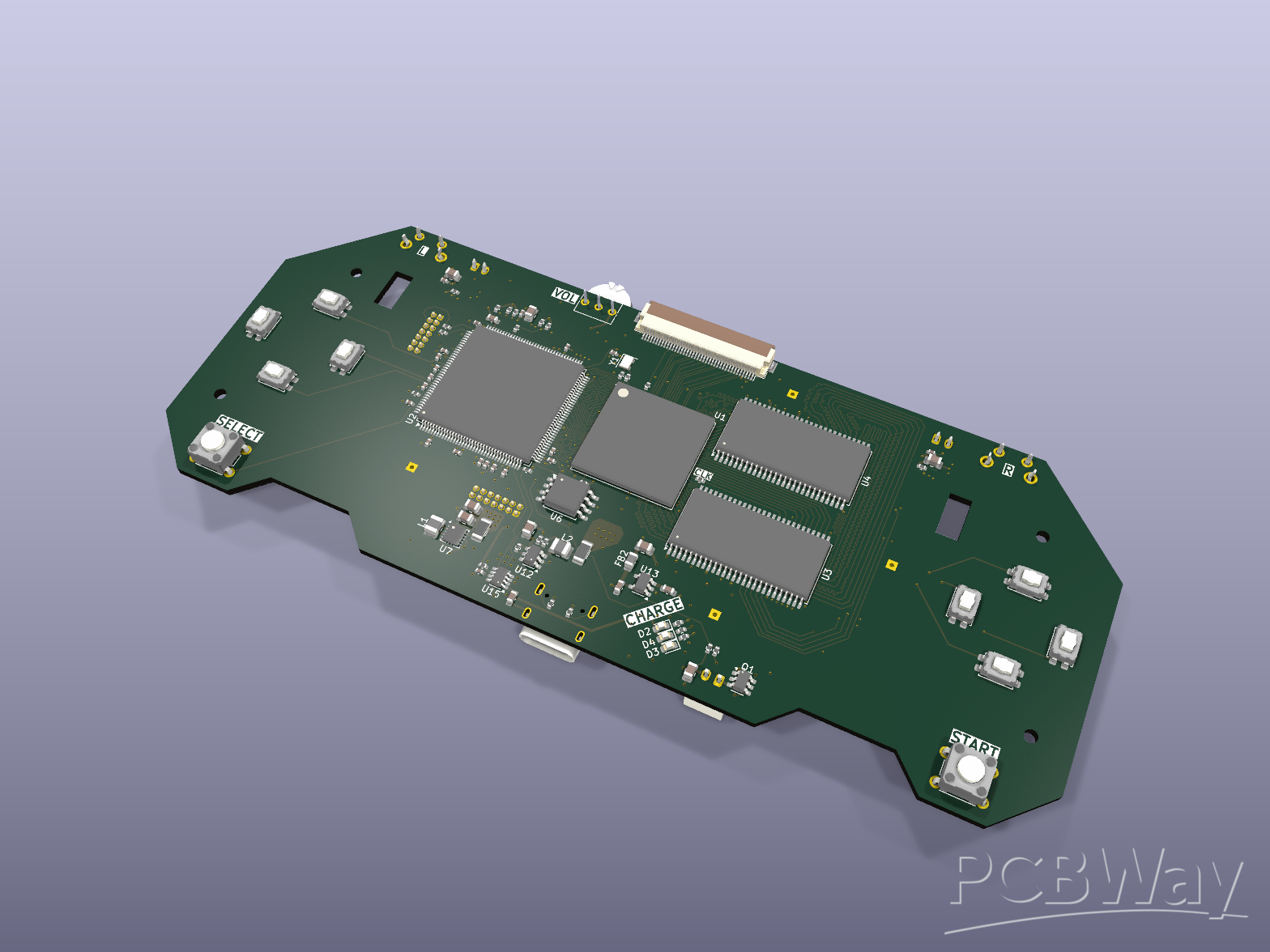
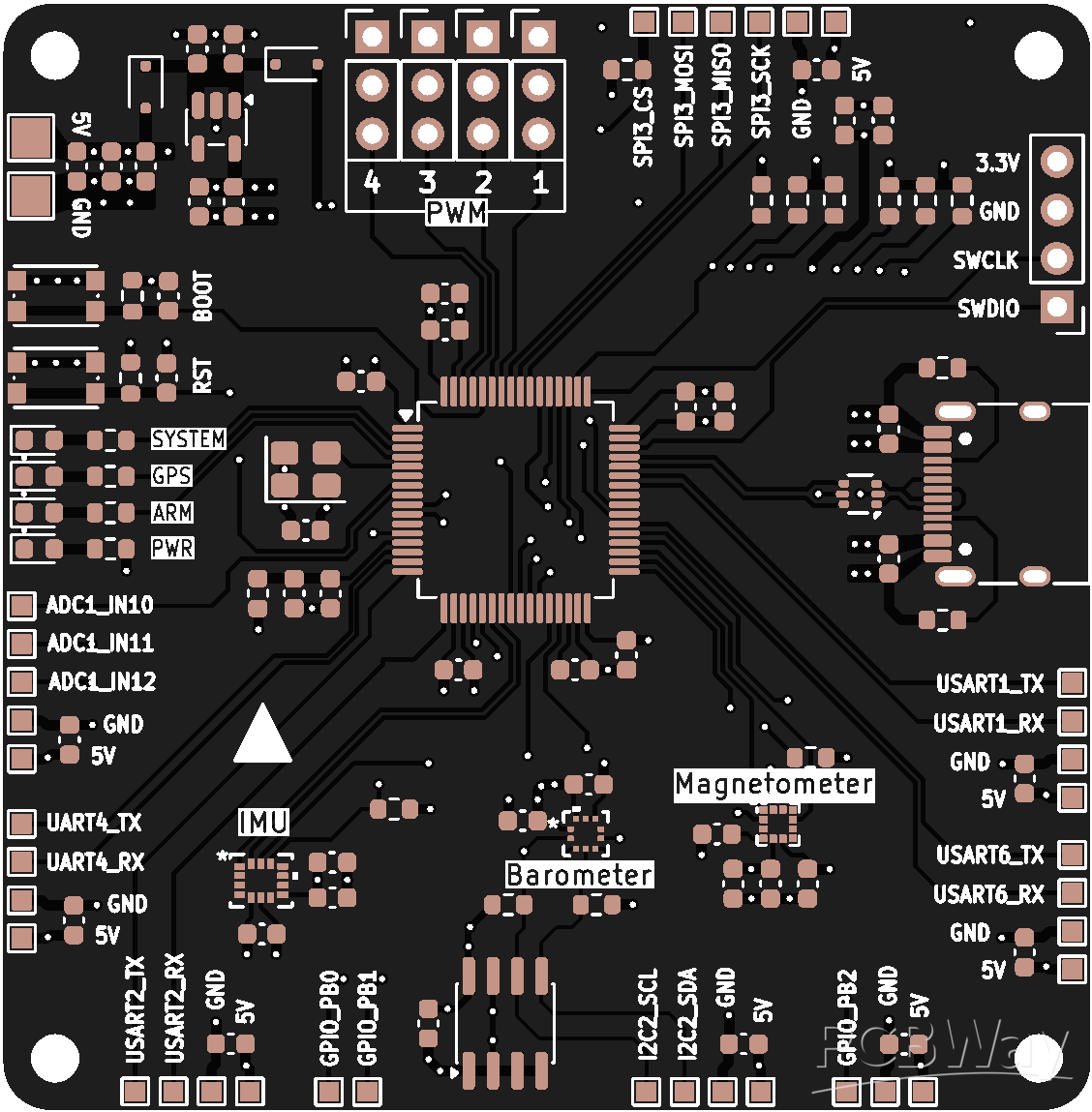
The Front PCB serves as the central processing for the vehicle’s telemetry system. Its primary function is to manage core power distribution while acting as the primary node for data acquisition from the vehicle's forward sensors, including the GPS and IMU modules. Beyond simple collection, this board performs local data processing, transforming raw sensor inputs into metrics. This is essential for our development process, as it allows us to monitor vehicle dynamics in real-time.
It handles all off-board communication, utilizing a proprietary protocol to transmit integrated data packets to the team’s server. This is critical for remote diagnostics, as it ensures we maintain constant connectivity with the car during high-intensity track testing.
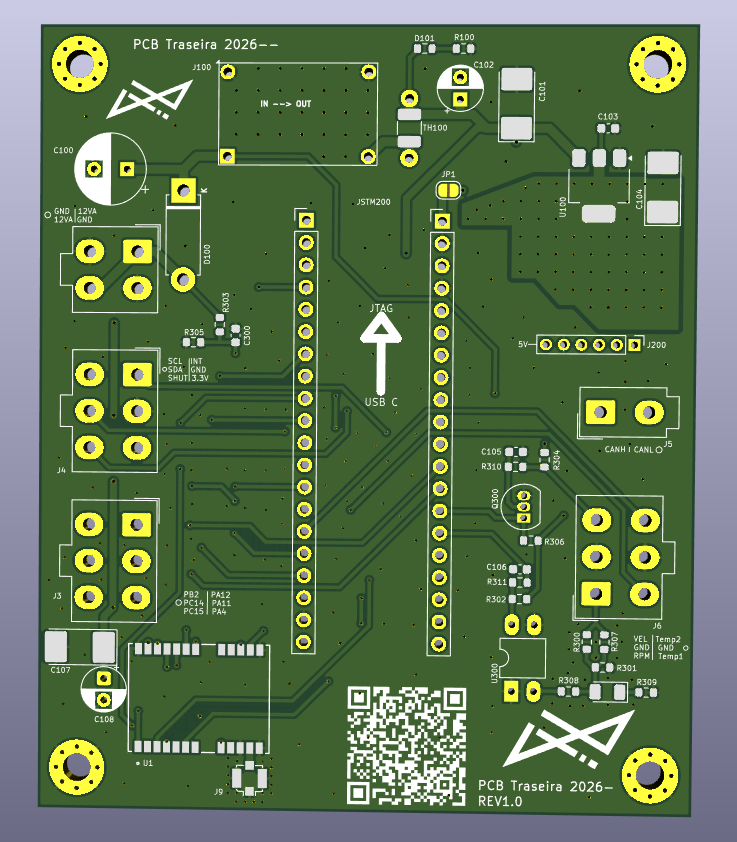
Rear PCB
The Rear PCB is dedicated to monitoring the powertrain and chassis health of the rear section of the vehicle. It is responsible for the acquisition of vital telemetry, specifically fuel levels and CVT temperature, which are key indicators of powertrain efficiency and thermal load management. This board is designed for high-reliability data acquisition in a high-heat environment. To maintain system synchronization, it communicates directly with the Front system via CAN network

- Comments(0)
- Likes(0)