

Grennen R1 / Camera Detector
Grennen R1: a handheld hidden-camera finder
The problem:
Hidden cameras keep turning up in Airbnbs, hotels and rentals. In a survey we ran this month, 8 of 12 travelers had wondered whether a room they stayed in had one, and 5 had already searched a room by hand, with a flashlight, by checking vents and corners, or just by looking around. None of them had a tool built for it.
The cheap detectors that exist mostly listen for radio signals, so they miss cameras that record to a memory card and never transmit. The red-filter lens viewers that do find lenses are slow and easy to get wrong.
What we're building
Grennen R1 is a handheld scanner that finds camera lenses by their reflection. A ring of infrared LEDs lights up the room, and camera lenses bounce that light straight back, the same way a cat's eyes shine in headlights. R1 shows the room on its screen and circles the bright spots so you can walk over and check them. It needs no app and no internet, and it never records or stores anything.
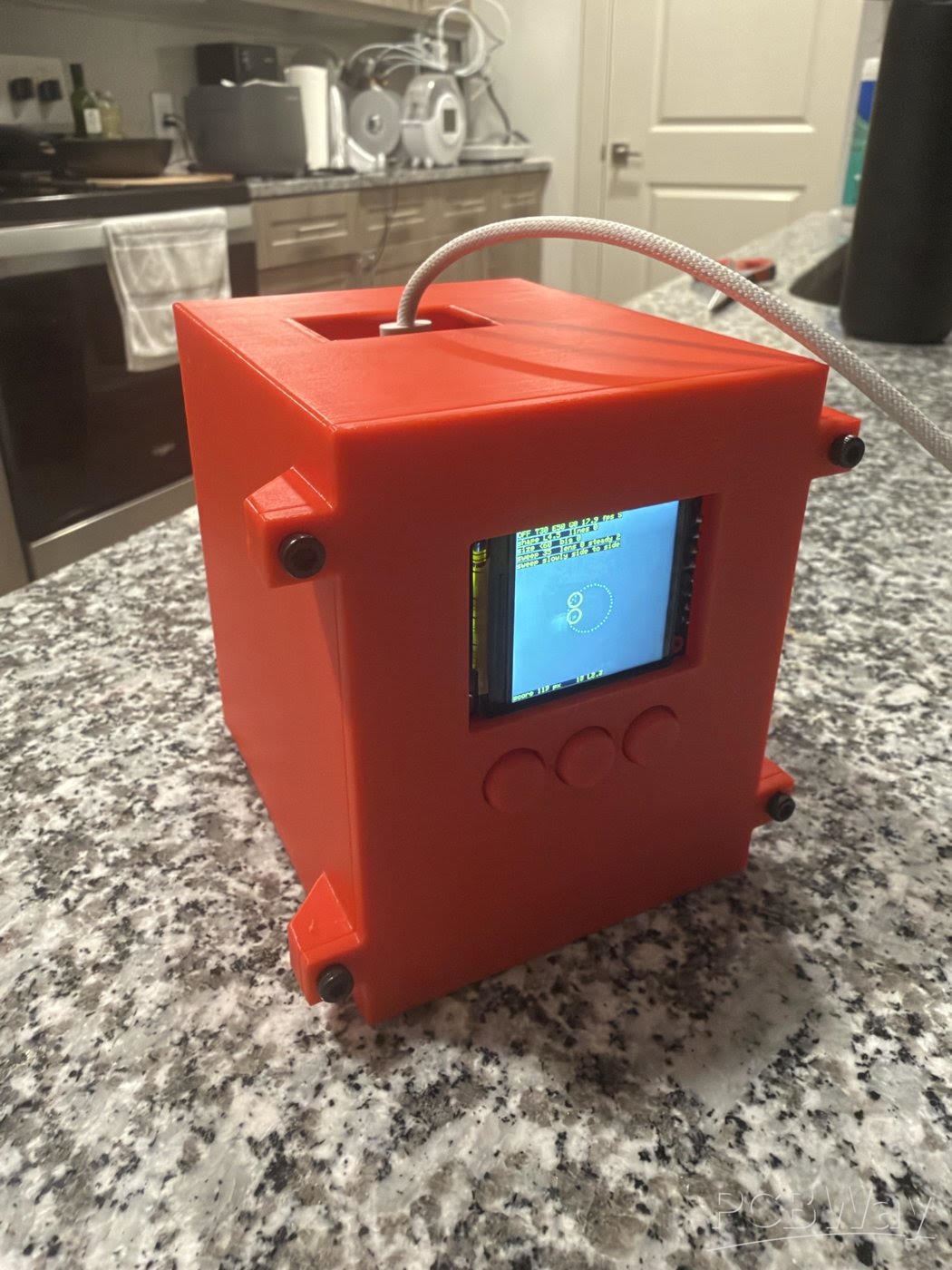
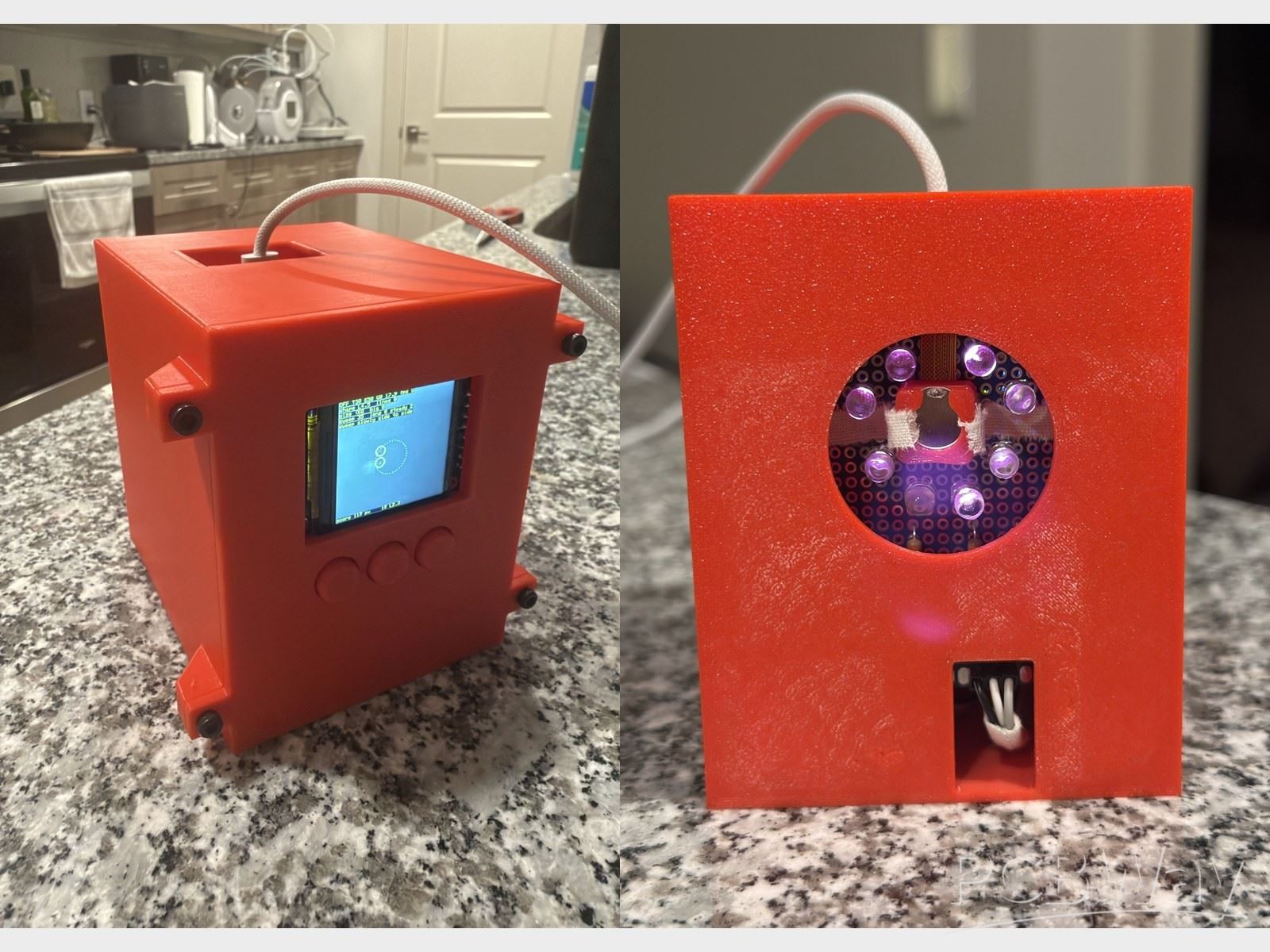
The R1 prototype: screen and buttons on the back.
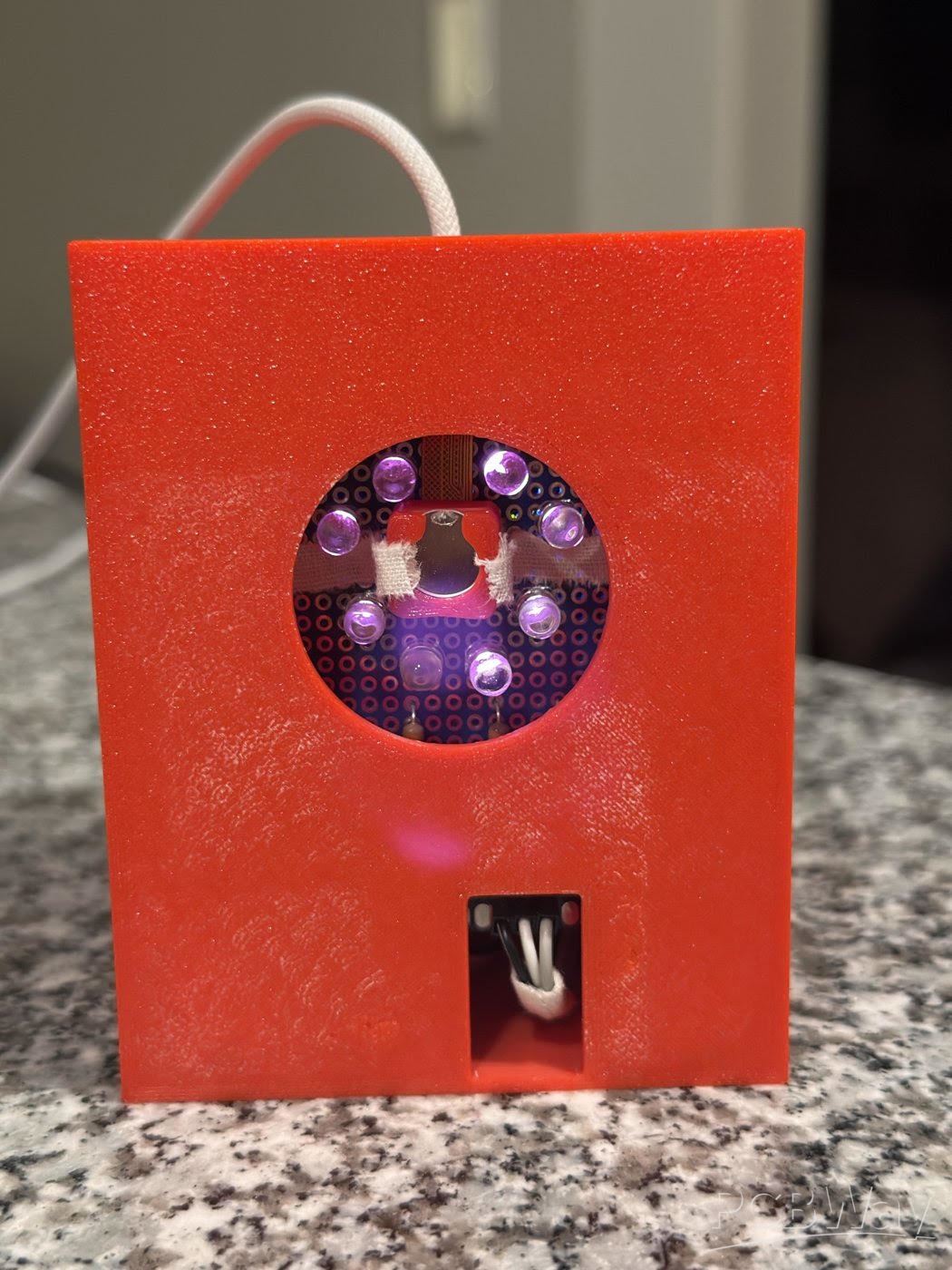
The front: 8 infrared LEDs around the camera.
Where we are
We've gone from a breadboard to a working handheld prototype in about a week:
Breadboard. An ESP32-S3 dev board, an infrared-sensitive camera, a small color screen, three buttons and 8 infrared LEDs driven by MOSFETs.
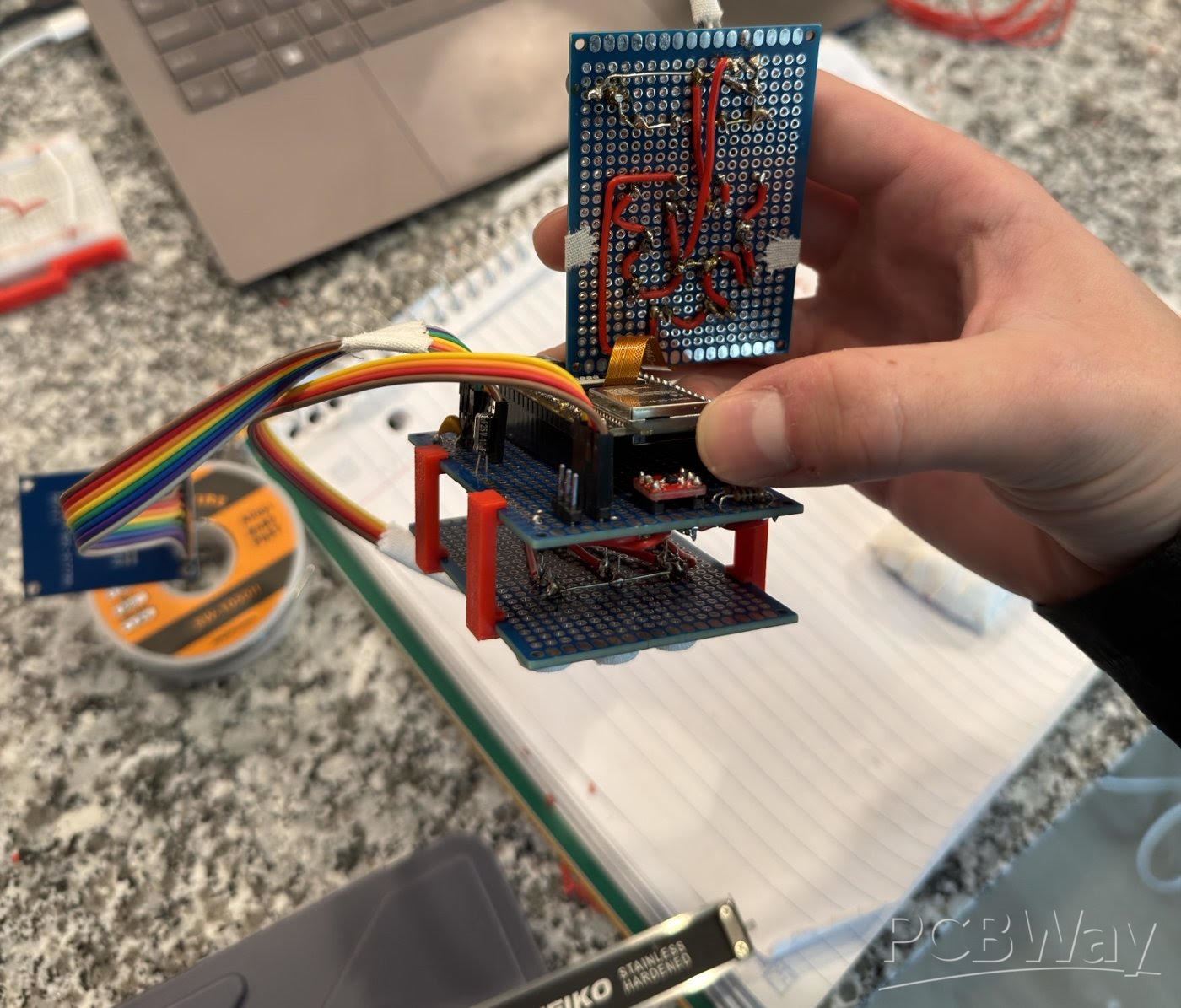
Perfboard stack.
We moved everything onto three hand-wired boards stacked in 3D-printed clips: an optics board with the camera and LED ring, a main board with the ESP32-S3 and LED drivers, and a button board.
Enclosure. A 3D-printed case, now on its second version.
Firmware. Twelve versions so far. In our tests R1 picks out a real home security camera's lens from about 6 to 8 feet away. We're now working on cutting false alarms and making the infrared beam cover more of the view.
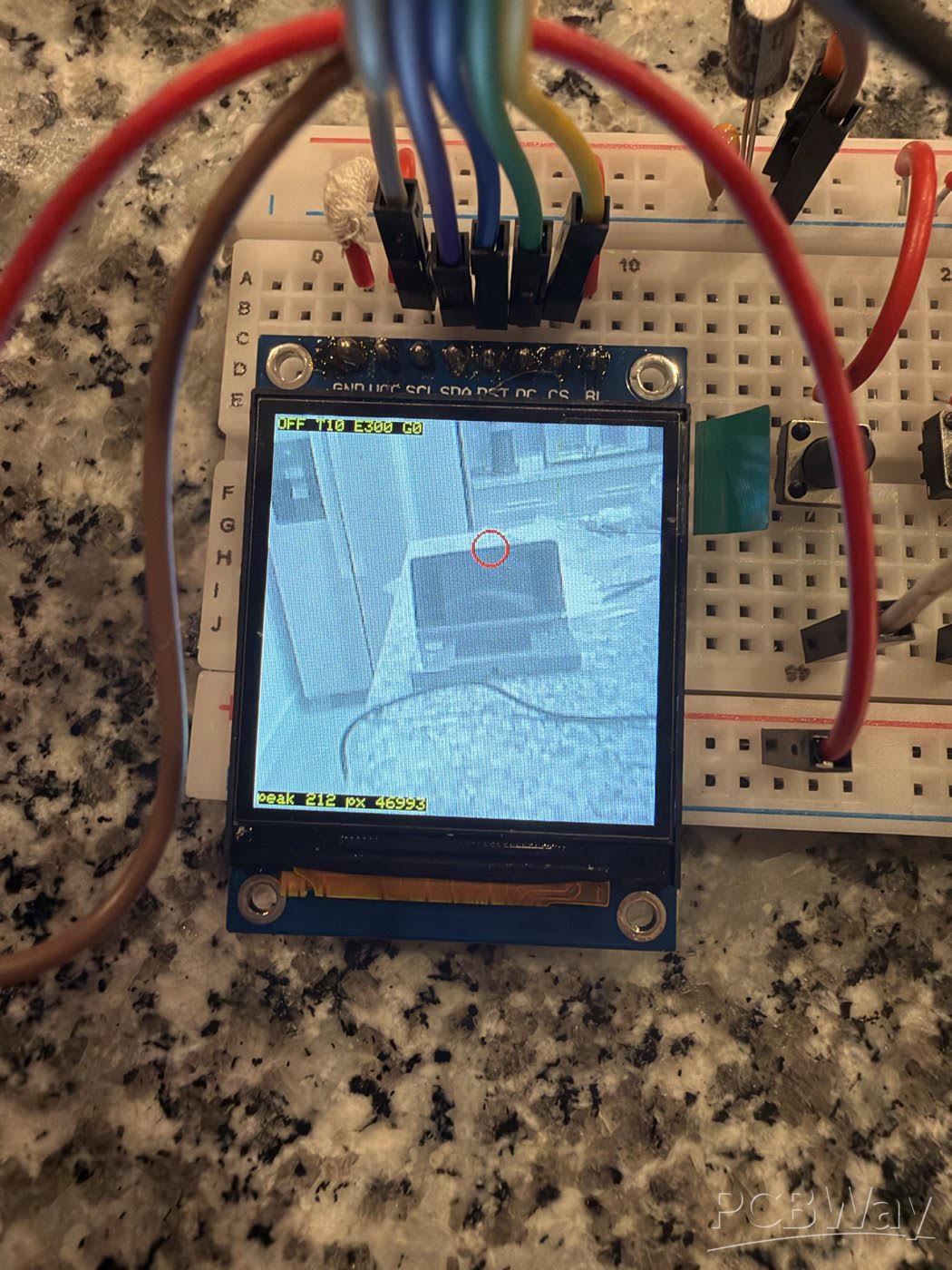
The first breadboard, circling a reflection it found.
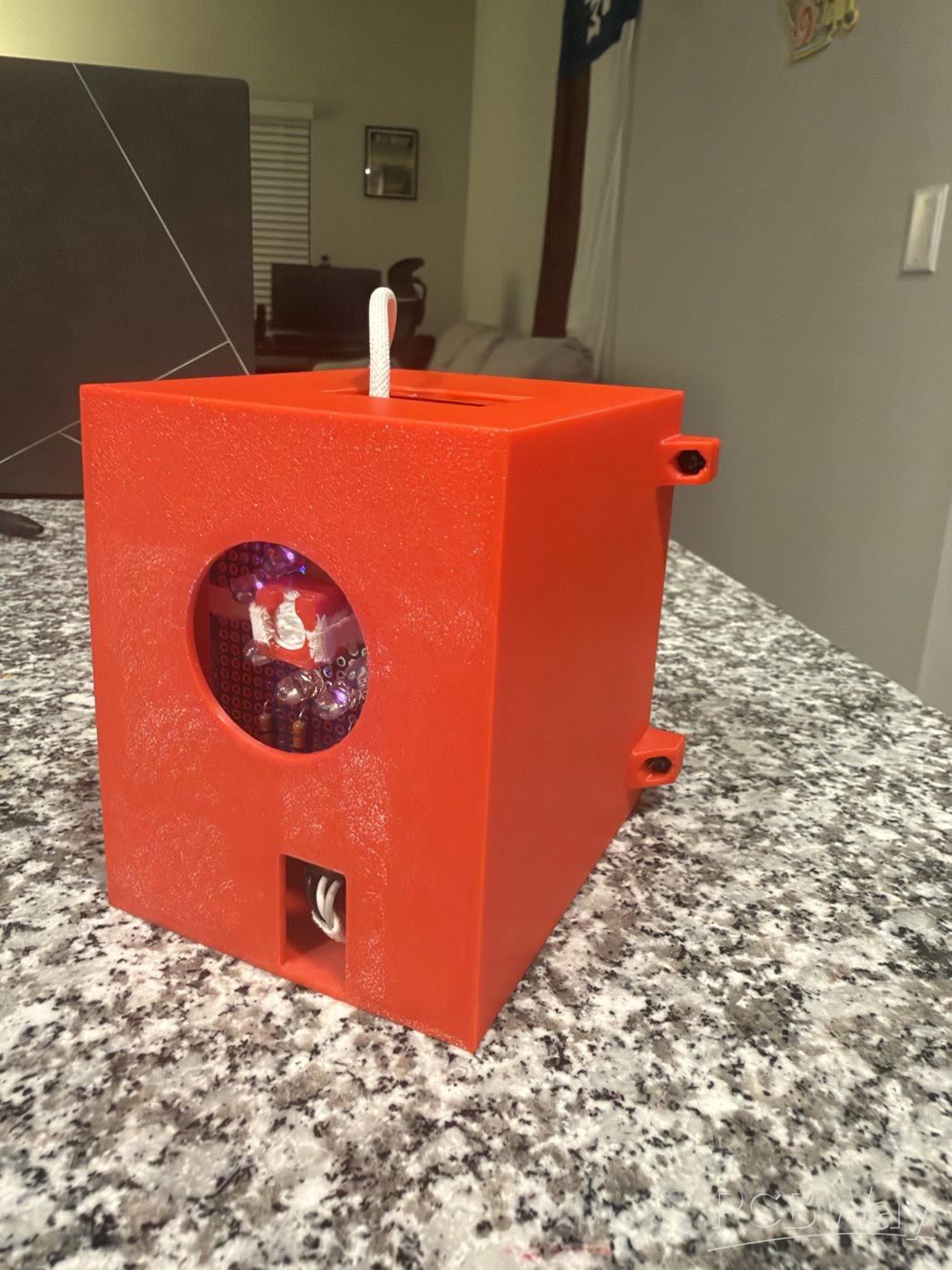
The second enclosure version.
What the PCBs are for
The hand-wired stack proved the idea, but it's fragile, slow to build and too big to carry. Our next step, which we're designing now, is Rev A: one 4-layer board, about 100 x 62 mm, that replaces all three perfboards. It carries the ESP32-S3 module, the camera connector, the infrared LED drivers, battery charging and a battery gauge, USB-C and the screen connector, so R1 can finally run on a battery in a pocket-sized case.
We plan to order a small batch of assembled boards from PCBWay once the design is finished. They'll go into our first battery-powered units, which we'll test side by side against a store-bought lens finder.
The team
We're two engineering students and cofounders:
Charlie Drennen, Texas A&M University (Manufacturing and Mechanical Engineering Technology): optics, mechanical design, CAD and enclosures
David Gabrick, University of Texas at Arlington (Mechanical Engineering): electronics and firmware
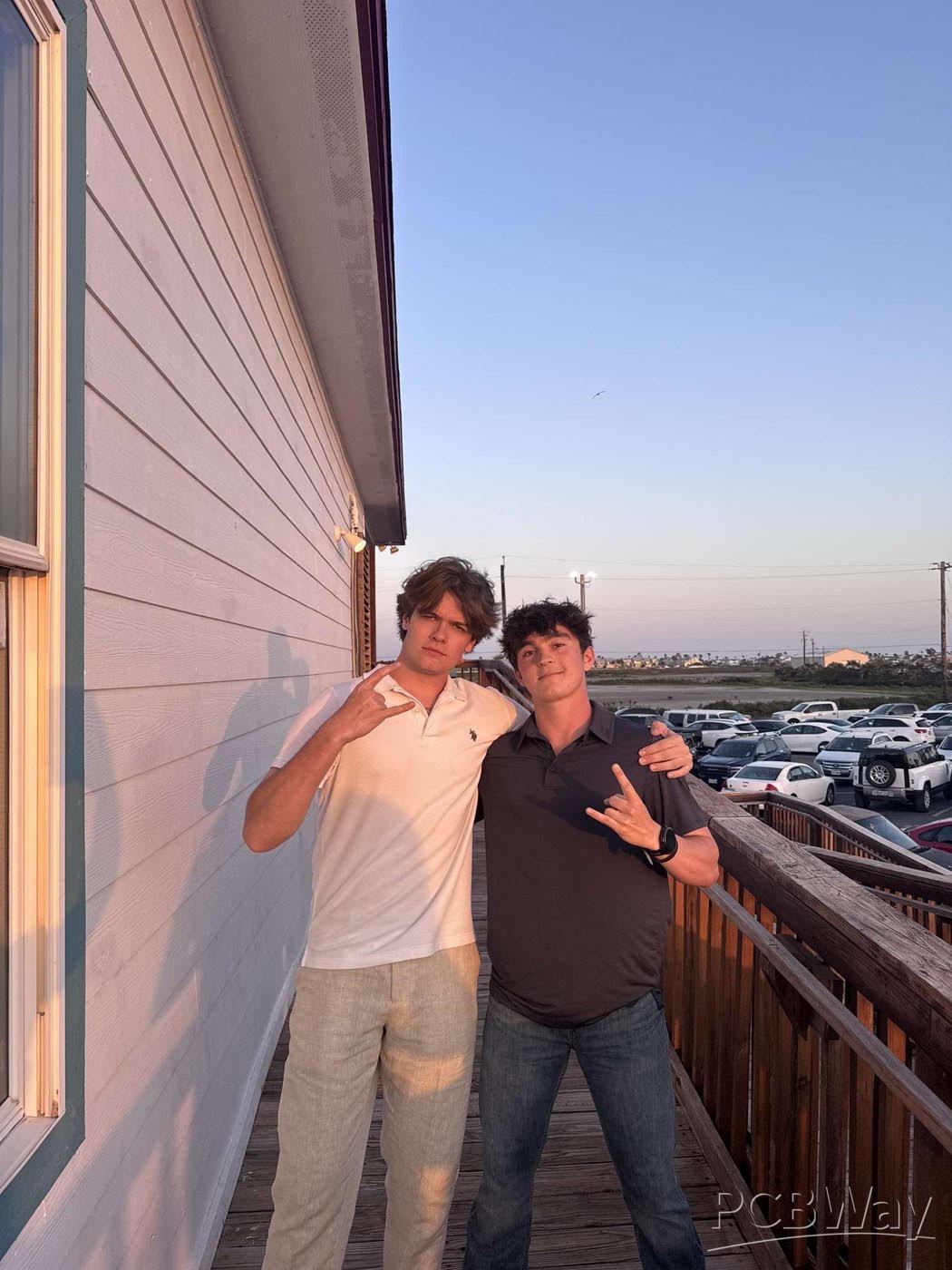
Charlie and David.
We are currently working on the schematic for the custom PCB, we will send over information on that as soon as possible.
Let us know if there's anything else you'd like to see.
Apply for sponsorship >>- Comments(0)
- Likes(2)