RoboMedal – Interactive PCB Medal with LED Matrix
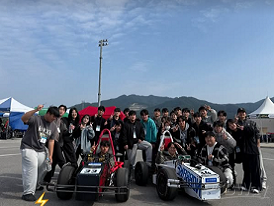
This project was created to recognize 40 public school students in a town in the interior of Brazil. The goal is to develop an electronic medal built on a printed circuit board (PCB), featuring a programmable LED matrix, to celebrate these students’ commitment, creativity, and dedication to educational robotics.
The initiative is led by Mayckon Jhônatas, a mathematics teacher and robotics coordinator for the municipal school system. His work with students brings together programming, electronics, robot construction, and problem-solving, giving them opportunities to turn their ideas into tangible projects.
Participation in activities and competitions such as the Brazilian Robotics Olympiad (OBR) provides opportunities for learning, collaboration, and recognition of public school education. The medal was conceived to celebrate this journey and give students a keepsake directly connected to the technology they have been learning to build.
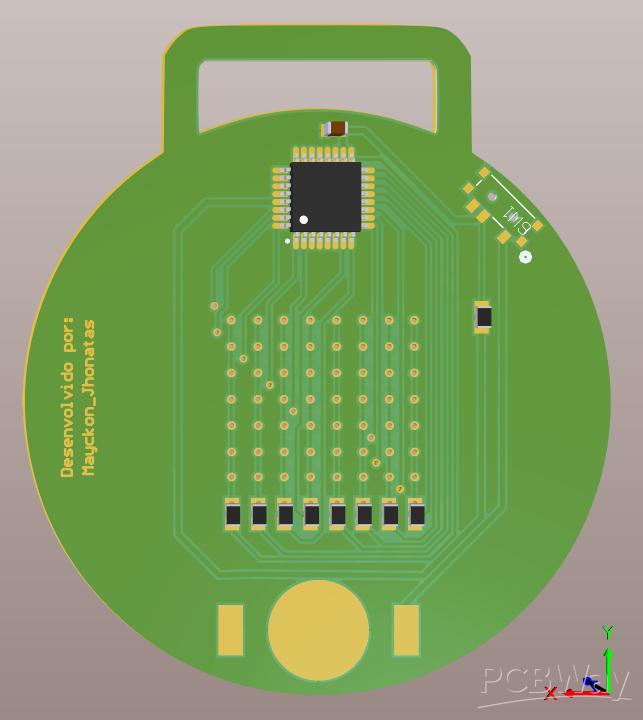
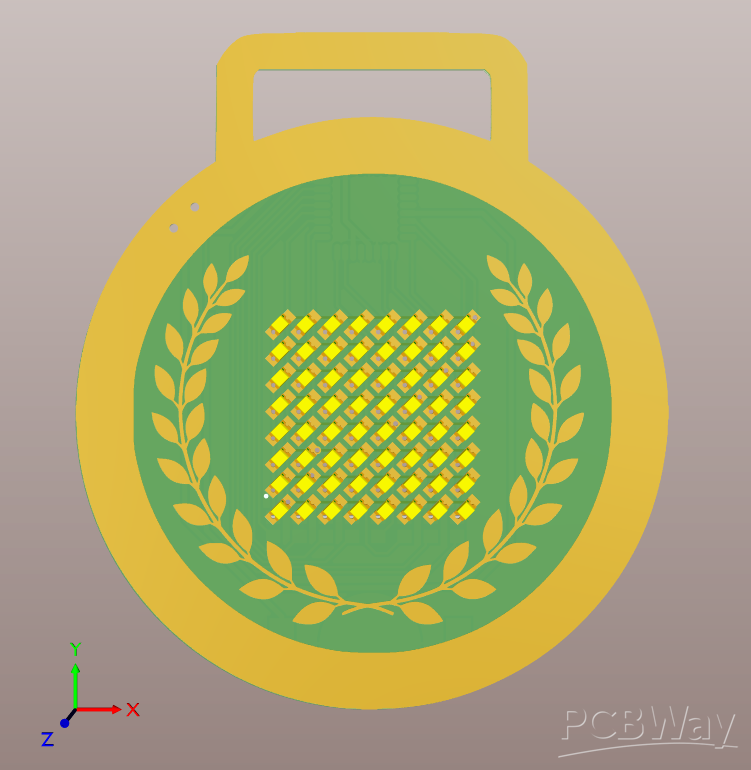
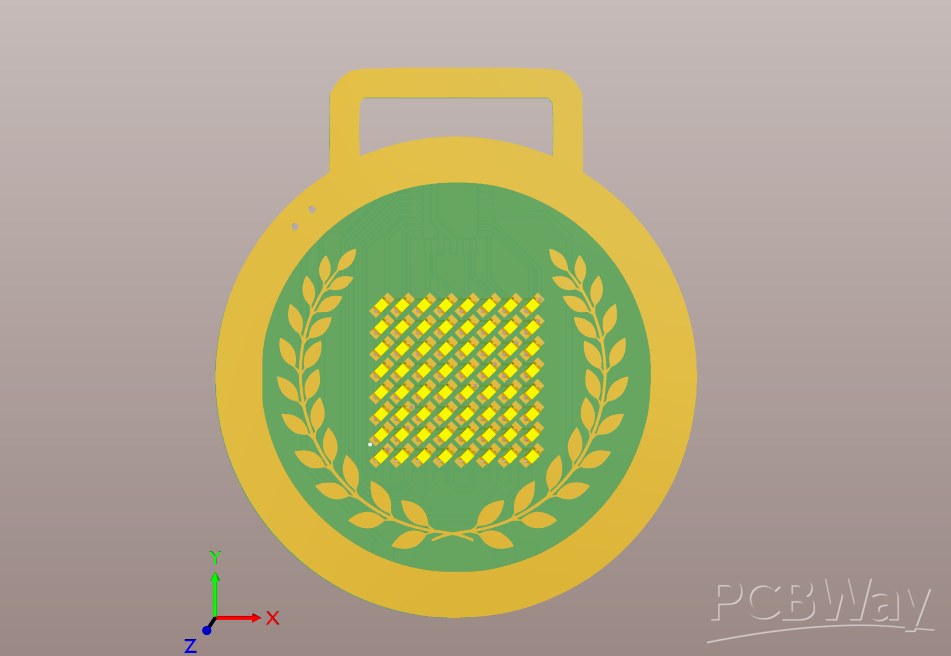
The printed circuit board itself will form the body of the medal. Its components, traces, and LEDs will become part of its visual identity, allowing students to see the electronics that bring their award to life. The medal can also spark questions about circuits, programming, and PCB manufacturing.
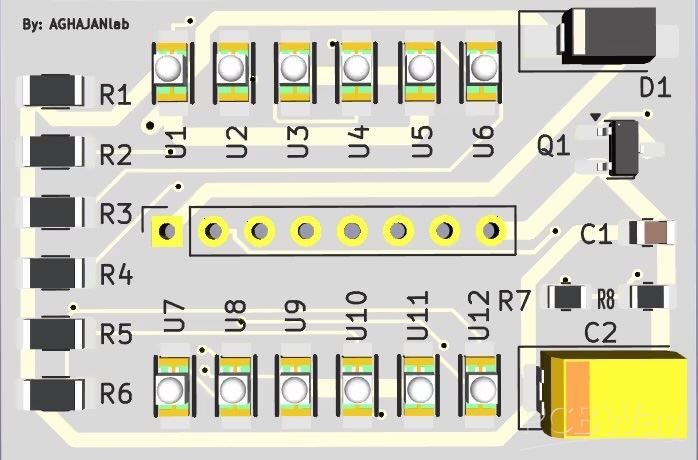
The design includes an 8 × 8 matrix consisting of 64 SMD LEDs mounted directly on the PCB. This matrix will display numbers, symbols, and small animations, depending on the firmware developed. Different lighting patterns will allow the medal to be personalized and highlight its technological character.
An ATmega-family microcontroller in a TQFP-32 package is planned to control the matrix. The proposed power source is a coin-cell battery, intended to keep the assembly compact and suitable for a wearable medal. Development includes selecting current-limiting resistors, power supply components, and the programming needed to control the LEDs.
One of the main technical challenges is balancing matrix brightness with power consumption and battery capacity. Prototyping will therefore be essential to verify circuit operation, adjust display patterns, and evaluate battery life before producing the medals intended for the students.
The project is currently under development, with work underway on the board design and LED matrix connections. The next steps include completing and reviewing the schematic and PCB layout, manufacturing and assembling prototypes, developing the firmware, and conducting tests. Following this validation, the goal is to produce medals for all 40 students.
We are seeking PCBWay’s support to manufacture the printed circuit boards needed for prototyping and medal production. This sponsorship would help turn the design into a tangible award, connecting professional electronics manufacturing with a public school educational initiative in the interior of Brazil.
The development process could be documented through images of the PCB design, assembly, testing, and completed medals. These records could also highlight PCBWay’s contribution and show how manufacturing support helped make the initiative possible.
We want every student to receive a medal that represents their effort and ability to create. By taking home a circuit that lights up and displays programmed patterns, each student will have a reminder of their achievements and encouragement to continue exploring science and technology.
- Comments(0)
- Likes(1)
 More by Mayckon Jhonatas
-
 RoboMedal – Interactive PCB Medal with LED Matrix
This project was created to recognize 40 public school students in a town in the interior of Brazil....
RoboMedal – Interactive PCB Medal with LED Matrix
This project was created to recognize 40 public school students in a town in the interior of Brazil....
-
 Learning Math with Robotics – Educational Project
Founded at Escola Municipal José Rufino, the "Learning Math with Robotics" project aims to integrate...
Learning Math with Robotics – Educational Project
Founded at Escola Municipal José Rufino, the "Learning Math with Robotics" project aims to integrate...