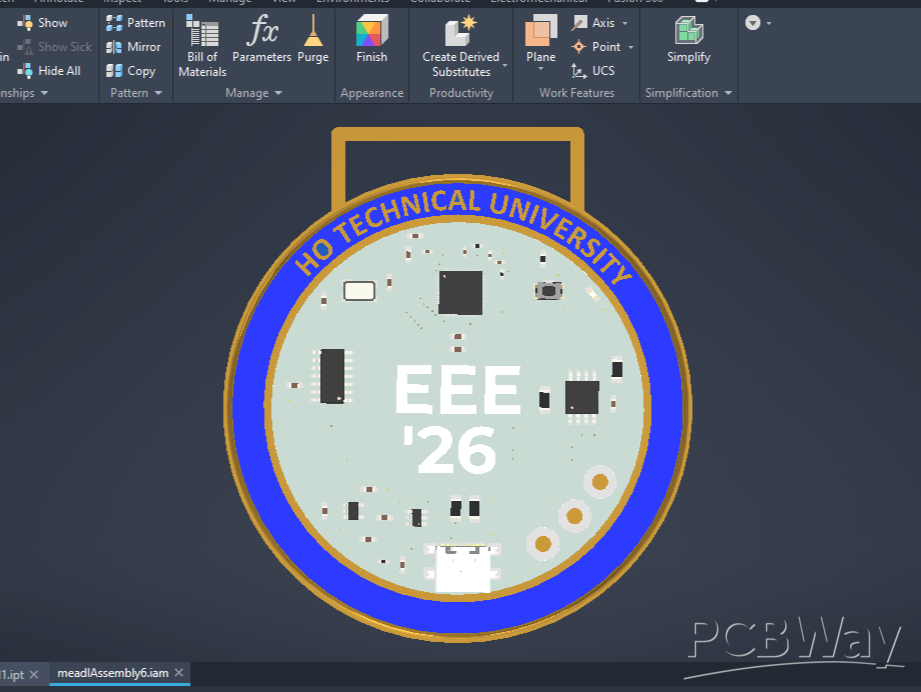
HTU EEE Medal

Signal Generation and Embedded Architecture
The signal-generation subsystem of the medal is built around the RP2040 microcontroller and a high-fidelity stereo audio signal generation architecture designed specifically for waveform-based identity encoding.
For each unit, student-specific information is first converted into a unique set of X-Y coordinate data representing the student's personalized vector signature. Rather than streaming these coordinates directly during operation, the coordinate data is processed offline into a synchronized stereo waveform and stored as digital audio data within the system memory.
During operation, the RP2040 retrieves the pre-generated waveform data from memory and streams it to the audio subsystem for playback. The stereo output consists of two synchronized analog channels, where the left channel represents the X-axis signal and the right channel represents the Y-axis signal.
This approach allows the analog reconstruction hardware to generate continuous voltage transitions between successive coordinate positions, producing significantly smoother vector graphics than direct point-by-point coordinate streaming. By utilizing an audio-oriented digital-to-analog conversion system optimized for continuous waveform reconstruction, the design achieves cleaner analog output, improved signal stability, and reduced electrical noise.
An additional advantage of this architecture is computational efficiency. Since the waveform is generated prior to deployment, the RP2040 is no longer required to calculate and stream thousands of coordinate values in real time. Instead, the processor performs efficient memory playback while the audio subsystem handles continuous analog waveform reconstruction, reducing processor workload and improving timing consistency.
The synchronized analog outputs are routed to three dedicated oscilloscope interface pads exposed on the PCB:
- X-axis signal output
- Y-axis signal output
- Ground reference
When connected to an oscilloscope configured in X-Y mode, the medal generates a unique vector-style waveform signature corresponding to the programmed student identity. Rather than displaying conventional time-domain waveforms, the oscilloscope reconstructs the encoded vector graphics directly from the synchronized analog signals, allowing each student's identity to be represented as a distinctive electrical signature.
The purpose of this architecture is not general-purpose readability, but the creation of a technically symbolic identity system embedded directly into hardware. The encoded information exists primarily as an electrical representation interpretable through laboratory instrumentation, reflecting the principles of embedded systems, analog signal processing, and electronics engineering.
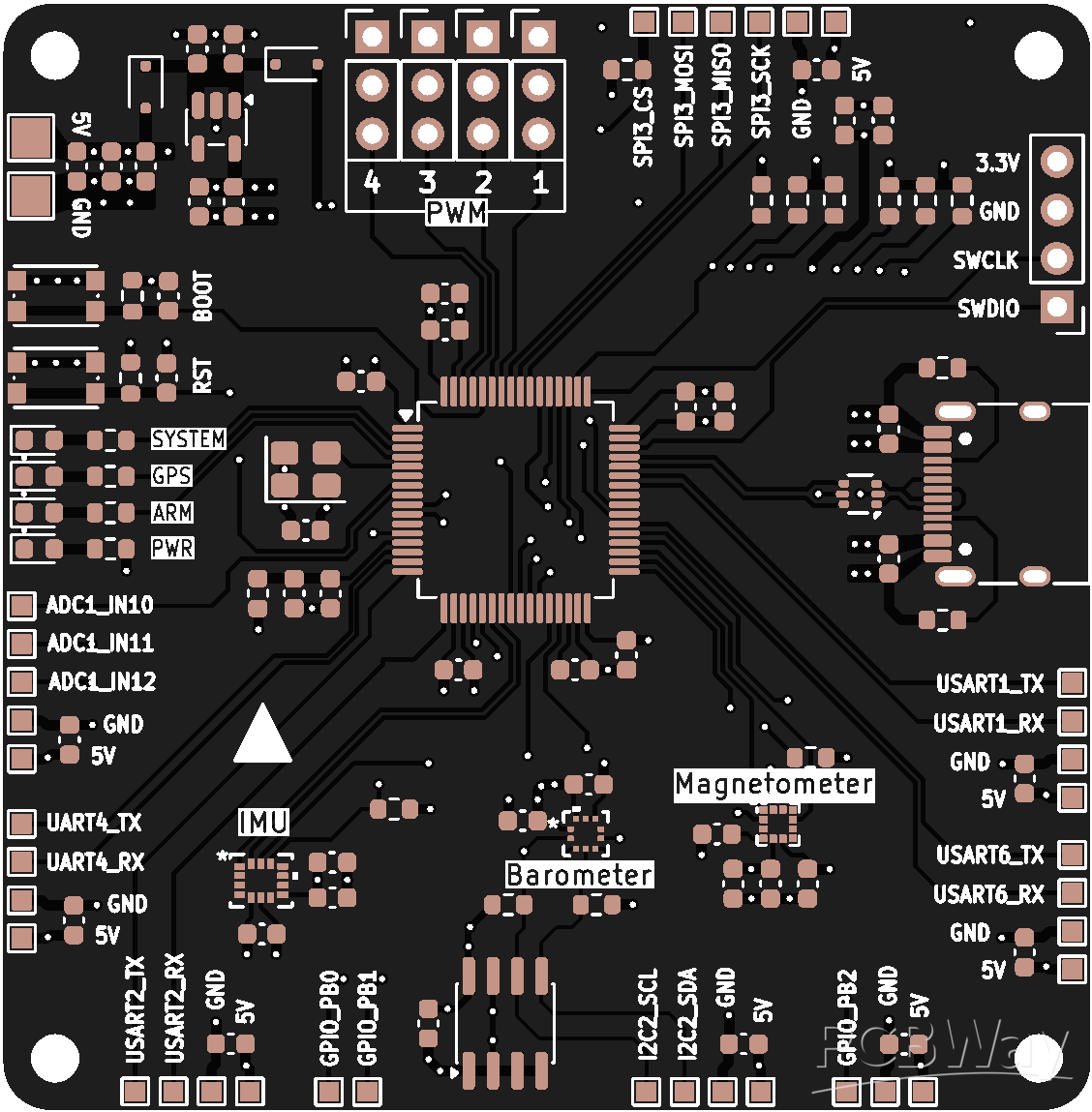
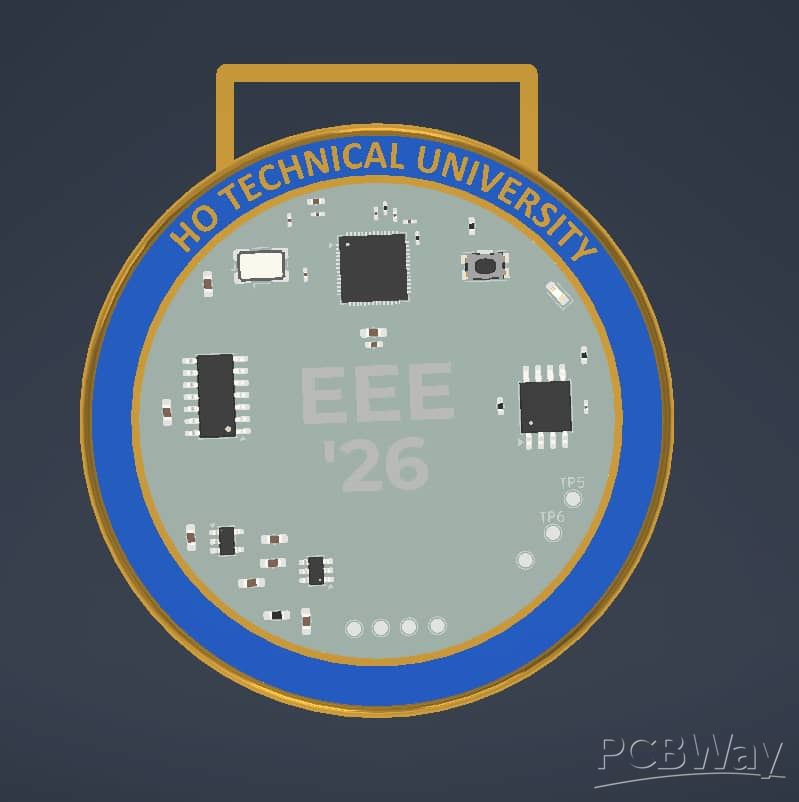
From a hardware perspective, the design integrates:
- RP2040 microcontroller subsystem
- External SPI flash memory
- Precision oscillator circuitry
- High-resolution stereo audio DAC subsystem
- Surface-mount passive support network
- Dedicated oscilloscope output pads
- External pogo-pin programming interface
The entire system was designed in KiCad with strong emphasis on compact wearable PCB layout, manufacturability, assembly constraints, signal integrity, analog routing, solder mask tolerances, and production scalability.
To preserve the physical aesthetics of the wearable board, onboard USB connectors were intentionally omitted from the final medal layout. Instead, firmware flashing and testing are performed through a dedicated pogo-pin programming interface exposing USB data and power connections through discrete test pads. This enables rapid programming during assembly while maintaining the clean visual appearance of the final wearable device.
The current hardware architecture represents the result of several prototype iterations. Early development included evaluating direct coordinate-streaming techniques using an ESP32-based prototype. The lessons learned during this phase—including improvements in waveform reconstruction, signal quality, and processing efficiency—guided the evolution toward the current stereo waveform architecture implemented in the final graduation medal.
The project is currently planned for a production run of approximately 50 units for graduating students at Ho Technical University, combining embedded systems engineering, PCB manufacturing, digital signal processing, analog waveform generation, and symbolic wearable technology into a single hardware platform.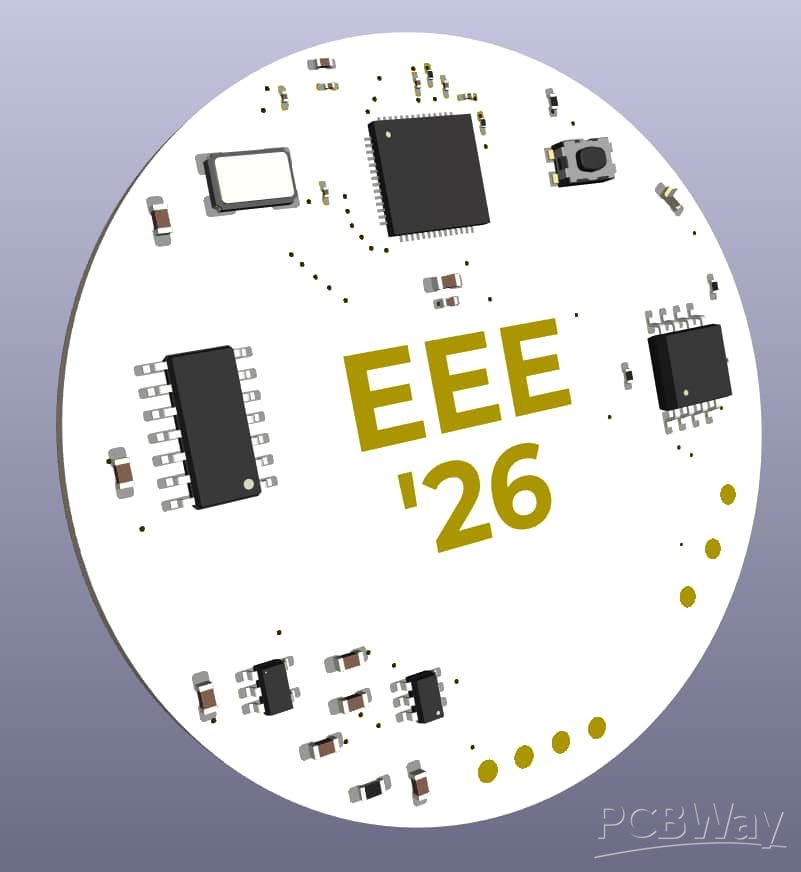
- Comments(0)
- Likes(1)