

DIY Tracked Crusher Turning Waste Concrete into Aggregate
WHO I AM
I'm Devan Lincoln, the maker behind Lincoln Built in New Zealand. I'm a qualified heavy fabricator and machinery designer. My career has taken me from a fabrication apprenticeship at 16 to installing robotic machinery in New Zealand, Australia and the USA, project management, and designing machinery for handling fruit products. I enjoy taking an idea through CAD, fabrication, assembly and testing.
Outside work, I restore older machines and share the process through Lincoln Built. My dad and uncle taught me to give things a go and understand how they come apart. That has stayed with me: I love bringing something back to life and finding a practical solution when the obvious one is beyond my budget.
THE PROJECT
This build began with the muddy ground outside my shed. Instead of simply buying gravel, I wanted to make a machine that could turn unwanted concrete into useful aggregate. The plan now includes accepting suitable unwanted concrete from people locally, creating an opportunity to recover material that might otherwise be discarded.
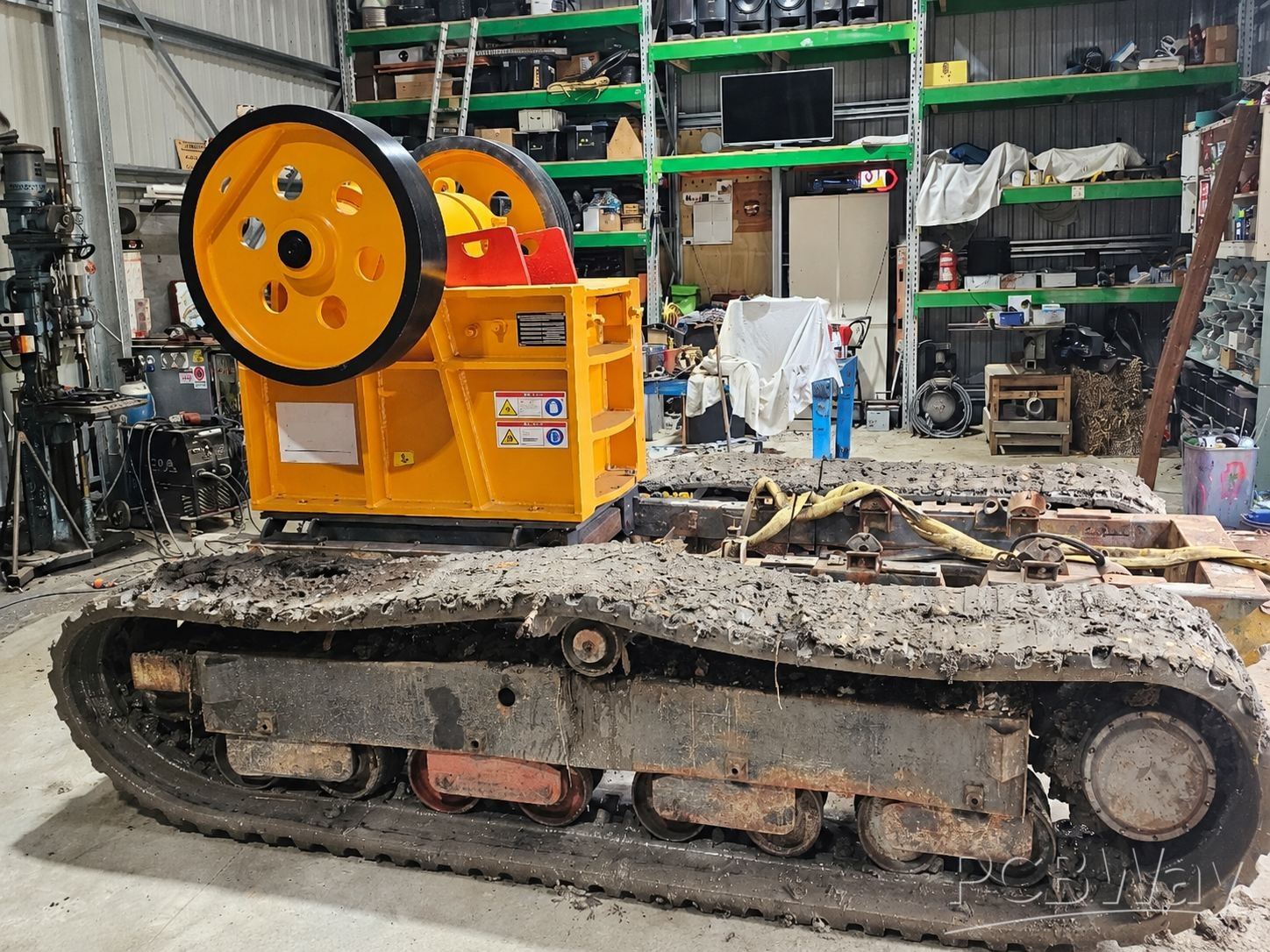
I purchased a PE 250x400 jaw crusher and a used Morooka tracked chassis. Using CAD, I designed a steel mounting structure and have mounted the crusher on the chassis. It is still a work in progress and is not yet operational.
The biggest setbacks have been a seized, water-damaged engine and worn rubber tracks. The remaining work includes selecting and installing a suitable engine, matching the hydraulic drive to the crusher, replacing the tracks, completing fabrication, and building a discharge conveyor. Controls, guarding, emergency stopping and dust management will be addressed before controlled concrete trials.
HOW IT WILL WORK
The intended system uses the tracked chassis to position the machine, a diesel engine and hydraulic drive to power the jaw crusher, and a conveyor to carry the crushed material away. Final component specifications and operating capacity will be confirmed during engineering development and testing. I plan to record the concrete processed and the aggregate produced so the recycling results are measurable.
CAD, SCANNING AND PROTOTYPING
My engineering approach combines practical fabrication with digital design. I've used a Creality 3D scanner and can see value in scanning existing components, checking layouts in CAD, and using printed prototypes, fit-check models, jigs and templates before committing to final parts. Any critical components will need suitable materials and engineering checks for their actual loads and environment.
WORDS TO PCBWAY
I'm sharing this build to explore whether PCBWay can support a suitable part of the project through its manufacturing services, particularly CNC machining or 3D printing of custom components and prototypes once their designs are ready. I understand this sponsorship route focuses on PCB-based projects. I do not currently have a custom PCB design for this crusher and am not claiming that one is ready for manufacture. If mechanical manufacturing support falls outside this programme, I would welcome consideration under an appropriate project collaboration route.
I will contribute my own design work, workshop facilities, fabrication labour and filming. Through Lincoln Built, I intend to document the development, installation and testing of any supported parts, credit the support clearly, and share the lessons with other makers.
The goal is to turn an ambitious shed project into a working concrete-recycling demonstration while showing that old machinery and unwanted materials can still have a useful future.
BUILD VIDEOS
https://youtube.com/@lincoln-built
Apply for sponsorship >>- Comments(0)
- Likes(0)