




https://www.instructables.com/DIY-Solar-Power-Meter/
Accurate measurement of solar irradiance is one of the most critical steps in solar photovoltaic system design, performance evaluation, and educational experimentation. Solar irradiance directly determines how much electrical power a solar panel can generate at a given location, tilt, and orientation. While professional irradiance meters and pyranometers provide high accuracy, they are often expensive, bulky, and inaccessible to students, hobbyists, and small-scale solar installers.
The DIY Solar Power Meter was developed to address this gap by offering a compact, low cost, and portable solution that can be used for quick field measurements, educational demonstrations, and experimental solar studies. The project focuses on practicality rather than laboratory-grade precision, providing sufficiently accurate readings for comparative analysis, panel alignment, and real-world learning.
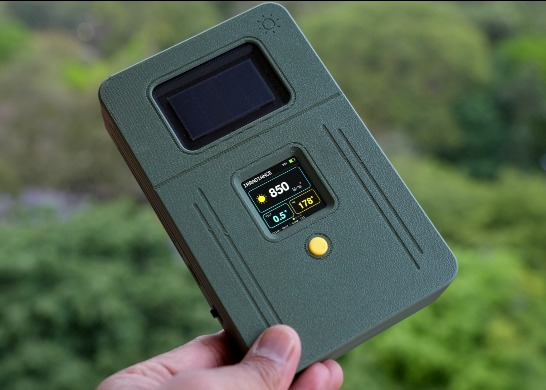
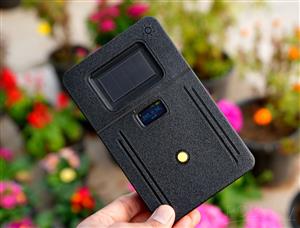
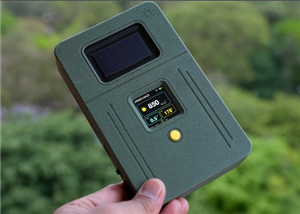
This device combines a calibrated solar cell for irradiance estimation with orientation sensing for tilt and azimuth, all integrated into a handheld, battery-powered unit with a real-time OLED display. The complete system is built using widely available components and programmed using the Arduino platform, making it easy to understand, modify, and reproduce.
System Overview:
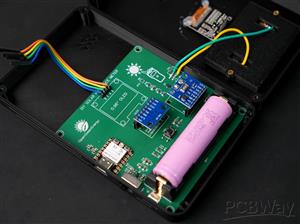
The DIY Solar Power Meter is built around an ESP32 microcontroller, which serves as the central processing unit for sensor data acquisition, calculations, and display control. The ESP32 was selected for its low power consumption, strong processing capability, and wide support within the Arduino ecosystem.
A precision current and voltage monitoring IC measures the electrical output of the solar cell. The short-circuit current is calculated from these measurements and converted into an irradiance value using a calibration constant derived from real outdoor testing.
To support proper solar panel alignment, the system also includes a combined accelerometer and magnetometer module. This sensor provides real-time tilt and azimuth readings, allowing the user to orient the device toward the sun or align solar panels accurately.
All data is displayed on a compact OLED screen, ensuring excellent readability even under bright outdoor conditions. A single button interface allows the user to navigate between display modes, keeping the user interaction simple and intuitive.
Solar Irradiance Measurement
This irradiance meter works on the short-circuit current (Isc) principle.
A silicon solar cell produces current proportional to the sunlight falling on it. At Standard Test Conditions (STC), 1000 W/m² of irradiance produces a known short-circuit current.
The irradiance is calculated using:
Irradiance (W/m²) = (Measured Isc / Rated Isc) × 1000
Because this method directly uses a solar cell, it naturally:
- Matches the solar spectrum
- Exhibits good cosine response
- Correlates well with actual PV performance
In this irradiance meter, a silicon solar cell is used as the primary sensing element to measure solar irradiance by exploiting the direct relationship between incident sunlight and the short-circuit current generated by the cell. Unlike optical light sensors, this method closely represents the behavior of actual photovoltaic modules and therefore provides physically meaningful measurements for solar applications.
The solar cell is operated under controlled short-circuit conditions using a MOSFET-based switching arrangement. The MOSFET is placed in the current path between the solar cell and the current sensing circuit, allowing the microcontroller to electrically connect or disconnect the solar cell as required. When the MOSFET is turned ON, the solar cell terminals are effectively shorted through the shunt resistor and the INA226 current measurement input, enabling accurate measurement of the short-circuit current. When the MOSFET is turned OFF, the solar cell is electrically isolated, preventing unnecessary current flow and reducing idle power consumption.
The generated short-circuit current flows through the INA226 current sensor and send to MCU for further processing. The electrical connection of the solar cell, MOSFET, and INA226 is shown in the schematic.
At Standard Test Conditions (STC), an irradiance of 1000 W/m² corresponds to the rated short-circuit current of the solar cell. By comparing the measured short-circuit current with the rated Isc value, the incident irradiance is computed in firmware.
https://www.instructables.com/DIY-Solar-Power-Meter/
Project images are for reference only. Actual production is based on the manufacturing files on the project page.
Please review the designer's notes (e.g., PCB thickness) and select the appropriate options.
PCBWay is not responsible
for issues caused by unsuitable parameter selections.
For more important ordering information, please refer to
Read More


Raspberry Pi 5 7 Inch Touch Screen IPS 1024x600 HD LCD HDMI-compatible Display for RPI 4B 3B+ OPI 5 AIDA64 PC Secondary Screen(Without Speaker)
BUY NOW

- Comments(0)
- Likes(1)
More by Open Green Energy
-
 DIY Smart Multipurpose Battery Tester
In recent years, the market has been flooded with low-cost batteries, many of which originate from u...
DIY Smart Multipurpose Battery Tester
In recent years, the market has been flooded with low-cost batteries, many of which originate from u...
-
 Solar Powered WiFi Weather Station V4.0
This is an affordable weather station for various applications like smart agriculture, smart city, s...
Solar Powered WiFi Weather Station V4.0
This is an affordable weather station for various applications like smart agriculture, smart city, s...
-
 DIY Solar Bottle Lamp V1.0
Solar Bottle Lamp is a solar-powered light that is constructed from waste plastic bottles. The desig...
DIY Solar Bottle Lamp V1.0
Solar Bottle Lamp is a solar-powered light that is constructed from waste plastic bottles. The desig...
-
 https://www.instructables.com/DIY-Solar-Power-Meter/
Accurate measurement of solar irradiance is one of the most critical steps in solar photovoltaic sys...
https://www.instructables.com/DIY-Solar-Power-Meter/
Accurate measurement of solar irradiance is one of the most critical steps in solar photovoltaic sys...
-
 DIY Solar Mason Jar Lamp
Making a solar mason Jar Lamp is not just a fun project; it’s also a fantastic way to learn about re...
DIY Solar Mason Jar Lamp
Making a solar mason Jar Lamp is not just a fun project; it’s also a fantastic way to learn about re...
-
 LED PCB for DIY Solar Bottle Lamp V2.0
DIY Solar Bottle Lamp V2.0 contains two PCBs, one is the Main PCB and the other is the LED PCB.This ...
LED PCB for DIY Solar Bottle Lamp V2.0
DIY Solar Bottle Lamp V2.0 contains two PCBs, one is the Main PCB and the other is the LED PCB.This ...
-
 DIY Portable Solar Generator V2
A DIY portable solar generator is an excellent project for individuals who want to harness the power...
DIY Portable Solar Generator V2
A DIY portable solar generator is an excellent project for individuals who want to harness the power...
-
 DIY 18650 Power Bank With Flashlight
BOM :Powerbank Module: https://s.click.aliexpress.com/e/_DBELYV918650 Battery: https://s.click.aliex...
DIY 18650 Power Bank With Flashlight
BOM :Powerbank Module: https://s.click.aliexpress.com/e/_DBELYV918650 Battery: https://s.click.aliex...
-
 Solar WiFi Weather Station V4 Receiver ( Rx )
Note:One more important thing, both the transmitter and receiver board must be in the same frequency...
Solar WiFi Weather Station V4 Receiver ( Rx )
Note:One more important thing, both the transmitter and receiver board must be in the same frequency...
-
 DIY Solar Panel Monitoring System – V2.0
As solar photovoltaic (PV) systems become increasingly popular as a clean and renewable source of en...
DIY Solar Panel Monitoring System – V2.0
As solar photovoltaic (PV) systems become increasingly popular as a clean and renewable source of en...
-
 Main PCB for DIY Solar Bottle Lamp V2.0
PCBWay Note: DIY Solar Bottle Lamp V2.0 contains two PCBs, one is the Main PCB and the other is the ...
Main PCB for DIY Solar Bottle Lamp V2.0
PCBWay Note: DIY Solar Bottle Lamp V2.0 contains two PCBs, one is the Main PCB and the other is the ...
-
 How to Make a 12V Lead Acid Battery Charger with CC & CV
I made a simple battery charger for charging my 12V/7Ah SLA battery commonly used inside the UPS for...
How to Make a 12V Lead Acid Battery Charger with CC & CV
I made a simple battery charger for charging my 12V/7Ah SLA battery commonly used inside the UPS for...
-
 TP4056 Based Solar Bottle Lamp
Solar Bottle Lamp is a solar-powered light that is constructed from waste plastic bottles. The desig...
TP4056 Based Solar Bottle Lamp
Solar Bottle Lamp is a solar-powered light that is constructed from waste plastic bottles. The desig...
-
 DIY Mini UPS for WiFi Router V5.0
The pandemic COVID-19 outbreak forced companies to continue with work-from-home policy to maintain s...
DIY Mini UPS for WiFi Router V5.0
The pandemic COVID-19 outbreak forced companies to continue with work-from-home policy to maintain s...
-
 ESP8266 Weather Widget V2.0
Welcome to my new Weather Widget Project. Earlier I have posted an article on the weather widget, th...
ESP8266 Weather Widget V2.0
Welcome to my new Weather Widget Project. Earlier I have posted an article on the weather widget, th...
-
 DIY Non Contact IR Thermometer V1.0
Currently, we are chasing an invisible monster named Corona Virus ( COVID-19 ) and we are going thro...
DIY Non Contact IR Thermometer V1.0
Currently, we are chasing an invisible monster named Corona Virus ( COVID-19 ) and we are going thro...
-
 Solar Powered WiFi Weather Station V3.0
Note: now the version is 3.2 This Weather Station is such compact weather station that consists of s...
Solar Powered WiFi Weather Station V3.0
Note: now the version is 3.2 This Weather Station is such compact weather station that consists of s...
-
 DIY Emergency Light
Features:● Long Battery Backup ( 6V / 4.5Ah )● Light can bе соnnесtеd tо the power source аll t?mе.●...
DIY Emergency Light
Features:● Long Battery Backup ( 6V / 4.5Ah )● Light can bе соnnесtеd tо the power source аll t?mе.●...
-
SmallOLED - Live PC Stats, Animated Clocks & Audio Visualizer
854 0 3 -
"Talking Multimeter": Arduino-Based Speech Add-on for Multimeters with SCPI Protocol
499 0 1 -
Programmable Mist Maker - XIAO / QT PY Extension
2969 2 3 -
RadioHAT - Raspberry Pi radio development platform
2514 0 4 -
-
-
-
ARPS-2 – Arduino-Compatible Robot Project Shield for Arduino UNO
4589 0 6