|
|
Si4825 Radio chip |
x 1 | |
|
|
1x3 Switch |
x 1 | |
|
|
Ferrite core coil |
x 1 | |
|
|
Microammeter |
x 1 | |
|
|
potentiometer 2x100k |
x 1 | |
|
|
potentiometer 10k |
x 1 | |
|
|
Audio amplifier board PAM8403 |
x 1 | |
|
|
Speaker: 0.25W, 8 ohms |
x 1 | |
|
|
resistors and capacitors |
x 1 | |
|
|
32.768 kHz Crystal |
x 1 |

|
Soldering iron (generic) |
|

|
Solder Wire, Lead Free |
DIY Si4825 A10 multiband Radio (MW,SW,FM)
Thanks to the production of specialized radio chips, nowadays it is possible to make a quality multiband receiver by ourselves in a very simple way. In several of my previous videos, I described ways to make such radio receivers using microcontrollers. The receiver described in this project is very simple and consists of only one specialized chip, no programming is required, no tuning is required and the receiver works great immediately after connecting the components.
The receiver is made according to the demo schematic diagram found in the manufactirer datasheet. The heart of the receiver is the Si4825 A10 IC, which is extremely cheap, and we can get a five-piece lot for a total price of less than two dollars.

Despite the low price, it has excellent features and completely covers the three areas of MW, SW, and FM bands.
The device is relatively simple to make and consists of several components.
- Si4825 A10 IC
- a ferrite core coil removed from a defective portable MW radio (optional)
- A microammeter that is actually part of an old analog multimeter
- Stereo potentiometer 2x100k
- Potentiometer 10K
- Small Audio amplifier board PAM8403
- Band switch (2x3 positions)
- several resistors and capacitors
- and a small speaker
On the back of the receiver there are BNC connectors for AM and FM antenna. A crystal with a frequency of 32,768 Megahertz is mounted on the chip itself.

This project is sponsored by PCBWay. This year, PCBWay organizes the Seventh Project Design Contest where, in addition to Electronic and Mechanical Project, also has been added a new category: STM32 Project. For the best selected projects are provided rich prizes in cash, coupons and special gifts. Submit your project for participation in this Contest from 2nd, Sep, 2024 to 19th, Jan, 2025. For more details and instructions visit the given page. Let PCBway always be your first choice.

Band selection is done with a switch that actually forms a voltage divider, and the given resistances cover the following frequency ranges:

AM from 510 to 1710 KHz
SW from 5.9 MHz to 18 MHz
and FM from 87 to 108 MHz
The frequency is selected using a two potentiometers in a way that changes the voltage between the Tune1 and Tune2 pins.

100k potentiometer is for coarse tuning and 10k for fine tuning. The other channel of the 100K stereo potentiometer is connected through a series-connected trimmer potentiometer of 10K to the microammeter that serves as an analog radio scale. The method of connection is presented in the diagram, whereby we adjust the trimmer potentiometer to enable a full deflection of the arrow when the tuning potentiometer is in the extreme right position.

I still have to mark the scale with appropriate bands and frequencies, but even this way there is enough visibility. The audio output of the Si4825 is connected to the input of a small audio amplifier to which a suitable speaker is connected. On both sides of the instrument I placed warm white LEDs for better readability of the scale. It is important to mention that 5V is connected to the input of the radio, and the Si4825 chip should be powered with a maximum of 3.3V.

For this purpose I used the simplest way to reduce the voltage using three series connected silicon diodes, as shown in the picture.
And now let's see how the device works in real conditions: First we need to connect a suitable antenna, and then immediately after switching on, the scale takes the given position which depends on the resistance of the scanning potentiometer. Analogous to the rotation of the potentiometer, the needle of the instrument is also moved. Then we select the desired band, set the audio volume, and we can start dialing stations. I should also mention that the ideal option for tuning the stations would be a multi-turn potentiometer.

I started the project with a multiturn potentiometer, but later found that it was defective, so I looked for another solution with two potentiometers for coarse and fine tunning.
And finally, a short conclusion. I started making radio receivers in the previous century with transistors, when making and especially setting up a quality radio receiver required very expensive equipment and vast knowledge in the field of electronics and radio technology. Nowadays, with the development of specialized chips, the self-production of quality radio receivers is extremely simplified, there is no need for any adjustments, and the total price is also very low. However, I personally still prefer making radio receivers with discrete elements, and even vacuum tubes, where we can learn a lot from this area, and the satisfaction when setting up and making such a receiver is greater, and a well-made discrete receiver often has better selectivity and sensitivity than that with specialized ICs. The radio is installed in a suitable box made of PVC material with a thickness of 3 and 5 mm and covered with colored self-adhesive wallpaper.


DIY Si4825 A10 multiband Radio (MW,SW,FM)








Raspberry Pi 5 7 Inch Touch Screen IPS 1024x600 HD LCD HDMI-compatible Display for RPI 4B 3B+ OPI 5 AIDA64 PC Secondary Screen(Without Speaker)
BUY NOW


- Comments(0)
- Likes(1)
More by Mirko Pavleski
-
 Arduino 3D Printed self Balancing Cube
Self-balancing devices are electronic devices that use sensors and motors to keep themselves balanc...
Arduino 3D Printed self Balancing Cube
Self-balancing devices are electronic devices that use sensors and motors to keep themselves balanc...
-
 Build a Real 5-Band Parametric EQ with ESP32 + WM8960 - Stereo DSP Audio Processor
Audio equalizer (EQ) is an electronic device that allows control over the strength of different fre...
Build a Real 5-Band Parametric EQ with ESP32 + WM8960 - Stereo DSP Audio Processor
Audio equalizer (EQ) is an electronic device that allows control over the strength of different fre...
-
 Bass Reflex vs Sealed vs Horn – Same 2 inch Speaker Test
In one of the previous videos I presented the making of a miniature Horn type speaker box with a 2 ...
Bass Reflex vs Sealed vs Horn – Same 2 inch Speaker Test
In one of the previous videos I presented the making of a miniature Horn type speaker box with a 2 ...
-
 Building a Mini Fostex Horn Speaker with a 2-Inch Full-Range Driver
A back-loaded horn speaker is a loudspeaker design that channels the rear sound wave of a driver th...
Building a Mini Fostex Horn Speaker with a 2-Inch Full-Range Driver
A back-loaded horn speaker is a loudspeaker design that channels the rear sound wave of a driver th...
-
 ESP32 Moon Lamp That Shows the Real Moon Phase on Crowpanel Round Dispaly
Recently on the Hackaday portal I came across a very interesting project called Moon Display by aut...
ESP32 Moon Lamp That Shows the Real Moon Phase on Crowpanel Round Dispaly
Recently on the Hackaday portal I came across a very interesting project called Moon Display by aut...
-
 40-Year-Old DIY Power Amplifiers – Do They Still Work - 500W MOSFET & Transistor Amps
This time I want to describe my two DIY super powerful audio amplifiers that I made about 40 years ...
40-Year-Old DIY Power Amplifiers – Do They Still Work - 500W MOSFET & Transistor Amps
This time I want to describe my two DIY super powerful audio amplifiers that I made about 40 years ...
-
 Wi-Fi HaLow Explained! Long-Range Camera Test up to 300m (ESP32 + ThinkNode G4 from ELECROW)
I recently needed to install a security camera at a relatively large distance from my home, more pre...
Wi-Fi HaLow Explained! Long-Range Camera Test up to 300m (ESP32 + ThinkNode G4 from ELECROW)
I recently needed to install a security camera at a relatively large distance from my home, more pre...
-
 Simple Object Recognition with the UNIHIKER K10 – No TensorFlow, No Internet, No Cloud AI
Object recognition has become one of the most popular applications of artificial intelligence and em...
Simple Object Recognition with the UNIHIKER K10 – No TensorFlow, No Internet, No Cloud AI
Object recognition has become one of the most popular applications of artificial intelligence and em...
-
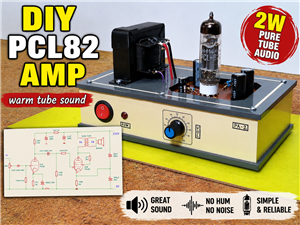 DIY PCL82 Tube Amplifier, Single-Ended Amp with Amazing Sound
The idea for this project came from a local electronics magazine called EMITER, issue 12/13 from 20...
DIY PCL82 Tube Amplifier, Single-Ended Amp with Amazing Sound
The idea for this project came from a local electronics magazine called EMITER, issue 12/13 from 20...
-
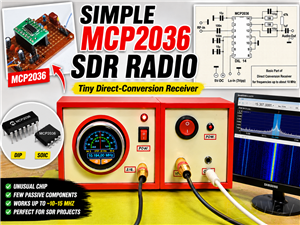 Simple MCP2036 SDR Radio - The Most Unusual Software Defined Radio
SDR (Software Defined Radio) is a radio communication system where many of the key electronic compo...
Simple MCP2036 SDR Radio - The Most Unusual Software Defined Radio
SDR (Software Defined Radio) is a radio communication system where many of the key electronic compo...
-
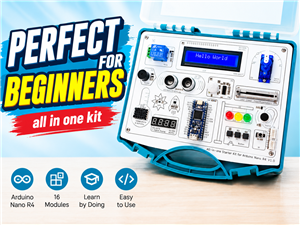 Elecrow All-in-One Arduino Starter Kit Review - 20 Projects & 16 Modules
This time I will describe a simple and practical way to enter the world of microcontrollers, specif...
Elecrow All-in-One Arduino Starter Kit Review - 20 Projects & 16 Modules
This time I will describe a simple and practical way to enter the world of microcontrollers, specif...
-
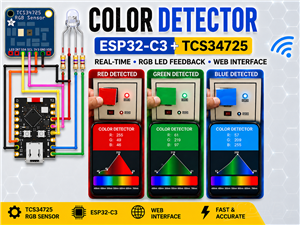 ESP32-C3 Color Detector with TCS34725, Real-Time RGB Detection & Web Interface
Color detection is a fundamental task in many embedded systems – from industrial sorting machines t...
ESP32-C3 Color Detector with TCS34725, Real-Time RGB Detection & Web Interface
Color detection is a fundamental task in many embedded systems – from industrial sorting machines t...
-
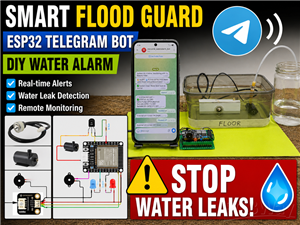 DIY ESP32 Telegram Flood Protection System - Smart Home Automation
Recently I had an unpleasant experience in my home, specifically my ground floor was flooded as a r...
DIY ESP32 Telegram Flood Protection System - Smart Home Automation
Recently I had an unpleasant experience in my home, specifically my ground floor was flooded as a r...
-
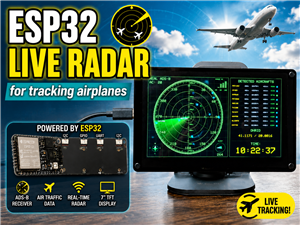 Real-Time Air Traffic Radar using ESP32 + ADS-B Data
ADS-B, which stands for Automatic Dependent Surveillance-Broadcast, is the modern standard for trac...
Real-Time Air Traffic Radar using ESP32 + ADS-B Data
ADS-B, which stands for Automatic Dependent Surveillance-Broadcast, is the modern standard for trac...
-
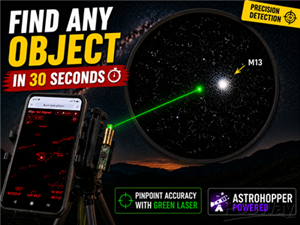 DIY Green Laser Night Sky Object Finder - Find Stars & Galaxies Instantly with great accuracy
As an amateur astronomer, especially at the beginning, the most difficult part of observing the nig...
DIY Green Laser Night Sky Object Finder - Find Stars & Galaxies Instantly with great accuracy
As an amateur astronomer, especially at the beginning, the most difficult part of observing the nig...
-
 DIY Avionics Simulator with ESP32 - Artificial Horizon, Compass & Altimeter
The inspiration for this project comes from classical aircraft cockpit instruments used for navigat...
DIY Avionics Simulator with ESP32 - Artificial Horizon, Compass & Altimeter
The inspiration for this project comes from classical aircraft cockpit instruments used for navigat...
-
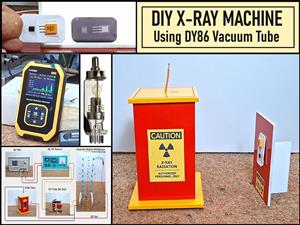 DIY Miniature X-Ray Machine using a TV Vacuum Tube DY86
An X-ray machine (or radiograph) is a quick, painless medical test that produces images of the struc...
DIY Miniature X-Ray Machine using a TV Vacuum Tube DY86
An X-ray machine (or radiograph) is a quick, painless medical test that produces images of the struc...
-
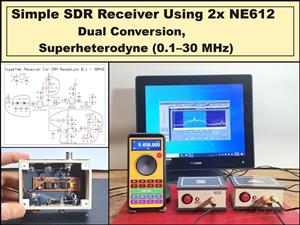 Simple SDR Receiver Using 2x NE612 - Dual Conversion, Superheterodyne (0.1–30 MHz)
SDR (Software Defined Radio) is a radio system in which most of the functions of a classic radio (f...
Simple SDR Receiver Using 2x NE612 - Dual Conversion, Superheterodyne (0.1–30 MHz)
SDR (Software Defined Radio) is a radio system in which most of the functions of a classic radio (f...
-
SmallOLED - Live PC Stats, Animated Clocks & Audio Visualizer
781 0 3 -
"Talking Multimeter": Arduino-Based Speech Add-on for Multimeters with SCPI Protocol
443 0 1 -
Programmable Mist Maker - XIAO / QT PY Extension
2910 2 3 -
RadioHAT - Raspberry Pi radio development platform
2475 0 4 -
-
-
-
ARPS-2 – Arduino-Compatible Robot Project Shield for Arduino UNO
4558 0 6