With the advantages of controllable cost, reliable strength, and efficient manufacturing, sheet metal enclosures are widely used in electronics, industrial control, telecommunications, medical equipment, and automotive devices. Excellent sheet metal box design is not simply about building a metal housing, but about achieving the optimal balance between protection, heat dissipation, assembly, appearance, and cost.
This sheet metal box design guide combines industry-standard engineering practices and manufacturing experience to provide a practical workflow covering requirement definition, material selection, structural design, DFM optimization, PCB integration, assembly, and surface finishing. The goal is to help engineering teams reduce redesign risks, improve mass-production consistency, and optimize manufacturing costs.
Define Design Requirements Before Starting
Before starting the design, the function, environment, and usage method must be clearly defined to avoid repeated modifications later.
- Dimensions and Internal Layout: Determine PCB/module size, mounting positions, cable routing space, connector cutout locations, and reserve assembly tolerance.
- Protection and Environment: Indoor/outdoor use, waterproof and dustproof rating (IP/NEMA), temperature and humidity, vibration, shock, and corrosion environment.
- Operation and Maintenance: Whether doors, removable panels, viewing windows, or quick-release structures are required.
- Strength and Load: Whether load-bearing, vehicle-mounted movement, anti-deformation, or impact resistance is needed.
- Thermal and EMC Requirements: Natural convection/forced air cooling, thermal paths, electromagnetic shielding, and grounding requirements.
- Appearance and Cost: Surface texture, color, production quantity, and budget range.
List all requirements clearly, as all subsequent design decisions should be based on them. Many redesign issues are not caused by manufacturing problems, but by undefined requirements in the early stage.
Choosing the Right Material for Sheet Metal Enclosures
Materials directly determine strength, weight, corrosion resistance, cost, and manufacturability. Common sheet metal materials are compared below:
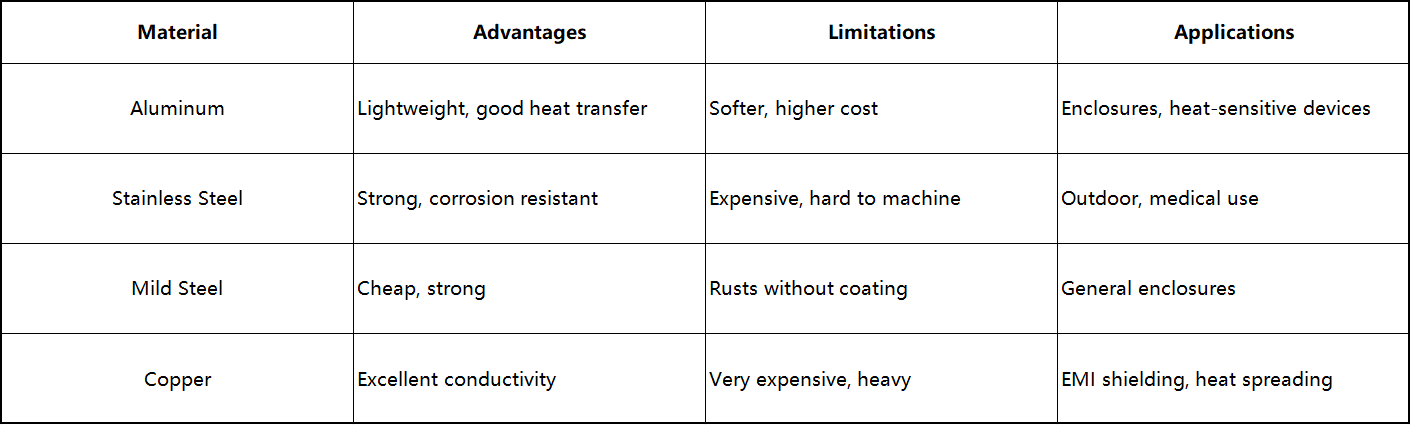
Selection guidelines:
- Indoor equipment: cold rolled steel + powder coating
- Outdoor environments: prioritize aluminum or stainless steel
- Thermal-focused applications: aluminum performs better
- Cost-sensitive projects: prioritize cold rolled steel
In actual projects, material selection affects not only performance, but also bending, welding, coating, and assembly difficulty.
Sheet Metal Thickness and Structural Reinforcement
Material thickness directly affects strength, weight, and cost. Avoid blindly increasing thickness.
Common sheet thickness:
- Small enclosures: 0.8–1.5mm
- Medium enclosures: 1.5–2.5mm
- Racks/load-bearing structures: 2.5–3.0mm
Low-cost ways to improve rigidity:
- Add bent edges/flanges to form a closed-frame structure
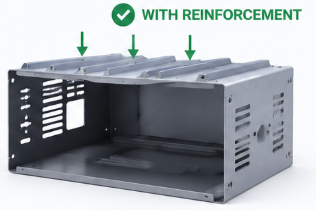
- Add reinforcing ribs, embosses, or grooves to significantly improve stiffness without increasing weight
- Use integrated bending instead of welded corners to reduce weld points and gaps
Design principle: Thin material with reinforcement, thick material with fewer parts, and integrated bending is better than excessive welding. In real projects, structural optimization is usually more effective than simply increasing sheet thickness, while also controlling cost and weight.
Bending Rules and Fabrication Considerations
Bending is one of the core processes in sheet metal fabrication, and the design should match manufacturing capability.
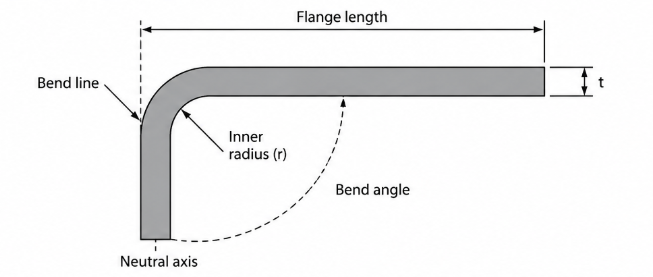
- Bend Radius: Recommended inner radius: r ≥ 1.0t (t = sheet thickness). Aluminum parts usually require a larger bend radius. A radius that is too small may cause cracking, while an excessively large radius affects appearance and dimensional accuracy.
- Distance Between Holes and Bend Lines: The distance from the hole edge to the bend line should be at least 2–3 times the sheet thickness to prevent deformation. Slots, countersinks, and PEM hardware should stay away from bending areas.
- Bending Direction: Keep bending directions consistent to reduce setup time and improve efficiency and consistency. Complex parts should aim for fewer bends, larger openings, and easier forming.
Tolerances and Cutout Design
Improper tolerances can cause assembly failure, large gaps, and poor appearance.
General tolerances:
- Laser cutting: ±0.1–0.3mm
- Bending angle: ±0.5°
Cutout design considerations:
- Use symmetrical tolerance marking for connectors and screw holes to simplify manufacturing compensation
- Ventilation holes and louvers should balance airflow and protection while avoiding sharp edges and burrs
- Cable routing holes should include flanges or grommets to prevent cable damage
For mass production projects, coating thickness, accumulated assembly tolerance, and thermal deformation should also be considered.
Enclosure Assembly and Fastening Design
Prefer connection methods with fewer parts, fast assembly, and repeated disassembly capability.
- Welding: Good sealing and high strength, suitable for waterproof enclosures and load-bearing structures, but surface grinding is usually required.
- Rivets/Blind Rivets: Low cost and single-side installation, suitable for fast batch assembly.
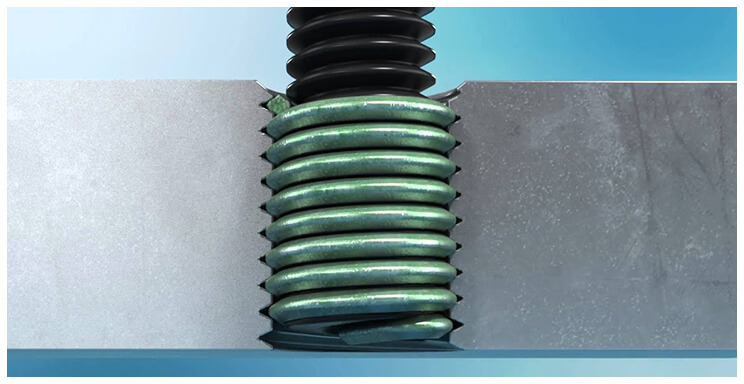
- PEM Nuts/Studs: Provide pre-installed internal threads, easy maintenance, and repeated assembly without thread wear.
- Screws + Snap Fits: Suitable for equipment requiring frequent opening and maintenance.
Design recommendations: Use positioning holes and guiding structures to reduce assembly difficulty, and unify screw specifications on the same panel to reduce tool variety.
Thermal Design and Sealing Protection
- Thermal Management: Aluminum panels can be used for passive heat dissipation. High-power devices should include louvers, ventilation holes, or fan mounts, while reserving internal airflow paths.
- Sealing: Outdoor/waterproof equipment should use silicone gaskets and compression sealing structures. Step-shaped joints help reduce gaps.
- EMC Shielding: Use continuous conductive contact surfaces, grounding studs, and shielding mesh to ensure electromagnetic compatibility.
Surface Finishing for Metal Enclosures
Surface finishing determines durability and appearance, and should match the selected material.
- Aluminum: Anodizing (wear and corrosion resistance), chromate conversion coating (conductive anti-corrosion), or powder coating.
- Stainless Steel: Brushed or polished finish to maintain natural appearance and corrosion resistance.
Recommended process flow: Forming → Deburring → Surface Finishing → Final Assembly
DFM Guidelines for Sheet Metal Fabrication
DFM is the key stage connecting design drawings and sheet metal production. The main goals are to simplify manufacturing processes, reduce scrap rates, lower production costs, and improve production consistency.
Avoid Small Irregular Holes
- Very small irregular holes reduce laser cutting efficiency and increase burr risk.
- Recommended hole diameter ≥ sheet thickness, and slot width should not be smaller than 1.0t.
Control Welding Deformation
Long weld seams can easily cause thermal deformation, especially for stainless steel and thin aluminum sheets.
Methods to reduce deformation risk include:
- Intermittent welding
- Symmetrical welding
- Fixtures and jigs
- Replacing welding with bending structures
Reserve Space for Coating Thickness
- Powder coating usually adds 60–120μm thickness.
- Clearance should be reserved for clips, rails, and mounting holes to prevent assembly interference after coating.
Reduce Non-Standard Fasteners
Unifying screw specifications and lengths helps:
Reduce BOM cost
Improve assembly efficiency
Lower maintenance complexity
Reinforce Large Panels
Large flat panels are prone to:
- Oil canning
- Resonance
- Transportation deformation
Recommended reinforcement methods:
- Reinforcing ribs
- Flanges
- Embossed structures
Do not rely solely on increasing sheet thickness to solve structural problems, as it usually increases cost with limited improvement.
PCB Integration in Sheet Metal Enclosures
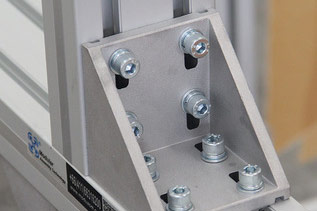
Sheet metal enclosures provide support, protection, heat dissipation, and electromagnetic shielding for PCBs. Poor coordination between enclosure and PCB design can lead to PCB installation failure, connector misalignment, poor thermal performance, short-circuit interference, and EMC failure. PCB and enclosure design should be developed simultaneously and adapted to each other.
Lock Connector Positions Early
PCB connectors and enclosure cutouts must be designed together. Late-stage connector changes often result in:
- PCB rerouting
- Enclosure rework
- Assembly interference
Consider Thermal Paths
High-power components should be placed near to avoid heat accumulation in enclosed corners.:
- Ventilation openings
- Metal contact surfaces
- Airflow channels
EMC Grounding Design
- PCB GND and enclosure grounding should establish a low-impedance connection.
- Conductive grounding areas should be reserved in coated regions.
Prototype Testing and Production Validation
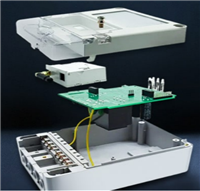
- Build 1–2 prototype units to verify assembly, cutouts, structural strength, and thermal performance.
- Perform environmental and reliability tests such as drop testing, vibration testing, waterproof testing, and temperature rise testing.
- Optimize the design before investing in production tooling and fixtures to reduce manufacturing risks.
Good sheet metal box design is about balancing strength, manufacturability, thermal performance, protection, appearance, and cost. From material selection and bending design to DFM optimization and PCB integration, every design decision directly affects product reliability and production efficiency.
For projects requiring coordinated PCB layout, enclosure structure, and manufacturing support, PCBWay design service provides professional PCB design, mechanical design, and sheet metal enclosure fabrication services to help accelerate development from prototype to mass production.