
|
KiCad 9.0 |
Z-Axis Step Generator
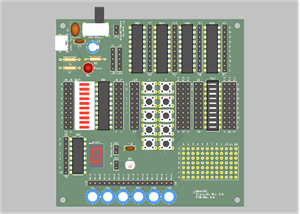
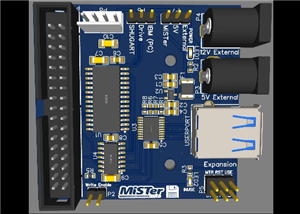
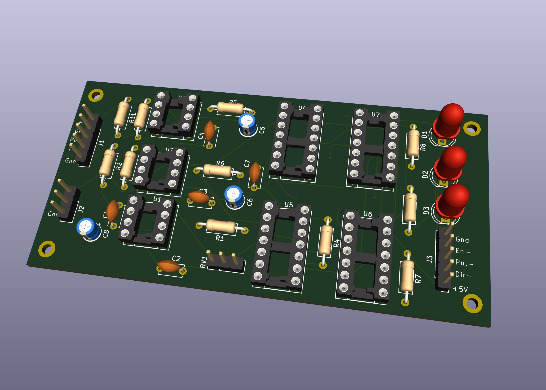
This design generates step and direction pulses for the Z-axis driver of a CNC machine based on UP and DOWN request signals from a Torch Height Controller (THC).
The circuit generates step and direction pulses and merges them together with the existing PUL and DIR signals produced by a PC parallel port (aka Breakout Card), such that both sources always have the ability to control the Z-axis. The following sequence is assumed for interactions among the PC running Mach3 software, the THC and the StepGenerator:
1. Mach3, via the parallel port, homes then places the torch in the x-y plane at the start of the cut.
2. Mach3 enables the torch and lowers it to “touch off” on the workpiece, then raises it to a default cutting height.
3. After touch off, Mach3 drives the torch x-y axes to complete the cut but has little or no interaction with the z-axis.
4. During the cut, the THC monitors the voltage at the torch to keep it at the value associated with the best cut quality. When the voltage is outside of the optimal range, the THC closes contacts between its COMMON terminal and either UP or DOWN terminal. It is assumed that it never closes both contacts at the same time.
5. At the end of the cut, Mach3 homes or otherwise stows the torch, which includes operating on the z-axis. It is assumed that Mach3 has disabled the torch, and so the THC will no longer make requests.
It is desirable that the THC be able to move the torch with speed and range similar to that of Mach3. Mach3 setup for the z-axis is assumed to be
· 32111 steps per inch of z-axis travel
· 35 in/min maximum speed
· 7 in/sec/sec acceleration
The step frequency associated with the above is determined by
(32111 step/in) * (35 in/min) / (60 s/min) = 18731 step/sec
Typically, stepper motor drivers require a setup time between the DIR signal and the beginning of PUL pulses. Similarly, a hold time is required after the last pulse before DIR is removed. While a specific requirement for this machine is unknown, 1 us for both setup and hold is common, and this design provides >39 us in this respect.
The design does not implement acceleration but does provide for operator-settable speed to be used in response to THC requests. This setting is made via a potentiometer accessible to the operator.
It is assumed that assertion of the UP request causes the DIR- output to go low, while a DOWN request leads to DIR- remaining high.
Z-Axis Step Generator
Project images are for reference only. Actual production is based on the manufacturing files on the project page.
Please review the designer's notes (e.g., PCB thickness) and select the appropriate options.
PCBWay is not responsible
for issues caused by unsuitable parameter selections.
For more important ordering information, please refer to
Read More


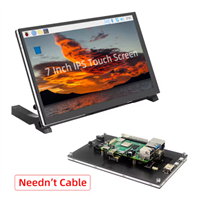
Raspberry Pi 5 7 Inch Touch Screen IPS 1024x600 HD LCD HDMI-compatible Display for RPI 4B 3B+ OPI 5 AIDA64 PC Secondary Screen(Without Speaker)
BUY NOW

- Comments(0)
- Likes(0)
More by Justin Wintour
-
Programmable Mist Maker - XIAO / QT PY Extension
2212 2 2 -
RadioHAT - Raspberry Pi radio development platform
1900 0 4 -
-
-
-
ARPS-2 – Arduino-Compatible Robot Project Shield for Arduino UNO
4082 0 6 -
A Compact Charging Breakout Board For Waveshare ESP32-C3
4843 3 8 -
AI-driven LoRa & LLM-enabled Kiosk & Food Delivery System
5639 2 2 -