


|
|
ComputeModule5-CM5Hirose
|
x 1 | |
|
|
STM32N657L0H3Q |
x 1 | |
|
|
Pololu_Breakout_Board_A4998Pololu
|
x 6 | |
|
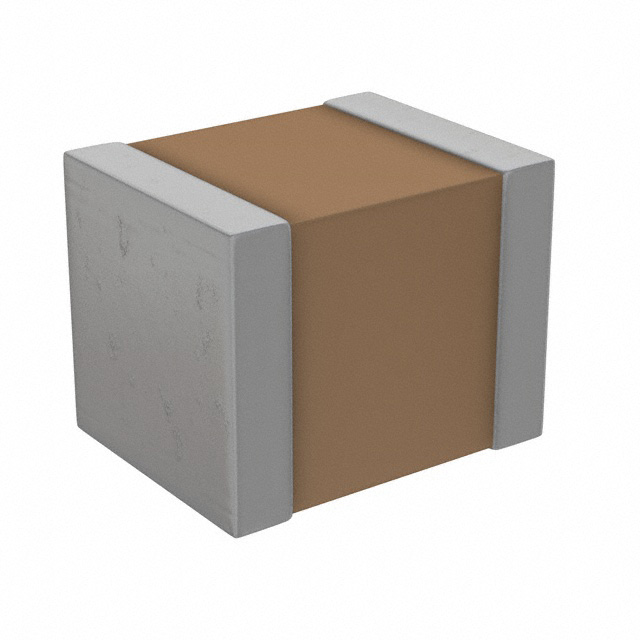
CGA6M2X7R2A105M200AATDK
|
x 1 | |
|
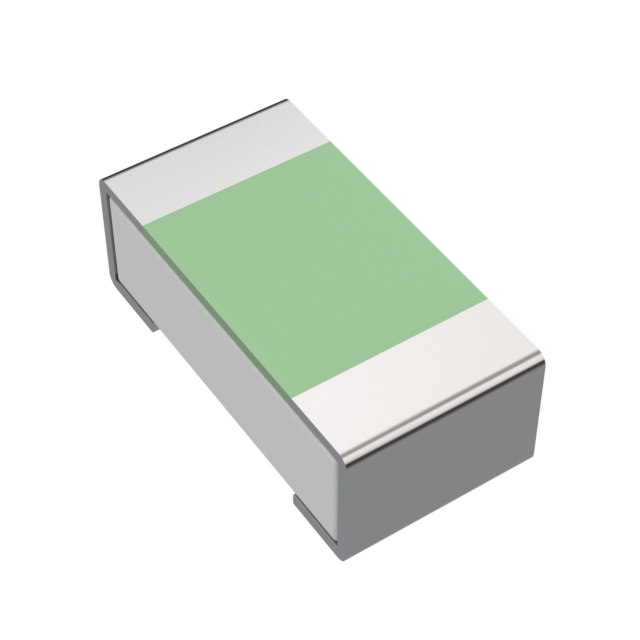
TNPW0402835RBEEDVishay Dale
|
x 1 | |
|
|
CRJ061-L1-THSame Sky
|
x 1 |

|
Visual Studio CodeMicrosofe
|
|

|
KiCad 9.0 |
|

|
STMicroelectronics ST Visual develop IDE for developing ST7 and STM8 applications |
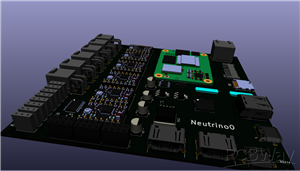
Nutrino0 - Robotics Dev Board
Nutrino0 – Ultimate Edge-AI & High-Density Robotics Development Platform
Executive Summary
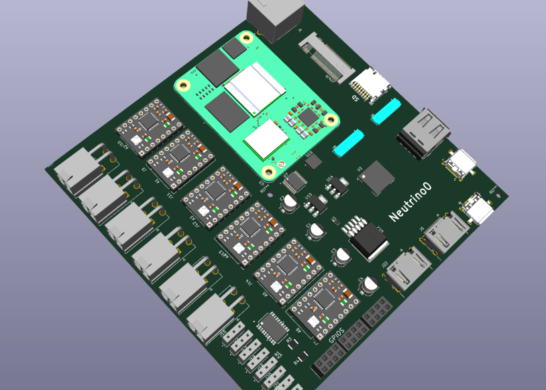
Nutrino0 represents a significant advancement in integrated robotics hardware design. This ultra-dense, dual-engine development board functions as a complete, industrial-grade “nervous system” for next-generation autonomous machines. By seamlessly merging high-performance edge AI computing with deterministic real-time control, multi-axis actuation, and comprehensive environmental sensing onto a single, meticulously engineered PCB, Nutrino0 delivers unprecedented levels of integration, reliability, and performance in a compact form factor.
Designed from the ground up using professional KiCad workflows, the platform eliminates the traditional fragmentation of robotics electronics — removing unreliable interconnects, signal degradation, excessive EMI, and bulky enclosures that have long plagued custom robot development. Nutrino0 empowers engineers, researchers, and developers to build more capable, compact, and robust autonomous systems with reduced development time and improved system-level reliability.
The Challenge in Modern Robotics
Contemporary advanced robotics imposes stringent and often contradictory requirements. Systems must simultaneously perform complex semantic reasoning — including real-time computer vision, Simultaneous Localization and Mapping (SLAM), spatial intelligence, and deep learning inference — while executing precise, latency-critical physical control tasks such as multi-axis inverse kinematics, field-oriented motor control (FOC), high-frequency PID loops, and micro-stepping.
Conventional approaches rely on heterogeneous stacks: a high-level Single Board Computer (typically a Raspberry Pi or equivalent), a separate real-time microcontroller, discrete motor driver boards, sensor breakout modules, and fragmented power distribution networks. This architecture introduces numerous challenges:
Proliferation of connectors and cables, creating multiple mechanical failure points
Signal integrity degradation over long traces and interconnects
Increased susceptibility to electromagnetic interference (EMI) and ground loops
Larger physical footprint and higher overall system weight
Complex power management and debugging across disparate subsystems
Higher costs and longer integration timelines
These limitations become particularly acute in space-constrained, high-performance applications such as humanoid robots, advanced quadrupeds, collaborative robotic arms, and autonomous mobile platforms.
The Nutrino0 Solution
Nutrino0 was conceived and engineered to address these fundamental limitations. By integrating a powerful application processor, a neural-accelerated real-time microcontroller, high-current actuation drivers, multi-modal sensing, and extensive I/O onto one optimized high-density PCB, the platform creates a unified, high-reliability computing and control substrate.
The design philosophy centers on functional segregation with high-speed local interconnects, aggressive signal integrity optimization, and industrial-grade robustness — all achieved within a compact layout that rivals or exceeds the integration level of commercial proprietary systems.
System Architecture
Nutrino0 employs a sophisticated dual-brain heterogeneous compute architecture that partitions workloads optimally across specialized processing elements:
1. High-Level Compute Engine (Cerebrum)
Raspberry Pi Compute Module 5 (CM5): Delivers 64-bit multi-core performance for demanding applications including ROS2 middleware orchestration, large language model integration, sophisticated navigation algorithms, and GPU-accelerated computer vision pipelines.
Native support for high-bandwidth interfaces including MIPI CSI-2 (cameras) and DSI (displays).
2. Real-Time Control Engine with Neural Acceleration (Brainstem)
STM32N657 microcontroller featuring an integrated hardware Neural Processing Unit (NPU).
Capable of executing low-latency inference and control algorithms using INT4, INT8, INT16, FP16, TF32, and BF16 data types.
Handles deterministic sensor data fusion, high-frequency motor control loops (up to tens of kHz), safety monitoring, and real-time task scheduling — completely offloading these responsibilities from the CM5.
These two primary processors communicate over high-speed, low-latency local buses, ensuring efficient data exchange while maintaining clear separation of concerns.
Actuation Capabilities
Nutrino0 provides extensive onboard direct-drive motor control:
Stepper Motor Control: Six independent channels supporting Pololu A4988 (or compatible) driver modules. Outputs are routed via heavy-duty, locking Molex Mini-Fit Jr. 39301040 4-pin connectors, engineered to handle sustained high currents without connector degradation or overheating.
Servo Motor Control: Seven high-precision channels managed by a dedicated PCA9685PW 16-channel 12-bit PWM controller. This hardware-timed solution isolates the main MCUs from high-current switching transients and supports simultaneous, jitter-free operation through reliable Samtec ESW 3-pin headers.
Sensing and Environmental Awareness
Comprehensive onboard telemetry enhances autonomy and system health monitoring:
MPU-6050-A 6-axis Inertial Measurement Unit for real-time orientation, acceleration, and angular velocity data.
BD1020HFV high-precision analog temperature sensor for thermal profiling of critical components.
Integrated microphone circuit supporting acoustic monitoring, sound signature analysis, and potential voice command integration.
Storage, Networking, and Multimedia
Storage Subsystem:
M.2 Key M NVMe SSD slot (up to 1TB) using a robust Amphenol MDT180M01001 right-angle card edge connector.
Hirose DM3D-SF push-push microSD slot for removable high-speed storage.
Secondary SPI Flash for critical boot and recovery firmware.
Networking:
Gigabit Ethernet with TE Connectivity high-retention magnetic jack and PoE support.
Industrial-grade CAN 2.0B interface via MCP2515-I_ST controller with SPI connectivity.
Display and Video
:
Dual Molex HDMI ports supporting resolutions up to 8K@60fps or 4K@120fps with CEC.
USB Type-C Alt Mode with DisplayPort 1.4 output (up to 2.5K@60fps) alongside USB 3.2 data.
Vision:
Dual 4-lane MIPI CSI-2 camera inputs, configurable for stereo vision or independent high-resolution streams.
Expansion and Power Management
A fully protected high-density GPIO header provides:
28× multi-mode GPIOs
13× hardware PWM channels
5× UART, 5× I2C, 1× I3C, 2× SPI interfaces
12-bit SAR-ADC (up to 1 MS/s)
Power architecture supports flexible sourcing via USB Type-C Power Delivery (with UVLO/OVLO protection), PoE, or external regulated supplies. Dedicated load switches and robust protection circuitry safeguard all subsystems.
PCB Design Excellence
Critical high-speed routes feature precise length matching, intra-pair skew compensation, and continuous reference planes. Mixed-signal domains are physically segregated using moats and star-ground topologies. Thermal management is enhanced through extensive via stitching, wide copper pours for high-current paths, and strategic component placement.
Additional professional features include DIP switches for boot configuration, tactile switches for reset/power functions, active fan control, and comprehensive protection circuitry throughout.
Target Applications and Use Cases
Nutrino0 is ideally suited for:
Research and development of advanced autonomous mobile robots
Multi-degree-of-freedom robotic manipulators and humanoids
Quadrupedal and legged locomotion platforms
Industrial automation systems requiring edge intelligence and real-time control
Autonomous drones and unmanned vehicles
Educational platforms for advanced embedded systems and robotics curricula
Prototyping of next-generation AI-powered machines
Future Development Roadmap
Potential enhancements include additional motor driver options (e.g., TMC5160 for advanced stepper control), expanded wireless connectivity (Wi-Fi 6 / Bluetooth 5.3 / 5G modules), higher-resolution ADCs, and support for emerging CM5 variants as they become available.
Acknowledgments
This project would not have been possible without the support of the open-source hardware community, component manufacturers, and everyone who provided feedback, encouragement, and contributions throughout the development journey.
Nutrino0 - Robotics Dev Board
Project images are for reference only. Actual production is based on the manufacturing files on the project page.
Please review the designer's notes (e.g., PCB thickness) and select the appropriate options.
PCBWay is not responsible
for issues caused by unsuitable parameter selections.
For more important ordering information, please refer to
Read More


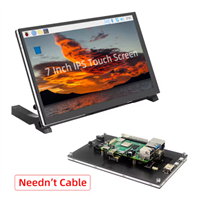
Raspberry Pi 5 7 Inch Touch Screen IPS 1024x600 HD LCD HDMI-compatible Display for RPI 4B 3B+ OPI 5 AIDA64 PC Secondary Screen(Without Speaker)
BUY NOW


- Comments(0)
- Likes(1)
More by Dipesh Kachhi
-
Émetteur Récepteur Optique Expérimental (communication UART ATtiny + fibre optique)
142 0 1 -
SmallOLED - Live PC Stats, Animated Clocks & Audio Visualizer
991 0 3 -
"Talking Multimeter": Arduino-Based Speech Add-on for Multimeters with SCPI Protocol
569 0 1 -
Programmable Mist Maker - XIAO / QT PY Extension
3041 2 3 -
RadioHAT - Raspberry Pi radio development platform
2585 0 4 -
-
-