
|
FreeCad |
|

|
Ultimaker CURA |
RC Propeller
Experimental 200 mm S1223 RC Propeller
Project Overview
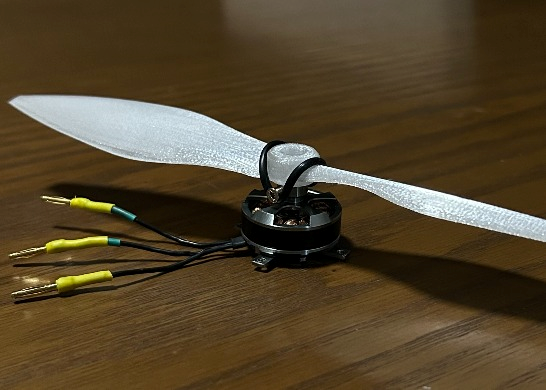
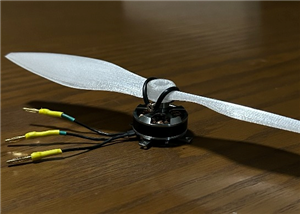
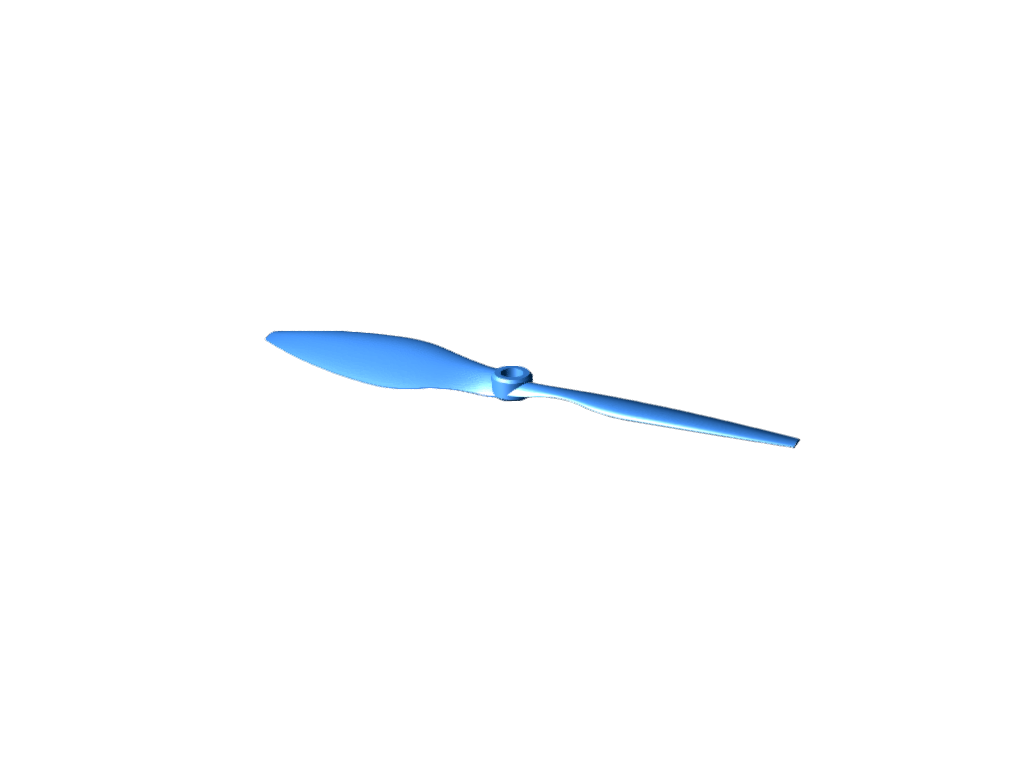
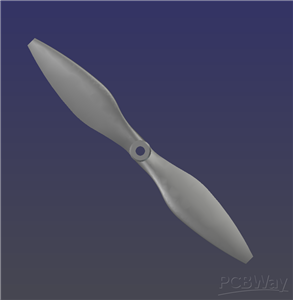
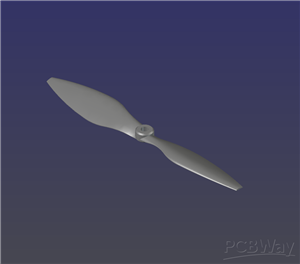
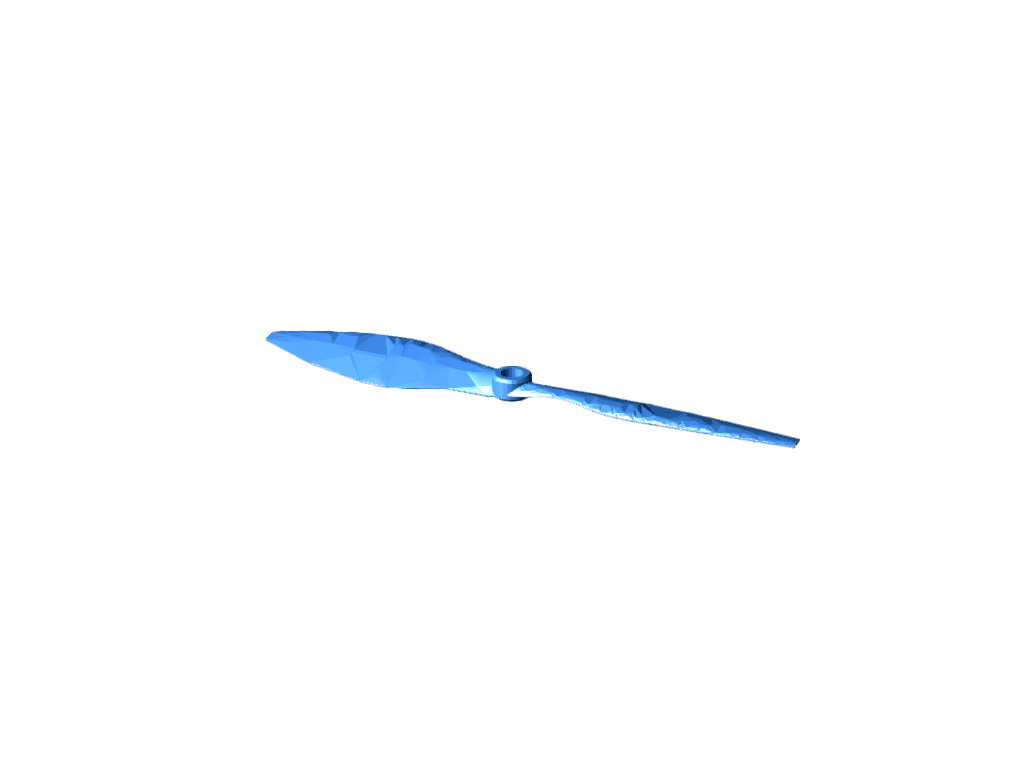
This project is an experimental 200 mm two-blade propeller for RC aircraft, designed for additive manufacturing and initially tested using FDM-printed PETG prototypes.
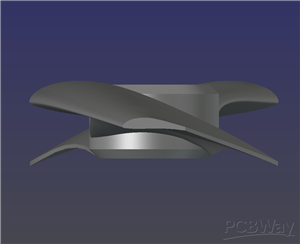
The blade geometry is based on the Selig S1223 airfoil. The propeller incorporates a varying geometric pitch along the blade radius (blade twist), while maintaining a non-zero geometric angle near the tip.
The objective is to explore how this blade geometry performs when implemented as a small, lightweight propeller that can be manufactured using accessible 3D-printing processes.
The hub has a 6 mm central hole and a reduced blade-root thickness intended for use with a prop saver. Other mounting methods may also be possible depending on the motor and adapter geometry.
Design Philosophy
This propeller was developed as part of an experimental RC aircraft project.
One of the main motivations was to explore propeller geometries that can be designed, manufactured and experimentally evaluated without relying exclusively on commercially available propellers.
The S1223 airfoil was selected to investigate the application of a high-lift airfoil geometry to a small 3D-printed propeller. The blade also uses geometric twist, and unlike a previous propeller design, the local geometric angle remains above zero near the blade tip.
Several prototypes were manufactured while adjusting the design and printing process. In PETG, excessive numbers of perimeters produced significant warping, so the manufacturing parameters were progressively modified until reliable prints could be obtained.
Operating Principle
The two blades rotate around the central hub and generate thrust through their aerodynamic geometry and local blade angle.
The propeller was manufactured and tested in PETG using FDM, with a 0.2 mm nozzle and 0.15 mm layer height. The tested printing configuration uses two perimeters, high-density hexagonal infill, traditional supports and a raft.
The propeller is printed on its edge, with the hub rotation axis parallel to the print bed. This orientation was used for the prototypes subjected to the static tests.
Preliminary Static Performance
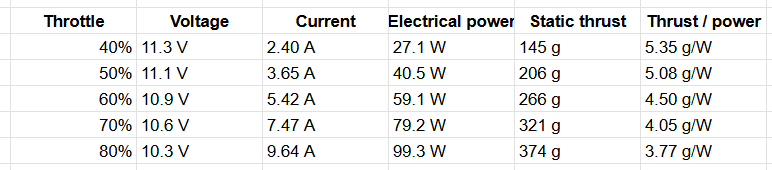
A static test was performed using an F2204 1500 KV brushless motor. Voltage, current and thrust were measured at several throttle levels.
The power supply was adjusted to approximately 11.5 V before testing. The voltage values shown above were measured under load and therefore include the voltage drop observed during each operating point.
These measurements represent a single experimental test and should not be interpreted as a complete performance characterization. Repeatability has not yet been established, and results may vary with manufacturing process, material, motor, mounting, power supply and test conditions.
Manufacturing Approach and Future Development
The current prototype has been manufactured and tested in PETG, but the project also provides an opportunity to investigate other additive-manufacturing processes and materials.
Of particular interest is studying how changes in material stiffness, dimensional accuracy and surface finish affect the behavior of the same basic blade geometry.
Future testing may include additional performance measurements and comparisons between manufacturing methods.
Independent test results are very welcome. I am also interested in feedback regarding the hub geometry and alternative mounting systems, as these could help improve future versions of the design.
Safety Considerations
This is an experimental propeller, not a certified commercial aircraft component.
Every manufactured propeller should be carefully inspected, centered and balanced before high-RPM operation. Additive manufacturing can introduce mass differences, dimensional deviations or defects between blades.
If abnormal vibration occurs, the motor should be stopped and the cause corrected before further testing. Keep a safe distance and avoid standing in the plane of rotation during operation.
RC Propeller
Project images are for reference only. Actual production is based on the manufacturing files on the project page.
Please review the designer's notes (e.g., PCB thickness) and select the appropriate options.
PCBWay is not responsible
for issues caused by unsuitable parameter selections.
For more important ordering information, please refer to
Read More


Raspberry Pi 5 7 Inch Touch Screen IPS 1024x600 HD LCD HDMI-compatible Display for RPI 4B 3B+ OPI 5 AIDA64 PC Secondary Screen(Without Speaker)
BUY NOW

- Comments(0)
- Likes(0)
 More by Engineer
-
Émetteur Récepteur Optique Expérimental (communication UART ATtiny + fibre optique)
36 0 1 -
SmallOLED - Live PC Stats, Animated Clocks & Audio Visualizer
864 0 3 -
"Talking Multimeter": Arduino-Based Speech Add-on for Multimeters with SCPI Protocol
507 0 1 -
Programmable Mist Maker - XIAO / QT PY Extension
2975 2 3 -
RadioHAT - Raspberry Pi radio development platform
2523 0 4 -
-
-