Flexible PCB (FPC), also known as a flexible circuit board, is a type of printed circuit board. However, it differs significantly from traditional rigid PCBs in structure and application, which is why it is categorized separately as an FPC.
FPCs are typically made with polyimide (PI) film as the base material. These flexible PCBs help significantly reduce the size and weight of electronic products and support the industry trend toward high-density, miniaturized, and highly reliable electronics.
This article explains the key factors that affect flexible PCB cost and FPC price during manufacturing.
PI Film: The mainstream and high-end base material for flexible PCBs. PI offers excellent heat resistance (continuous operation above 260°C), strong dimensional stability, mechanical strength, and chemical resistance.
PET Film: A lower-cost polyester film with limited heat resistance (typically below 120°C) and average dimensional stability. It is flexible and economical but suitable only for simple applications.
Cost: Due to differences in material synthesis and performance, PI film typically costs 3–8 times more than PET film.
Performance: PI can withstand SMT reflow soldering temperatures, while PET cannot. Soldering of FPCs made with PET is generally not recommended due to poor heat resistance. PI also supports complex designs such as multilayer and rigid-flex PCBs, whereas PET is usually limited to simple single- or double-layer circuits.
Thinner traces or higher current applications typically require thicker copper foil to prevent overheating and voltage drop. Thicker copper increases etching time and material usage, directly raising flex PCB cost.
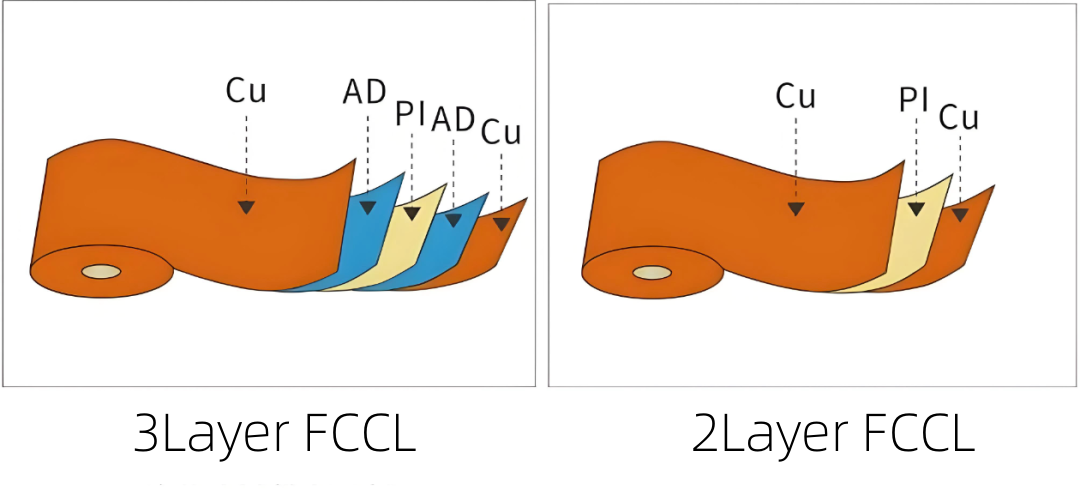
Adhesive-based structure: Copper foil + adhesive + PI film. Lower cost and simpler processing, but reduced thermal resistance and dimensional stability.
Adhesiveless structure: Copper foil directly bonded to PI film. Higher manufacturing cost but significantly better heat resistance, flexibility, and dimensional stability.
Cost impact: Adhesiveless FPC substrates typically cost 30–50% more than adhesive-based ones, but they are preferred for high-reliability and high-frequency applications.
Surface treatments such as ENIG, OSP also affect FPC price. Different finishes vary in cost, reliability, shelf life, and compatibility with soldering or wire bonding.
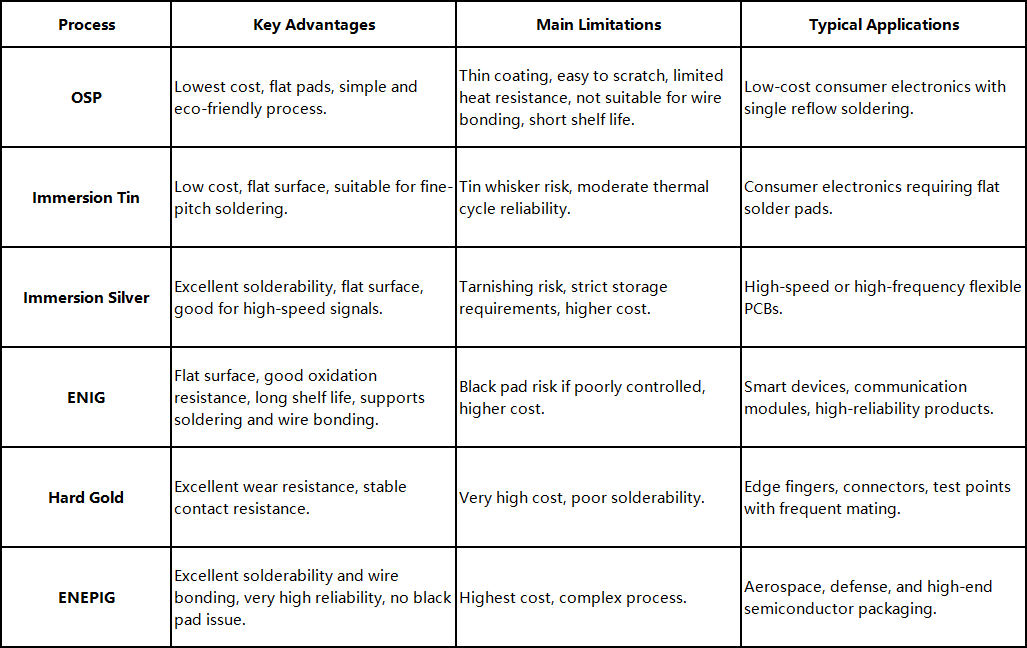
(Comparison Table of Different Surface Finish)
For surface finish selection suitable for gold wire bonding, please refer to this article for more details: Gold Wire Bonding: Choosing the Right Gold Thickness and Surface Finish
Layer count is one of the most direct and significant cost drivers in FPC.
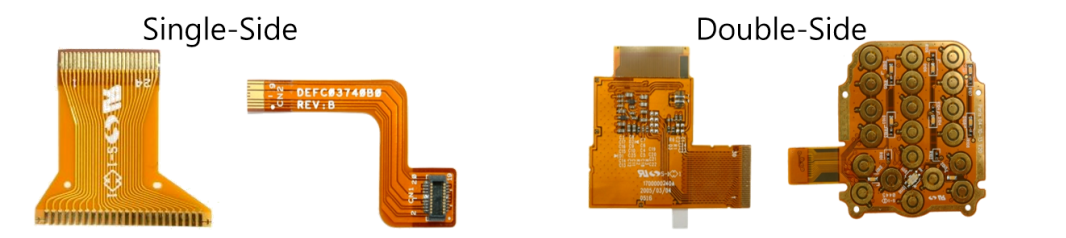
Single-layer flexible PCBs are the most economical option and are commonly used in simple interconnection applications such as printer head cables.
Once the design moves to double-layer or multi-layer structures, manufacturing difficulty increases sharply. Tighter alignment tolerance, more complex processing steps, and higher defect risk lead to a substantial rise in multi-layer FPC cost.
Trace width and spacing: Fine-pitch routing significantly increases flexible PCB cost. Extremely small line widths or spacings may require advanced processes such as LDI exposure, semi-additive processes, or special etching techniques.
Vias: A higher number of vias increases drilling, plating, and inspection costs. Microvias or laser-drilled vias require specialized equipment and further raise flex PCB cost.
A smaller bend radius places higher mechanical stress on the circuit, increasing both manufacturing difficulty and reliability requirements. The bend radius impact on FPC cost is mainly reflected in:
Higher material requirements: thinner copper, higher-grade PI, or adhesiveless structures
Tighter process control: stricter etching, lamination, and forming tolerances
Additional reliability testing: bend life and fatigue testing
Static Flex FPC: Bent only once during assembly and remains fixed during operation. Material and structural requirements are lower, making the FPC price more controllable.
Dynamic Flex FPC: Subjected to repeated bending throughout the product’s lifetime, such as in hinges, camera modules, and wearable devices. These applications require high fatigue resistance, advanced materials, and optimized copper structures, resulting in a higher dynamic flex PCB price.
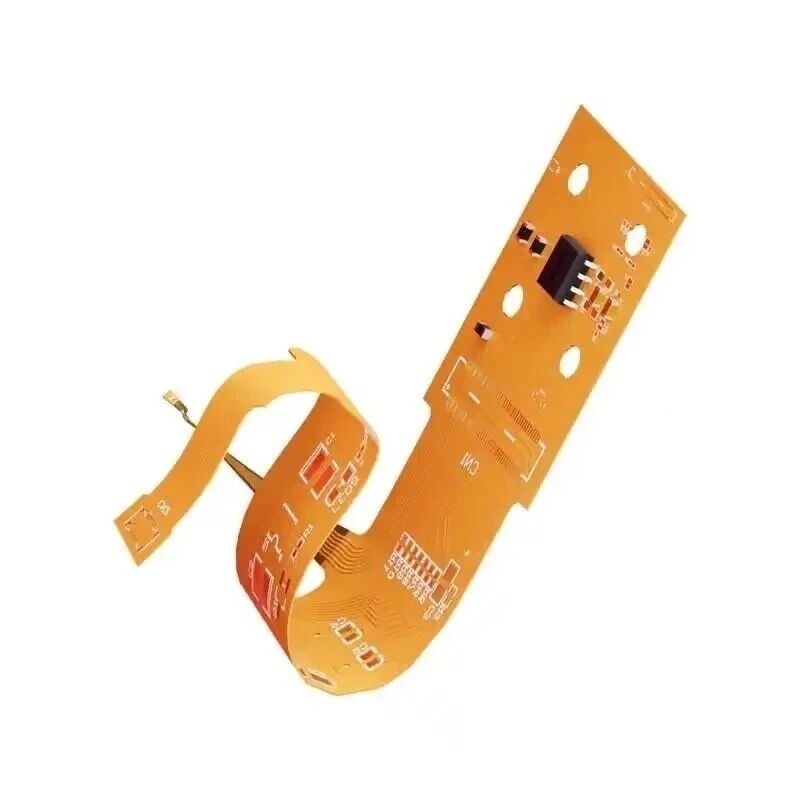
Optimized trace geometry: curved or serpentine routing reduces stress concentration
Minimized vias and pads in bend areas: avoids stress points and failure risks
Controlled copper distribution: avoiding solid copper planes or using segmented patterns in flex zones
These design choices directly affect reliability and are important flex PCB pricing factors.
The cost of a flexible PCB is determined by three core pillars: material cost, process complexity, and design reliability requirements. High-performance materials such as PI film, rolled copper, and adhesiveless structures significantly increase base cost. Process complexity—especially higher layer counts and dense routing—is a major cost driver in FPC manufacturing. Reliability requirements, including dynamic bending, tight bend radii, and harsh operating conditions, further increase FPC price through specialized materials, structures, and validation testing.
Ultimately, flexible PCB cost reflects the required performance, complexity, and reliability level of the design, making it a direct outcome of engineering and application demands.
You can use our online FPC quote system to get your FPC quote.