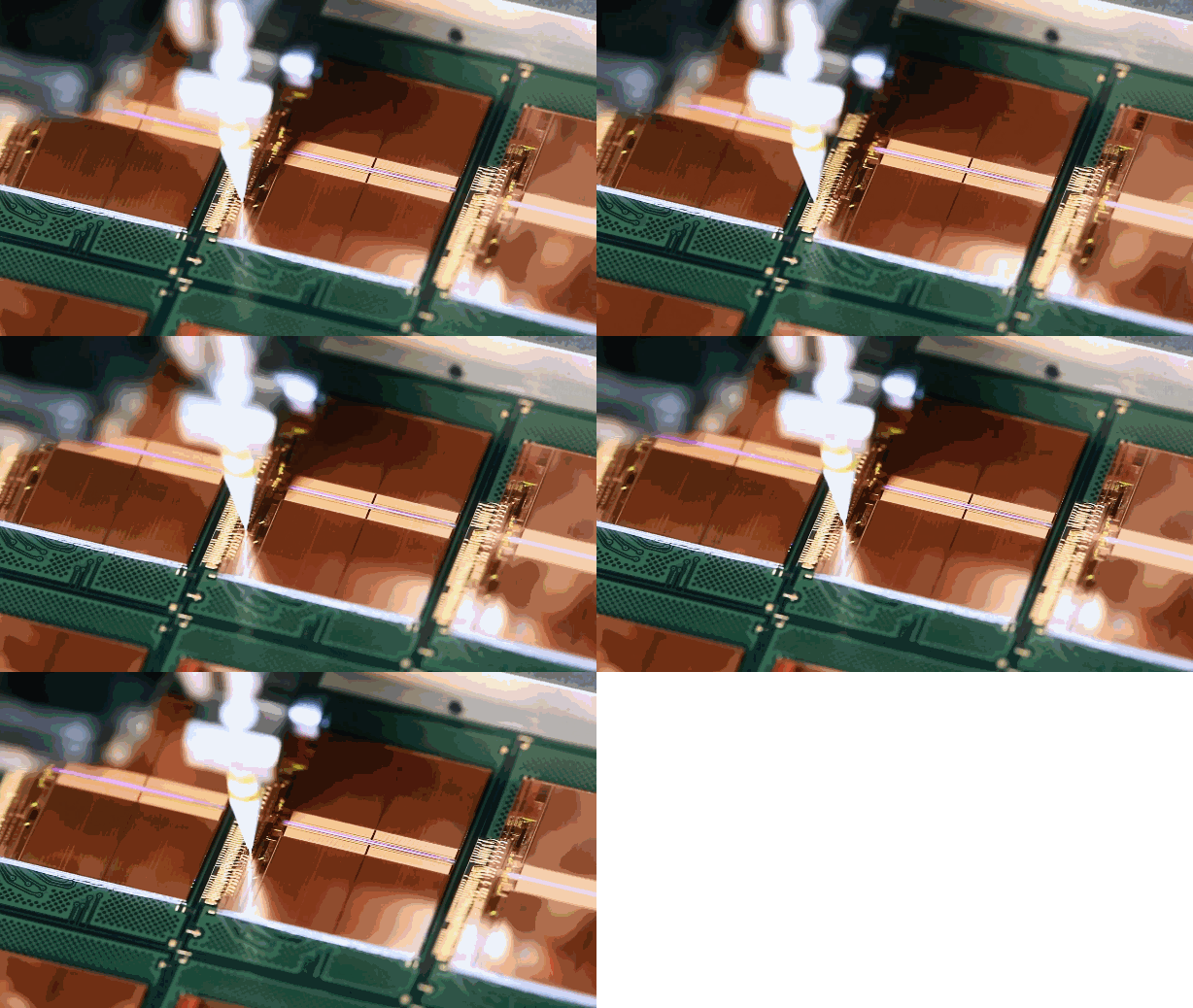
Gold wire bonding is a PCB manufacturing process that uses extremely fine gold wires to connect the leads of a chip or device to PCB pads, electrodes, or lead frames. It is a wire bonding process that combines heat, pressure, and ultrasonic energy. Unlike soldering, the bond relies on solid-state metallic diffusion between gold surfaces to achieve a strong and reliable connection.
In PCB wire bonding, the gold thickness requirement directly affects bonding reliability and overall production yield.
When the gold layer is thick enough, it forms a stable atomic-level bond with the gold wire during the gold wire bonding process. A thicker gold layer reduces failures caused by surface contamination, oxides, or plating defects, ensuring long-term bonding reliability in electronic products.
During the wire bonding process, ultrasonic energy and pressure wear the surface of the gold finish. A gold thickness of 2U+ helps prevent the gold layer from being worn through and exposing the underlying nickel (or copper), which is critical for maintaining bonding reliability and product lifetime.
A thicker gold layer also withstands high-temperature environments better, preventing oxidation, discoloration, or degradation. This helps maintain stable electrical and mechanical performance after PCB wire bonding.

The choice of PCB surface finish for wire bonding directly affects the yield and reliability of chip packaging processes such as COB bonding. In most PCB manufacturing processes involving gold wire bonding, the ENEPIG surface finish is significantly superior to ENIG, especially for high-reliability or fine-pitch bonding.
The primary difference between ENIG and ENEPIG is the “black pad” issue:
During the ENIG process, strong oxidizers in the immersion gold bath can attack the electroless nickel layer—particularly along grain boundaries—causing excessive corrosion and forming a brittle, phosphorus-rich layer.
In an ENEPIG surface finish, the immersion gold reaction occurs on top of the palladium layer rather than directly on nickel. Palladium is a noble metal and is not corroded, preventing nickel damage and eliminating the black pad problem.

(ENEPIG VS ENIG)
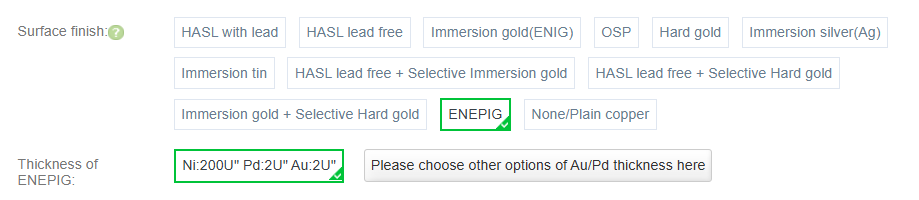
If your PCB production requires gold wire bonding, please make sure to include a note when placing your order or specify it clearly in your design files. For the best bonding reliability, we recommend using a gold thickness of at least 2U’’ and select the ENEPIG surface finish.