

|
|
ThinkNode M9 Meshtastic Terminal |
x 1 | |
|
|
MeshStick USB-to-SPI LoRa Stick |
x 1 | |
|
|
Elecrow Raspberry Pi Terminal |
x 1 |

|
Soldering Iron Kit |
|

|
arduino IDEArduino
|
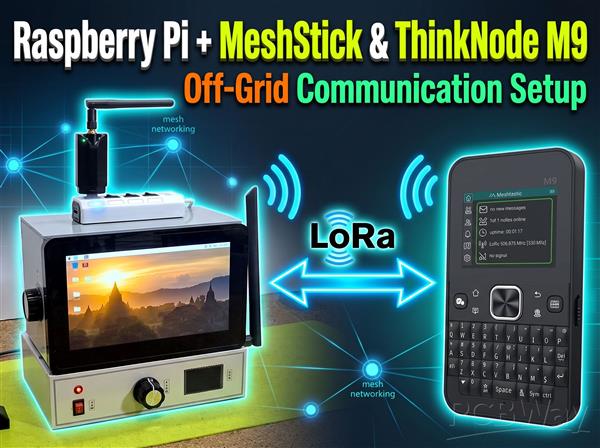
Ultimate Off-Grid Communication Setup- Raspberry Pi + MeshStick & ThinkNode M9
I recently ordered two products from Elecrow - ThinkNode M9 Meshtastic Terminal and compact Meshstick USB stick, that are a powerful combination for creating an off-grid, decentralized communication experience using the Meshtastic network.
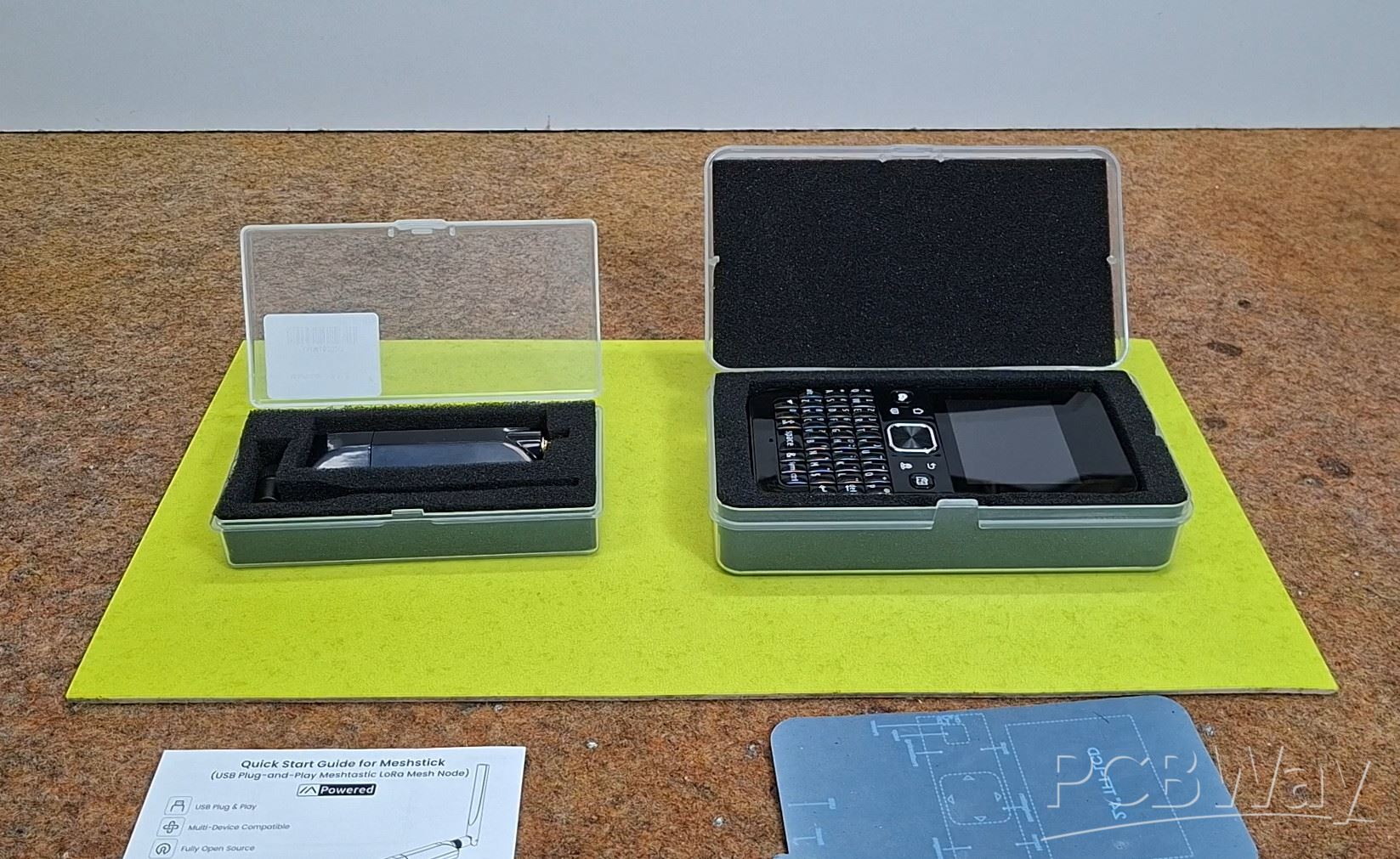
These devices keep you connected when traditional infrastructure fails, cell towers go down, or you step completely off the grid into the wilderness.
First of all, what is Meshtastic? It is an open-source project that enables the exchange of short text messages and location data via LoRa radio. Messages travel directly between devices, without the need for a mobile carrier or the internet. When additional, suitably placed devices are located between the sender and the receiver, they can relay the message further. This creates a mesh network and extends coverage. It is an interesting solution for hiking, camping, communication among friends, and, of course, electronics experiments.
Range depends heavily on the terrain, the antennas, and their placement—in open areas with a clear line of sight, communication over distances of several kilometers is possible.
The first device is the ThinkNode M9.
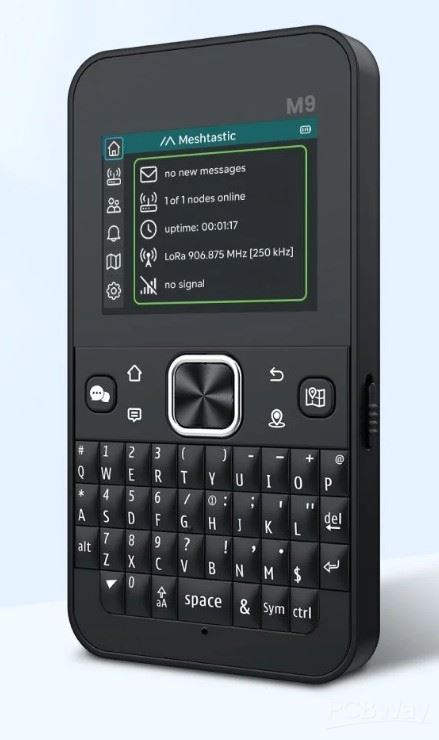
At first glance, it resembles a small phone with a physical keyboard. However, its main advantage is that it functions as a standalone LoRa terminal: messages can be composed and read directly on the device, without the need for an additional smartphone. It features a 2.4-inch color screen, a QWERTY keyboard, built-in GPS, and a 2300 mAh battery that charges via USB-C. The GPS also enables location sharing. At its core lies an ESP32-S3 chip paired with an LR1110 LoRa radio chip. Essentially, it is a portable communicator combining a screen, keyboard, and battery into a single compact housing.
While on the subject of the device, I would like to share a brief update: a small batch of M9 units recently surfaced containing a virus on the SD card—specifically, on the card integrated into the device as part of the firmware. Users of devices from this batch were immediately notified of the issue via email and offered several ways to resolve it. The good news is that if the device is used in the standard way—connecting it to a PC via the local USB-C port—there is no risk of the virus infecting the PC. The risk arises only if the SD card is physically removed from the M9 and connected to a PC via a card reader (a very rare scenario) or if one attempts to transfer data from the M9 over a Wi-Fi network. If you definitely want to install new, uninfected firmware—which is recommended—follow the instructions at the provided link, where the entire procedure is described in detail
The second product is the MeshStick.
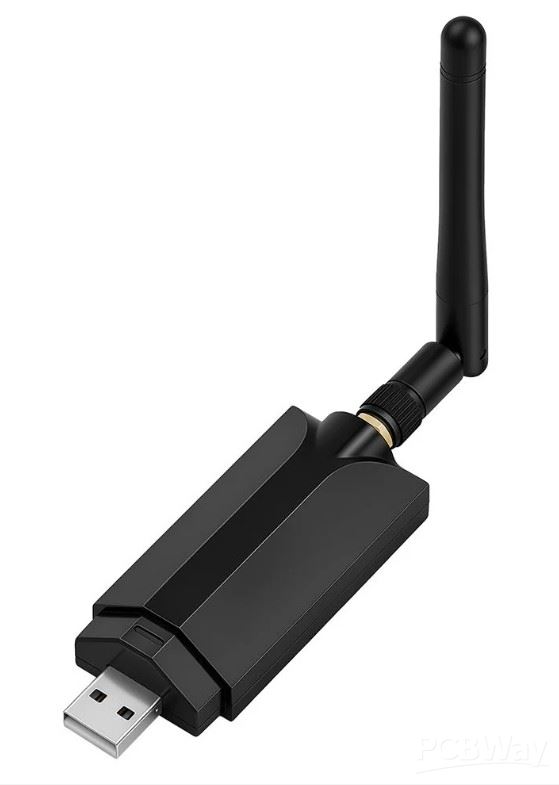
This small USB adapter adds LoRa radio capabilities to a Linux OS PC or Raspberry Pi. It utilizes the SX1262 radio chip, includes an external antenna connector, and is powered directly via USB. To operate it, computer software is also required. For this purpose, I am using this Elecrow Pi Terminal, which I have used in some of my previous projects. It is essentially a mini PC running the Raspberry Pi OS. The project description provides detailed instructions, including commands, for installing the official Meshtastic daemon/server.
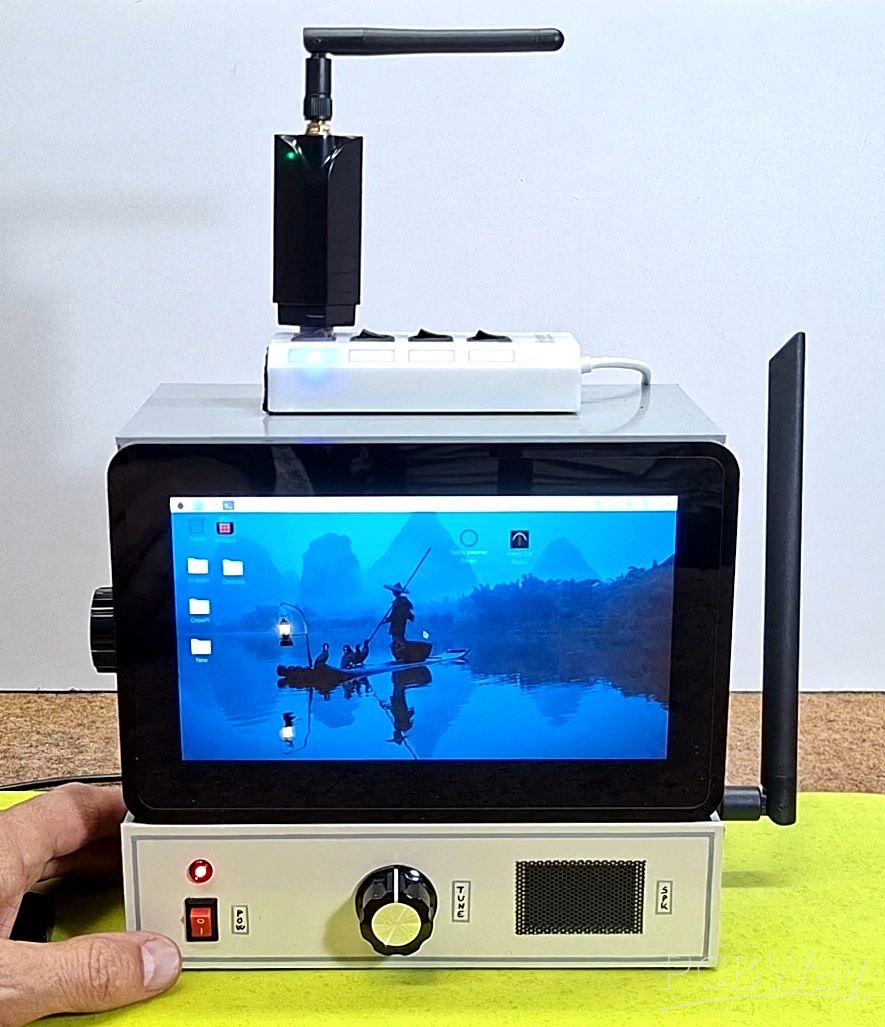
It is worth noting that, for now, it is only available for Linux and macOS-based operating systems and cannot be installed directly on Windows. The Meshtastic server runs in the background on the Parspberry Pi OS, capturing radio signals from the hardware (in our case, MeshStick via USB-SPI) and converting them into network data.
At the end of the text, it is provided a complete, step-by-step guide for installing the Meshtastic daemon/server.
Now, from any computer on the local network, you can connect to the Meshtastic Web/App Client at the address: https://192.168.2.101:9443, where 192.168.2.101 is the local address of the Raspberry Pi. Note that this address depends on the class of your local network.
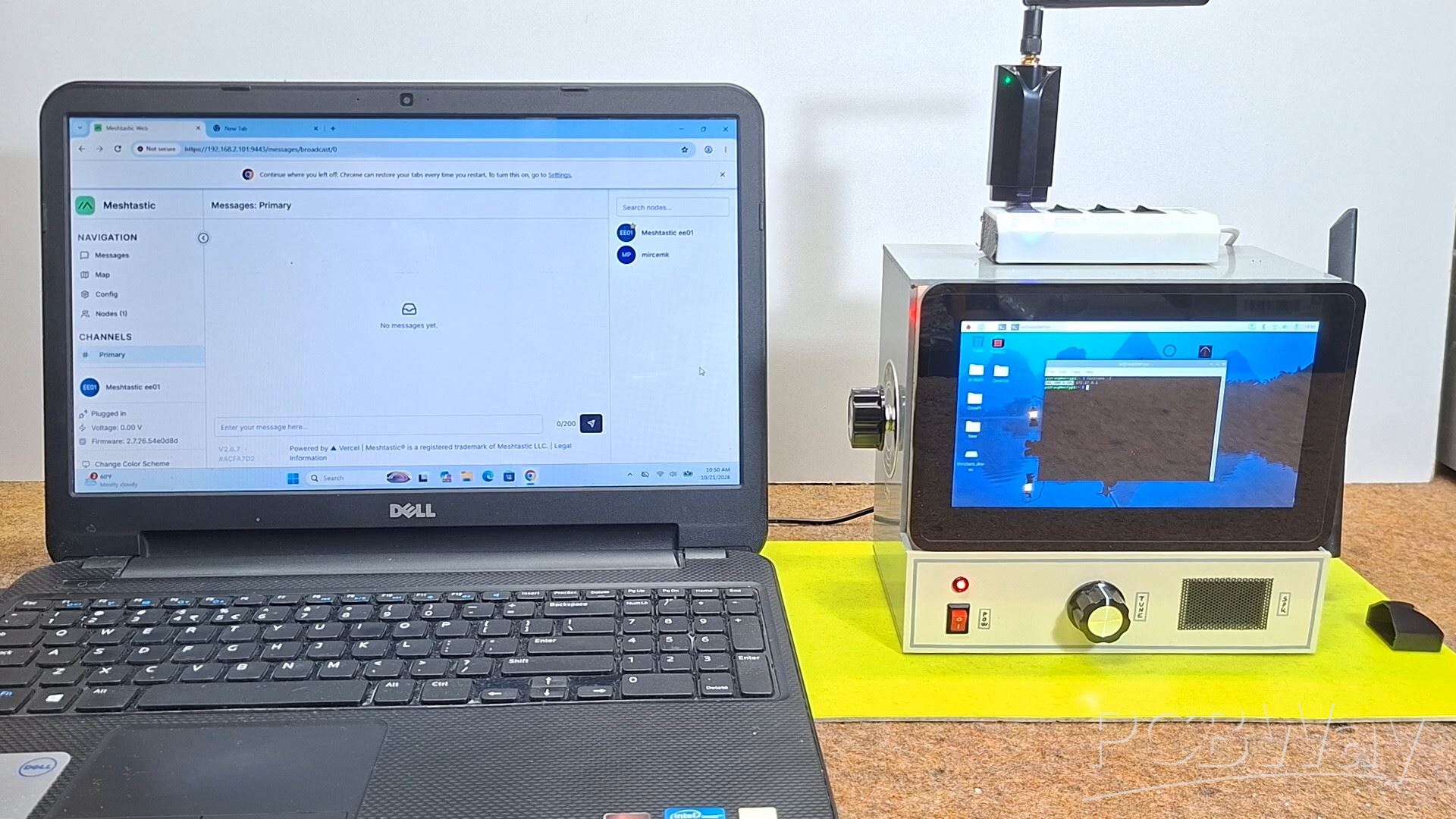
This is where the interesting part begins for us DIY enthusiasts: sending messages via a custom program, processing received data, and integrating the communication with other home projects. In short, we carry the M9 with us, while the MeshStick remains as a home station.
And Finally a short conclusion. Combining a Raspberry Pi base station with a standalone M9 terminal creates a robust, independent LoRa mesh network that keeps you connected anywhere, completely off-grid.
Ultimate Off-Grid Communication Setup- Raspberry Pi + MeshStick & ThinkNode M9


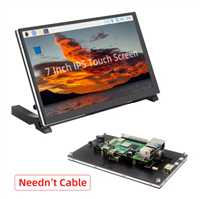
Raspberry Pi 5 7 Inch Touch Screen IPS 1024x600 HD LCD HDMI-compatible Display for RPI 4B 3B+ OPI 5 AIDA64 PC Secondary Screen(Without Speaker)
BUY NOW


- Comments(0)
- Likes(0)
More by Mirko Pavleski
-
 Arduino 3D Printed self Balancing Cube
Self-balancing devices are electronic devices that use sensors and motors to keep themselves balanc...
-
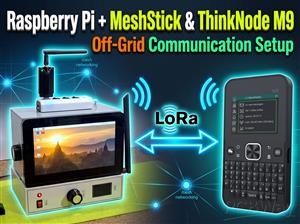 Ultimate Off-Grid Communication Setup- Raspberry Pi + MeshStick & ThinkNode M9
I recently ordered two products from Elecrow - ThinkNode M9 Meshtastic Terminal and compact Meshsti...
-
 DIY ESP32 Universal Timer with Touchscreen & Rotary Encoder
In several of my previous videos, I presented different projects based on the CrowPanel 2.1-inch HM...
-
 Build a Real 5-Band Parametric EQ with ESP32 + WM8960 - Stereo DSP Audio Processor
Audio equalizer (EQ) is an electronic device that allows control over the strength of different fre...
-
 Bass Reflex vs Sealed vs Horn – Same 2 inch Speaker Test
In one of the previous videos I presented the making of a miniature Horn type speaker box with a 2 ...
-
 Building a Mini Fostex Horn Speaker with a 2-Inch Full-Range Driver
A back-loaded horn speaker is a loudspeaker design that channels the rear sound wave of a driver th...
-
 ESP32 Moon Lamp That Shows the Real Moon Phase on Crowpanel Round Dispaly
Recently on the Hackaday portal I came across a very interesting project called Moon Display by aut...
-
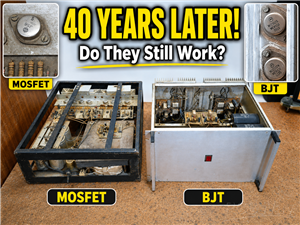 40-Year-Old DIY Power Amplifiers – Do They Still Work - 500W MOSFET & Transistor Amps
This time I want to describe my two DIY super powerful audio amplifiers that I made about 40 years ...
-
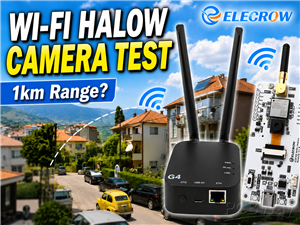 Wi-Fi HaLow Explained! Long-Range Camera Test up to 300m (ESP32 + ThinkNode G4 from ELECROW)
I recently needed to install a security camera at a relatively large distance from my home, more pre...
-
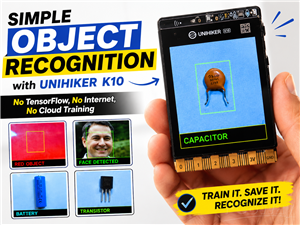 Simple Object Recognition with the UNIHIKER K10 – No TensorFlow, No Internet, No Cloud AI
Object recognition has become one of the most popular applications of artificial intelligence and em...
-
 DIY PCL82 Tube Amplifier, Single-Ended Amp with Amazing Sound
The idea for this project came from a local electronics magazine called EMITER, issue 12/13 from 20...
-
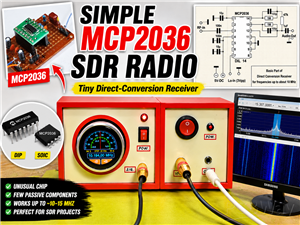 Simple MCP2036 SDR Radio - The Most Unusual Software Defined Radio
SDR (Software Defined Radio) is a radio communication system where many of the key electronic compo...
-
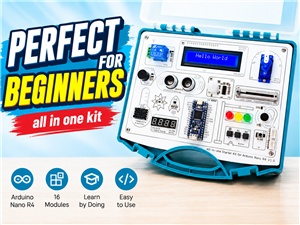 Elecrow All-in-One Arduino Starter Kit Review - 20 Projects & 16 Modules
This time I will describe a simple and practical way to enter the world of microcontrollers, specif...
-
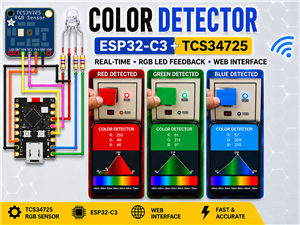 ESP32-C3 Color Detector with TCS34725, Real-Time RGB Detection & Web Interface
Color detection is a fundamental task in many embedded systems – from industrial sorting machines t...
-
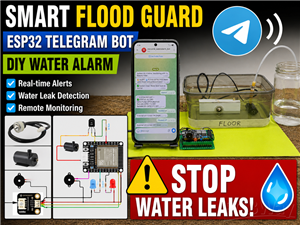 DIY ESP32 Telegram Flood Protection System - Smart Home Automation
Recently I had an unpleasant experience in my home, specifically my ground floor was flooded as a r...
-
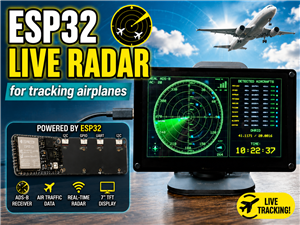 Real-Time Air Traffic Radar using ESP32 + ADS-B Data
ADS-B, which stands for Automatic Dependent Surveillance-Broadcast, is the modern standard for trac...
-
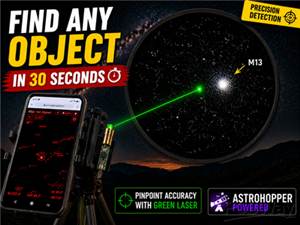 DIY Green Laser Night Sky Object Finder - Find Stars & Galaxies Instantly with great accuracy
As an amateur astronomer, especially at the beginning, the most difficult part of observing the nig...
-
 DIY Avionics Simulator with ESP32 - Artificial Horizon, Compass & Altimeter
The inspiration for this project comes from classical aircraft cockpit instruments used for navigat...
-
-
-
-
Émetteur Récepteur Optique Expérimental (communication UART ATtiny + fibre optique)
251 0 1 -
SmallOLED - Live PC Stats, Animated Clocks & Audio Visualizer
1165 0 3 -
"Talking Multimeter": Arduino-Based Speech Add-on for Multimeters with SCPI Protocol
677 0 1 -
Programmable Mist Maker - XIAO / QT PY Extension
3169 2 4 -
RadioHAT - Raspberry Pi radio development platform
2689 0 4 -