
|
KiCad 9.0 |
STEPDOWN 240V TO 12V DIY HIDEOUT
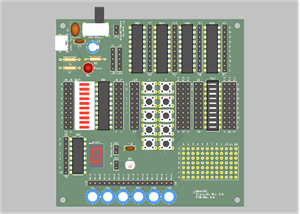
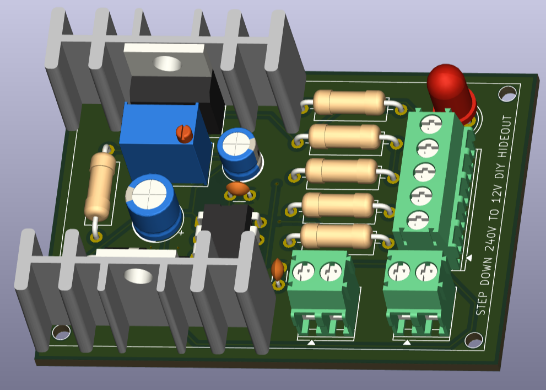
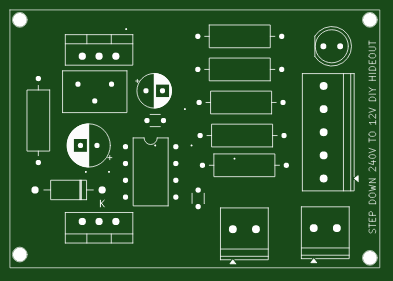
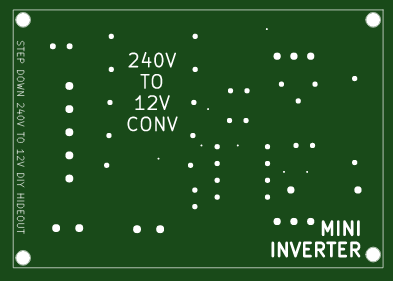
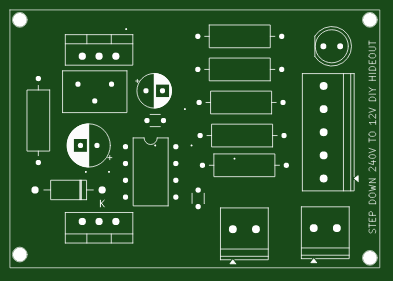
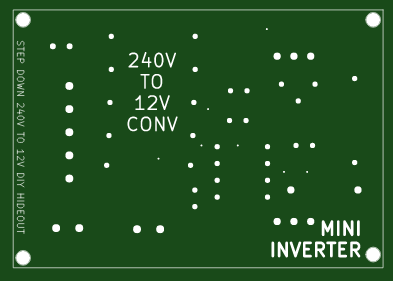
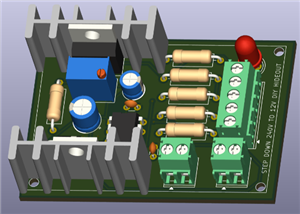
Based on the visual data of the printed circuit board (PCB), this is a power electronics module designed to step down a high-voltage input (240V) to a low-voltage output (12V).
Power management and thermal dissipation are handled by power semiconductors in TO-220 packages. Two primary semiconductor devices are bolted to heavy-duty extruded aluminum heat sinks. Depending on the exact topology (linear vs. switching), these are likely high-voltage power MOSFETs, Triacs, or linear voltage regulators. The heat sinks manage the substantial thermal load generated by the voltage drop. The multi-turn potentiometer, which is the blue, box-like component with an adjustment screw, is a precision trimpot. It is integrated into the feedback loop to allow fine-tuning and calibration of the exact output voltage or current limit.
Control logic and switching are driven by an 8-Pin DIP integrated circuit. The Dual In-line Package (DIP) IC serves as the brain of the board. In a high-voltage step-down scenario, this is typically a dedicated PWM (Pulse Width Modulation) switching controller, an offline switcher IC (like the VIPer or LNK series), or an opto-isolator providing galvanic isolation for the feedback circuit.
Filtering, rectification, and passives include a capacitive filtering array. The circuit utilizes polarized electrolytic capacitors (the cylindrical blue components) for bulk energy storage and smoothing out low-frequency voltage ripple on the DC rails. Smaller ceramic/disc capacitors are placed nearby for high-frequency noise decoupling. The power diode, a discrete black diode with a silver cathode band, is used for rectification (converting AC to DC) or as a flyback/freewheeling diode to safely collapse inductive spikes. The power resistor bank consists of an array of large, beige cylindrical components that are high-wattage power resistors. Their physical size indicates they dissipate significant heat. They are likely configured for current sensing, acting as a voltage dropper network, or functioning as a bleeder/snubber circuit.
Interconnects and status features include terminal blocks, which are green modular screw terminals that provide secure, low-resistance mechanical connections for the high-voltage mains input and the stepped-down 12V load output. A status indicator utilizing a standard discrete LED is wired across the low-voltage rail, likely with a series current-limiting resistor, to provide a visual indication that the output stage is energized.
STEPDOWN 240V TO 12V DIY HIDEOUT
Project images are for reference only. Actual production is based on the manufacturing files on the project page.
Please review the designer's notes (e.g., PCB thickness) and select the appropriate options.
PCBWay is not responsible
for issues caused by unsuitable parameter selections.
For more important ordering information, please refer to
Read More


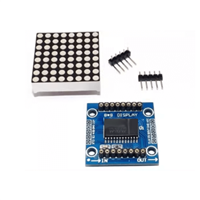
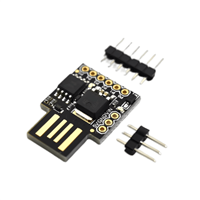
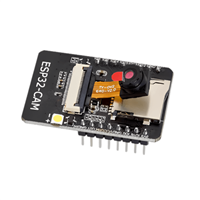
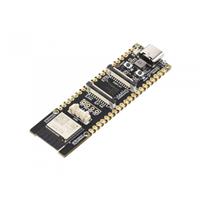
Raspberry Pi 5 7 Inch Touch Screen IPS 1024x600 HD LCD HDMI-compatible Display for RPI 4B 3B+ OPI 5 AIDA64 PC Secondary Screen(Without Speaker)
BUY NOW


- Comments(0)
- Likes(1)
More by Aravind GM
-
 Arduino Pro Micro GAMEPAD
This project is a custom-designed, handheld gaming controller built around an Arduino Pro Micro. It ...
Arduino Pro Micro GAMEPAD
This project is a custom-designed, handheld gaming controller built around an Arduino Pro Micro. It ...
-
 STEPDOWN 240V TO 12V DIY HIDEOUT
Based on the visual data of the printed circuit board (PCB), this is a power electronics module desi...
STEPDOWN 240V TO 12V DIY HIDEOUT
Based on the visual data of the printed circuit board (PCB), this is a power electronics module desi...
-
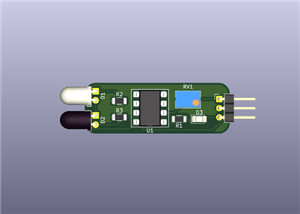 INFRARED SENSOR
This 3D CAD rendering models a standard three-pin infrared obstacle avoidance sensor module widely u...
INFRARED SENSOR
This 3D CAD rendering models a standard three-pin infrared obstacle avoidance sensor module widely u...
-
SmallOLED - Live PC Stats, Animated Clocks & Audio Visualizer
771 0 3 -
"Talking Multimeter": Arduino-Based Speech Add-on for Multimeters with SCPI Protocol
437 0 1 -
Programmable Mist Maker - XIAO / QT PY Extension
2889 2 3 -
RadioHAT - Raspberry Pi radio development platform
2468 0 4 -
-
-
-
ARPS-2 – Arduino-Compatible Robot Project Shield for Arduino UNO
4550 0 6