 PCBWay
Nov 25,2013
1170
PCBWay
Nov 25,2013
1170
Vias of the PCB boards
Vias are used to connect different conductor plate layer. Inside vias typically connected by solder, pins for component insertion. Vias are divided into three kinds: direct pass from the top to the b...
PCBWay
Nov 25,2013
1200
Multilayer board Concept
General circuit and system design with dual-panel design to meet the needs of four-layer board , but in the more advanced circuit design, or have special needs, such as against high frequency interfer...
PCBWay
Nov 25,2013
1218
The basic concept of the circuit board PCB
General PCB circuit board has called Single Layer PCB (single panel), Double Layer PCB (double-sided), four-layer board, plywood and so on. Single panel is a single-sided copper, so use it to apply ...
PCBWay
Nov 25,2013
1066
The Schematic of the Circuit Boards
Although there is no guarantee, a good layout starts with a good schematic. Be thoughtful and generous when drawing a schematic, and think about signal flow through the circuit. A schematic that has a...
PCBWay
Nov 25,2013
1509
Grounding of the Printed Circuit Boards
Ground is to study the potential of the system design. The first time starting from the conceptual design review, it should be made into a product. Important principles grounded: to maintain and isola...
PCBWay
Nov 22,2013
1143
Several layers of PCB is the best?
Several layers of PCB is the best? A designer according to the complexity of the circuit to determine the number of PCB layers. Single-layer PCB Sometimes, we will create a simple single-layer P...
PCBWay
Nov 22,2013
1292
Analog circuit noise of the PCBs
Analog circuit noise is to limit the performance of the main factors. Noise is divided into the following categories: Conduction (Conducted Emissions) - analog circuits and other circuits connected ...
PCBWay
Nov 22,2013
2229
Power-Supply Bypassing of the PCBs
Bypassing the power supply at the amplifier’s supply terminals to minimize noise is a critical aspect of the PCB design process—both for high-speed op amps and any other high-speed circuitry. There ar...
PCBWay
Nov 22,2013
2587
Pin in Paste using Solder Preforms-PCBs
Pin-in-paste is the technique of intrusive soldering through-hole components to a circuit board using reflow soldering. Typically, solder paste can be printed and this will provide enough solder for ...
PCBWay
Nov 22,2013
1213
Profitability Potential in Printed Circuit Board Assembly
The impetus for writing the Patty and the Professor series, in 2009, <posts here> <hardcopy book here> came from my observations that many assemblers were not very focused on productivit...
PCBWay
Nov 22,2013
2054
The Printed Circuit Board: More Important Now Than Ever
Folks, My interest was piqued by a recent article from the pen of good friend, Ray Rasmussen. In this piece, Ray reviews a presentation by Phil Plonski of Prismark Partners on a tear down analysis of...
PCBWay
Nov 22,2013
2146
Ink materials for printed circuit boards (PCBs)
DuPont Microcircuit Materials (MCM) has developed a broad and growing portfolio of CB Series screen printed ink materials for rigid and flexible printed circuit boards (PCBs). Current offerings inclu...
PCBWay
Nov 22,2013
1337
circut board
Stands for "printed circuit board." A PCB is a thin board made of fiberglass, composite epoxy, or other laminate material. Conductive pathways are etched or "printed" onto board, connecting different ...
PCBWay
Nov 21,2013
1895
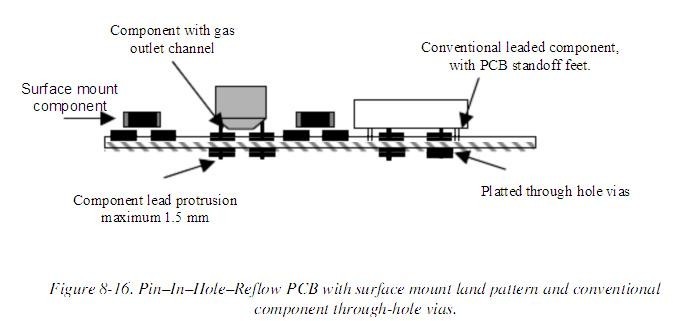
Single Sided Mixed Technology Reflow Process
A relatively new procedure has been developed to enable a single reflow operation to solder both surface mount and conventional through-hole components on the same board. This is particularly desirabl...
PCBWay
Nov 21,2013
5120
Mixed Technology PCB Assembly
There are still components that are not available in surface mount configuration (for example, some connectors and capacitors). Therefore, some assemblies have through-hole and surface mount component...
PCBWay
Nov 21,2013
9949
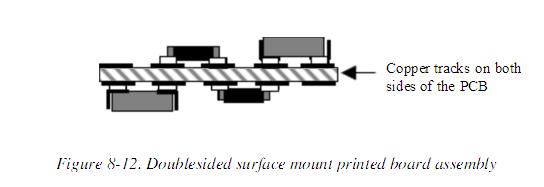
Double Sided PCB Assembly and Soldering
To achieve higher component density, the double-sided assembly technology has evolved. Double-sided circuit boards have copper tracking and component pads (land pattern) on the top and bottom side of...
PCBWay
Nov 21,2013
11314
Wave (Flow) Soldering Process
Since the introduction of automated PCB assembly and component lead soldering, wave soldering has been the mainstream method of applying solder automatically to the bottom side of PCBs. Wave soldering...
PCBWay
Nov 21,2013
2990
PCB assembly enters reflow process
Since the introduction of automated PCB assembly and component lead soldering, wave soldering has been the mainstream method of applying solder automatically to the bottom The PCB is passed though the...
PCBWay
Nov 21,2013
1749
Re-flow Soldering Process
Reflow soldering is the making of solder joints by (re) melting previously applied solder, usually in the form of a paste. A re-flow machine is a conveyorised oven that transports the pasted and compo...
| Ranking | Name | Answers |
|---|---|---|
| 1 | PCBWay Team | 6 |


