
|
KiCad 9.0 |
Color Code calculator and Ohmmeter
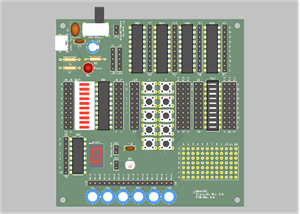
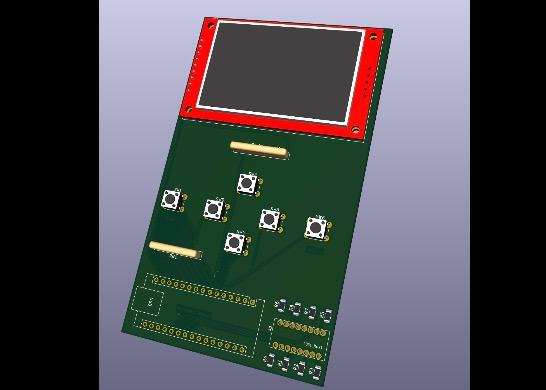
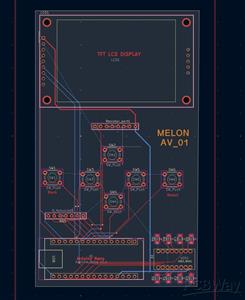
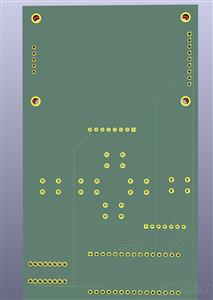
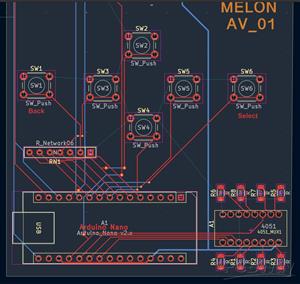
This project is a portable, handheld embedded systems device designed to automate the process of measuring electrical resistance. It features a custom-designed PCB equipped with an ATmega328 microcontroller, a 1.8-inch color TFT display, a navigation keypad, and an integrated multiplexer circuit.
It serves a dual purpose:
Color Code Calculator: An on-screen interactive menu where a user can input a resistor's colored bands (using the directional buttons) to instantly decode its nominal value, multiplier, and tolerance.
Digital Ohmmeter: A live testing dock where a user can plug an unknown resistor directly into the onboard socket to get an instant, real-time digital readout of its exact resistance.
Any electronics hobbyist or engineering student knows the daily frustration of dealing with resistors.
The Problem with Color Bands: Reading tiny, faded colored bands under poor desk lighting is tedious and prone to human error (especially confusing red/brown or blue/violet bands).
The Problem with Multimeters: While a standard digital multimeter (DMM) works great, constantly picking up two loose probes, clipping them onto a tiny resistor on a cluttered workbench, and manually rotating a giant dial gets clumsy during fast-paced prototyping.
The Learning Experience: Building this tool from scratch provides an excellent hands-on challenge. It forces you to master precision analog-to-digital signal conversion, manage multi-channel multiplexing, design a clean user interface (GUI) on a SPI-driven LCD screen, and dive deep into custom PCB layout architecture.
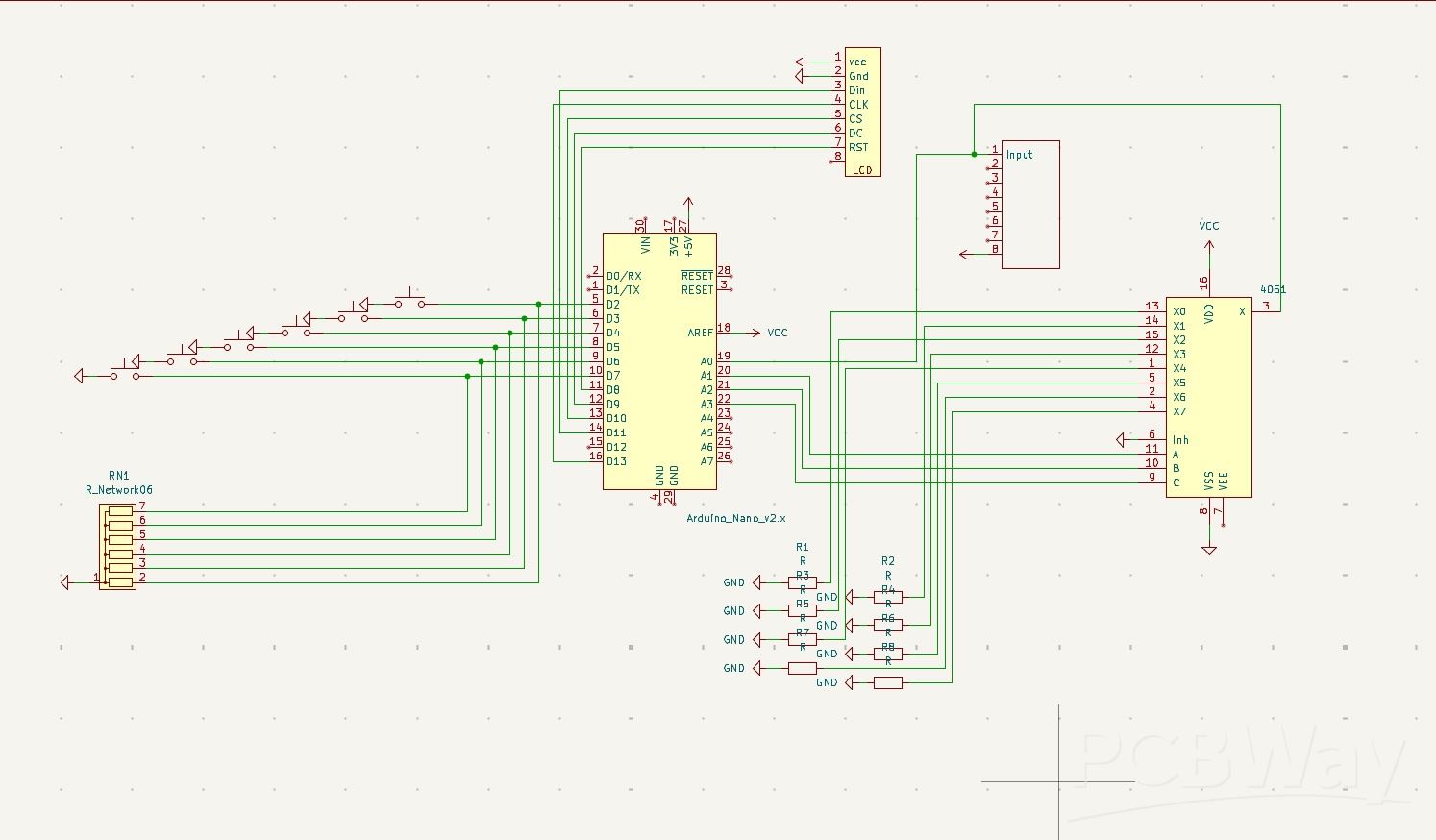
The microcontroller cannot measure resistance directly; it can only measure voltage. When you plug in an unknown resistor (Runknown), it pairs with a known reference resistor (Rknown) to create a voltage drop.
The microcontroller measures this output voltage (Vout) and uses a simple ratio to instantly calculate the unknown resistance:
Vout=5V⋅(Rknown+RunknownRunknown)
A single reference resistor cannot accurately measure both tiny and massive resistances. To solve this, the CD4051 Multiplexer acts as an automatic electronic switch.
It cycles through a bank of different on-board resistors (100Ω, 1 kΩ, 10 kΩ, etc.) to find the perfect match for your target resistor. Once it finds the range that gives the cleanest voltage reading, the microcontroller locks it in and displays the final, highly accurate value on the LCD screen.
Color Code calculator and Ohmmeter
Project images are for reference only. Actual production is based on the manufacturing files on the project page.
Please review the designer's notes (e.g., PCB thickness) and select the appropriate options.
PCBWay is not responsible
for issues caused by unsuitable parameter selections.
For more important ordering information, please refer to
Read More


Raspberry Pi 5 7 Inch Touch Screen IPS 1024x600 HD LCD HDMI-compatible Display for RPI 4B 3B+ OPI 5 AIDA64 PC Secondary Screen(Without Speaker)
BUY NOW


- Comments(1)
- Likes(0)
More by Avanish Sahoo
-
SmallOLED - Live PC Stats, Animated Clocks & Audio Visualizer
800 0 3 -
"Talking Multimeter": Arduino-Based Speech Add-on for Multimeters with SCPI Protocol
452 0 1 -
Programmable Mist Maker - XIAO / QT PY Extension
2928 2 3 -
RadioHAT - Raspberry Pi radio development platform
2479 0 4 -
-
-
-
ARPS-2 – Arduino-Compatible Robot Project Shield for Arduino UNO
4563 0 6