

SPARROW 1 Flight computer
Hi there,
my name is Alexis, since i was a little kid i always wanted to build a rocket but being a student i can't really afford expensive avionics so after a while of studying about electronics i've decided to design and build SPARROW 1 for a rocket with the same name
The SPARROW project began as a simple ATtiny-based circuit on a breadboard with a single pressure sensor. While it was a great start, the limitations were clear—not enough processing power, not enough I/O, and unreliable 433MHz radio communication. It was time to aim higher.
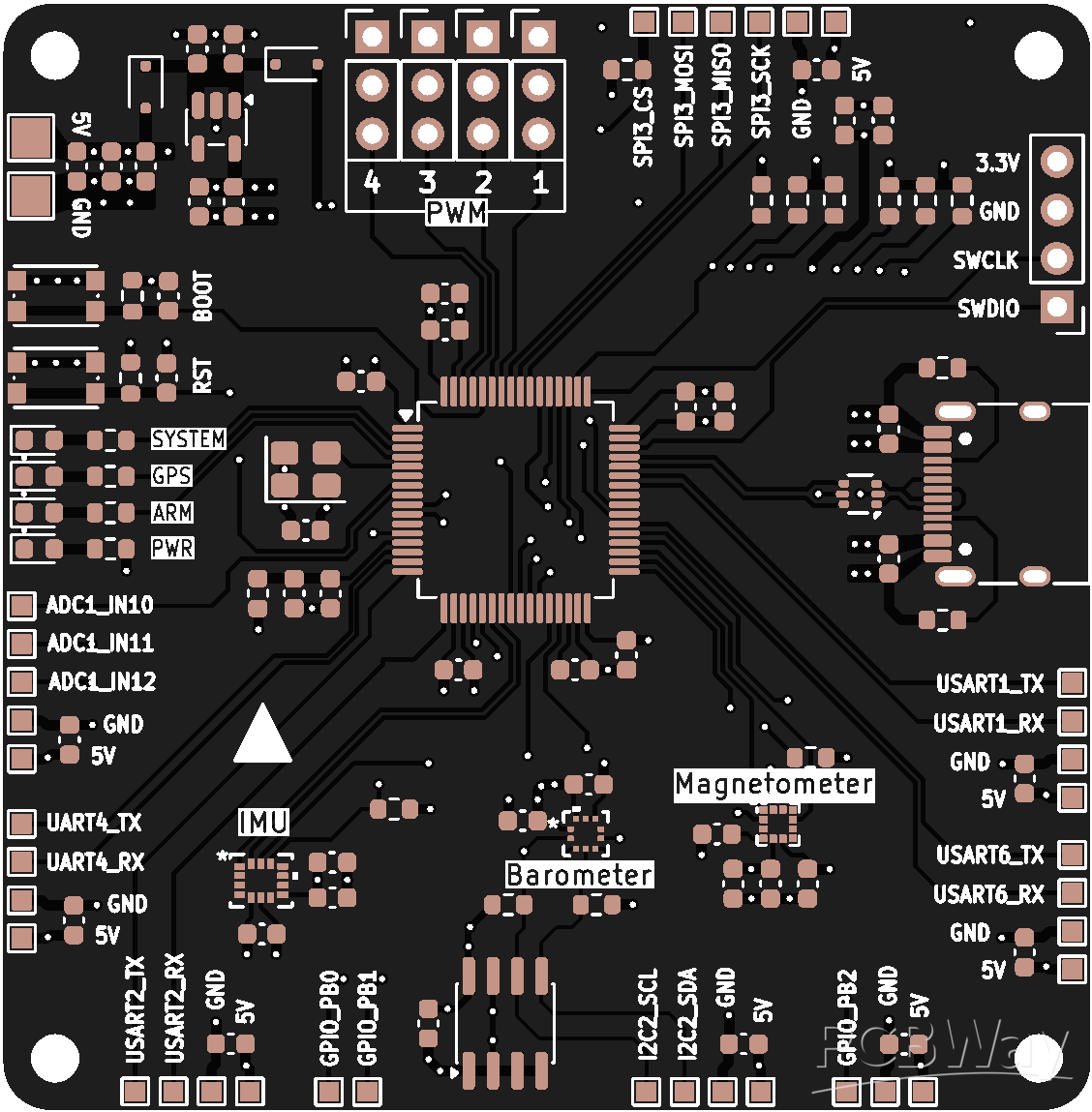
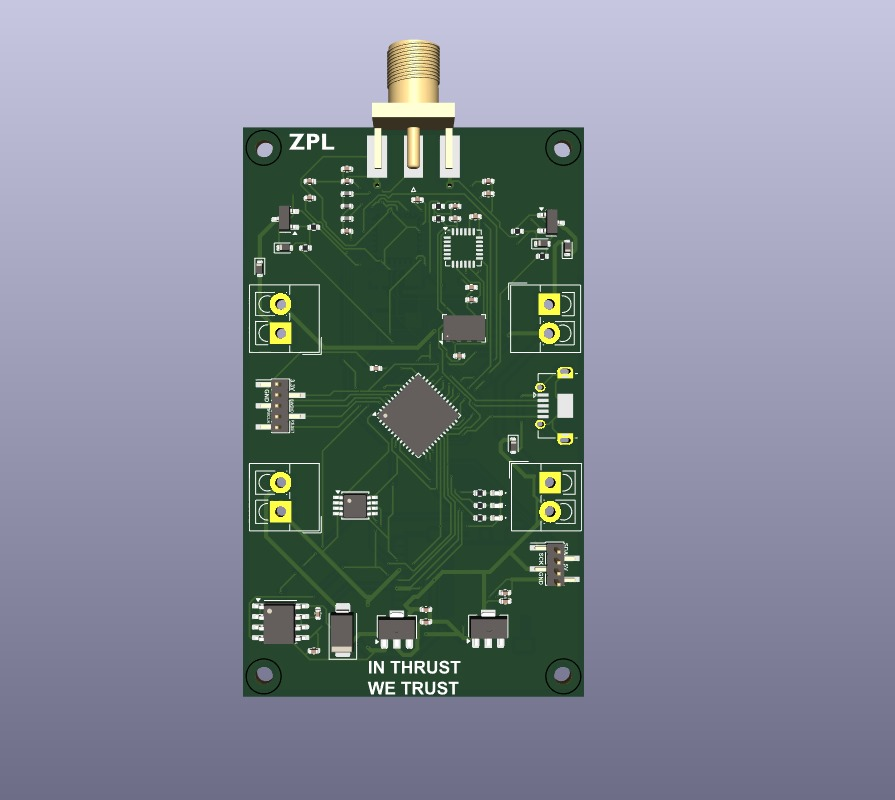
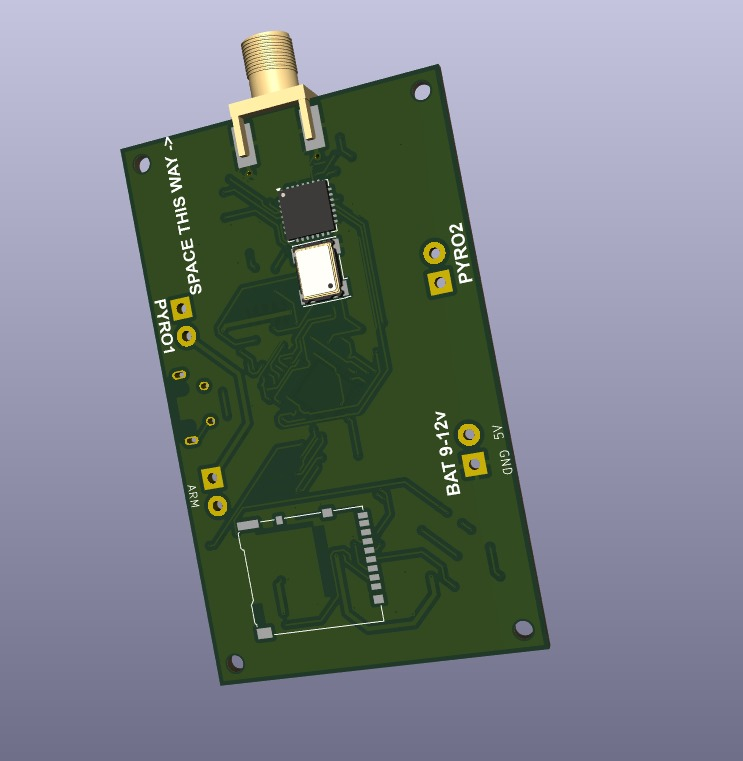
The result is the SPARROW 1: a feature-packed, 7x4 cm flight computer meticulously designed to be the brain of a modern model rocket. While compact enough for most airframes, its size allows for a robust set of features and, most importantly, room for expansion.
this project aims to be a long lasting development for a better avionics board for my own projects and maybe even other people model rocket projects
SPARROW 1 is packed with hardware chosen for performance and reliability:
- Powerful Core: At its heart is an ATSAMD21G18A microcontroller, an ARM Cortex-M0+ chip that provides plenty of power for complex calculations, data logging, and real-time control.
- Comprehensive Sensor Suite: Onboard sensors gather a complete picture of the flight environment:
- MPU-6050: A 6-DOF IMU that measures acceleration and rotation on all three axes.
- MS5611: A high-precision barometric altimeter to accurately track altitude.
- INA219: A dedicated sensor to monitor the health and real-time power consumption of the entire system.
- Reliable Dual-Deployment: Two fully protected, MOSFET-controlled pyrochannels allow for safe, independent deployment of drogue and main parachutes, a critical feature for high-altitude flights and minimizing drift.
- Long-Range Telemetry: A 915MHz SX1276 LoRa radio module provides a robust, long-range link for transmitting live flight data back to a ground station, ensuring you never lose contact with your rocket.
- Onboard Data Recording: An onboard microSD card slot and a secondary SPI flash memory chip ensure that every piece of high-resolution sensor data is securely logged, even if the radio link is lost.
- Designed for Expansion: The board is built with modularity in mind. A dedicated I2C expansion port allows anyone to design and connect their own scientific experiment modules—like a GPS, camera, or environmental sensor—and use the SPARROW's core systems to power, log, and transmit the data.
As a student, I understand the financial constraints that can hold back ambitious projects. I am currently unable to fund the initial manufacturing run of SPARROW 1 prototypes myself.
A sponsorship from PCBWay would enable me to order the first SPARROW V1 prototypes for critical real-world testing. This is the essential next step in creating an open-source platform that will open the doors of STEM to students through hands-on rocketry projects
- Comments(0)
- Likes(0)