

Ontario Tech Racing
Ontario Tech Racing is a team of dedicated engineering and business students who design, manufacture, and market a Formula-style electric race car. Each season, we compete at the Formula SAE Electric and Formula Hybrid + Electric competitions representing Ontario Tech University against top universities across North America.
To engineer a high-performance, fully electric Formula-style race car and develop the next generation of industry-ready engineers through hands-on experience in electrical design, mechanical systems, powertrain engineering, manufacturing, testing, and team operations.
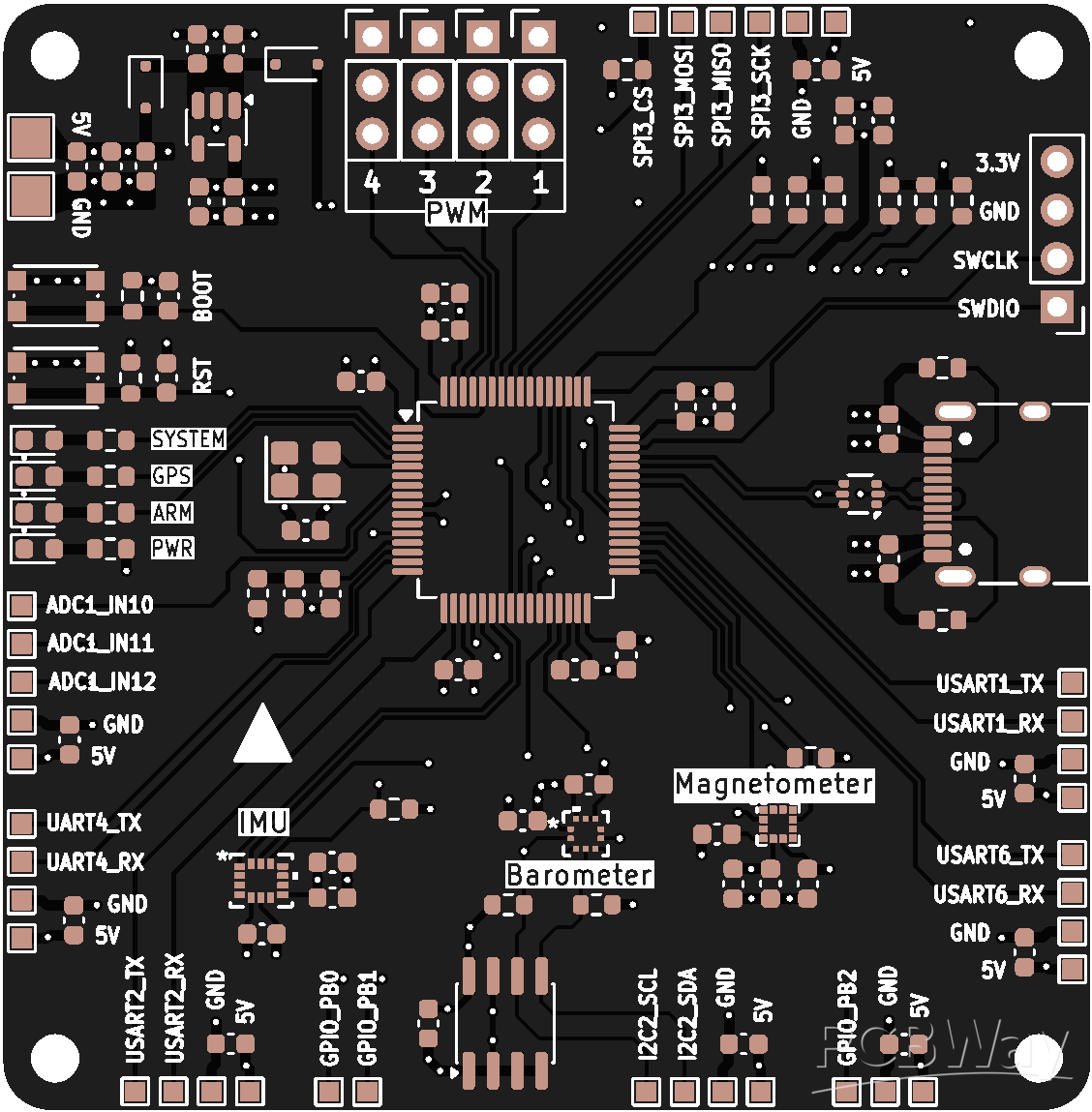
Our electronics division is responsible for the design, fabrication, and validation of all critical low-voltage and high-voltage PCBs on the vehicle. These boards ensure driver safety, powertrain reliability, regulatory compliance, and high-performance data flow.
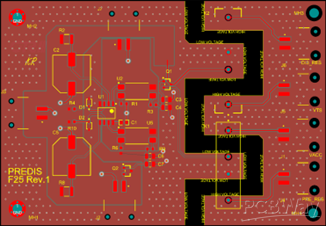
Our primary hardware focus areas include:
- Safety Circuit PCBs
- High-Voltage Battery Management PCBs
- Data Acquisition & Telemetry PCBs
Most of our boards are designed in-house, giving our team complete control over system reliability and innovation.
The Formula SAE Electric rule sets strict requirements for vehicle safety. Our custom safety circuits ensure that the car always operates within safe electrical limits—both during driving and maintenance.
Safety Circuit PCBs
1. Precharge–Discharge Board
The Precharge–Discharge Board is responsible for safely powering up the car’s high-voltage system. Our battery pack feeds into an inverter with large internal capacitance, and this board ensures that those capacitors charge gradually rather than experiencing a damaging inrush of current. By directing power through a controlled path during startup, the board allows the inverter to reach approximately 90% of the battery pack voltage before fully engaging the system. This protects the power electronics, prevents component stress, and ensures the vehicle’s high-voltage system initializes smoothly every time.
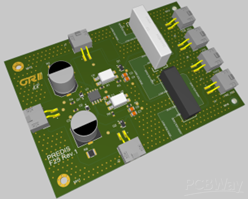
2. TSSI & RTM Control Board
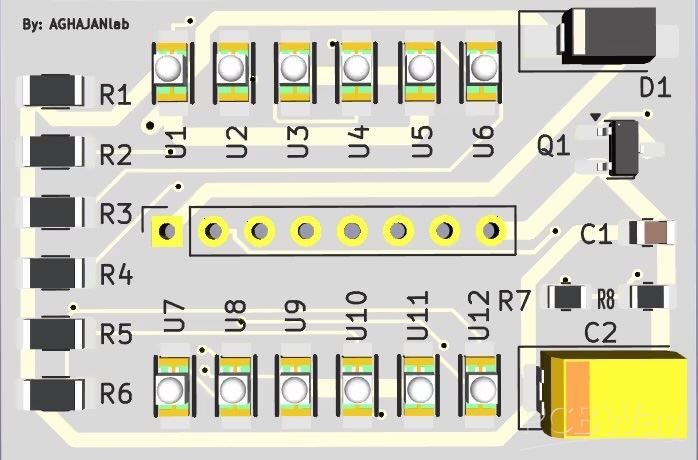
The TSSI (Tractive System Status Indicator) and RTM Control Board serves as the car’s primary visual alert system for high-voltage status. It continuously monitors the voltage levels of both the battery and inverter, and when the car is powered on, it drives a clear red, yellow, or green indicator based on the system's electrical state. This gives team members, drivers, and competition officials an immediate and unambiguous understanding of whether the vehicle is safe to handle, energized, or ready to operate. The board is fully compliant with Formula SAE regulations and plays a crucial role in ensuring safety on and off track.
3. Latch Control Board
The Latch Control Board acts as a failsafe that prevents the vehicle from operating if any critical subsystem reports a fault. It continuously receives status signals from the battery management system (BMS), brake pressure sensor, and ECU. If any of these systems detect abnormal conditions, the board opens or closes a latching relay that immediately disables the tractive system. This guarantees that the car cannot be driven under unsafe conditions, and it provides a reliable, hardware-level layer of protection in addition to software-based safety checks.
High Voltage and Battery Management
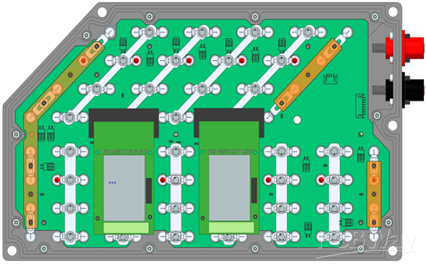
The HV PCBs revolutionized our pack assembly and maintenance processes by reducing the number of loose wires to essentially zero. This allows for solderless assembly (important when working with batteries), robust internal connections to BMSs, and a perfectly standardized layout across all of our modules. The HV PCB improves safety, reduces error probability, and makes assembly/maintenance simpler.
Data Acquisition
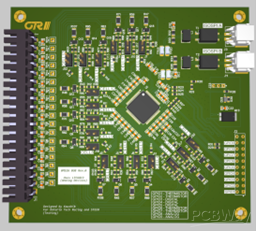
Our Formula SAE Electric team is developing a fully custom Data Acquisition (DAQ) system to enhance vehicle performance and validate our engineering simulations. The system consists of quarter-car modules placed at each corner of the vehicle, each equipped with its own microcontroller, ADCs, CAN transceiver, and power management circuitry. These modules interface with wheel speed sensors, damper potentiometers, load cells, and thermal sensors, all feeding into our central CAN-based logging architecture. This modular approach drastically reduces wiring complexity while enabling high-resolution, real-time data collection essential for suspension tuning, vehicle dynamics analysis, and track-side decision-making.
- Comments(0)
- Likes(0)