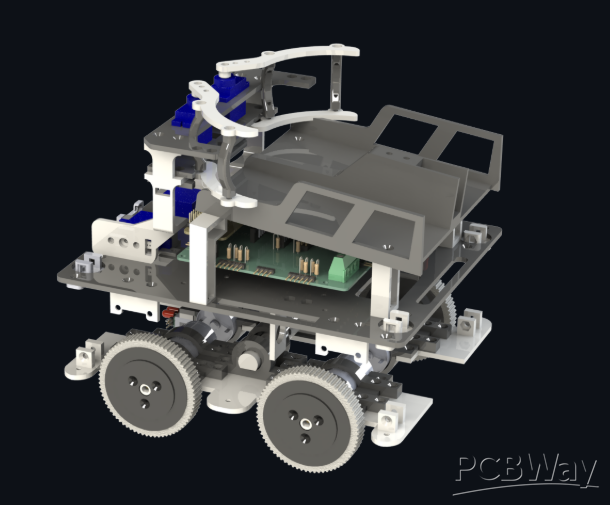
NoClueRobotics FTC 2026 Competition Robot
The NCR-1 project is a competition robotics platform developed by NoClueRobotics, a student-led team from Indonesia, to compete in the FIRST Tech Challenge (FTC) 2025–2026 season. Our goal is to design, build, and program a high-performance robot capable of completing complex tasks using mechanical engineering, electronics, and intelligent software.
We created this project to give students real-world experience in STEM fields such as robotics, programming, and problem solving. Through hands-on development, our team learns how to design mechanical systems, integrate sensors, and implement autonomous algorithms. The robot is built using a modular design approach, allowing for rapid prototyping, testing, and improvement throughout the season.
The system combines precision mechanical components, custom electronics, and software written in Java to perform both driver-controlled and autonomous operations. Features include computer vision, sensor-based navigation, and strategic mechanisms designed specifically for the FTC game challenge.
Beyond the technical goals, this project is also about education and community impact. We actively share our progress through workshops, social media, and outreach programs to inspire other students to explore robotics and technology.
NCR-1 represents our commitment to innovation, teamwork, and continuous learning. Through this project, we aim not only to compete at a high level but also to contribute to the growth of STEM education in Indonesia.
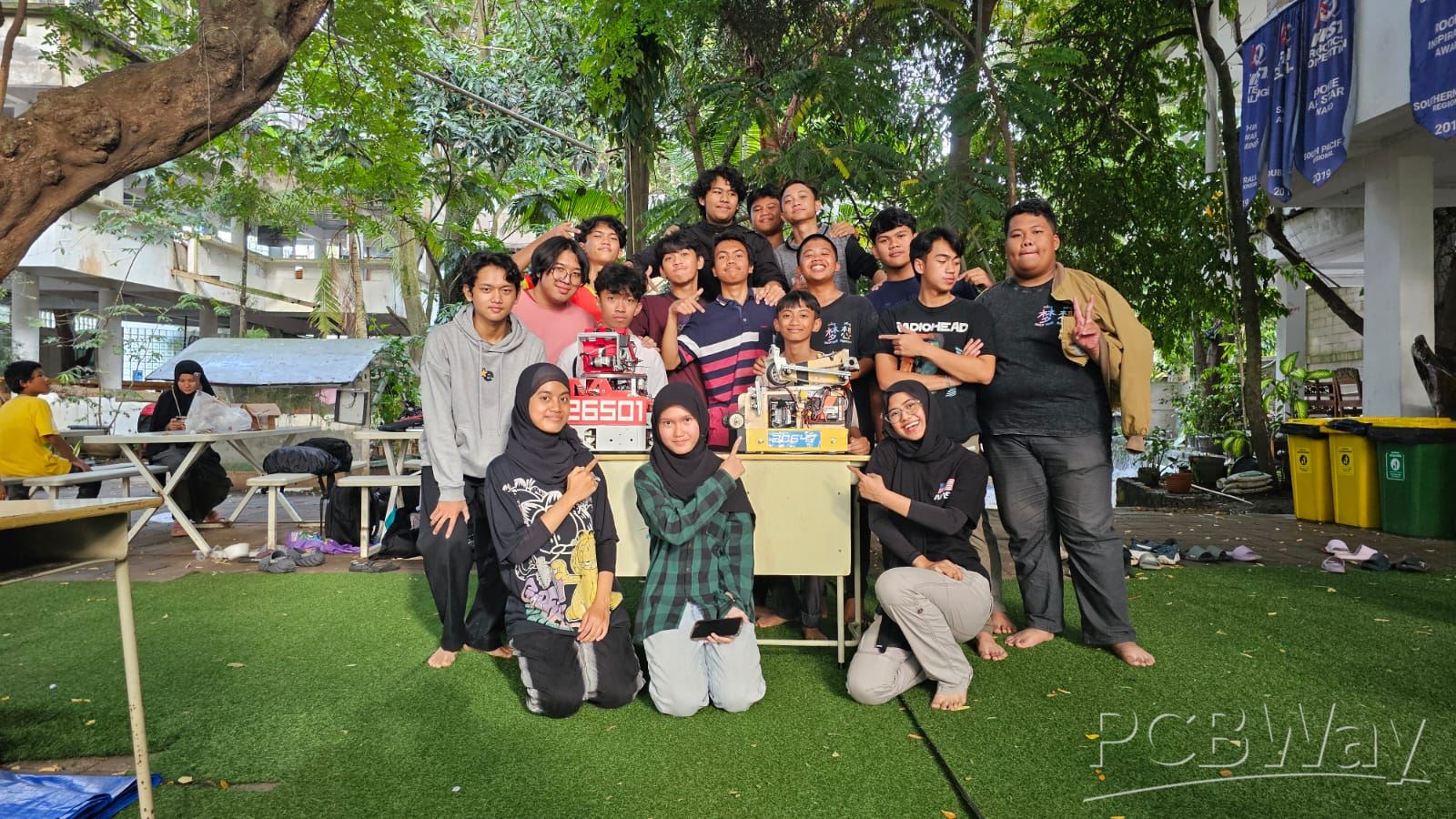
So, about our team and project, NoClueRobotics is a student-led robotics team, founded in 2025 with the goal of developing technical skills and inspiring innovation among young people. our team consists of 14 high school students from diverse educational backgrounds. supported by 3 experienced mentors, who guide us in engineering design, programming, mechanical, CAD, and project management. Despite coming from different schools and areas of expertises, we are united by a shared passion for robotics, problem solving, and STEM (Science, Technology, Engineering, and Mathematics) education.
our current project is the development of a competitive robot for the FIRST Tech Challenge 2025-2026 season. The project involves designing, building, programming a robot that capable of completing complex game challenges in both autonomous and driver-controlled modes. We are pretty much responsible for the entire engineering process, including mechanical design, electrical and wiring integration, software development, testing, and also iteration.
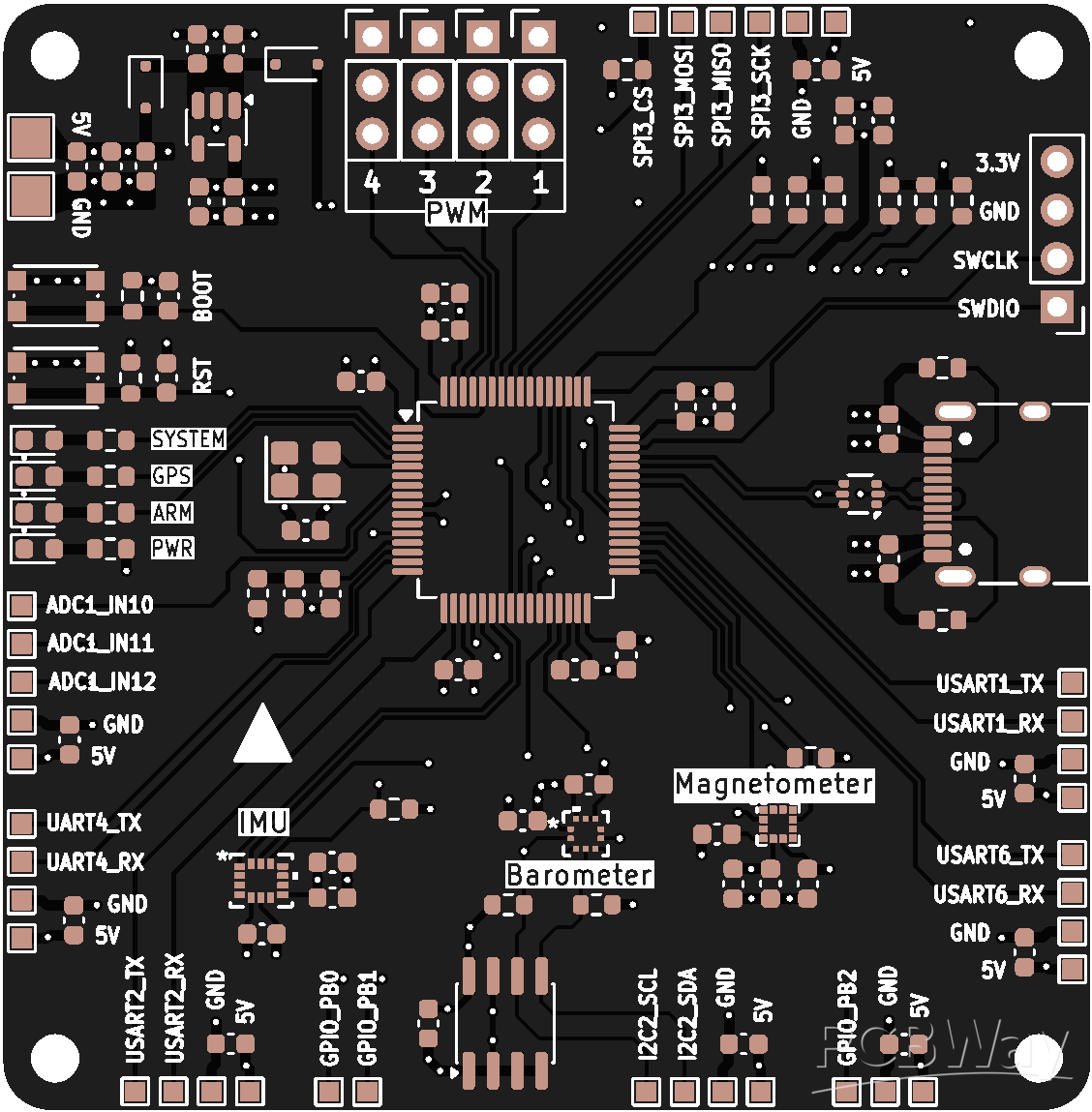
Technically, our robot integrates custom mechanisms, sensor systems, computer vision, and motion control algorithms to achieve high precision and reliability. Team members are collaborating in specialized divisions such as mechanical engineering, programming, electronics and PCB design, also strategy and decision making. Allowing everyone to contribute according to their strengths.
Beyond competition, our team is committed to community outreach. We organize workshops and training sessions to introduce robotics and programming to other students, helping to expand access to tech education in Indonesia. Through this project, we aim not to only compete at a high level but also to grow as engineers, innovators, and future leaders in technology.
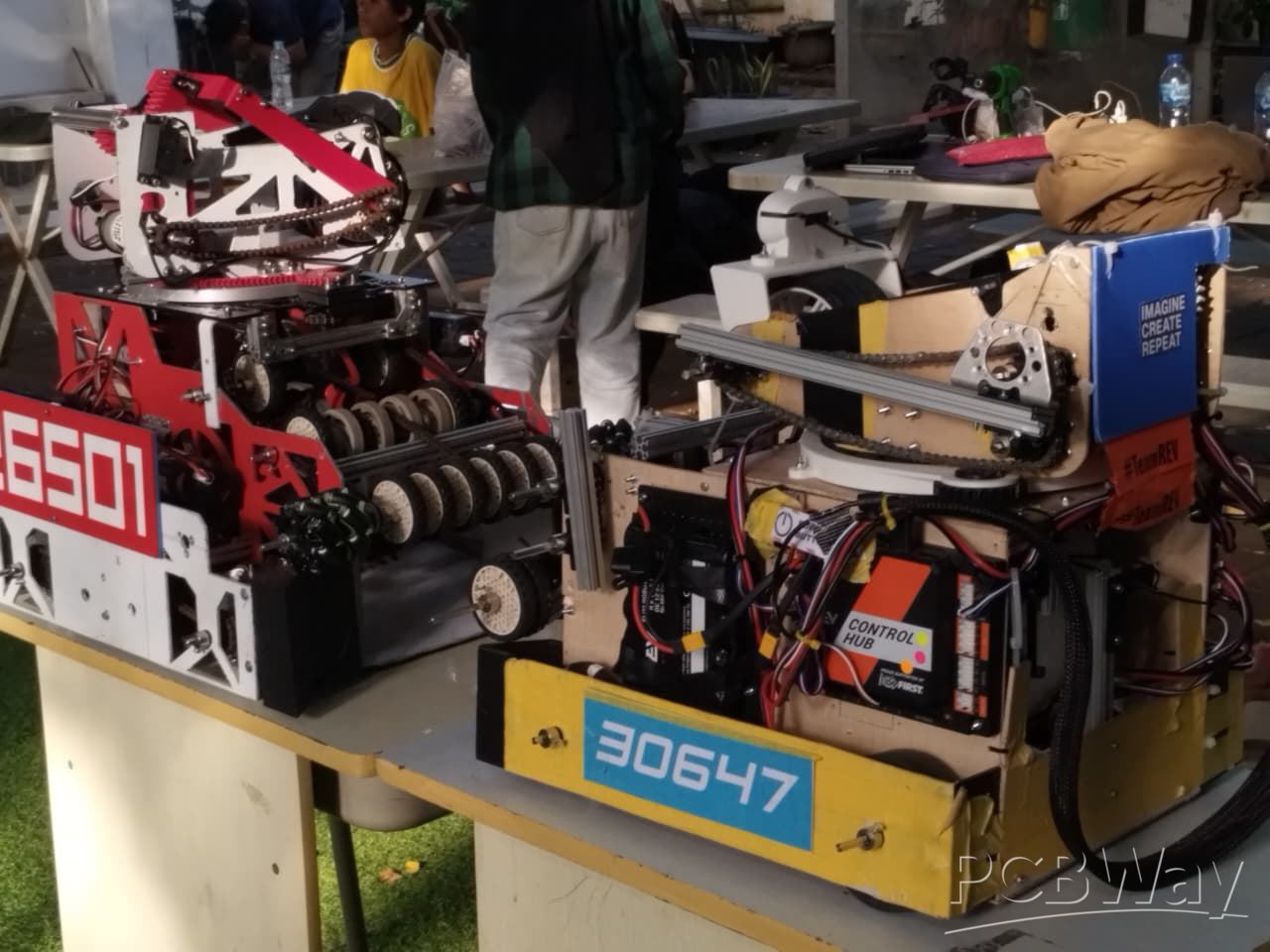
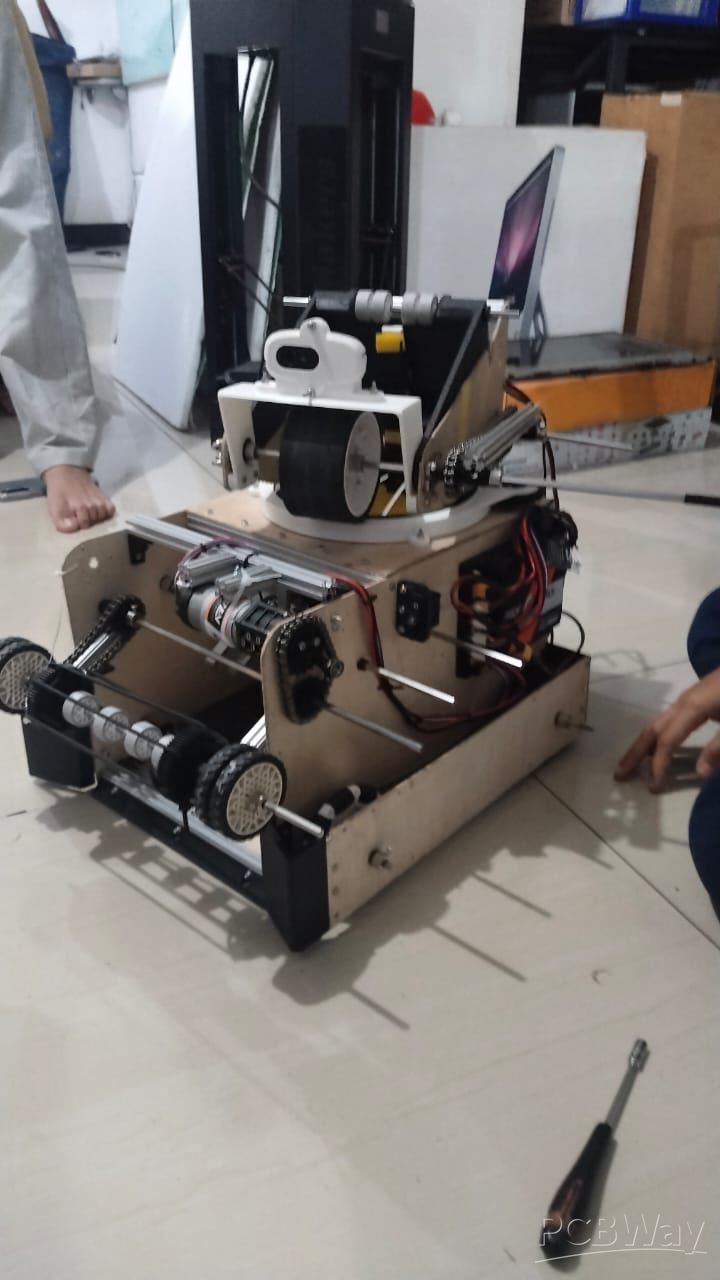
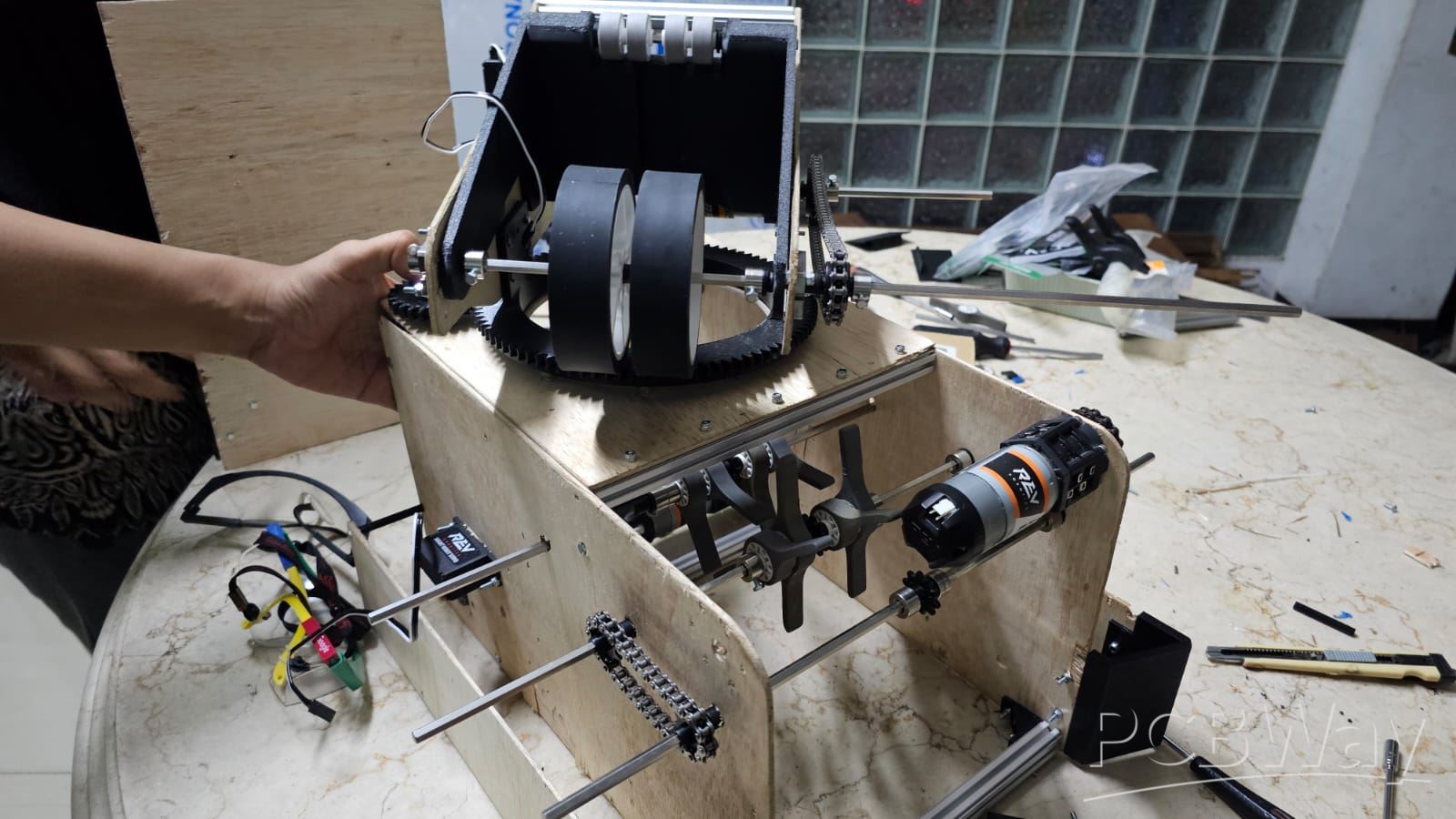
In this season, our main focus is to developing a fully functional robot for FTC competition, specifically for the 2025-2026 game challenge. We are currently working on several key subsystems, including a high-presision drivetrain, a custom intake, and scoring mechanism. we also working on sensor integration for autonomous navigation, and software algorithms for motion control and computer vision. Each part of the robot is carefully designed using CAD software, and fabricated through 3D Printing and using plywood, we are using plywood because we didnt have enough money to do CNC Milling so were using plywood. but even though we use plywood for almost main material of the bot, we tested iteratively to achieve optimal performance.
Our programming division is developing autonomous routines using Java, implementing PID control, encoder-based movement, and vision processing to allow the robot to operate independently during matches. Meanwhile, the mechanical team is responsible for prototyping mechanisms, assembling structural components, and ensuring durability and efficiency. The electronics team handles wiring, power management, and sensor integration to ensure stable and reliable system performance.
Together, we function as a collaborative unit where every member contributes unique skills and perspectives. Through this project, we are not only building a robot but also learning how to work as an engineering team, manage complex projects, and solve real-world technical challenges.
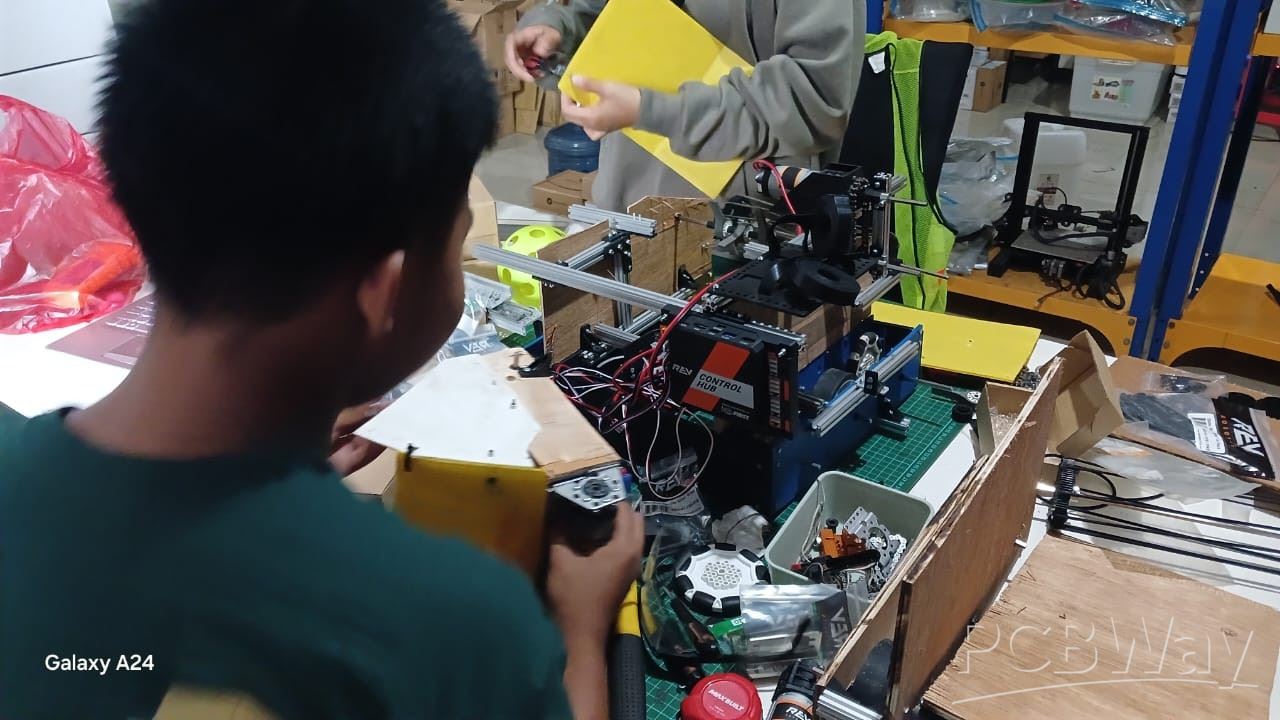
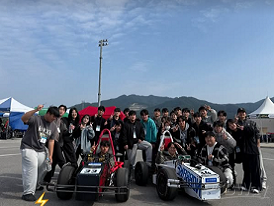
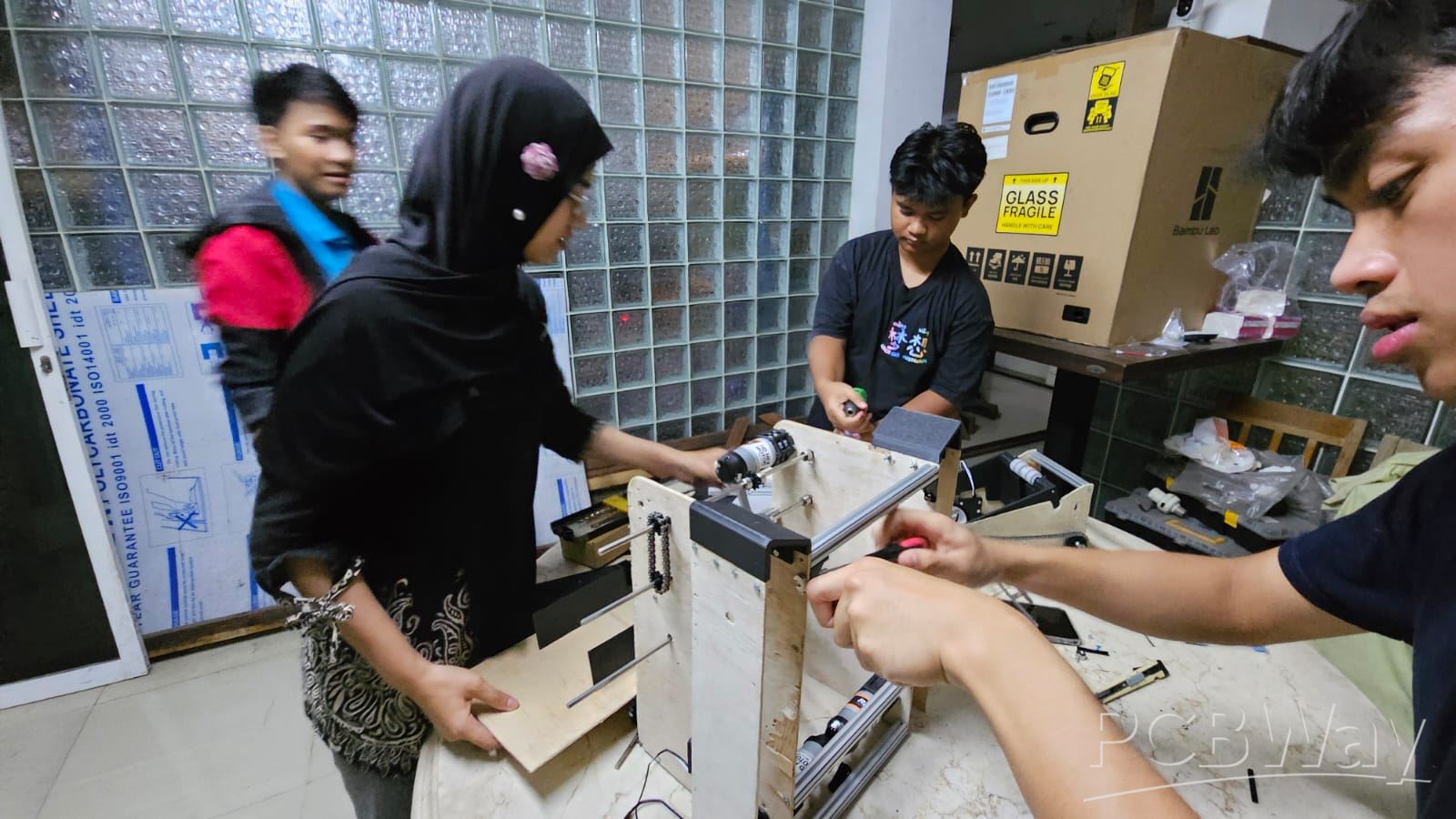
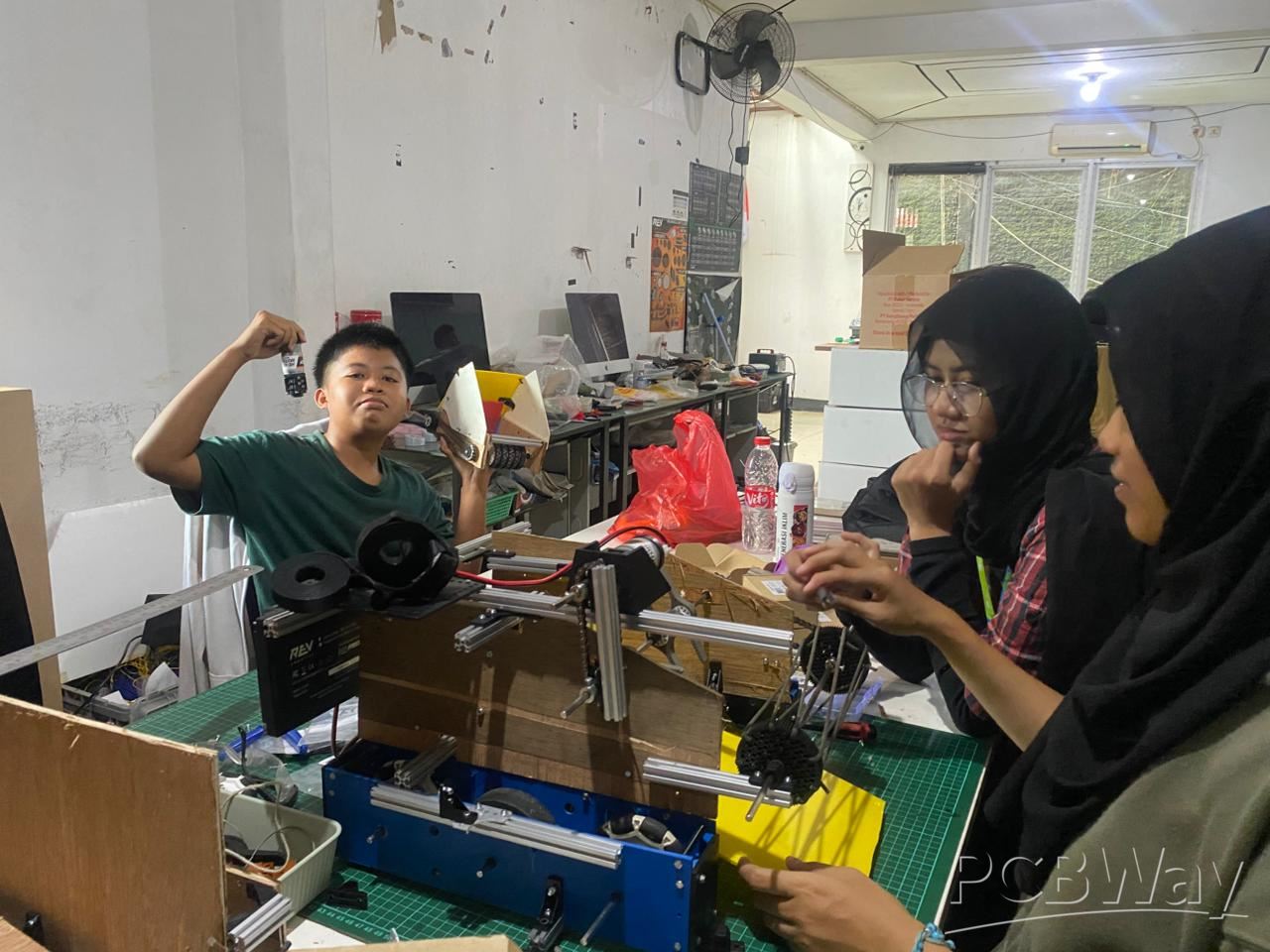
Below theres a picture of us and the robot. 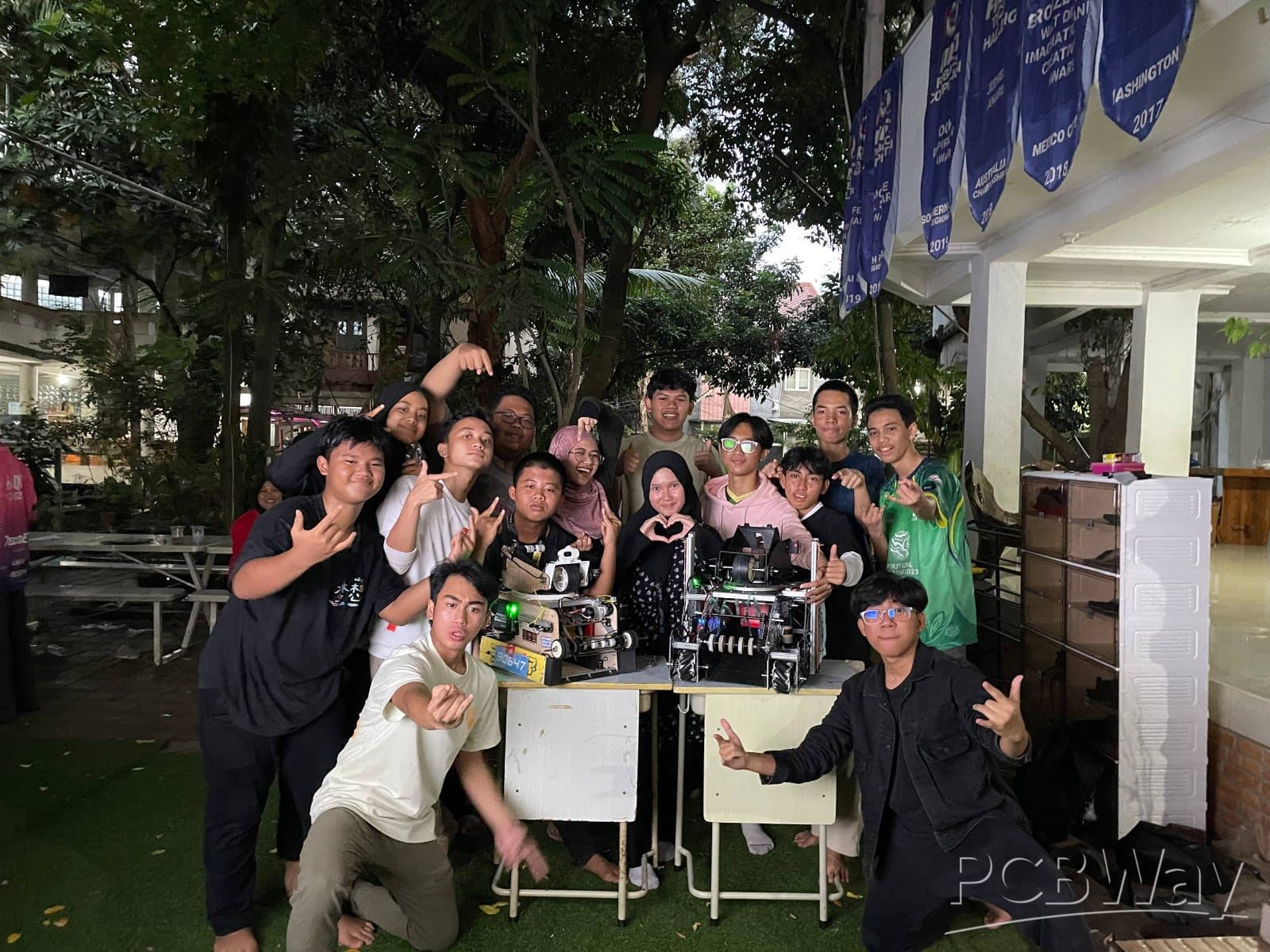
- Comments(0)
- Likes(1)