FIU Rocket Team Sponsor
FIU Students for the Exploration and Development of Space (SEDS) Miami, Florida
About Our Team
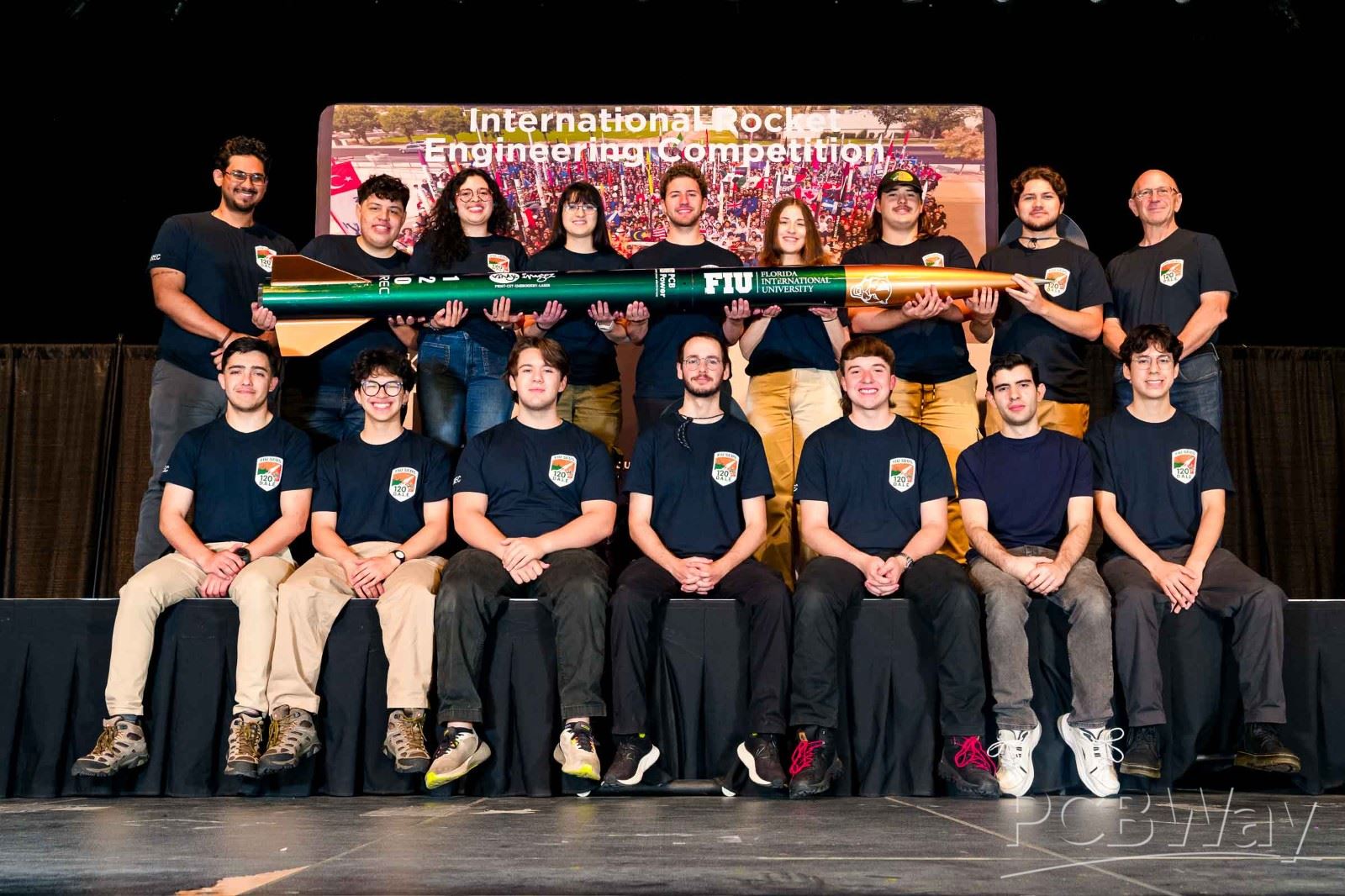
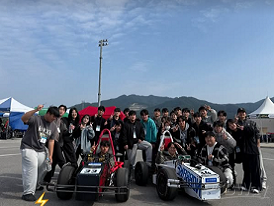
Florida International University's Students for the Exploration and Development of Space (SEDS) is a student-run organization dedicated to advancing engineering education, fostering undergraduate research, and promoting student innovation in aerospace technology. Our team brings together passionate students from computer engineering, mechanical engineering, physics, and other disciplines to design, build, and launch competitive rockets while developing critical technical skills for the aerospace industry. As the leading aerospace organization at FIU, we are committed to fostering hands-on engineering experience and creating accessible, open-source solutions that can benefit university rocket teams worldwide.
Our Competition Achievements
FIU SEDS has established itself as a competitive force in collegiate rocketry, representing our university at the International Rocket Engineering Competition (IREC) with impressive results:
- Ranked 1st place in Florida for two consecutive years
- Ranked 11th internationally in IREC competition standings
- 2025 IREC Performance: Successfully launched our rocket to 9,023 feet out of our targeted 10,000 feet apogee, placing 56th out of 81 international teams
These achievements demonstrate our team's technical capabilities and dedication, particularly as we continue developing fully student-researched and developed (SRAD) avionics systems. Building on this foundation, we are preparing for upcoming competition seasons with improved designs, expanded capabilities, and a growing team of motivated students eager to push the boundaries of what university teams can achieve.
Avionics Department: PCB Projects
Our Avionics Department is the technical backbone of our rocket systems, responsible for flight data collection, telemetry, ground station communication, and mission-critical electronics. We develop custom PCB solutions designed specifically for the demanding environment of high-powered rocketry. Here are our current and upcoming PCB projects:
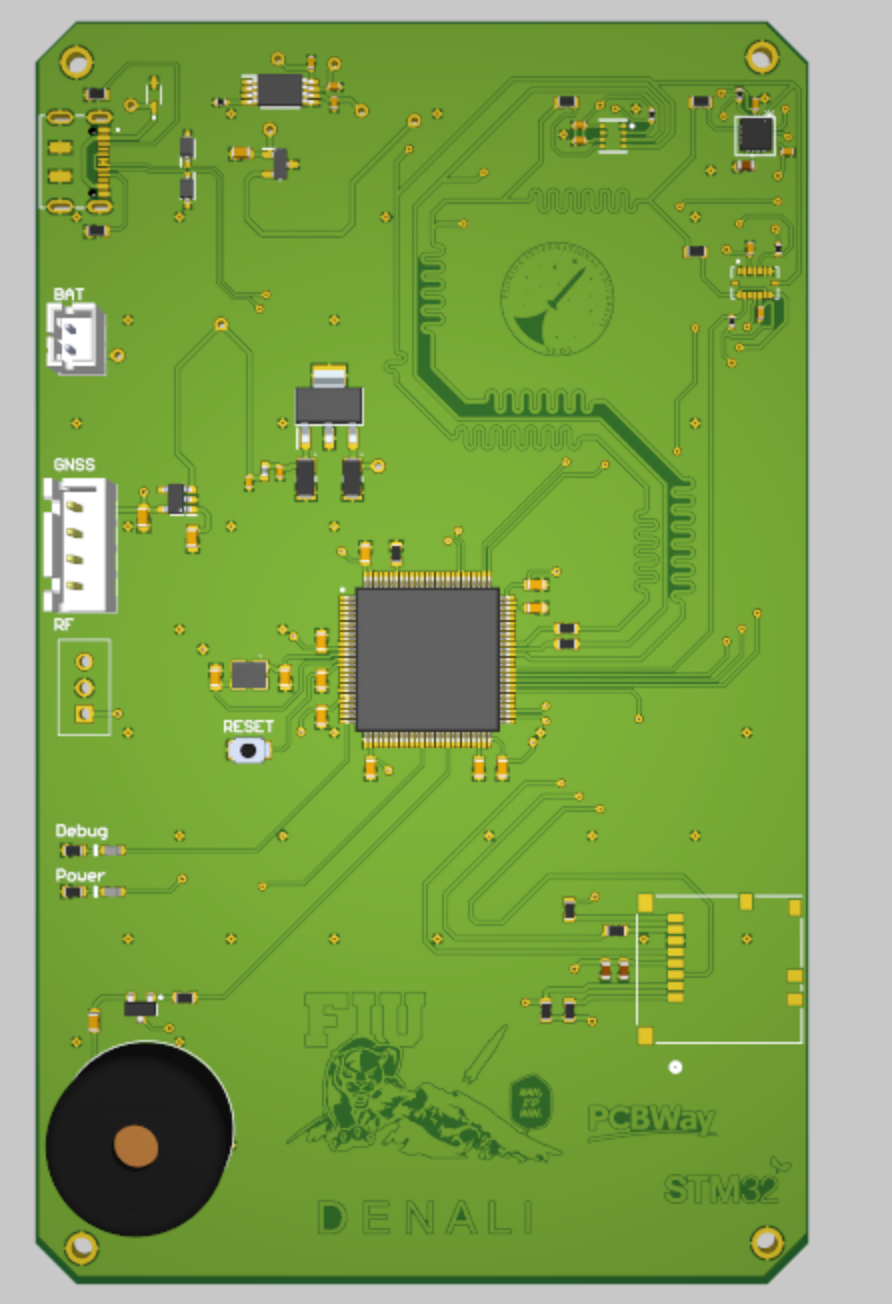
1. Denali Flight Computer (Current Generation)
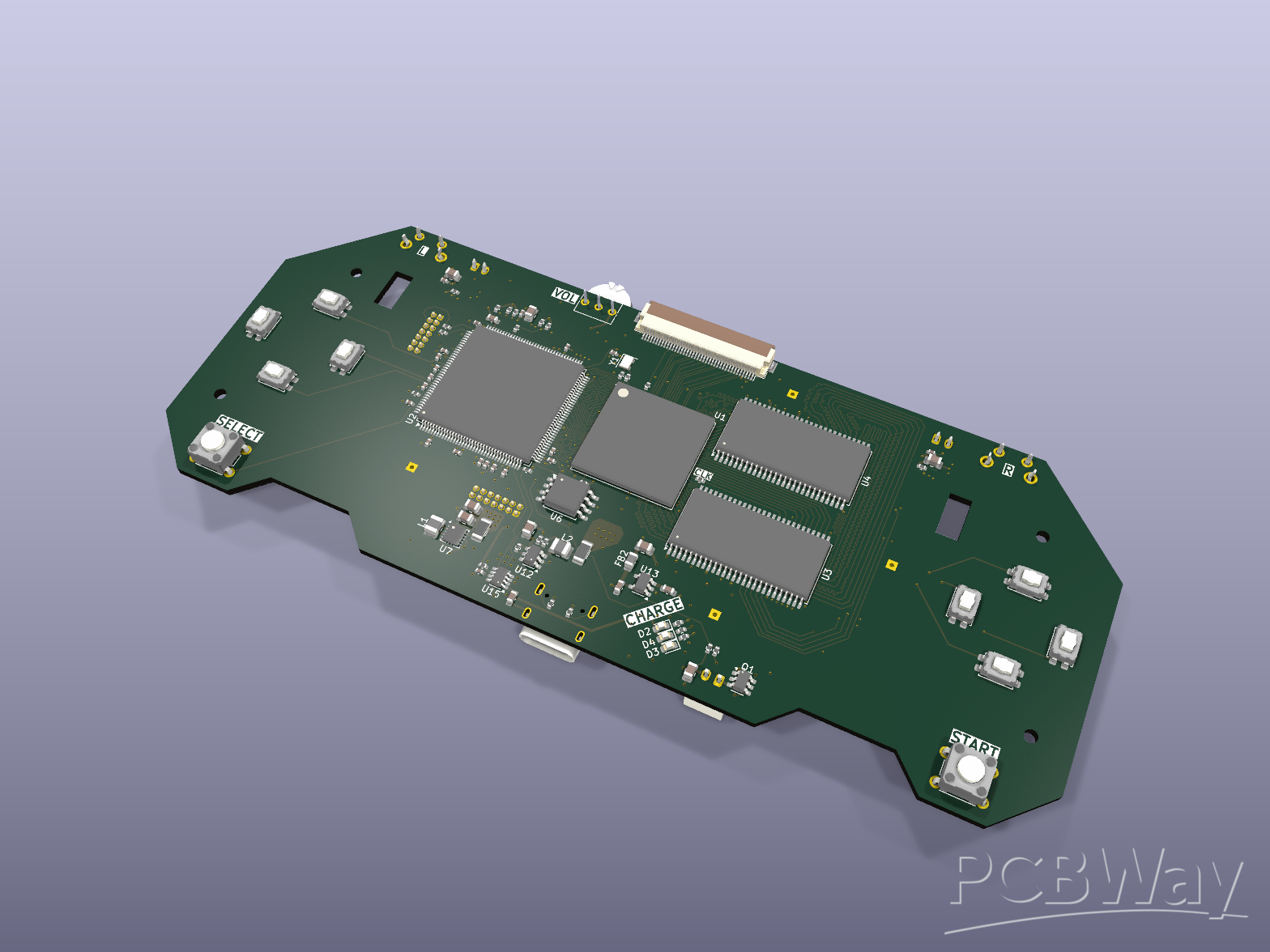
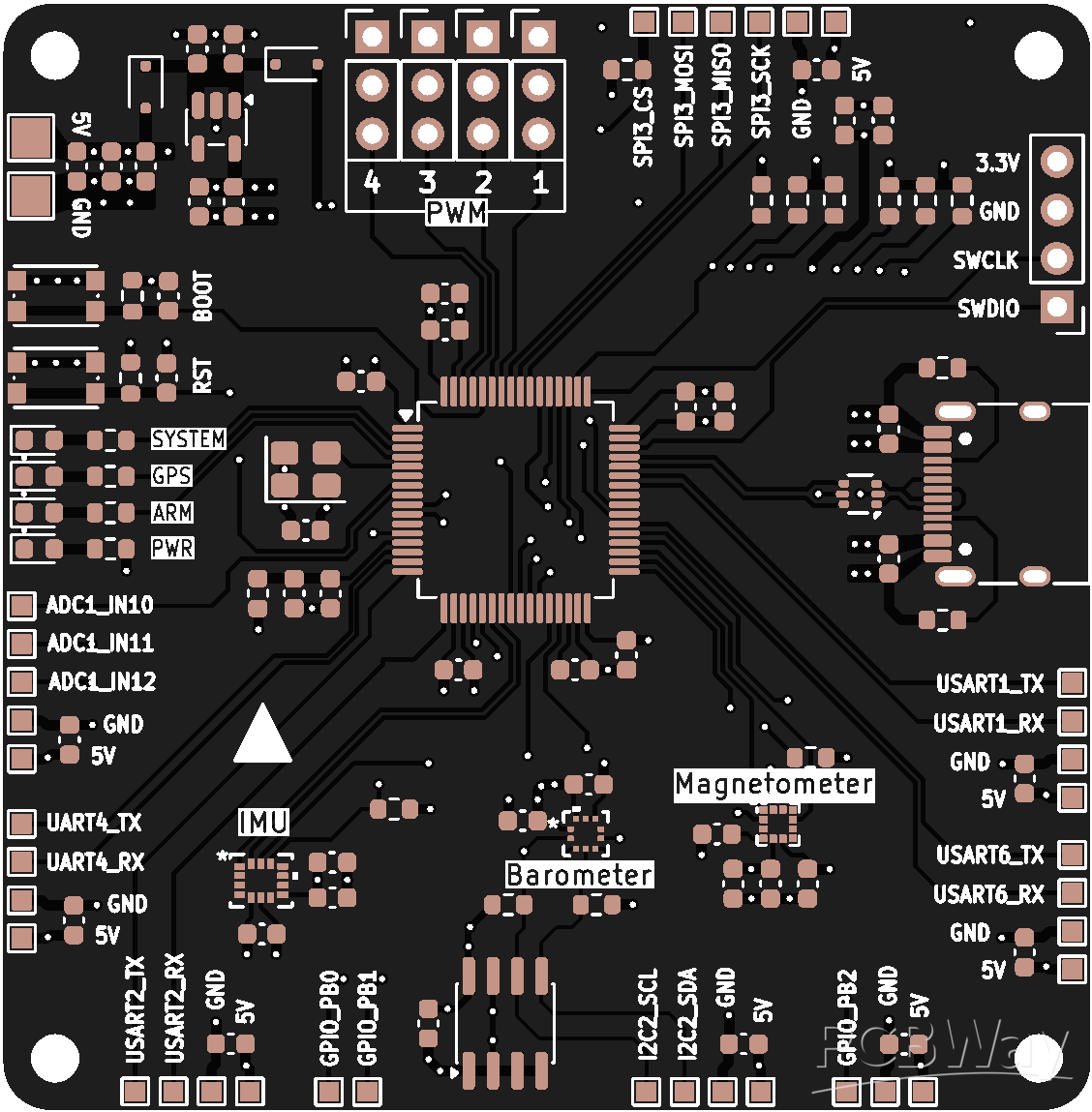
Our student-researched and developed (SRAD) flight computer serves as the primary telemetry system aboard our competition rockets. Built around the STM32H7-based system with advanced sensor integration, the Denali flight computer collects and transmits critical flight data in real-time while maintaining onboard data logging for post-flight analysis.
Key Features:
- Real-time sensor data collection: 6-axis IMU (acceleration, gyroscope) barometric altitude, magnetometer, and GPS coordinates
- LoRa radio telemetry for long-range communication with ground station (tested beyond 2 miles)
- Onboard SD card storage for flight data redundancy and post-flight analysis
- State machine architecture firmware programmed in C/C++ for reliable operation
GitHub Repository: [https://github.com/FIU-SEDS/Denali]
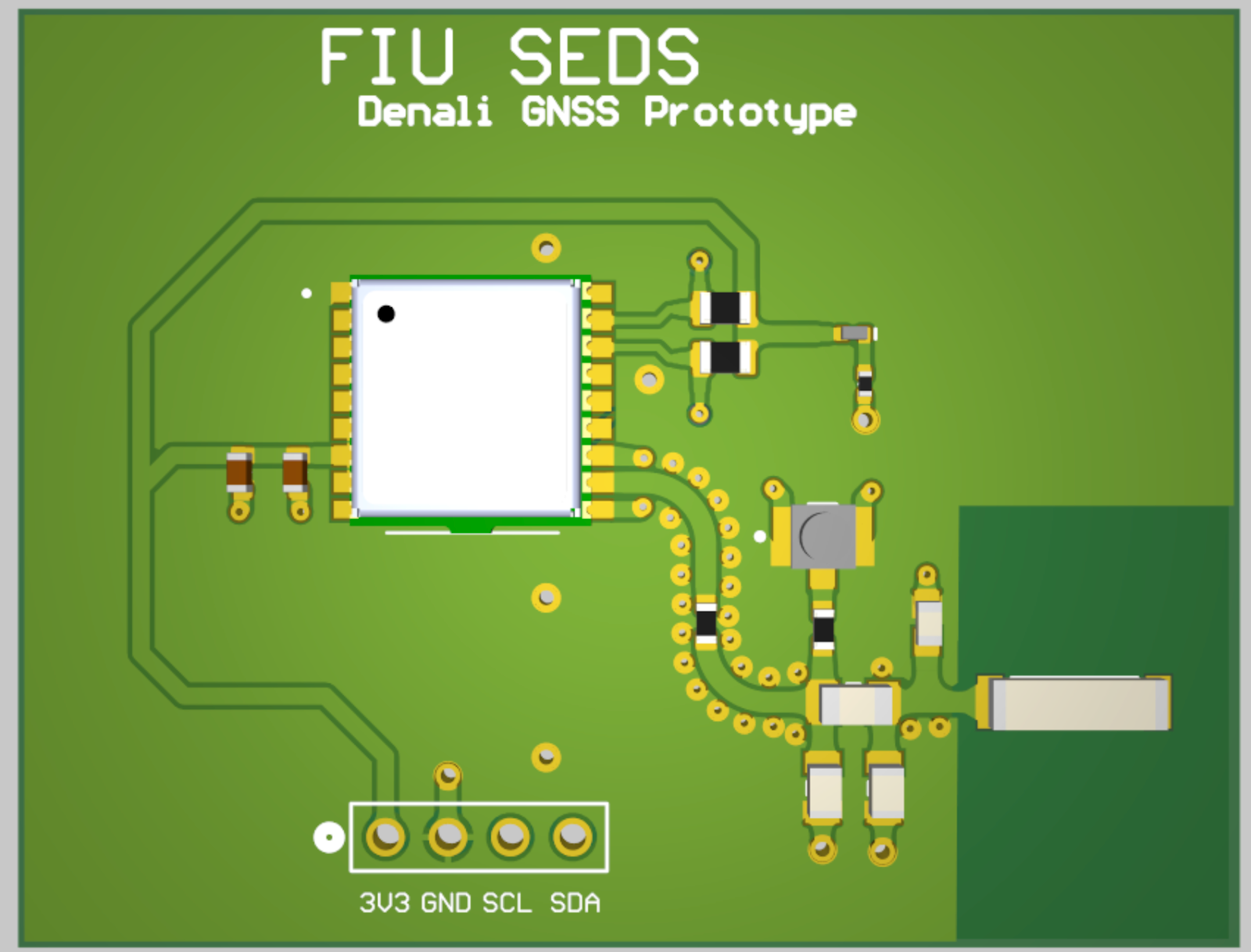
2. GNSS Expansion Board
A dedicated GPS module board designed to interface with our flight computer, providing accurate positional data throughout the flight and enabling efficient rocket recovery operations.
Key Features:
- Standalone GNSS unit with integrated antenna mounting
- SPI/UART communication interface to flight computer
- Optimized RF design for reliable satellite acquisition during flight
- Compact form factor for integration within rocket airframe
- Real-time coordinate transmission to ground station via flight computer
3. Pyrotechnic Test Box PCB
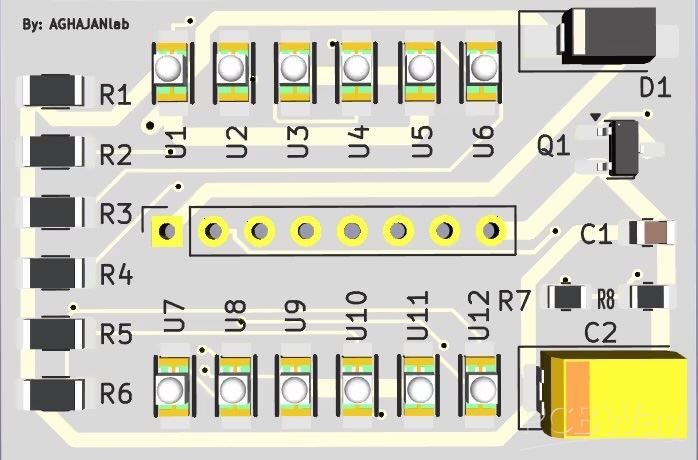
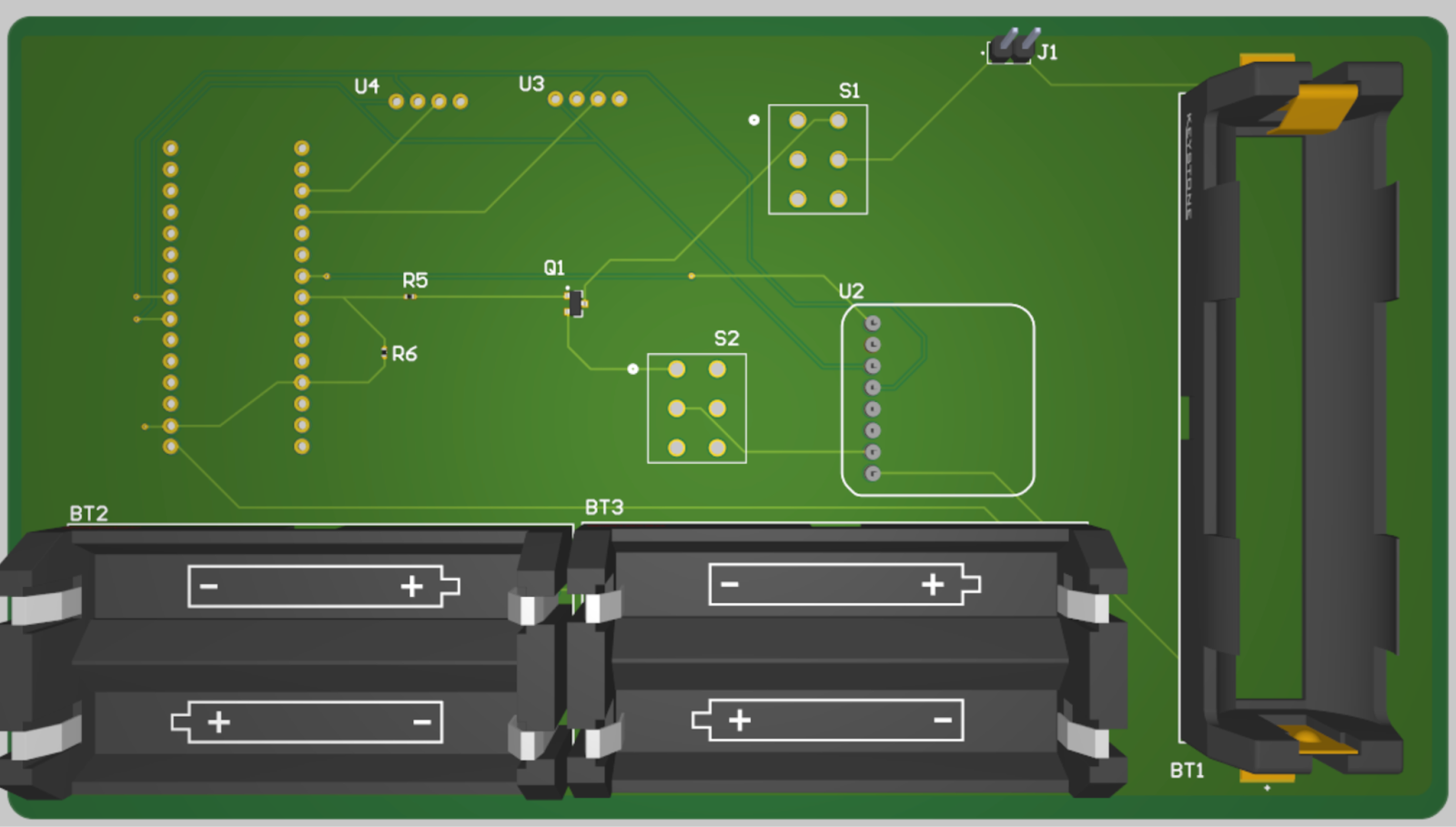
A safety-critical testing platform for validating pyrotechnic charges (e-matches) used in parachute deployment systems. This board enables safe, controlled testing of deployment mechanisms before flight operations.
Key Features:
- Isolated firing circuits with current limiting for safe pyrotechnic charge testing
- Multiple channel support for testing deployment sequences
- Continuity checking to verify e-match installation
- Safety interlock systems and status indicators
- Ruggedized design for field testing environments
4. Ground Station Telemetry System
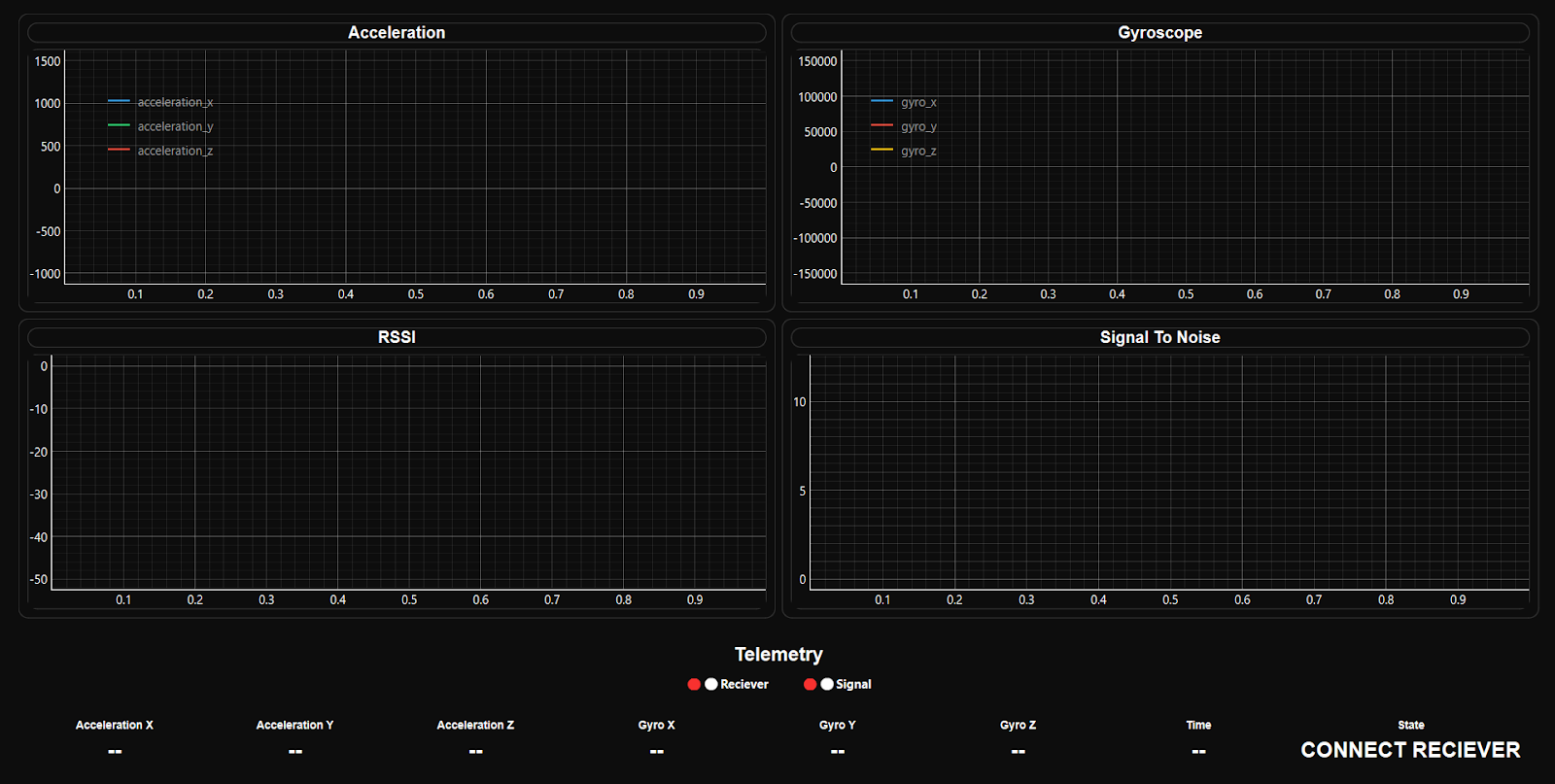
Our custom-developed ground station software provides mission control capabilities during launch operations, displaying live telemetry data and enabling real-time monitoring of rocket systems.
Software Features:
- Real-time visualization of acceleration, altitude, GPS coordinates, and orientation
- Live data plotting using Matplotlib and Pandas libraries
- Mission timeline tracking and event logging
- Post-flight data analysis and graphing capabilities
- Developed in Python with PyQt6 for cross-platform compatibility
GitHub Repository: [https://github.com/FIU-SEDS/Orbiview]
Additional Projects already developed:
Ground Station Hardware PCB: 2-layer board integrating LoRa radio modules for reliable long-range communication
Power Distribution Boards: Custom power management solutions for rocket avionics systems
Team GitHub Organization: [https://github.com/FIU-SEDS/]
5. Past Projects:
Some of our past projects since Avionics was founded to support other projects last year were:
Orizaba: which was our 2nd ever flight computer [https://github.com/FIU-SEDS/Orizaba]
Vinson: our 1st ever flight computer [https://github.com/FIU-SEDS/Vinson]
Both of these boards have flown and have been able to connect to our ground station software to display real-time telemetry.
Why We Need PCBWay's Support
As a university team operating with limited funding and navigating institutional procurement challenges, we face significant barriers in developing and iterating our PCB designs. University bureaucracy often creates timelines of 6-8 weeks for simple component orders, severely limiting our ability to rapidly prototype and test designs before competition deadlines.
We are specifically seeking PCB manufacturing sponsorship from PCBWay to provide:
- PCB Fabrication Services: Manufacturing of our custom-designed circuit boards, including multi-layer boards for flight computers, ground station hardware, and test equipment.
- Rapid Turnaround Times: Quick manufacturing cycles that align with our competition preparation schedules and academic semester timelines, allowing us to test designs before critical launch windows.
- Multiple Prototype Iterations: The ability to fabricate revised board versions throughout the design process, enabling us to validate improvements and fix issues discovered during testing.
- Quality Manufacturing for Flight Hardware: Reliable fabrication that meets the demanding requirements of high-vibration rocket flight environments, ensuring our competition hardware performs as designed.
- Assembly Services (if available): PCB assembly support would further accelerate our development timeline and allow more students to focus on design and testing rather than manual soldering.
What We Provide:
- Complete PCB design files ready for manufacturing (Gerber files, drill files, BOMs)
- Designs created in industry-standard Altium Designer
- Documented, open-source projects showcasing PCBWay's manufacturing quality
- Recognition of PCBWay's support in our competition documentation, presentations, and public repositories
Our Vision and Impact
Beyond competition success, our Avionics Department is committed to developing cost-effective, open-source flight computer systems that democratize access to advanced rocketry technology. We envision our designs and accompanying ground station software becoming resources that university teams worldwide can utilize, lowering barriers to entry in competitive rocketry.
With PCBWay's support, we can accelerate this mission while providing invaluable hands-on engineering experience to FIU students who will become the next generation of aerospace professionals.
We are excited about the opportunity to partner with PCBWay and showcase your manufacturing capabilities through our competition achievements and open-source contributions to the rocketry community.
Contact Information: Eriel Cabrera Chief of Avionics, FIU SEDS [ecabr090@fiu.edu] [786-613-8137]
Team Website: [https://github.com/FIU-SEDS/] Social Media: [https://www.instagram.com/fiuseds]
All PCB designs shown are student-developed using Altium Designer. Assembly photos, design files, and project documentation are available in our public GitHub repositories.
Apply for sponsorship >>- Comments(0)
- Likes(2)