DataForge-Pi - The Raspberry integrated DAQ
The story
Hey, I'm David from DvidMakesThings—an electrical and test engineer, and embedded systems developer. I work in test automation and embedded design, but it's more than just a job—it's my passion. I create professional yet accessible hardware, solving real-world problems while keeping things practical and efficient. In 2024, I started building my own 10-inch rack for hardware testing. Designing PCBs is one thing, but testing and bringing them to life can be a long, exhausting process. I needed a reliable and compact data acquisition system to streamline my workflow, but most DAQ solutions on the market are built for 19-inch racks, which are far too bulky for my setup. Facing this issue, I set out to design a DAQ system specifically for 10-inch racks—compact yet fully featured, offering the same level of performance as larger systems.
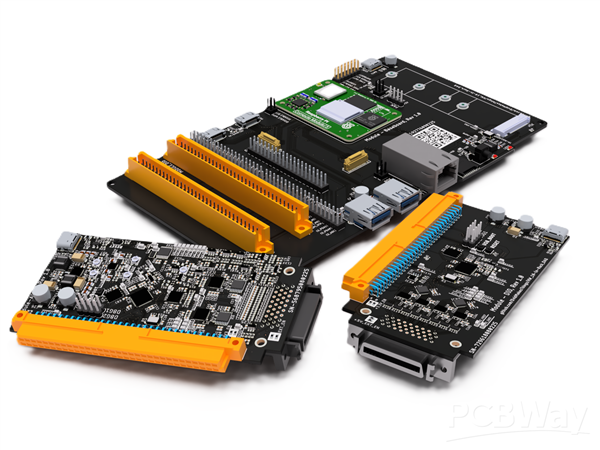
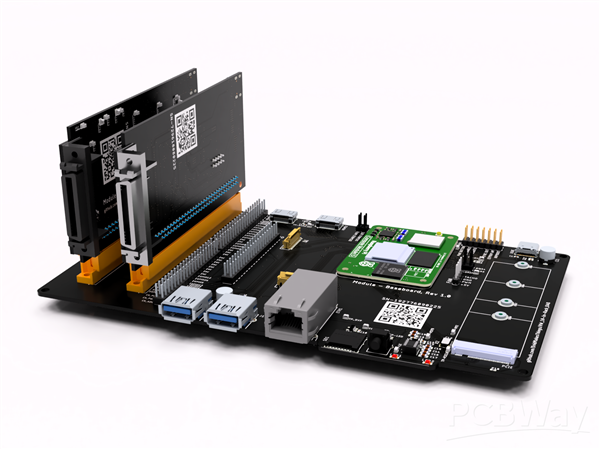
At the heart of this setup is the Raspberry Pi Compute Module 5, taking full advantage of the Raspberry ecosystem. The DAQ cards connect to a custom I/O board, making the entire system both a high-performance measurement device and an embedded PC. This integration allows for powerful data processing, seamless networking, and easy expansion, all in a compact form factor.
This project is still under development, and as with any first revision, there are bound to be challenges. Rev 1.0 is the initial step in refining the design, testing its capabilities, and identifying areas for improvement. While the core functionality is in place, real-world testing will reveal what works well and what needs adjustment. The goal is to iterate on this design, optimizing both hardware and software to make it as reliable and efficient as possible. Future revisions will focus on fine-tuning performance, improving signal integrity, and expanding compatibility with different test setups.
The hardware
Analog Input (16 Channels) and Analog Output (8 Channels)
The analog input section of the DAQ system is designed to provide high precision and flexibility for various applications. It features 16 channels of analog input, each capable of high-resolution data acquisition. Key Components:
- External 14-bit ADC: The ADS9234RIRHBR is a 14-bit, 3.5-MSPS dual SAR ADC with simultaneous sampling, internal reference, and enhanced SPI, ensuring accurate and reliable measurements.
- Multiplexers: 2 × DG409 are employed for flexible channel selection, allowing the system to switch between different input channels efficiently.
- Programmable Gain Amplifiers (PGA): ADA4254ACPZ are used to provide scalable input ranges, enabling the system to handle a wide variety of signal amplitudes.
The analog output section is designed to provide precise and stable output signals. It features 8 channels of analog output, each capable of high-resolution signal generation. Key Components:
- External 16-bit DAC: The DAC8568 is used for precision outputs, ensuring accurate and stable signal generation.
- Operational Amplifiers: TLV2372 are used for buffering and output stability, providing reliable and consistent performance.
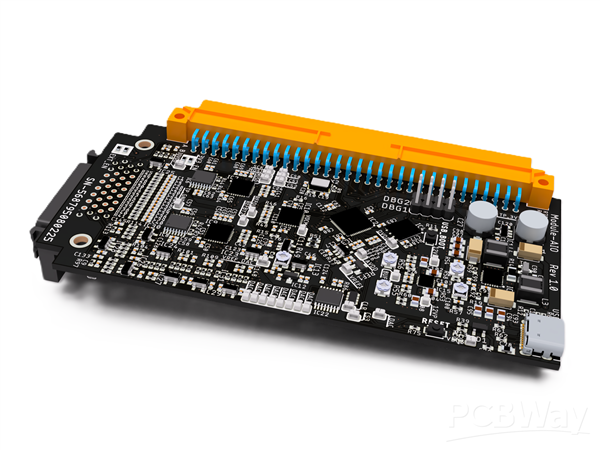
Digital IO (32 Channels)
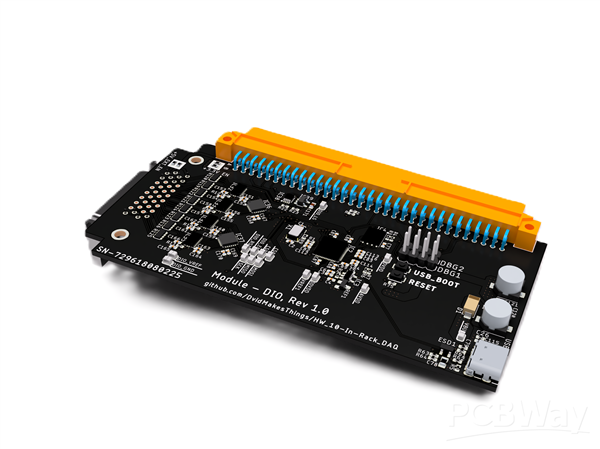
The digital IO section is designed to provide versatile and robust digital input and output capabilities. It features 32 channels of digital IO, each capable of handling various voltage levels and signal types. Key Components:
- Bidirectional Voltage-Level Translators: LSF0108-Q1 are used for multi-voltage compatibility, allowing the system to interface with different voltage levels.
- Direct GPIO Support: The RP2040 provides simple and robust design for direct GPIO support, ensuring reliable digital IO performance.
Words to PCBWay
High-quality PCB manufacturing is critical for a project like this. With dense layouts, precision analog circuits, and high-speed digital interfaces, the design demands reliable fabrication and assembly to perform as intended. PCBWay’s manufacturing capabilities would ensure that the Rev 1.0 boards meet the required quality and tolerances, allowing me to properly evaluate and refine the design. I’m also documenting this project on my YouTube channel (DvidMakesThings), where I’ll be sharing the full development process, from PCB assembly to testing. The first video is currently in the works, and this DAQ system will be a key focus of my content.
Apply for sponsorship >>- Comments(0)
- Likes(1)