

AccuSat - CanSat 2026
About AccuSat
AccuSat is our team’s entry for the Austrian CanSat Competition 2026. We are developing a fully functional satellite system that operates autonomously after being launched by a rocket built by the TU Wien Space Team.
The system must withstand launch acceleration, separation, descent and landing, all under strict size and mass constraints. During descent, AccuSat collects atmospheric data and transmits it live to a ground station. After landing, it continues measuring environmental parameters for more than 24 hours, effectively acting as a compact autonomous monitoring station.
Why We Built It
We wanted to work on a project that goes beyond theoretical exercises. CanSat encourages us to combine electronics design, embedded programming, RF communication, aerodynamics and mechanical construction into one integrated system.
Including system architecture planning, testing under constraints, and full subsystem integration. We see this as an opportunity to apply our knowledge in a realistic environment while developing practical engineering skills.
Technical Overview
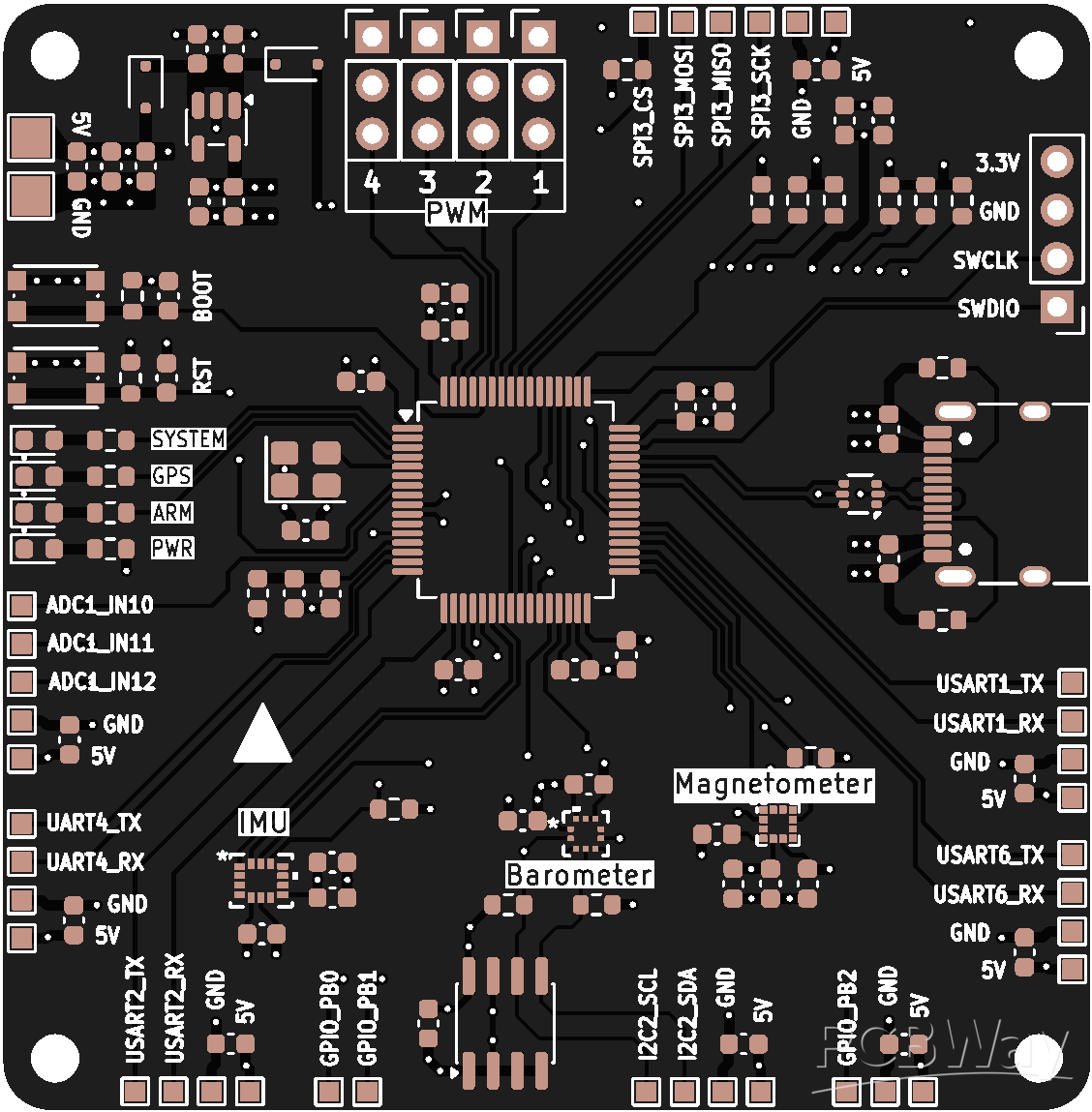
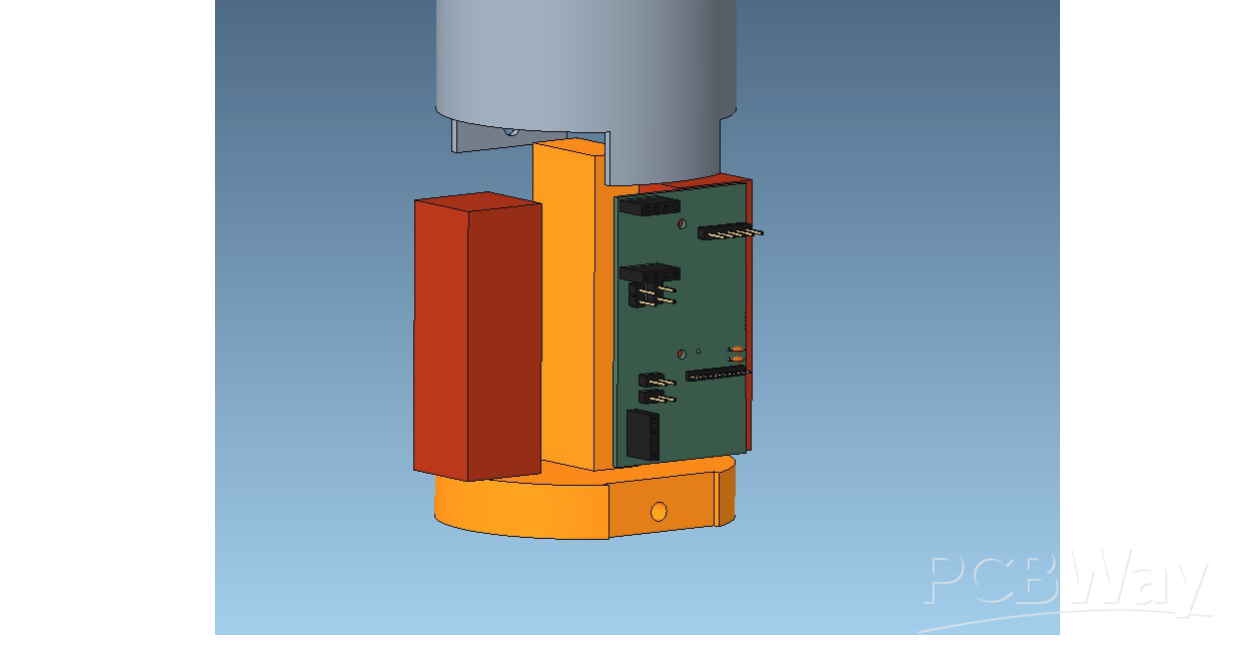
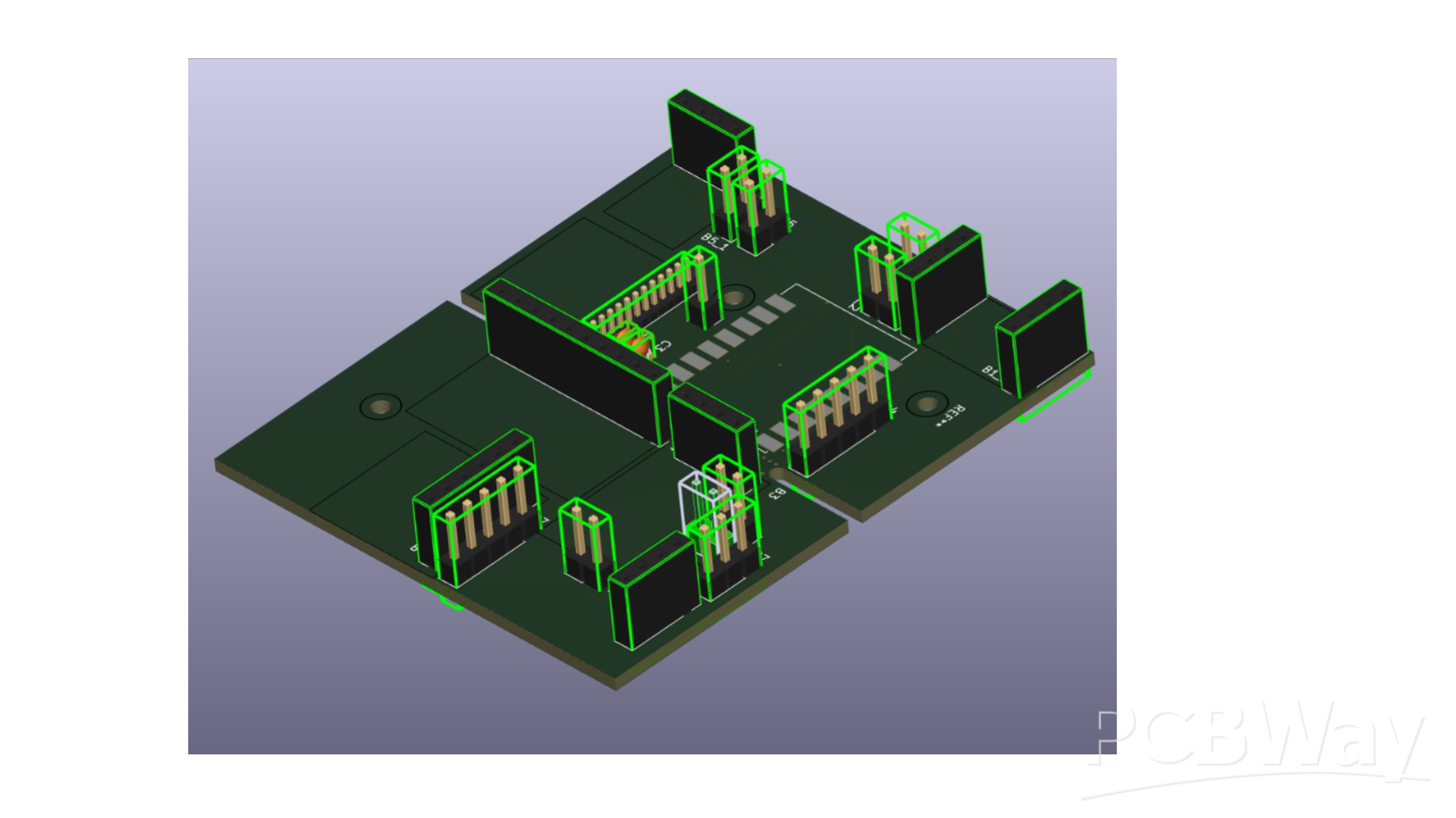
At the center of AccuSat is an ESP32-C3 microcontroller integrated on a custom-designed PCB. The system interfaces with:
GPS module for positioning and recovery
Pressure and temperature sensor for altitude calculation
Humidity and CO₂ sensors for extended environmental analysis
6-axis IMU and magnetometer
868 MHz LoRa module for telemetry transmission
MicroSD card for redundant local data storage
Servo actuator for a steerable parachute system
During descent, telemetry is transmitted once per second, including temperature, pressure, calculated altitude and descent speed. Communication tests have successfully reached a range of 1 km.
For our secondary mission, we are implementing a GPS-guided landing system. Using heading and position data, a servo adjusts the parachute lines to guide the CanSat toward predefined coordinates.
The system is powered by two Li-Ion cells with battery management and regulated voltage supply to ensure stable operation throughout the mission.
A professionally manufactured multi-layer PCB is essential for ensuring mechanical robustness, reliable RF performance and clean system integration compared to prototype-based wiring.
Our goal
To successfully complete the CanSat mission while gaining hands-on experience in space systems engineering, teamwork, and real-world problem solving.
Sponsorship Request
To finalize our flight hardware, we are seeking PCB manufacturing support for our custom-designed CanSat board.
As a student team, our budget is limited, and professional PCB production represents a significant portion of our remaining costs. Sponsorship would directly support the flight-ready electronics of AccuSat and help us ensure reliability during launch and descent.
In return, we offer:
Logo placement on our website and in official presentations
Sponsor acknowledgment in our final competition report
Mentions in social media updates and project documentation
Visibility during public presentations and school demonstrations
We actively document our development process and competition journey:
Instagram: instagram.com/team.accusat
YouTube: www.youtube.com/@TeamAccuSat
Website: accu-sat.com
We would greatly appreciate the opportunity to collaborate and represent your support throughout our CanSat mission.
Apply for sponsorship >>- Comments(0)
- Likes(0)