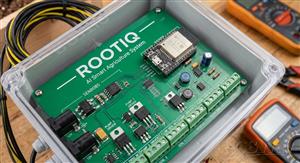


|
CAD Software |
|

|
KiCad 9.0 |
|

|
Arduino Web Editor |
ROOTIQ v.1
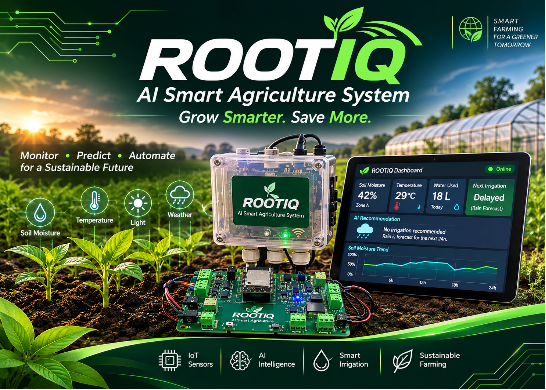
VERDANTIQ — AI-Powered Smart Agriculture and Automated Irrigation System
Project Description
VERDANTIQ is an intelligent agriculture and automated irrigation system designed to transform traditional farming into a smarter, more efficient, and sustainable process through the integration of Artificial Intelligence (AI), the Internet of Things (IoT), and engineering. The project aims to address some of the major challenges in modern agriculture, including inefficient water consumption, unpredictable environmental conditions, limited access to real-time crop information, and the difficulty of making informed irrigation decisions.
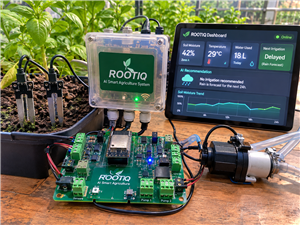
At the heart of VERDANTIQ is an ESP32-based monitoring and control system connected to multiple environmental sensors. These sensors continuously collect information about soil moisture, air temperature, humidity, light intensity, soil temperature, and water consumption. The collected data is transmitted through Wi-Fi to a central software platform, allowing users to monitor agricultural conditions remotely through a web-based dashboard.
Unlike conventional irrigation systems that operate according to fixed schedules, VERDANTIQ uses real-time sensor readings and intelligent decision-making to determine when irrigation is required. Its irrigation management system evaluates soil moisture levels and other environmental conditions to decide whether crops need water. When the measured conditions meet predefined irrigation criteria, the system can automatically activate the appropriate water pump. It is designed to support multiple irrigation zones, allowing different areas of a farm to receive water according to their individual conditions and requirements.
The platform also provides a centralised dashboard where users can view live sensor readings, examine historical data, monitor irrigation activity, track water consumption, and control the irrigation system manually or automatically. This makes it possible for farmers and agricultural operators to understand changing environmental conditions and make better decisions without needing to physically inspect every part of their farm.
An important feature of VERDANTIQ is its focus on intelligent data analysis rather than simply collecting sensor information. The current prototype uses explainable rule-based logic to interpret environmental readings, identify unusual conditions, and generate irrigation recommendations. As the system collects more real-world agricultural data, future development will introduce machine learning models to analyse historical patterns, predict irrigation requirements, detect anomalies, and improve water management. Weather information and crop-specific profiles could also be incorporated to make irrigation decisions more accurate and adaptable.
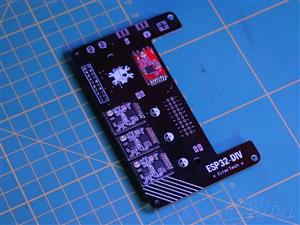
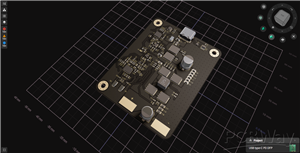
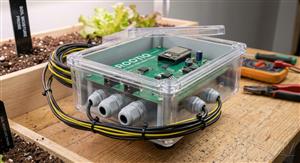
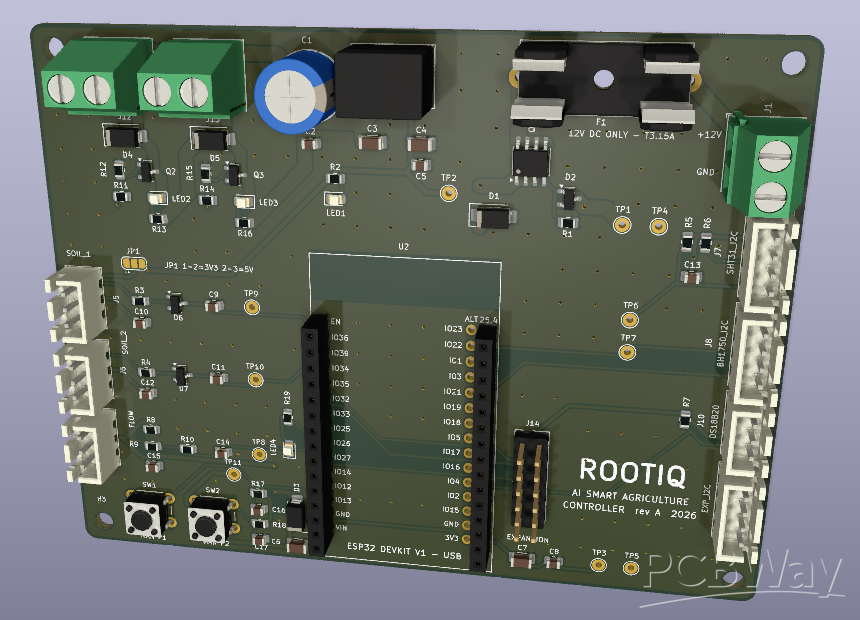
From an engineering perspective, VERDANTIQ combines embedded electronics, sensor integration, PCB design, software development, data management, and automated control into one integrated system. A custom-designed PCB will provide organised connections between the ESP32, sensors, power management circuits, and irrigation control interfaces. The electronics will be housed in a protective enclosure designed for agricultural environments, with appropriate cable management and protection against dust and moisture. The irrigation hardware will use independently controlled pump circuits and suitable electrical protection to ensure reliable operation.
The project is designed with scalability in mind. Its architecture could be expanded from a small garden or greenhouse prototype into a larger agricultural monitoring network with multiple sensor nodes, irrigation zones, and connected devices. Future versions could incorporate wireless communication technologies such as LoRa for farms with larger coverage areas, solar-powered operation for locations with limited access to electricity, and advanced analytics for long-term agricultural planning.
Ultimately, VERDANTIQ aims to make precision agriculture more accessible by combining affordable hardware with intelligent software. Rather than relying entirely on manual observation or fixed irrigation schedules, farmers can use measurable environmental data to understand their crops' needs, manage water more efficiently, and respond to changing conditions. The long-term vision is to develop a practical, adaptable, and intelligent agricultural platform that supports more productive farming while reducing unnecessary resource consumption and contributing to a more sustainable agricultural future.
VERDANTIQ — Smarter Farming. Better Growing. A Sustainable Future.
1.Main project
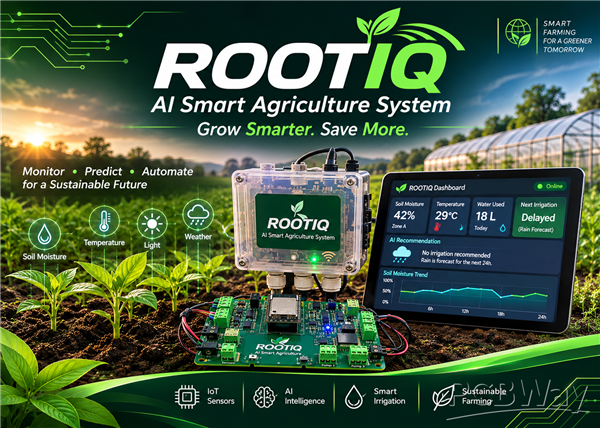
2.Custom PCB design
3.Sensor system
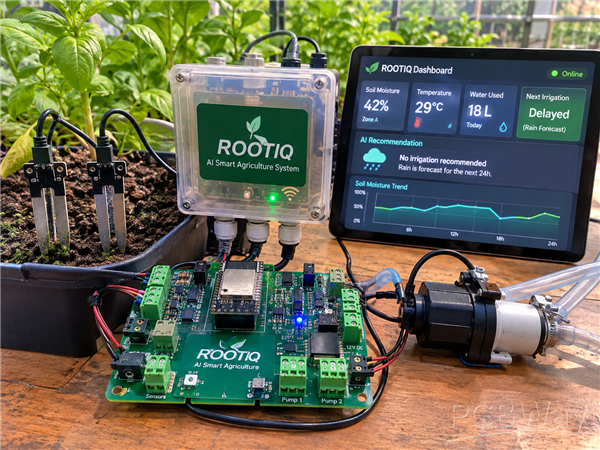
4. Enclosure CAD design
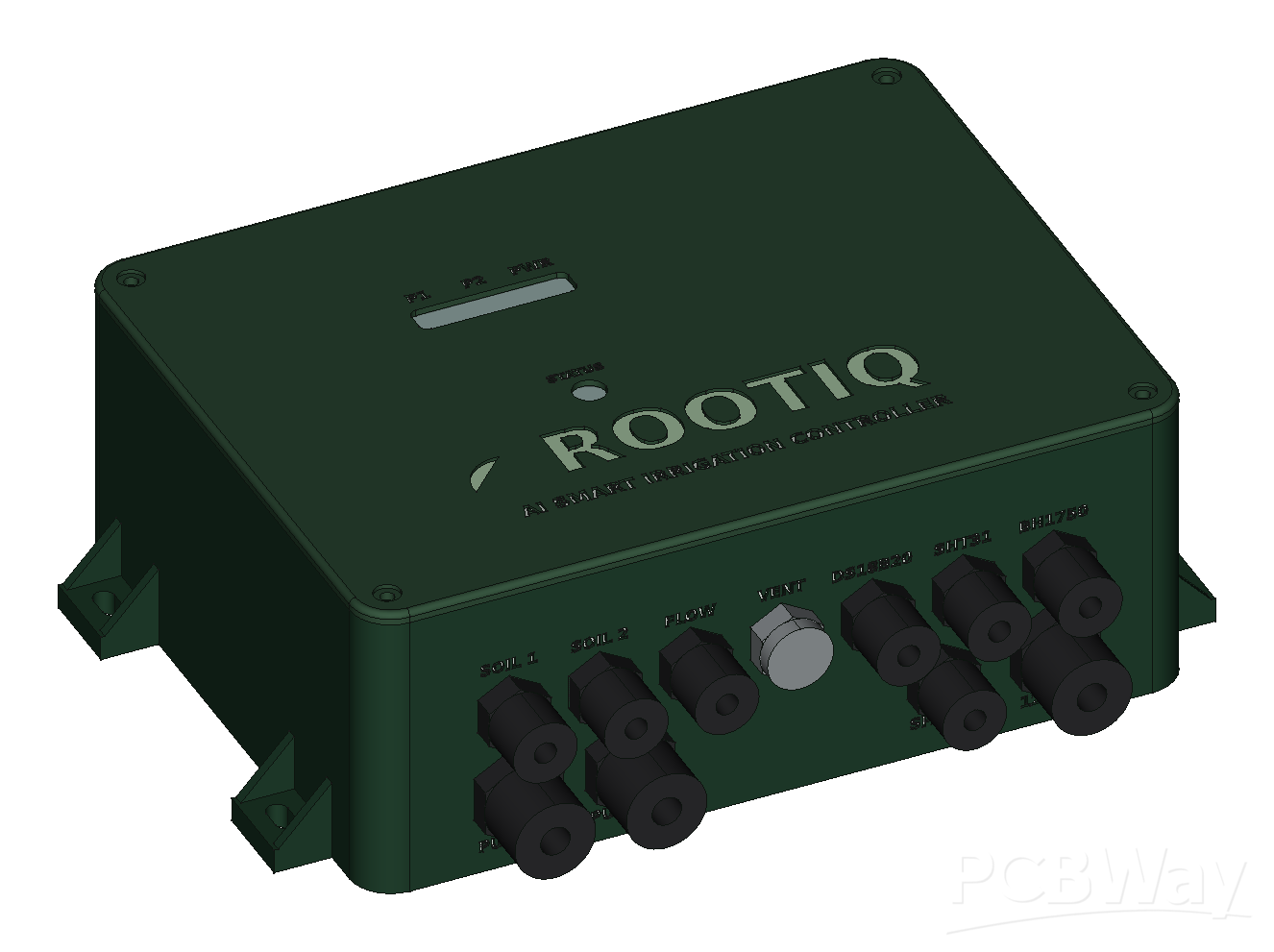
ROOTIQ v.1
Project images are for reference only. Actual production is based on the manufacturing files on the project page.
Please review the designer's notes (e.g., PCB thickness) and select the appropriate options.
PCBWay is not responsible
for issues caused by unsuitable parameter selections.
For more important ordering information, please refer to
Read More


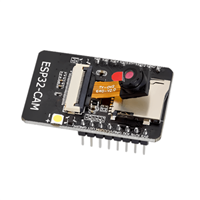
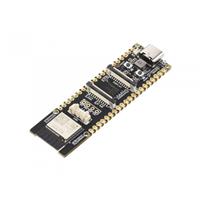
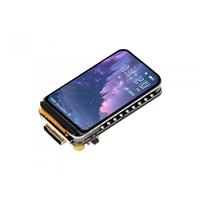
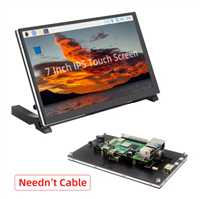
Raspberry Pi 5 7 Inch Touch Screen IPS 1024x600 HD LCD HDMI-compatible Display for RPI 4B 3B+ OPI 5 AIDA64 PC Secondary Screen(Without Speaker)
BUY NOW


- Comments(0)
- Likes(0)
 More by Engineer
-
-
-
AudioLink – USB & Bluetooth LE Audio / Auracast Receiver with Balanced Line Outputs (nRF5340)
278 0 1 -
-
-
-
Émetteur Récepteur Optique Expérimental (communication UART ATtiny + fibre optique)
357 0 1 -
SmallOLED - Live PC Stats, Animated Clocks & Audio Visualizer
1428 0 3 -
"Talking Multimeter": Arduino-Based Speech Add-on for Multimeters with SCPI Protocol
797 0 1