Hacks_symmetric
Here are relevant literature sources you can cite in your presentation for your AI‑based generative design project, along with short descriptions you can speak about each:
---
📘 1. Generative AI in Built Environment Design (State‑of‑the‑Art Review)
This review paper analyses nearly 180 research studies on how generative AI is used in architectural and engineering design, covering key algorithms, data needs, hybrid methods (AI + optimization), and evaluation metrics. It shows how generative AI helps automate design processes and explore large design spaces rapidly.
🗣 What to say in presentation:
“This review paper highlights the growing use of generative AI techniques—such as rule‑based systems, optimization, and deep learning—for automating and accelerating design in built environments. It supports the idea that AI can generate novel design alternatives beyond traditional manual methods, which is central to our project.”
---
📘 2. Structured Review of AI in Generative Design (Across Engineering Disciplines)
A structured review that summarizes how AI and generative design intersect in mechanical, civil, and architectural engineering. It discusses trends, applications (like design automation and topology optimization), benefits such as increased design diversity, and current challenges.
🗣 What to say in presentation:
“This article provides a broad perspective on how AI enables generative design across multiple engineering domains, including civil and mechanical systems. It underlines the potential for AI to reduce design time and produce efficient structures, which aligns well with our project’s goals.”
---
📘 3. Review of Generative AI in Civil & Environmental Engineering
This recent 2025 review specifically examines generative AI in civil and environmental engineering, detailing common AI models (like GANs, VAEs, transformers), best practices, and barriers such as data scarcity and integration challenges.
🗣 What to say in presentation:
“This survey focuses on civil engineering applications of generative AI, demonstrating how models are beginning to suggest design alternatives in spatial and structural problems. It highlights both opportunities and challenges—such as data limitations—that are relevant to implementing our system.”
---
📘 4. Review of AI in Civil Engineering
A broad review of how AI technologies (including machine learning) have been applied in modern civil engineering tasks such as structural analysis and optimization, showing the transformational role of AI beyond simple computation.
🗣 What to say in presentation:
“This literature on AI in civil engineering supports our motivation—AI methods are increasingly replacing traditional manual design and optimization tasks in structural and infrastructure engineering, making our project timely and aligned with broader research trends.”
---
📗 5. Generative AIBIM: Intelligent Structural Design Pipeline (Research Paper)
This research proposes Generative AIBIM, an intelligent pipeline that integrates generative AI with BIM for structural design, using physics‑informed models and advanced diffusion techniques.
🗣 What to say in presentation:
“This academic work shows how generative AI can be integrated with BIM to automate structural design. It’s directly relevant to our project because we also aim to combine generative models with BIM outputs for hydropower plant design.”
---
📗 6. Deep Generative Model for Mechanical System Configuration (Research Article)
This paper demonstrates a deep generative model used to automatically generate optimized mechanical system configurations, showing how generative AI can handle complex design spaces and multiple constraints.
🗣 What to say in presentation:
“This study applies deep generative modelling to mechanical configuration design—a concept similar to our task of generating optimized hydro‑mechanical and electro‑mechanical components. It provides precedent for using AI for multi‑constraint engineering design.”
---
📌 Tips for Citing in Your Slides
You can add a “Literature Review” slide with bullets like:
Generative AI enables automated design space exploration and hybrid optimization strategies (Review, 2025).
AI/Generative design is being applied across civil and mechanical engineering, supporting rapid design innovation (Structured review, 2025).
Civil engineering research shows increasing use of generative models with domain‑specific challenges (Civil & Environmental review, 2025).
Generative AI + BIM integration research validates combining AI outputs with digital construction workflows.
---
If you want, I can also help you generate short visual summaries (one image per paper) for your literature review slide or a APA/IEEE style reference list to paste into your report.
Hacks_symmetric


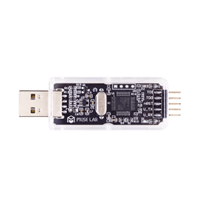
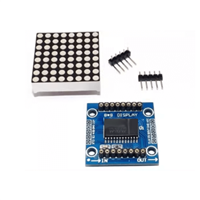
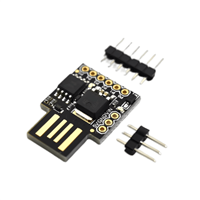
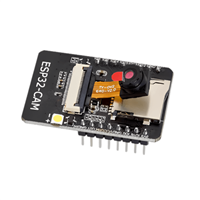
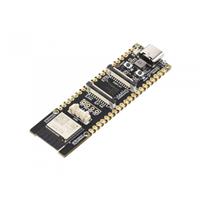


Raspberry Pi 5 7 Inch Touch Screen IPS 1024x600 HD LCD HDMI-compatible Display for RPI 4B 3B+ OPI 5 AIDA64 PC Secondary Screen(Without Speaker)
BUY NOW

- Comments(1)
- Likes(0)
 More by Engineer
-
Programmable Mist Maker - XIAO / QT PY Extension
2212 2 2 -
RadioHAT - Raspberry Pi radio development platform
1900 0 4 -
-
-
-
ARPS-2 – Arduino-Compatible Robot Project Shield for Arduino UNO
4082 0 6 -
A Compact Charging Breakout Board For Waveshare ESP32-C3
4843 3 8 -
AI-driven LoRa & LLM-enabled Kiosk & Food Delivery System
5639 2 2 -